
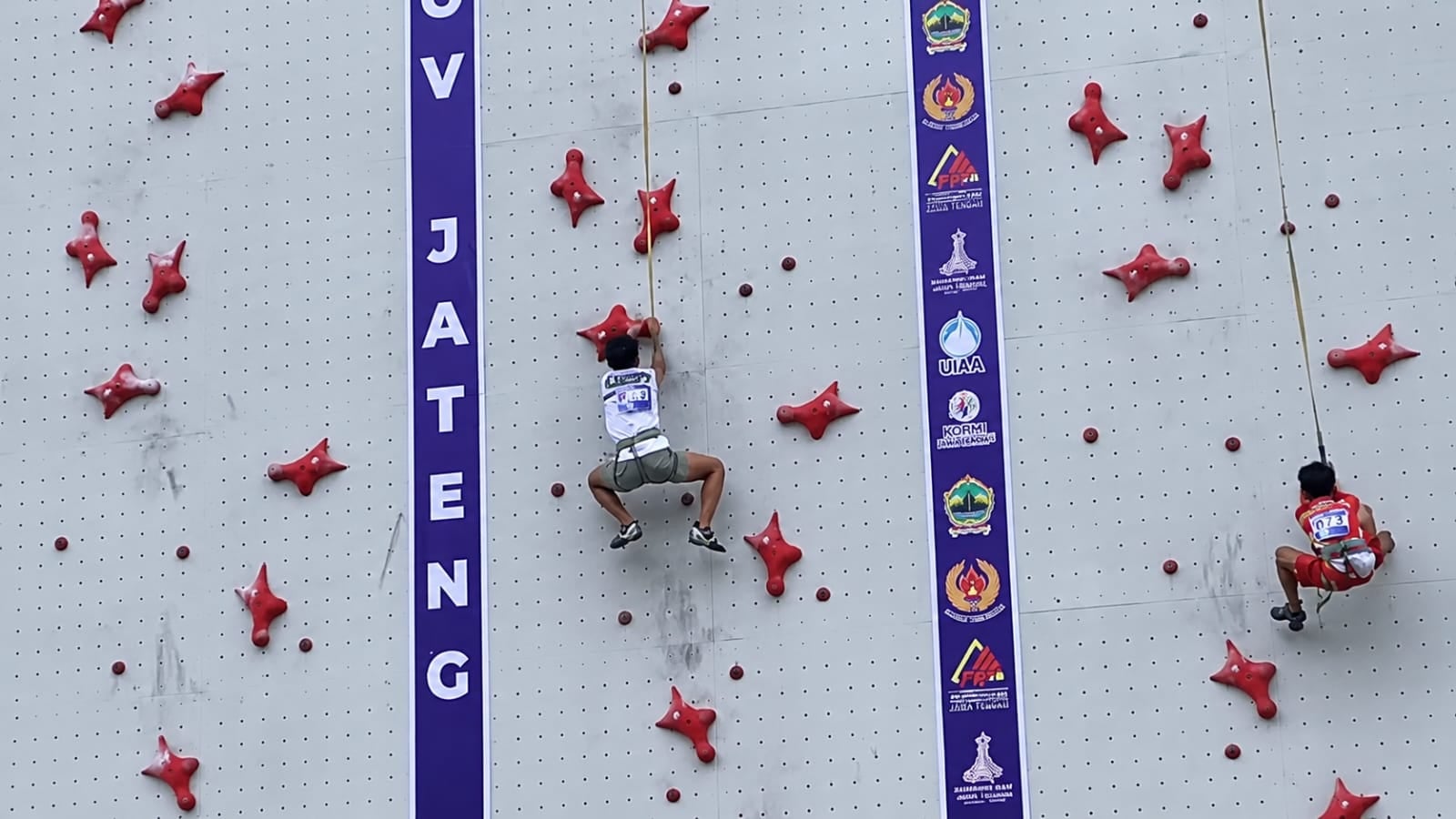
KUDUS – The silver medal won by Muhammad Alby Dewanta at the 2026 Central Java Provincial Sports Week (Porprov) marks a significant milestone in Kudus Regency’s sports development program. The 13-year-old athlete secured second place in the Men’s Speed Asia K under-13 category following a series of competitive heats.
Alby’s achievement is part of a broader trend of success. Three young athletes from the Kudus POP Kids Climbing Club recently medaled at the 2026 Central Java Provincial Championship and Climbing Circuit #2 in Semarang. These results underscore the effectiveness of youth training programs facilitated by local clubs and dedicated coaching.
Every success is built on an intensive development process, ranging from overcoming a fear of heights and mastering technical climbing skills to building physical endurance and gaining competitive experience.
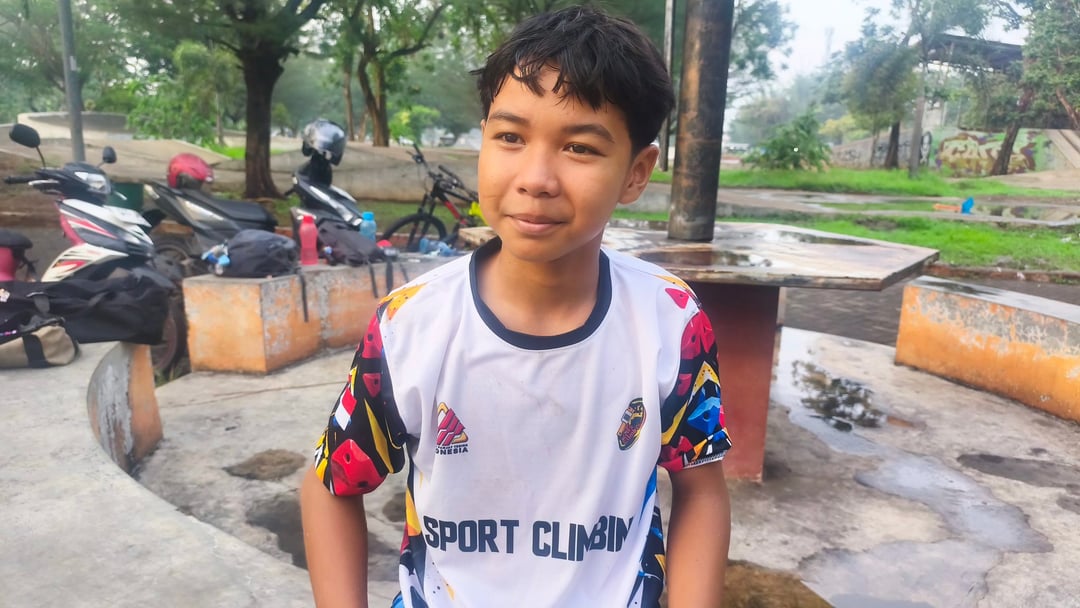
For Alby, a student at SMP 3 Kudus, the 2026 Central Java Porprov served as a vital opportunity to test his skills following routine training with the POP Kids Climbing Club.
During the competition, Alby faced several opponents, including Charlie Caesar Cahandrakusuma, who had defeated him twice previously. This time, Alby successfully turned the tables.
"I had faced him (Caesar) twice before and lost both times. This was my first win against him," he recalled.
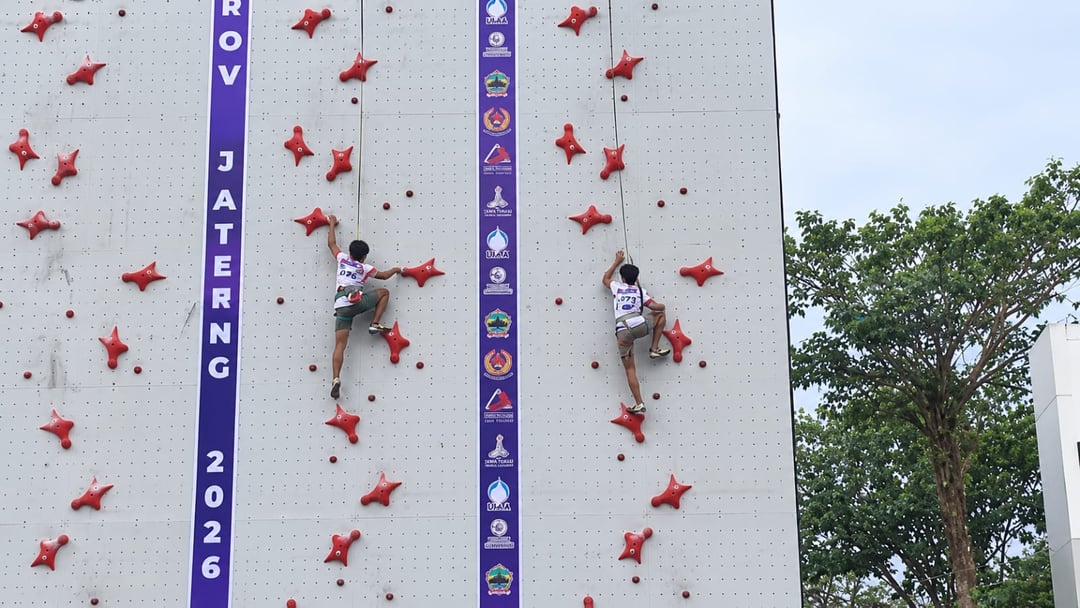
The victory advanced him to the gold medal match against Galang Ardhiyana from Karanganyar Regency. In the final, a slip near the top of the route resulted in a time of approximately 8.6 seconds, securing him second place and the silver medal.
"The final round to determine the gold medal was very tense," he said.
The result has further motivated Alby to improve his performance. He aims to refine his technique in the middle section of the route to increase his overall speed.
"I am very happy and satisfied with this silver medal, but I hope to win gold at the Central Java Popda in the future. I want to improve my movement in the middle section to be faster," he added.
Alby, who was introduced to the sport by a friend, became deeply committed after his first few sessions. He now trains five days a week to develop his physical and technical prowess.
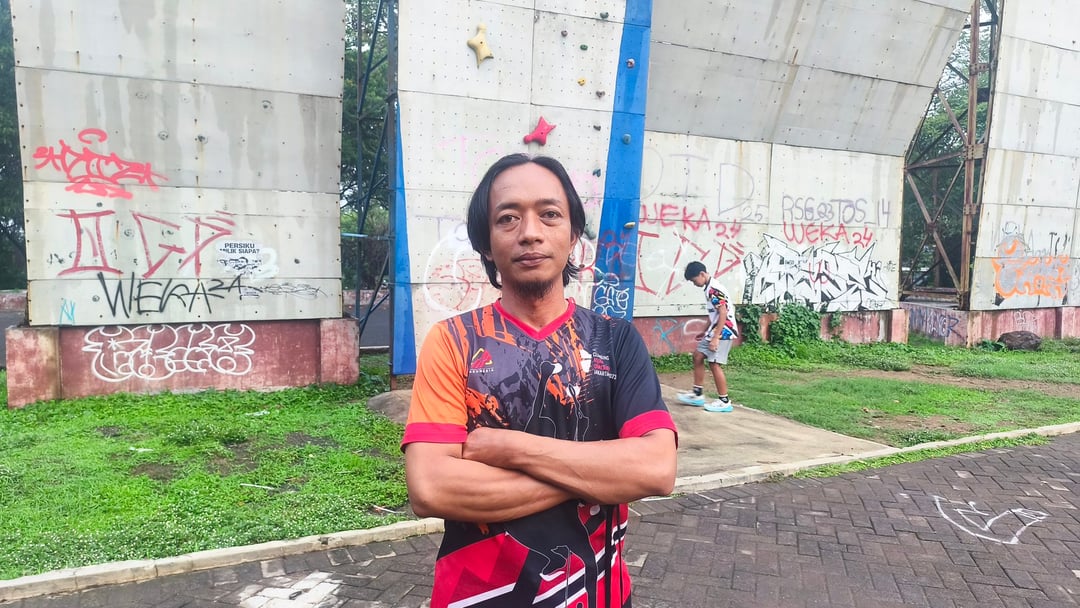
Alby’s journey serves as a case study for the youth athlete development program managed by the Indonesian Sport Climbing Federation (FPTI) in Kudus Regency. Hema Himawan, FPTI Kudus secretary and coach, emphasized that development must begin at an early age to secure a pipeline of future athletes.
Clubs serve as a primary entry point for introducing children to rock climbing and identifying potential talent. Children who display promise receive intensive mentoring and are eventually offered the opportunity to attend dedicated training camps.
According to Hema, initial training does not focus on speed or technical route completion. Instead, coaches prioritize building a child's confidence in overcoming a fear of heights.
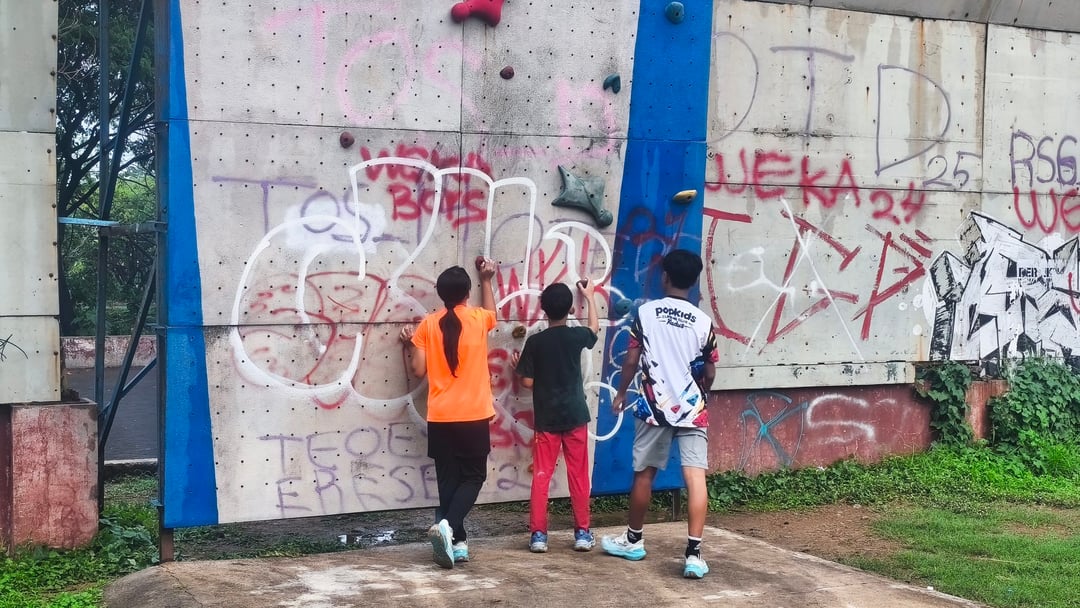
Children aged six to seven typically require time to acclimate to the climbing wall. Consequently, training is conducted incrementally, starting at a height of approximately two meters before advancing to three or four meters based on individual readiness.
Once a child gains confidence, the curriculum shifts to developing grip strength, precise footwork, balance, and advanced climbing techniques.
“The initial stage is simply to help children overcome their fear of heights. We cannot force it. Courage comes through repetition and familiarity,” Hema explained.
Training programs are tailored to the age and development stage of each athlete. FPTI follows the Long-Term Athlete Development (LTAD) guidelines to systematically cultivate physical, technical, and mental skills.
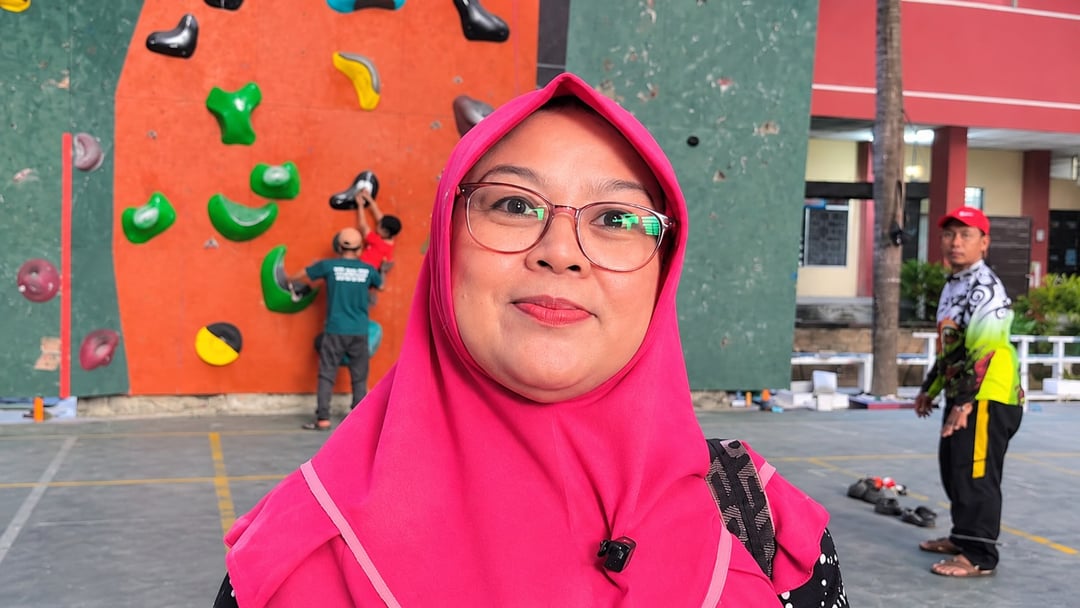
The POP Kids Climbing Club is one of the local organizations driving youth development in Kudus. The community was established approximately three years ago, following the first regional student sports competition (Popda) for rock climbing after the Covid-19 pandemic.
Indah Aprilia, founder of the POP Kids Climbing Club, noted that the community was formed because there were no dedicated outlets for children to train consistently.
“After that first post-Covid Popda, there was no specialized facility for children to train. So, a group of mothers and I decided to establish POP Kids,” Indah said.
Currently, approximately 30 athletes are training with POP Kids. Participants range from children as young as five to teenagers, with the majority still in elementary school.
Training sessions are held three times a week—every Monday, Wednesday, and Saturday afternoon at SMA 1 Kudus. New members are first introduced to the fundamentals of rock climbing, including movement, physical conditioning, and safety protocols during practice.
For Indah, maintaining a fun training environment is essential to keep the children engaged. They are not immediately pushed into competitions, as every child possesses different abilities and levels of readiness.
“The most important thing is that the children enjoy themselves first. We follow the principle of being happy and having fun. If they are happy, achievements are just a bonus,” she said.
This philosophy is applied through training activities that provide children the opportunity to experiment, repeat movements, and learn from experience. Coaches must also remain attentive to the children's moods and concentration levels as they fluctuate.
Through this routine, the children do more than just learn climbing techniques. They also develop concentration, learn to follow directions, practice discipline, and cultivate an understanding of safety.
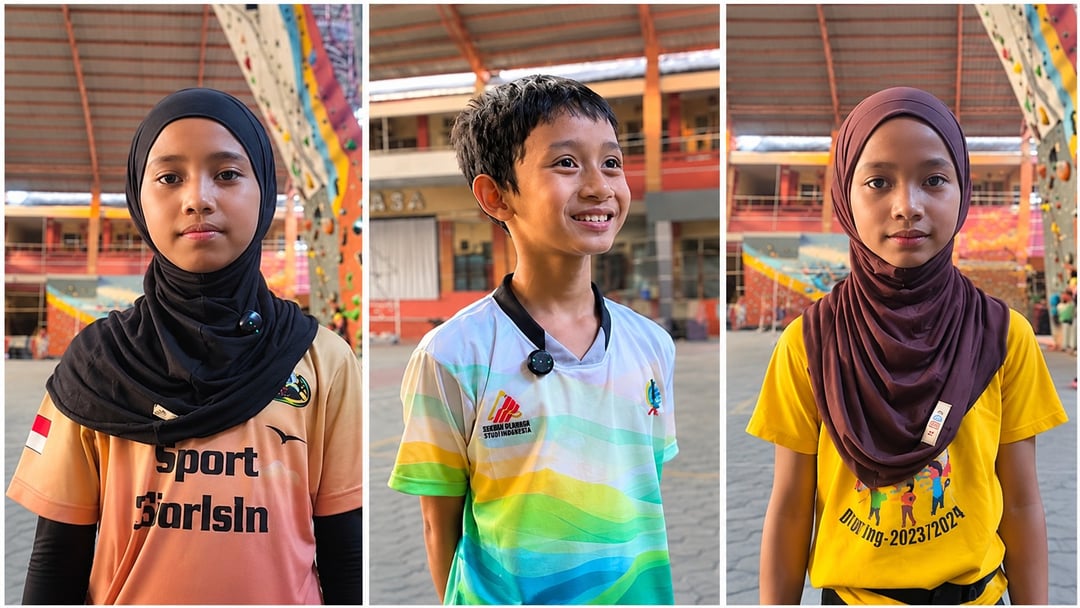
Competition becomes a part of the POP Kids journey once athletes are prepared for match conditions. This was evident during the 2026 Central Java Provincial Championship and Rock Climbing Circuit #2, held from August 26–30, 2026, at the FPTI Central Java Wall Climbing venue in the Jatidiri Sports Complex, Semarang.
The championship featured 260 athletes from 29 regencies and cities across Central Java. POP Kids sent a contingent that returned home with three medals in the Speed Classic category.
Danis Wara Nuril Amri, also known as Aam, secured first place in the boys' 10–11 age group. Meanwhile, Tantira Qonita Pratiwi took second place and Danisha Ainur Malikha, or Lili, finished third in the girls' 7–9 age group.
For Aam, rock climbing has been a part of his life since he was in kindergarten, around age six. The fourth-grade student at MI Muhammadiyah Al-Tanbih is now becoming accustomed to participating in tournaments.
However, every competition brings its own set of challenges, as athletes must overcome the height while striving to climb as quickly as possible.
Before competing, Aam has a routine of warming up and praying. After winning first place in Semarang, he expressed his excitement and his desire to continue pursuing the sport.
Meanwhile, the provincial championship in Semarang marked Tira's first experience at the provincial level. She successfully capitalized on the opportunity to take home a silver medal.
“This was my first time competing in a provincial championship. Thankfully, I was able to win silver,” Tira said.
Lili, who won the bronze medal, also gained valuable competitive experience through the event. For children of her age, tournaments provide a platform to gauge their abilities while gaining experience in the arena.
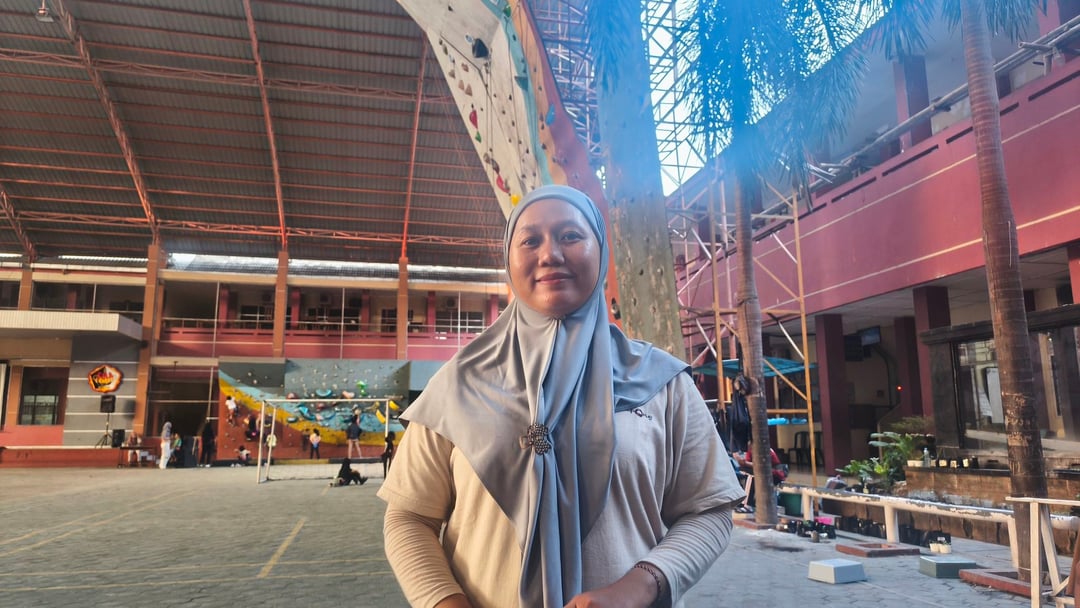
Early childhood athletic development extends beyond training grounds, as family support plays a vital role in children's commitment to rock climbing.
Setiya Ariani, mother of Aam and Lili, also serves as an administrator for POP Kids, often stepping in to assist when coaches are unavailable due to other commitments.
She noted that the children's involvement in sports has improved their daily routines. With school, training, and home activities now structured, the children are learning the value of time management and discipline.
"Winning today does not guarantee a win tomorrow. They are still young with a long road ahead, so they must keep training," said Bu Am.
Meanwhile, climbing development in Kudus faces persistent challenges. Hema noted that current facilities are better suited for speed climbing, while infrastructure for the lead category remains limited.
This disparity has led to a focus on speed climbing development, despite the potential for lead and boulder events to contribute to overall athletic achievement.
Beyond facility improvements, the sustainability of youth clubs and student competitions is essential for fostering a new generation of athletes. Such events introduce young climbers to competitive environments while allowing coaches to monitor their progress.
For Hema, youth clubs are a foundation for securing a consistent pipeline of future talent. Sustained development is expected to produce new athletes ready for competition.
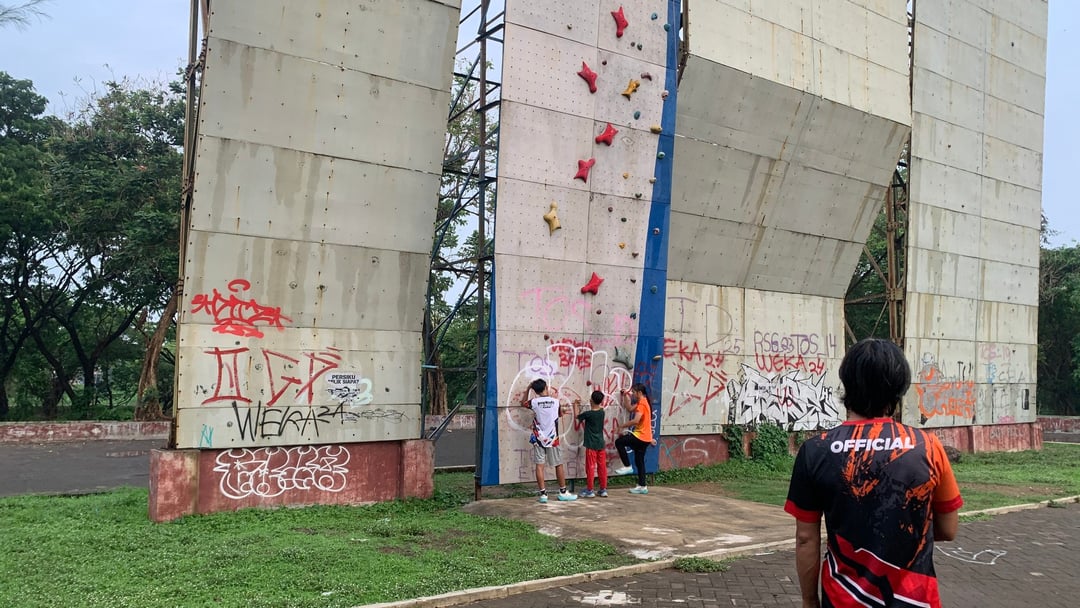
For Alby, a silver medal at the 2026 Central Java Porprov is a career milestone, yet he remains focused on refining his technique for better results in upcoming contests.
The same applies to Aam, Tira, Lili, and other young climbers in the POP Kids program. While some have yet to compete, many are still in the foundational phase—learning movements, acclimating to heights, and building confidence.
Progression on the climbing wall varies by child; some are just beginning to explore, while others repeat routes or test their skills in formal competitions.
Through routine training, coaching, and family support, the climbing development program in Kudus continues to move forward. Achievements serve as a measure of success, while courage and consistency provide the tools for these young athletes to advance. (FZ/OEB/YSR/MKK)