

Kudus – “How does one get to Kudus?”
This simple question almost always arises from those planning their first visit to the City of Kretek. Whether for pilgrimages, culinary adventures, sporting events, professional commitments, or simply to soak in the atmosphere of a city renowned for its rich history and cultural heritage, visitors often seek guidance on the best transit options.
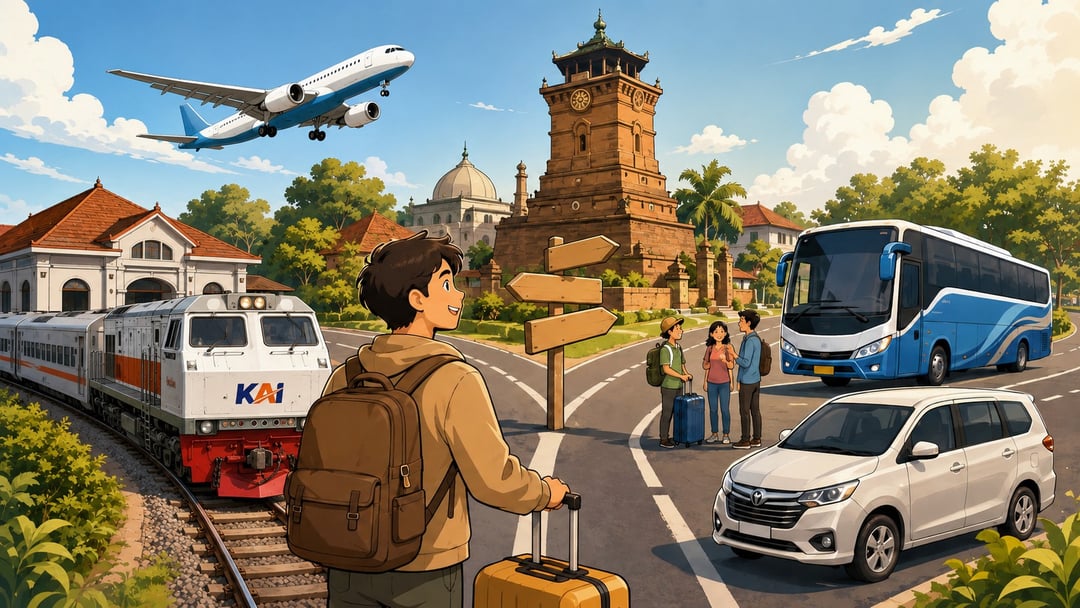
This hesitation is understandable. Unlike several other major cities in Central Java, Kudus lacks a commercial airport or active passenger rail service. At first glance, this might make the city seem more difficult to access.
However, that perception typically shifts once travelers learn of the available routes.
Despite the absence of an airport or active train station, transit options to Kudus are quite diverse. Trains, intercity buses, travel services, shuttles, and even flights can serve as gateways to this city, famous for its religious tourism, local cuisine, history, sports, and the kretek industry. Travelers need only align their choice with their preferred travel time, budget, and comfort level.
Interestingly, the journey to Kudus often becomes an integral part of the overall experience.
After departing major urban centers, the route continues along the northern coast highway, or Pantura. The scenery shifts gradually; urban landscapes give way to expanses of rice paddies, industrial zones, traditional markets, and the coastal activities that define life along Java's northern corridor. All these sights serve as a prelude before arriving in a city known for the Menara Kudus, jenang, soto, coffee, and a growing calendar of tourism and sporting events.
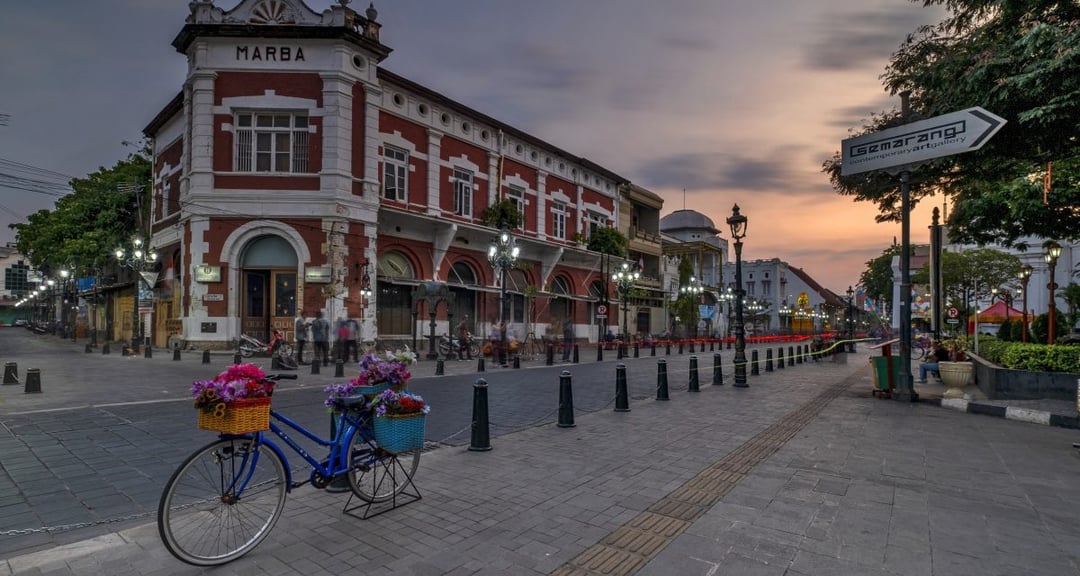
For many travelers, the journey to Kudus almost always begins in Semarang.
The city acts as a primary hub for various modes of transportation arriving from across Indonesia. From here, the journey continues overland toward Kudus.
For those opting to travel by train, the journey does not conclude at the station.
Currently, rail lines to Kudus do not support passenger services. The route that once connected Semarang, Demak, Kudus, and Pati is now part of the history of North Java’s transportation. Consequently, train travel typically ends in Semarang before passengers proceed to Kudus.
Two stations serve as the most common entry points.
Semarang Tawang Station handles various long-distance trains, including executive and economy classes. Services such as the Argo Muria, Argo Bromo Anggrek, and Blambangan Ekspres stop at this station, located just a short distance from Semarang’s Old Town district.
Meanwhile, Semarang Poncol Station serves various economy and business-class trains, including the Menoreh, Tawang Jaya, and Kertajaya.
Upon exiting the station, travelers have a wide array of options for reaching Kudus. Passengers can continue their trip via travel agencies, shuttles, buses, taxis, rental cars, or ride-hailing services. The transit time typically ranges from one and a half to two hours, depending on traffic conditions.
Combining rail and road travel creates a distinct experience. After enjoying the train ride, the atmosphere of the North Coast, or Pantura, serves as the next chapter before reaching the City of Kretek.
Semarang serves not only as a transit point but as the main gateway connecting Kudus to various regions.
From this city, the journey to Kudus can be completed via toll roads or national routes, covering approximately 60 kilometers. Travel time ranges from one to two hours, depending on traffic conditions.
Along the way, the landscape gradually shifts.
Skyscrapers give way to industrial zones, stretches of rice fields, typical Pantura traffic, and rows of restaurants and souvenir shops catering to travelers.
For some, this overland journey is more than just a trip between cities. It is along this route that initial impressions of Java's northern coast are formed before finally arriving in Kudus.
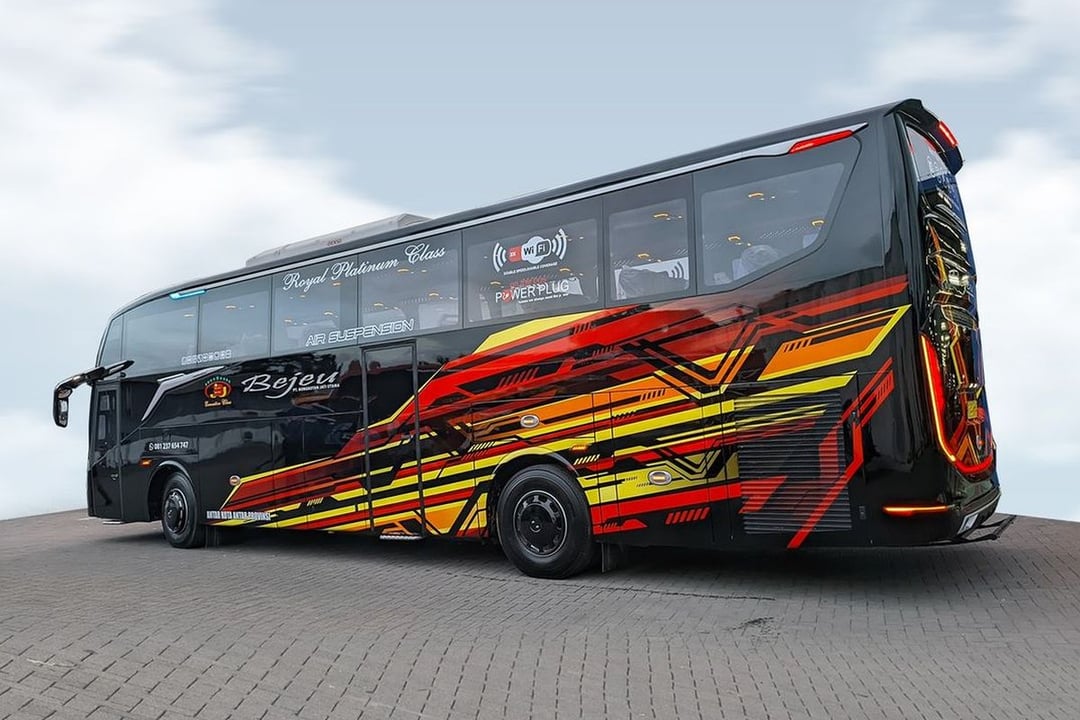
Despite the growing variety of transportation options, intercity buses remain a staple for those traveling to Kudus. Many still favor this mode of transport as it offers direct service without the need for transfers, particularly for passengers departing from Jakarta and other cities across Java.
Operator choices have become increasingly diverse, each providing service classes tailored to travel needs, ranging from standard to sleeper options.
Generally, the fare for a Jakarta–Kudus bus route ranges from IDR 190,000 to IDR 370,000 one way. Travel time varies between seven and ten hours, depending on traffic, departure schedules, and stopovers.
Bus companies serving this route include PO Haryanto, New Shantika, Nusantara, Rosalia Indah, Kalingga Jaya, Muji Jaya Putra (MJPM), Sahaalah, and Rimba Raya.
As an example, PO Haryanto fares typically start at approximately IDR 270,000. New Shantika ranges around IDR 250,000. Meanwhile, PO Sahaalah provides executive to sleeper class options with fares ranging from IDR 260,000 to IDR 370,000. Muji Jaya Putra also offers both standard and sleeper services with pricing adjusted based on travel amenities.
All these fares represent price ranges at the time of writing and are subject to change at any time based on company policies, travel seasons, booking times, and seat availability.
The diverse range of classes now makes overland travel more flexible. Some passengers prioritize cost-efficiency, while others choose comfort during their journey. Options are available for both preferences.
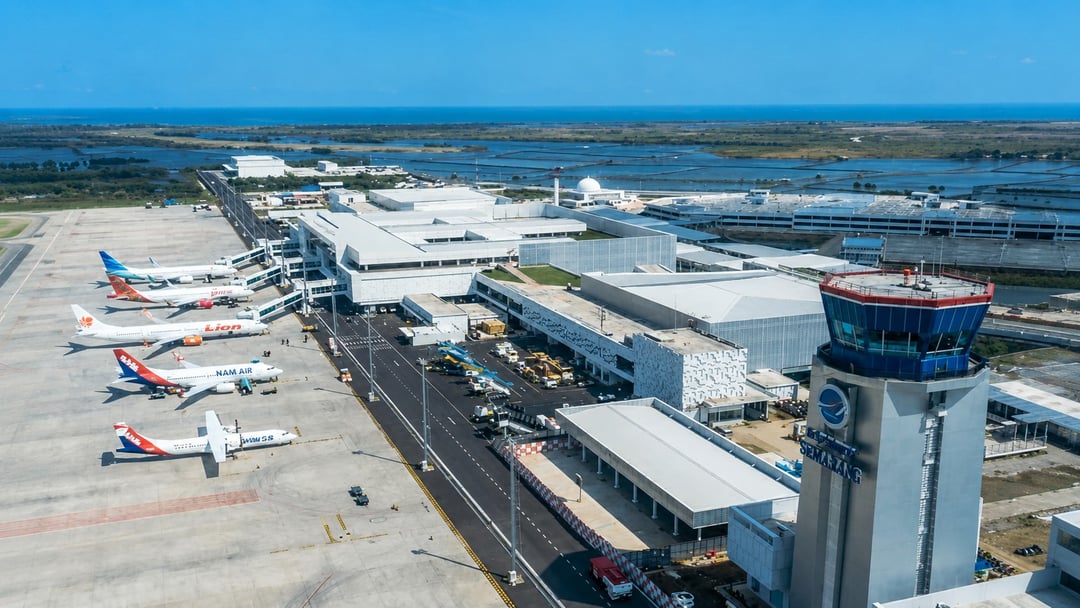
For travelers outside of Java, air travel is the most efficient way to reach the vicinity of Kudus.
However, there are no direct flights to the city. Kudus currently lacks a commercial airport, so air travelers must fly into Jenderal Ahmad Yani International Airport in Semarang before continuing their journey to Kudus by land.
Upon arrival, travelers can proceed to Kudus via travel services, shuttles, taxis, rental cars, or ride-hailing services. The trip typically takes between one and a half to two hours, depending on traffic conditions.
As the primary gateway to eastern Central Java, Ahmad Yani International Airport ensures that Kudus remains easily accessible from various regions.
The airport serves flights from major Indonesian cities, including Jakarta, Surabaya, Denpasar, Balikpapan, Pontianak, Banjarmasin, Pangkalan Bun, and Bandung. Airlines operating these routes include Garuda Indonesia, Batik Air, Lion Air, Citilink, Super Air Jet, and Wings Air.
For those traveling from Jakarta, daily flights to Semarang are available. With an average flight time of approximately 1 hour and 10 minutes, air travel is a preferred option for both tourists and business travelers looking to optimize their time.
As a high-traffic domestic route to Central Java, the direct Jakarta (CGK)–Semarang (SRG) corridor maintains a high frequency. There are approximately 10 to 11 direct flights daily, totaling about 77 flights per week. Batik Air operates the most frequent service, with around five flights per day, or 35 flights per week.
Garuda Indonesia operates between one and five flights daily, totaling about 31 flights per week, while Citilink offers one to two daily flights, totaling about 10 flights per week.
Flights are scheduled from morning until evening. The earliest departure is generally around 6:35 a.m. Western Indonesian Time (WIB), with the final flight scheduled for approximately 7:30 p.m. WIB. This variety of options provides flexibility for travelers to align their arrival with their Kudus itinerary.
Based on data available at the time of publication, one-way tickets on the Jakarta (JKT)–Semarang (SRG) route generally range from IDR 900,000 to IDR 2.3 million. Depending on booking timing, travel season, and seat availability, some airlines offer starting prices around IDR 1.2 million.
Ticket prices fluctuate based on departure dates. For the Jakarta (CGK)–Semarang (SRG) route, weekday (Monday–Thursday) fares typically range from IDR 630,000 to IDR 750,000, rising to IDR 850,000 to IDR 1.1 million between Friday and Sunday.
A similar pricing pattern applies to other routes. Surabaya (SUB)–Semarang (SRG) flights generally range from IDR 800,000 to IDR 950,000 on weekdays, increasing to IDR 1 million to IDR 1.25 million on weekends. Fares for the Pangkalan Bun (PKN)–Semarang (SRG) route range from IDR 1.1 million to IDR 1.3 million on weekdays, rising to IDR 1.25 million to IDR 1.5 million for weekend travel.
These fluctuations are reflected in actual airline pricing. For instance, Citilink charges approximately IDR 959,290 for a Tuesday departure, increasing to IDR 1,192,065 on Saturday—a difference of IDR 232,775. Batik Air fares shift from approximately IDR 1,097,280 on weekdays to IDR 1,273,780 on weekends, an increase of IDR 176,500. Meanwhile, Garuda Indonesia fares rise from approximately IDR 1,155,420 on weekdays to IDR 1,234,220 on weekends, an increase of IDR 78,800.
In general, the lowest fares are typically found on Tuesdays and Wednesdays when passenger demand is lower. Prices begin to climb Thursday evening through Friday due to weekend travel, with peak fares occurring from Sunday afternoon through evening as travelers return for the start of the week.
For travelers seeking competitive fares, monitoring price fluctuations before booking can be an effective strategy. Various online travel platforms provide data on price trends, airline rate comparisons, and price alert features to help passengers determine the optimal time to purchase tickets.
Information regarding flight schedules, airline options, ticket prices, and bookings for the Jakarta (JKT)–Semarang (SRG) route is accessible via tiket.com or similar online travel agents (OTAs). These platforms also provide details on flight classes, rescheduling options, and refund policies in accordance with each airline's terms.
In addition to domestic flights, Jenderal Ahmad Yani International Airport in Semarang serves as a gateway for international travelers with direct flights from Malaysia and Singapore. As of 2026, approximately 10 to 11 direct international flights are scheduled weekly to Semarang from these two countries.
The Kuala Lumpur (KUL)–Semarang (SRG) route is operated by AirAsia with a daily frequency. The flight duration is approximately 2 hours and 25 minutes, with departures typically scheduled for around 9:25 a.m. local time.
Meanwhile, the Singapore (SIN)–Semarang (SRG) route is served by Scoot three to four times weekly on specific days, including Tuesdays, Thursdays, and Saturdays. The flight takes approximately 2 hours and 10 minutes, with departure times varying by operational day, though early flights typically depart around 6:00 a.m. local time.
Regarding costs, one-way economy class fares fluctuate. Based on information available at the time of writing, flights from Kuala Lumpur to Semarang generally range from Rp 1.5 million to Rp 3 million. Flights from Singapore range from Rp 1.6 million to Rp 3.5 million, depending on departure dates, booking times, and seat availability.
As with domestic flights, international fares to Semarang are influenced by the departure date. Fares for economy class are generally higher on weekends (Friday–Sunday) compared to weekdays (Monday–Thursday), with a price difference of approximately Rp 200,000 to Rp 700,000. The increase is most pronounced on the Singapore (SIN)–Semarang (SRG) route, which has more limited direct flight frequency.
This disparity is evident in the actual rates offered by airlines. On the Kuala Lumpur (KUL)–Semarang (SRG) route, AirAsia tickets for weekday departures, such as Tuesday or Wednesday, are recorded at approximately Rp 1,491,846. Approaching the weekend, fares increase to approximately Rp 1,542,365 to Rp 1,750,000, representing a hike of roughly Rp 50,000 to Rp 250,000.
A different scenario is observed on the Singapore (SIN)–Semarang (SRG) route. Scoot's direct flight fares on weekdays are recorded at approximately Rp 2,518,400. For departures from Friday through the weekend, ticket prices can rise to approximately Rp 3,739,077 to Rp 5,036,000. Consequently, the fare difference reaches approximately Rp 1,220,000 to Rp 2,517,600 compared to weekday departures.
The difference in price increases is closely tied to the frequency of available flights. AirAsia operates daily direct flights on the Kuala Lumpur (KUL)–Semarang (SRG) route, resulting in relatively balanced seat distribution and more stable fare increases.
Conversely, direct flights from Singapore (SIN) to Semarang (SRG) are not available daily. As demand rises toward the weekend, seat availability becomes more limited. In certain conditions, some passengers may need to take connecting flights, further increasing the total cost of travel.
For travelers with flexible itineraries, choosing weekday departures can be an effective way to secure more competitive fares. Information regarding flight schedules, airline options, and ticket purchases remains available through tiket.com, similar online travel agents (OTAs), or official airline channels.
The availability of direct flights from Kuala Lumpur and Singapore further expands access to Kudus for international travelers. After landing at Jenderal Ahmad Yani International Airport in Semarang, the journey to the 'City of Kretek' can continue via land transportation, eliminating the need for a prior transit in Jakarta.
For many travelers, combining a flight to Semarang with a land transfer to Kudus offers an efficient solution, particularly when time is a priority.
A wide array of onward transportation options is available throughout the day. This provides tourists and business travelers with the flexibility to align their airport arrival times with connecting departures to Kudus.
Ultimately, reaching the City of Kretek no longer depends on a single mode of transport. The seamless connectivity between air, rail, bus, shuttle, and other ground transport services ensures that Kudus remains easily accessible from various regions.
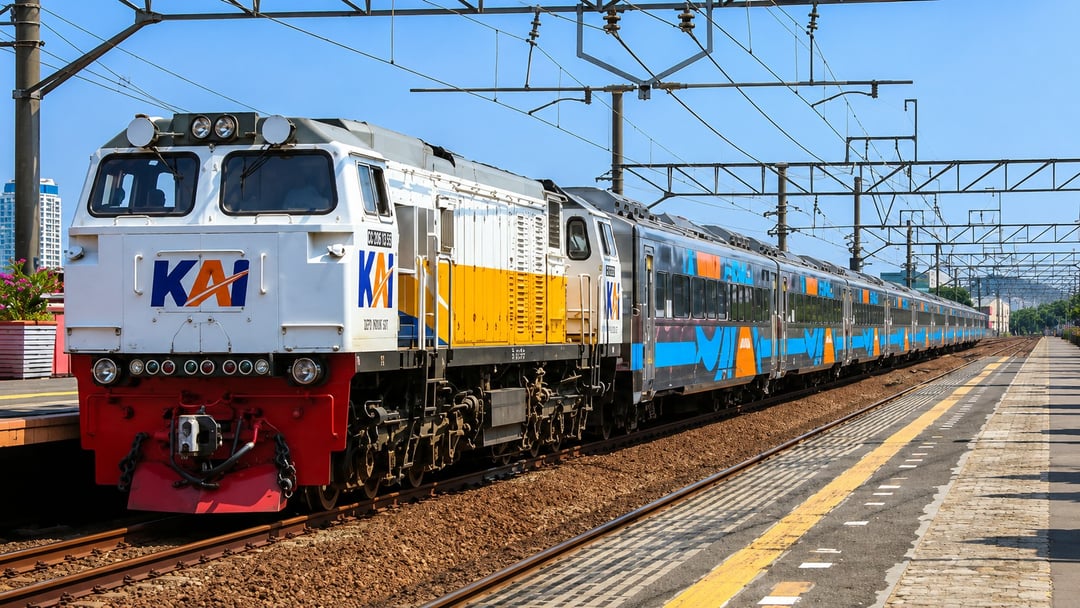
For travelers departing from Jakarta, the train remains a comfortable way to begin the journey to Kudus. Although the rail network does not extend directly into the City of Kretek, passengers can still travel by disembarking in Semarang before continuing by road.
Rail options to Semarang are diverse. Classes ranging from economy and executive to luxury are available, with an average travel time of five to six hours, depending on the service and schedule.
Costs also vary, with economy tickets generally starting at around IDR 84,000, while luxury class fares can exceed IDR 1 million. These rates are subject to change based on the travel class, booking timing, and seat availability.
Passengers wishing to compare schedules, check prices, or book tickets for the Jakarta–Semarang route or other major cities across Java can use Online Travel Agents (OTAs). These platforms also provide information on class options, seat availability, and policies regarding rescheduling and refunds.
Every traveler has their own preferences. Some enjoy a leisurely trip taking in the views from a train window, while others prefer the directness of a bus. Travelers from outside Java typically prioritize time efficiency by flying to Semarang before completing the final leg to Kudus.
There is no single "best" mode of transportation for everyone; the ideal choice depends on individual needs, schedule, budget, and travel style.
Notably, planning a trip to Kudus is now significantly easier than it was a few years ago.
Comprehensive travel needs no longer require multiple booking channels. Flight tickets, rail travel to Semarang, buses, hotels, and vehicle rentals can all be managed through digital travel platforms like tiket.com or similar Online Travel Agents (OTAs).
Through these platforms, travelers can compare schedules and fares, select airlines or transport operators, book accommodation, and arrange car rentals. This convenience allows travelers to organize their itinerary thoroughly, making the entire process more practical and efficient.
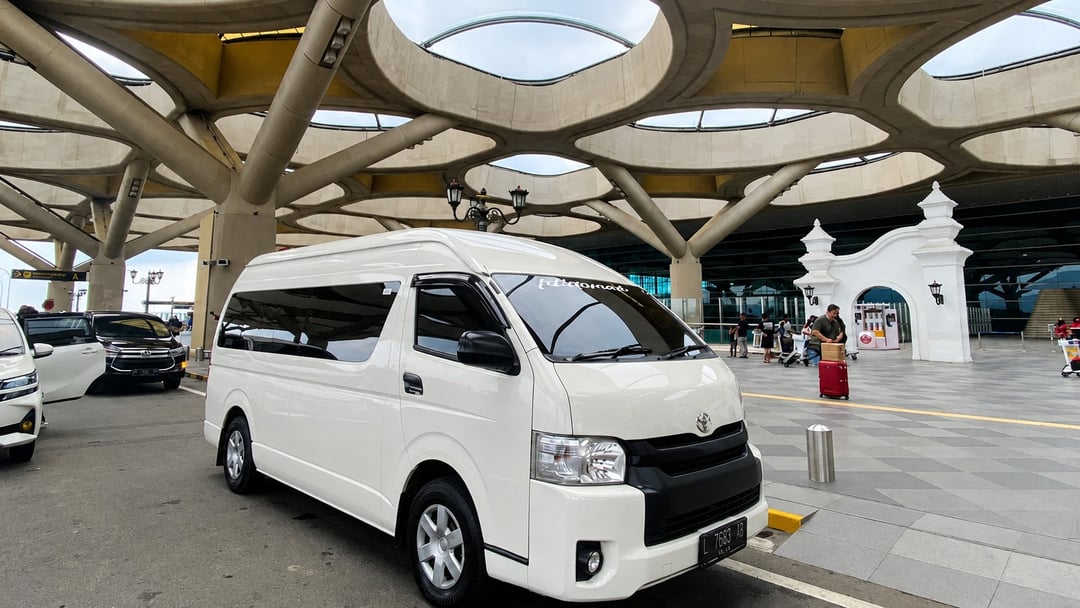
Arriving in Semarang does not mean the journey is over. In fact, it is from this city that the trip to Kudus enters its next phase.
In addition to travel and shuttle services, travelers can choose taxis, ride-hailing services, or vehicle rentals. For those who prefer more flexibility in their itinerary, car rentals are available, both with a driver or self-drive.
Based on current online travel platform pricing, car rental services with a driver typically start from around IDR 178,000 per day. Meanwhile, self-drive rentals range from IDR 470,000 per day. A diverse range of vehicles is available, from city cars to MPVs like the Toyota Avanza and Toyota Hiace, which can be selected based on passenger count and travel needs.
These options offer flexibility for tourists who wish to visit several destinations in Kudus or the surrounding areas without being tied to public transportation schedules.
The ease of reaching Kudus is complemented by an increasingly diverse selection of accommodations.
Travelers can find star-rated hotels, business hotels, family inns, and budget hotels in strategic locations, such as the city center, the area around Alun-alun Kudus, Jalan Sunan Kudus, and districts near culinary hubs and tourist destinations.
Based on current online travel platform pricing, hotel rates in Kudus generally start from around IDR 200,000 per night for budget options. Meanwhile, three- to four-star hotels range from IDR 400,000 to over IDR 900,000 per night, depending on room type, amenities, location, and the season.
With a more comprehensive range of accommodations, travelers have greater flexibility to tailor their stay to their specific needs, whether for short visits, business trips, family vacations, or sporting events.
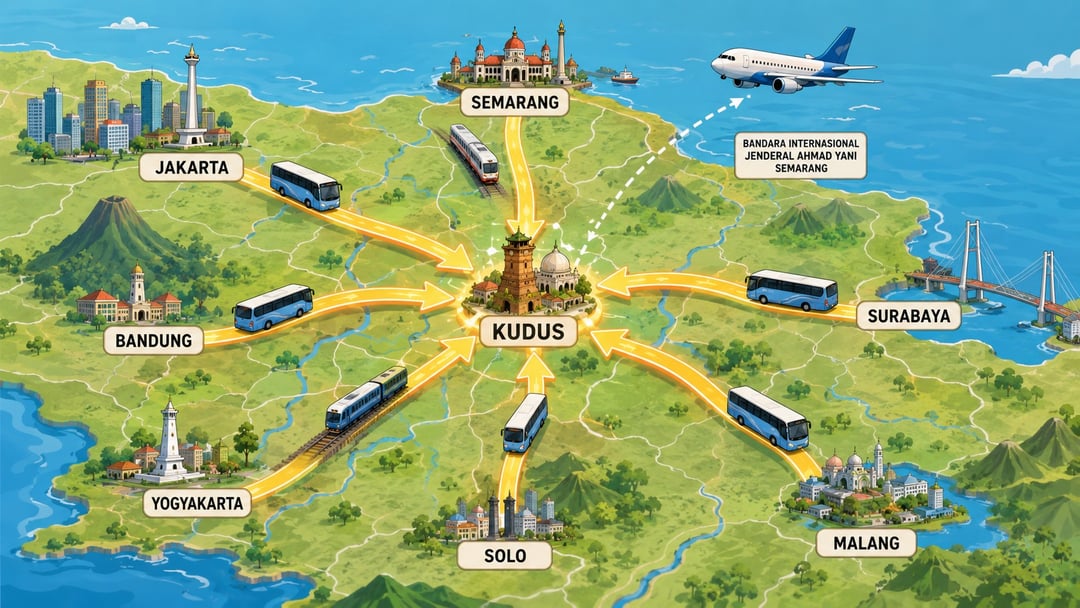
Ultimately, the journey to Kudus is no longer determined by the presence of an airport or train station within the city itself.
What makes the city accessible is the connectivity between complementary modes of transportation. Trains bring passengers to Semarang. Air travel shortens the distance from various cities in Indonesia and abroad. Buses, travel services, shuttle services, rental vehicles, and ride-hailing apps then bridge the final leg of the journey.
Therefore, the frequently asked question, “How do I get to Kudus?”, actually has many answers.
Some travelers enjoy the rail journey before heading along the Pantura route. Others prefer buses that provide direct service to the destination. Still others prioritize speed via air travel before completing the journey by land from Semarang.
Regardless of the chosen mode of transport, the goal remains the same: arriving in Kudus in the way that best suits each individual traveler.
With an increasingly diverse range of transportation options, interconnected access, and the convenience of planning trips through various digital services, visiting Kudus is no longer as complicated as once imagined.
Ultimately, there is more than one way to reach the City of Kretek. There are always multiple routes available, and every journey offers a unique story before travelers finally arrive in Kudus.
Note: All estimated costs for transportation, airfare, train tickets, vehicle rentals, and hotel rates mentioned in this article are based on information available at the time of writing. Prices are subject to change at any time based on provider policies, travel seasons, booking times, applicable promotions, and availability.
Source: Adapted from various reports, data, and official news sources