
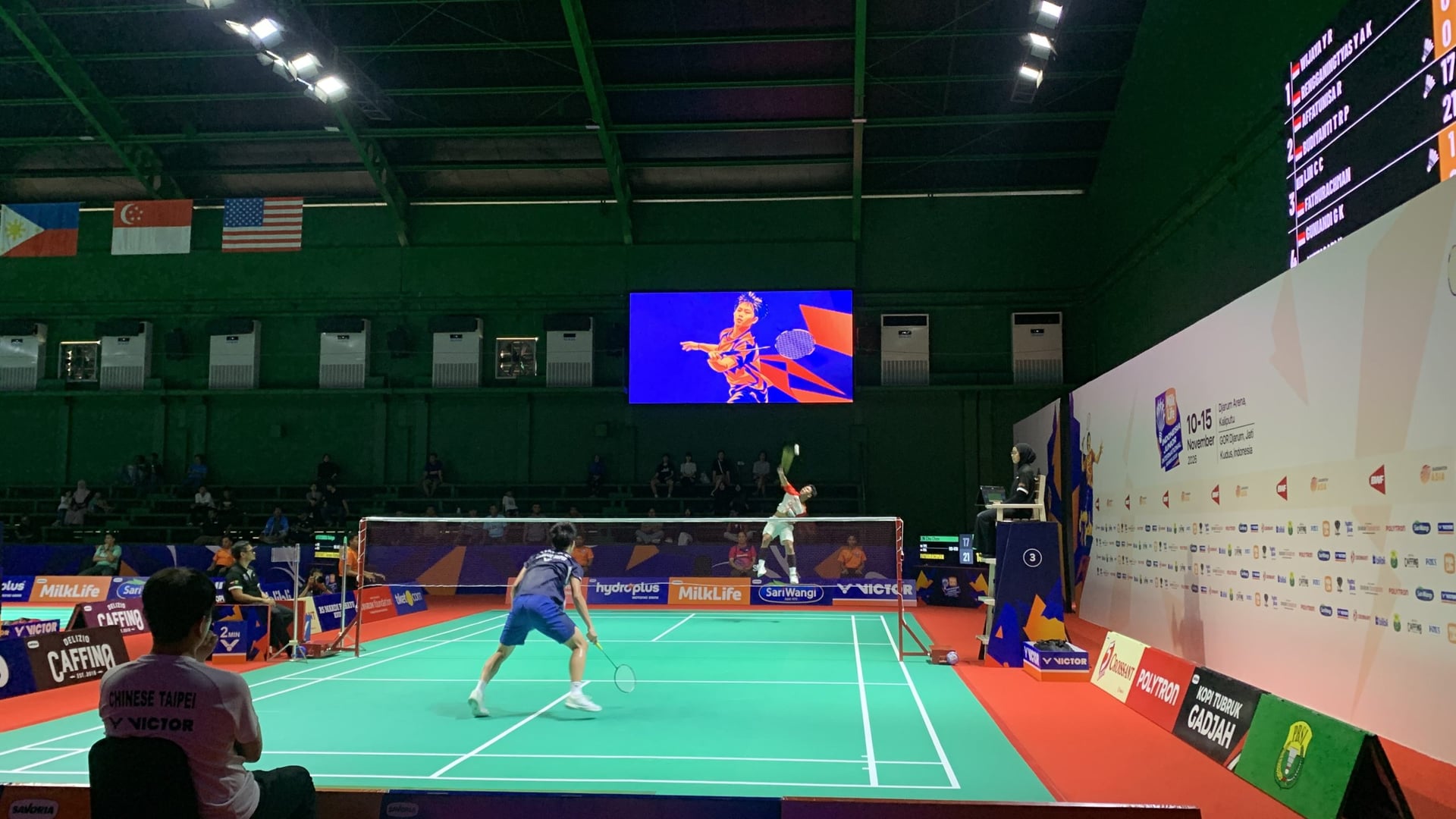
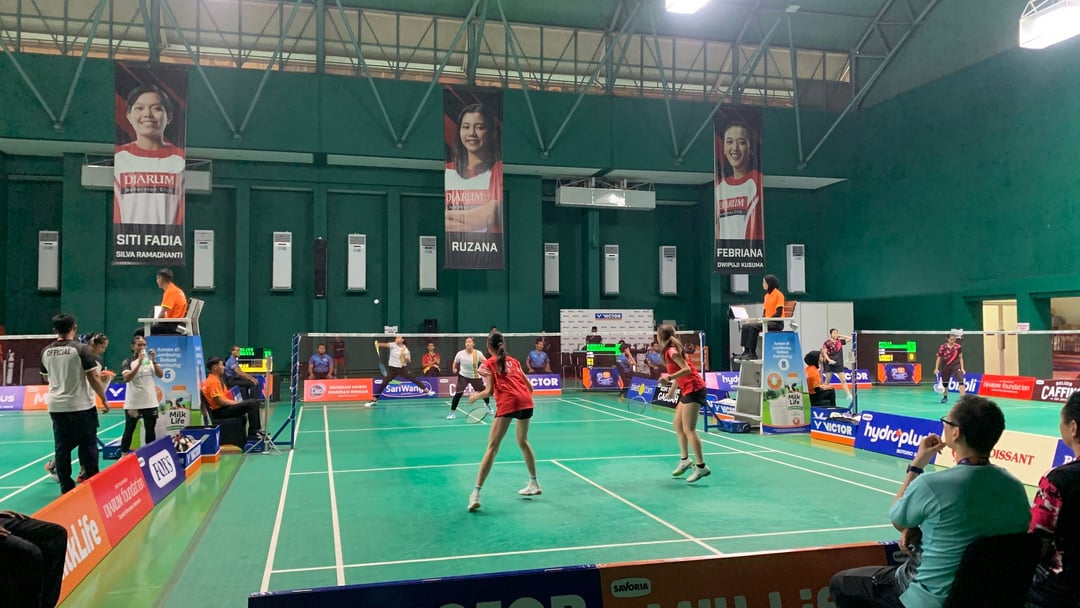
KUDUS — Participating in international tournaments abroad provides young athletes with unique experiences. Beyond the competitive challenge on the court, they have the opportunity to engage with new environments, connect with peers from various nations, and experience daily life in the host city.
This was the case for Katherine Xu and Bernice Xu, two young athletes from the United States who traveled to Kudus with the Global Badminton Academy (GBA) for the MilkLife Indonesia Junior International Series 2026, held from November 10 – 15, 2026, at GOR Djarum, Jati, and GOR Arena, Kaliputu, Kudus. During their time in Kudus, the pair balanced competitive play with navigating a new environment and exploring activities outside of the sport.
Between matches, the athletes maintained their school routines, managed rest schedules, and interacted with competitors from around the globe. This journey has become a formative experience for both as they continue to develop as young athletes.
Competing internationally requires Katherine and Bernice to adjust to new routines. Despite being away from home, academic obligations remain a daily priority.
Katherine noted that she and Bernice had significant homework to complete during the tournament in Indonesia, utilizing their downtime to keep up with their schoolwork.
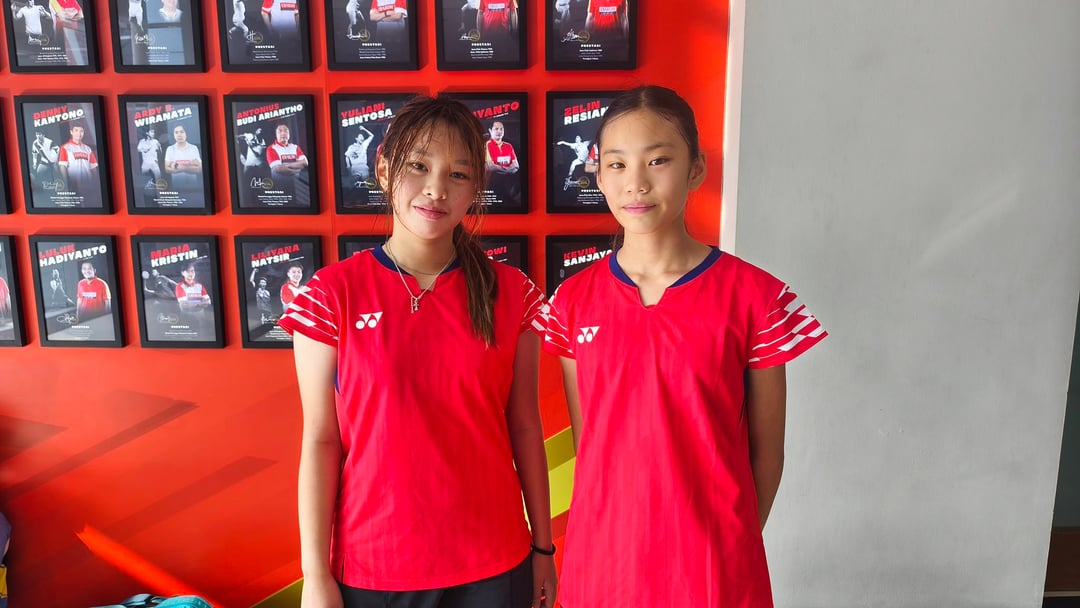
“We have a lot of homework because we had to leave school. So, there is still work that needs to be finished every day,” she said.
Among these responsibilities, Katherine enjoys the opportunity to meet athletes from different countries, sharing conversations and exchanging jerseys and contact information with other participants.
“We meet many people from different countries. We talk, swap jerseys, and exchange contact details,” she added.
For Bernice, her time in Indonesia also included activities beyond the court. She visited a shopping center with her group and sampled local Indonesian cuisine.
Beyond the culinary experience, she feels that participating in international tournaments provides her with space to grow both as an athlete and as an individual.
“This experience helps us learn and grow, both in the sport and personally,” she said.
A similar sentiment was expressed by Kai Lin Huang, an 11-year-old athlete from Singapore competing in the U-13 category. Despite the long journey to Kudus, her enthusiasm for the competition remains high.
“The journey from Singapore was quite long, but I am very excited to be here. I am happy to be playing badminton in Kudus,” she said.
For Kai Lin, facing athletes from various nations serves as a benchmark for her skills. She is learning to remain calm during intense matches and to stay persistent in fighting for every point.
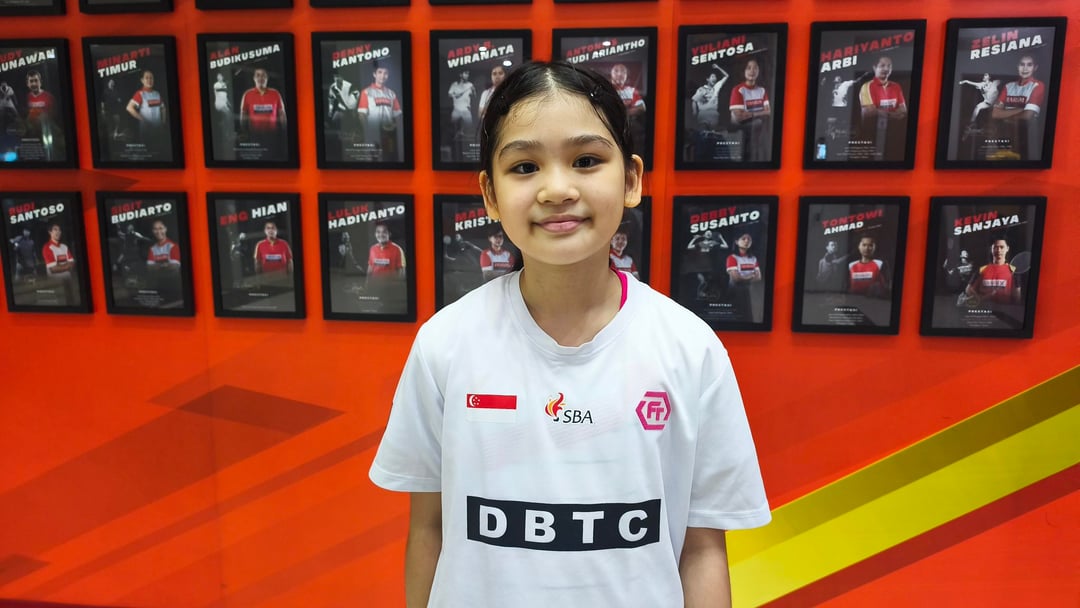
“I learned to stay calm, never give up, and fight for every single point,” she said.
The opportunity to meet Indonesian athletes also became a highlight of her experience. Kai Lin noted that the local players were welcoming and possessed high-level skills.
Off the court, she sampled chicken porridge, which became one of her favorite meals during her time in Indonesia. However, the chance to compete and forge new friendships remained the most memorable part of her trip, especially since it was her first visit to Kudus.
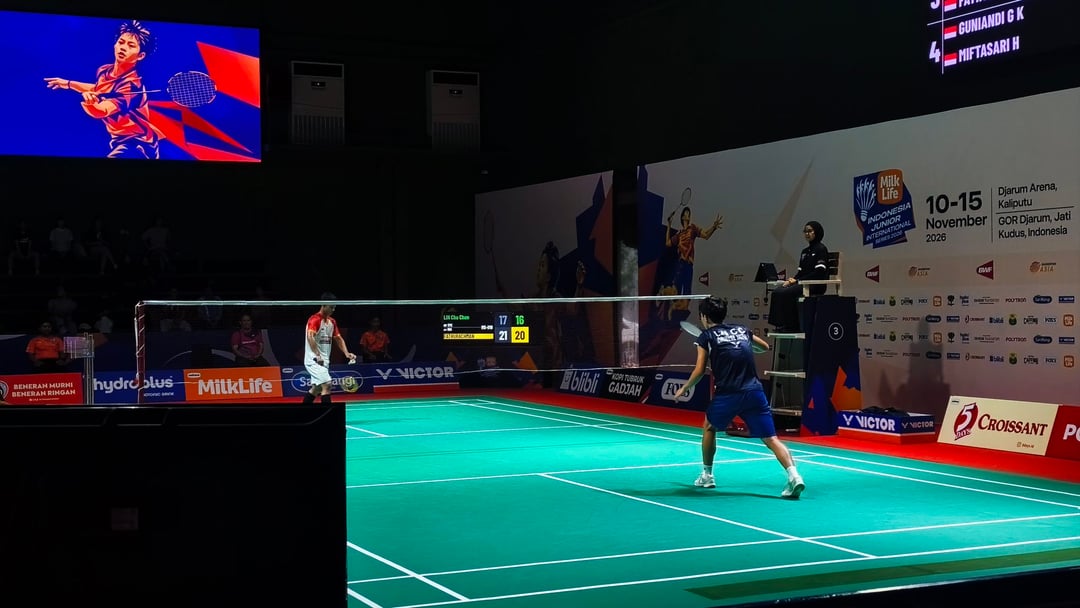
Not all athletes’ journeys in Kudus were without obstacles. For instance, Chu Chen Lin, a participant from Chinese Taipei, had to navigate competitive pressures while managing his health throughout the tournament.
With limited experience in international events, his success in reaching the quarterfinals is a significant achievement.
During the matches, Chu Chen Lin faced Indonesian opponents who he noted were characterized by their speed and powerful smashes. This style of play forced him to adjust his tempo to remain competitive.
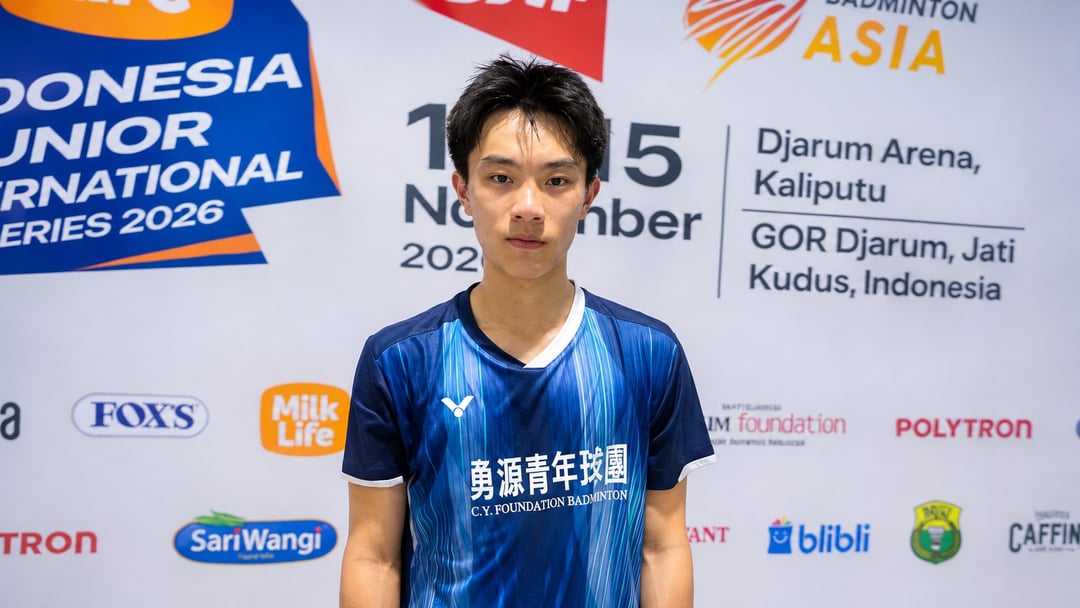
“Indonesian players have great speed and power. I had to try to match the tempo of their game,” he remarked.
He relied on footwork and technical precision to counter opponents who took the offensive initiative. Adaptation became a crucial element of every match he played.
However, his time in Kudus was interrupted by health issues. During the first week, he suffered from digestive problems that required a hospital visit. His condition improved significantly by the following week.
“I had some stomach trouble and had to go to the hospital. My condition is much better now,” he said.
During his recovery, Chu Chen Lin focused on resting. Despite experiencing health issues, he expressed pride in representing Chinese Taipei and reaching the quarter-finals amidst a highly competitive international field.
This experience highlights that international competition demands more than just technical and physical preparation. Young athletes must learn to monitor their physical well-being, manage rest, and adapt to environments outside their daily routines.
The experience of exploring Kudus was not limited to international participants. Athletes from across Indonesia also shared their impressions of participating in the MilkLife Indonesia Junior International Series 2026.
Muhammad Amri Ar-Rasyid, known as Rasyid, traveled from Bekasi to compete in the U-15 boys' singles and doubles categories, accompanied by his team and coaches.
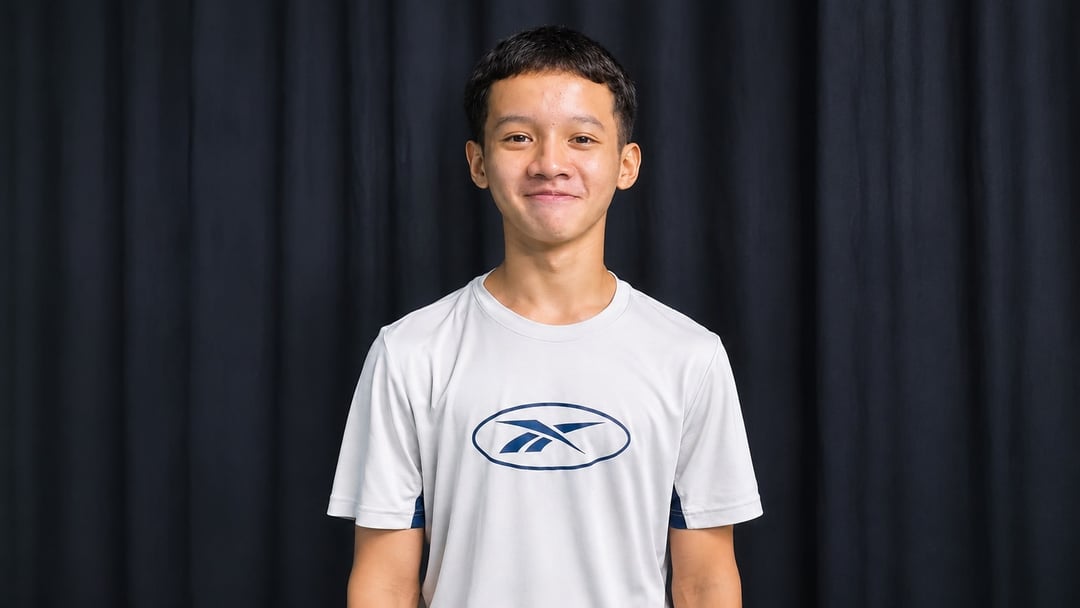
During his stay in the city, Rasyid’s schedule was limited to his accommodation, the match venue, and practice sessions. Although he had little time to explore, he took note of the city's atmosphere.
He found Kudus to be a comfortable environment for competition, noting that the traffic was significantly lighter than in his hometown.
“Kudus is clean and free of heavy traffic. The atmosphere is very comfortable,” Rasyid said.
He noted that the biggest challenge was adapting to match conditions, as the court environment required him to adjust his playing style to perform effectively.
“It wasn't easy to adjust to the court conditions at first. I had to adapt to play more comfortably,” he said.
Syamsul Ma'arif, an athlete from Southeast Sulawesi representing the Jaya Raya Hafana Academy in the U-17 boys' doubles category, also shared his positive impressions of the city. This tournament marked his third time participating in such a competition.
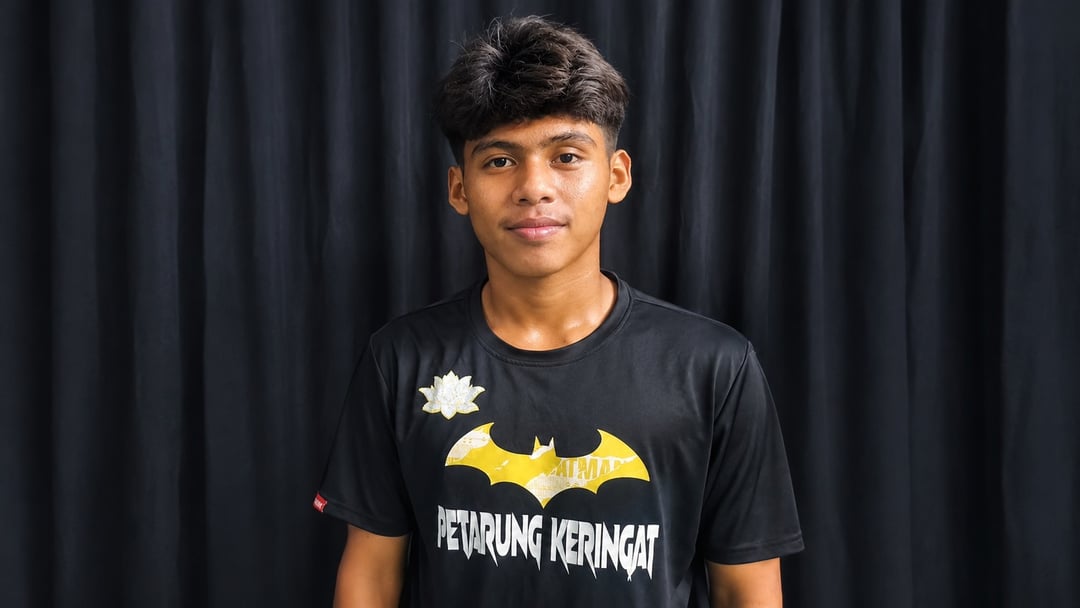
For Syamsul, the hospitality of the local residents stood out. He also remarked that the city is relatively clean and well-organized.
“The people in Kudus are kind and friendly. The city is clean as well,” he said.
Unlike some participants who had the chance to sample local delicacies, Syamsul has yet to explore the local culinary scene, relying mostly on food delivery services during the tournament.
“I have mostly been ordering food through delivery apps, so I haven't had the chance to try much of the local cuisine here yet,” he noted.
Traveling from their accommodation to the venue takes Rasyid and Syamsul approximately 15 minutes. They rely on ride-sharing services and transport provided by the athletes' parents.
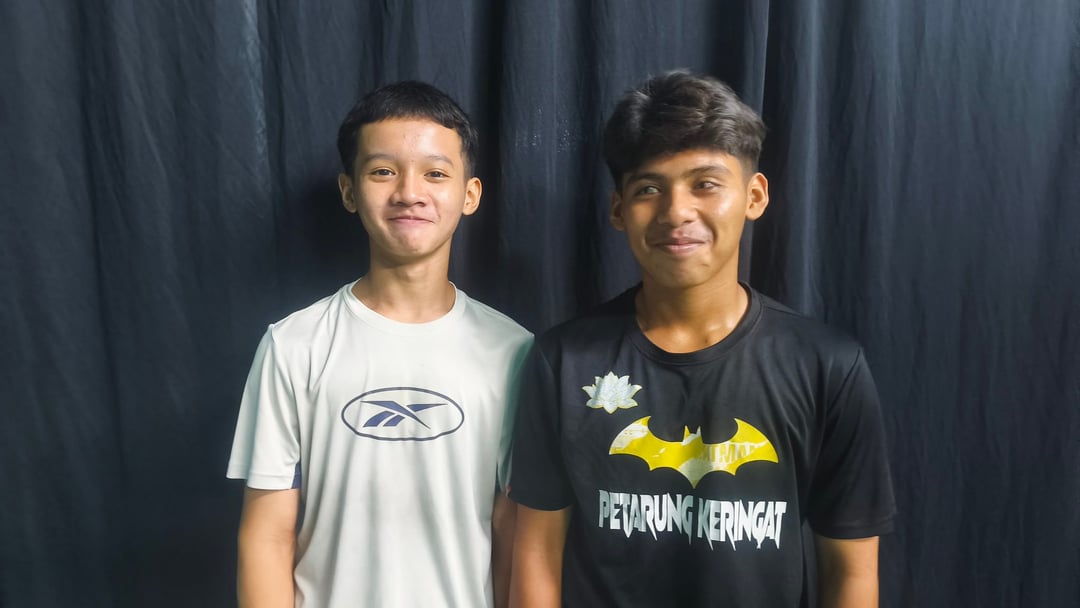
The routine between their lodging at Fileta House, located on Jl. Sosrokartono Gg. Nanas No. 20 in Kudus, Central Java, and the venue has limited their opportunities to explore the city. Nevertheless, the atmosphere and the warmth of the local community have remained a memorable part of their stay in Kudus.
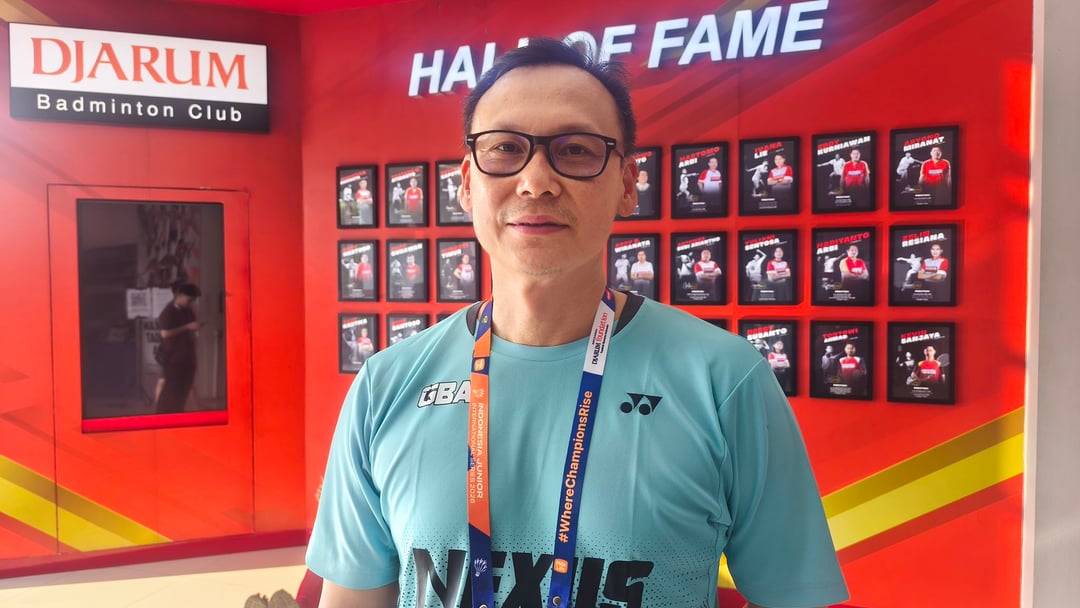
For Tony Gunawan, coach of the Global Badminton Academy, competing in Indonesia offers vital experience for his students' development.
The former Indonesian athlete won a gold medal at the 2000 Sydney Olympics alongside Candra Wijaya. He also became a world champion with Halim Haryanto in 2001, before winning another world title representing the United States with Howard Bach in 2005.
Today, Tony and his wife run the Global Badminton Academy in Los Angeles, where their athletes train for roughly 10 hours a week to balance sports with their schooling.
Tony noted that visiting Kudus allows his students to witness the high quality of Indonesian play, observing the speed, power, and technical skills of their opponents.
“They train about 10 hours a week because they are all still in school. This trip is a great opportunity for them to see the ability, skills, speed, and strength of Indonesian players firsthand,” he explained.
Competing in multiple tournaments back-to-back presents unique challenges. Athletes participated in team events before individual matches, a demanding schedule that tests their physical and mental endurance amidst frequent travel and competition.
Tony believes young athletes must learn to adapt to rigorous competition schedules and travel while maintaining their physical condition abroad.
As a coach, he also takes responsibility for his athletes' health. He noted that he must be extra vigilant since he is traveling with minors.
“As a coach, I have to be responsible because I brought them here alone. They are only 13 or 14 years old, so if one falls ill, I must be there to look after them,” he said.
Beyond his mentorship duties, Tony has closely monitored the development of Indonesian badminton. During his stay in Kudus, he took the opportunity to observe the caliber of young talent, particularly those representing PB Djarum.
After a long absence from witnessing the growth of Indonesian players firsthand, he expressed his admiration for the skills displayed by today's youth athletes.
“It has been quite a while since I last observed the progression of Indonesian badminton in person. The standard is truly remarkable now. The young players at PB Djarum possess exceptional talent,” he noted.
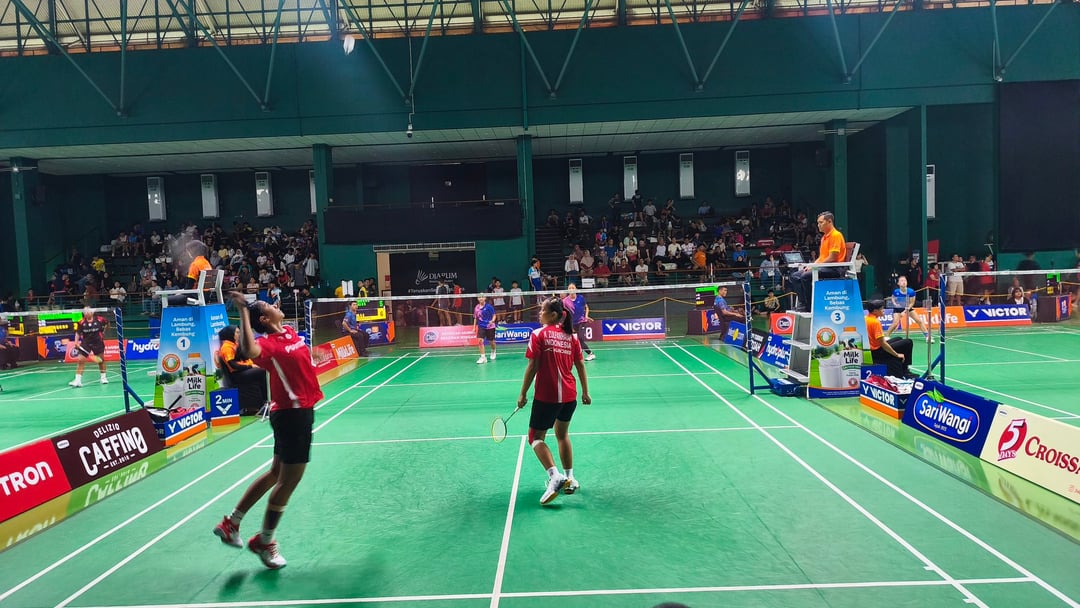
For the young athletes arriving in Kudus, competing in the MilkLife Indonesia Junior International Series 2026 offered a range of unique experiences. From forging international friendships and discovering favorite local dishes to adapting to diverse playing styles and experiencing the city’s hospitality, the tournament proved memorable.
Balancing match schedules, training, and academic responsibilities, these experiences are integral to their development as athletes. While medals and results are certainly among the takeaways, the friendships, lessons, and memories forged in Kudus serve to complete their journey. (OEB/YSR/mainkekudus)
