
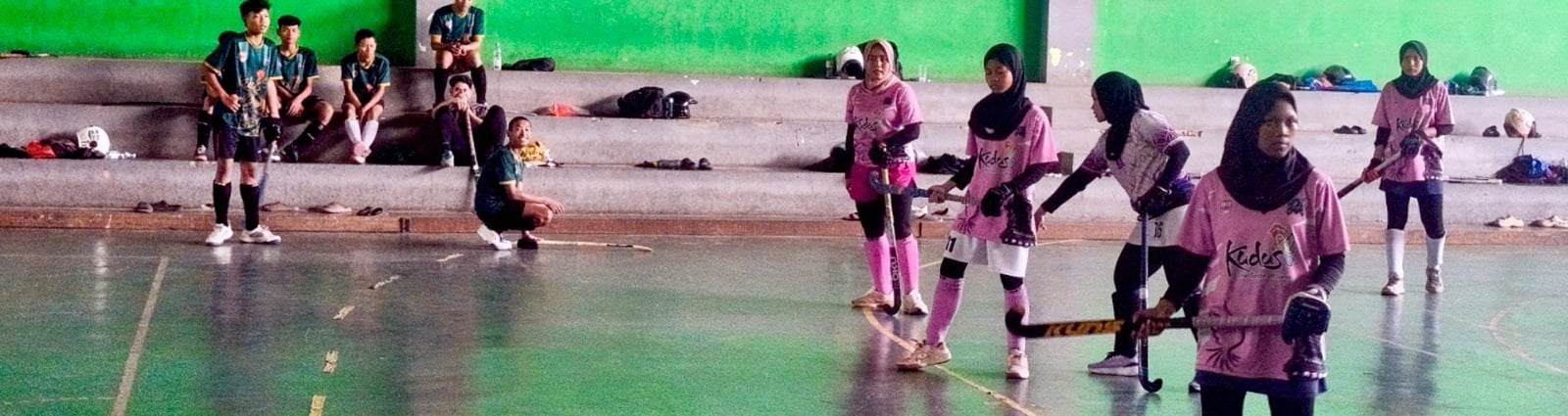
KUDUS – The sound of sticks striking the ball echoed through the Bung Karno Multifunctional Building in Wergu Wetan, Kudus. The ball moved rapidly between players as shots were periodically fired at the goal, thudding against the goalkeeper's gear. The game continued as players constantly shifted, creating space and seeking scoring opportunities.
On the same court, junior and senior athletes practiced with varying skill levels. Some were still developing their ball control and fundamental techniques, while others were seasoned competitors honing their skills for tournament play.
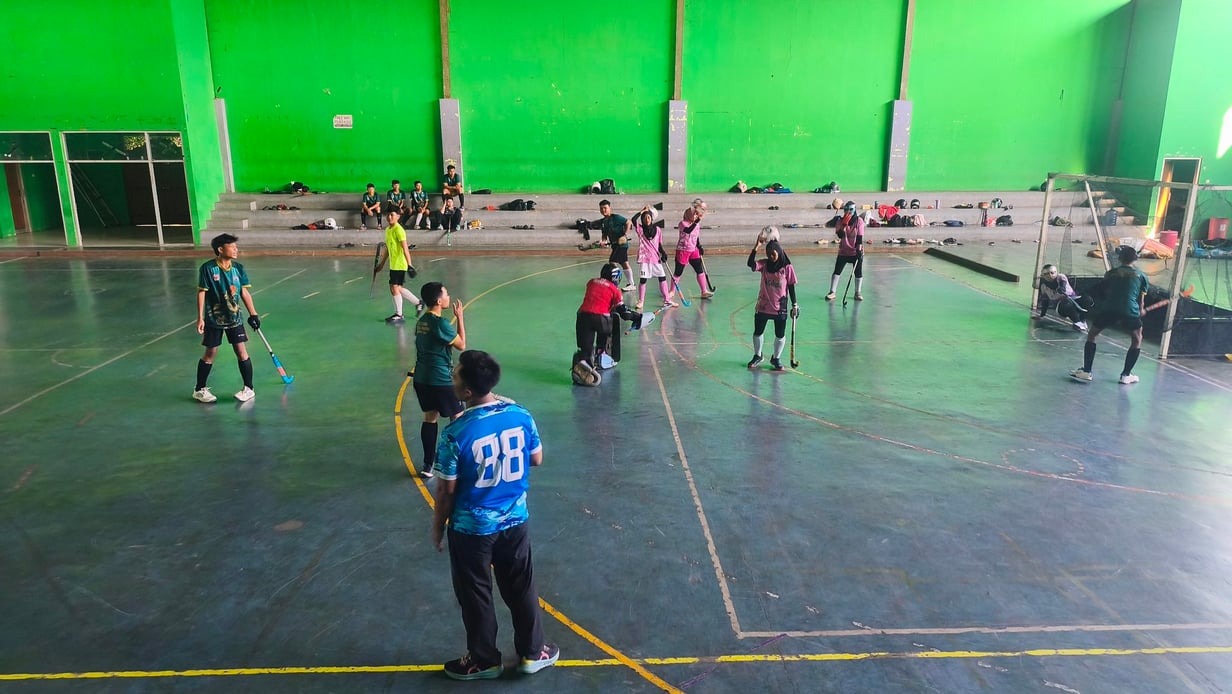
With over 50 active athletes, the Indonesian Hockey Federation (FHI) of Kudus Regency is working to ensure the sustainability of its training programs. Succession planning is a key priority for maintaining past achievements and preparing young players to compete at both regional and national levels.
This progress is evident in the 2024 Central Java Provincial Championship, where the Kudus U-12 girls' team secured the title, while both the U-12 boys' team and the U-17 group took third place. These achievements demonstrate the results of a development program rooted in school-based outreach, continuous training, and competitive experience.
Hockey development in Kudus has been active since 2013, though the 2020 COVID-19 pandemic temporarily halted operations. As sports activities resumed, coaches and officials focused on rebuilding by scouting for new athletes within schools.
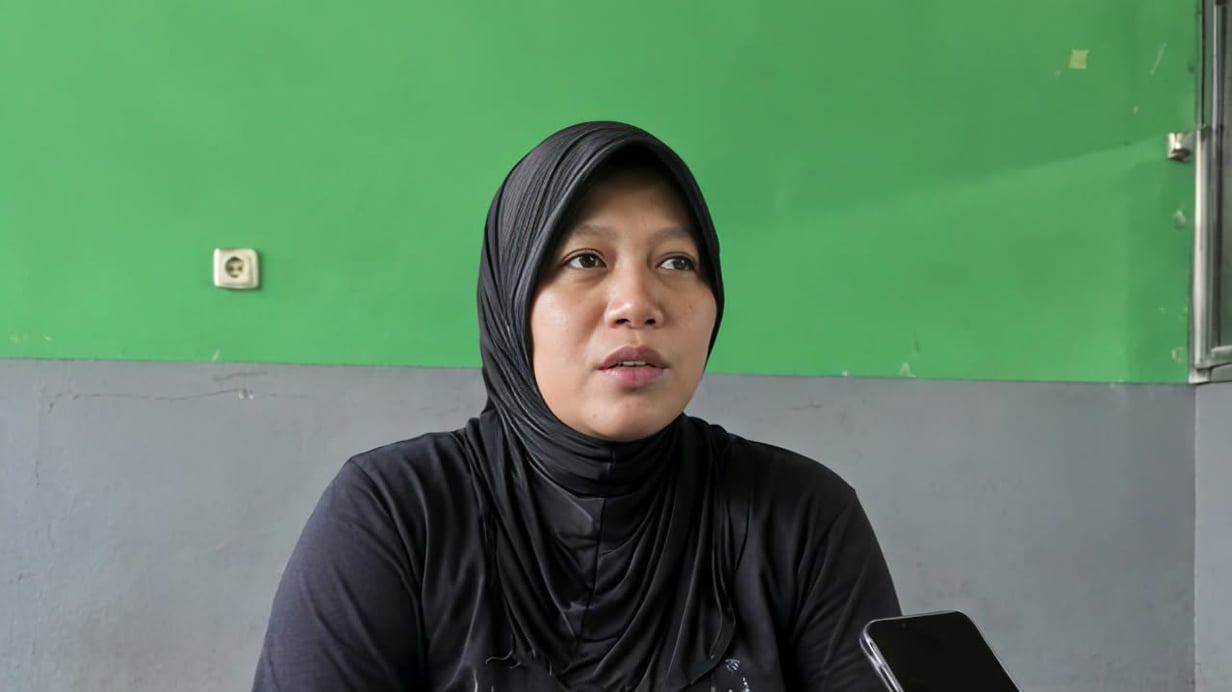
“The 2020 COVID-19 pandemic forced us to rebuild our development program from scratch,” said Pertiwi Setia Rini, Daily Chair of the Kudus Regency Indonesian Hockey Federation (FHI).
Extracurricular programs have served as a key entry point. Institutions like SDIT Umar bin Khattab and SMP 3 Kudus have introduced hockey to students who might otherwise never have encountered the sport.
“Initially, we introduced hockey through extracurricular activities in schools,” Pertiwi said.
Interested students can transition to club training, where they learn ball control, passing, player movement, and tactical patterns. This process provides the foundation required before players are selected for competitive teams.
The effort to recruit athletes also includes the Kudus Regency Student Sports Week (Popda), which allows various schools to field players and introduce them to the competitive environment.
"Over the past two years, we have also organized the Student Sports Week (Popda) in Kudus Regency. The enthusiasm from various schools to participate has been significant, including in the 2025 and 2026 events," said Pertiwi.
Participating in competitions outside the region offers coaches an opportunity to observe player development. This allows them to assess athletes' abilities and determine who qualifies for team selection.
"Every time there is an event outside Kudus, we participate and conduct selections simultaneously," she noted.
The number of players allowed for a match is limited. For the U-12 category, for example, only 12 children can make the roster. Players from various schools must compete for these spots.
Consequently, the development process extends beyond basic sports introduction to include training, evaluation, and selection. Each stage serves as an opportunity for young athletes to demonstrate their progress.
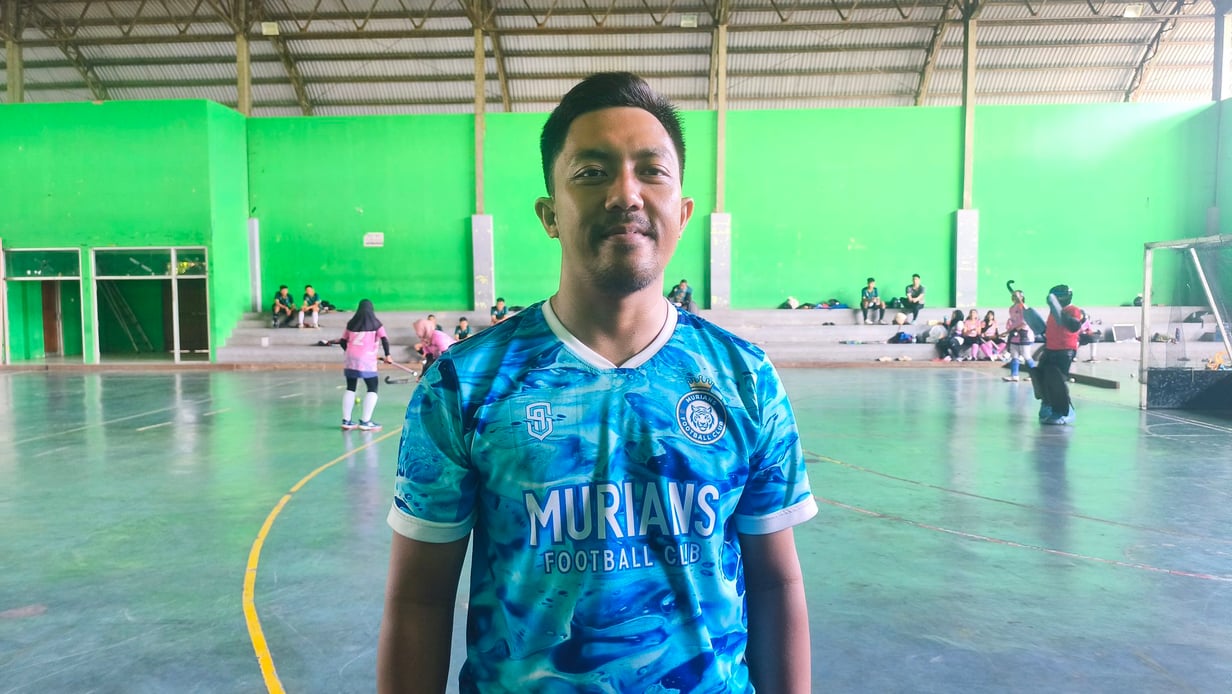
On the field, athlete development requires a phased process. Kudus hockey coach Yuli Irsanto emphasizes that building a strong mentality is the primary requirement before players can develop technical skills and grasp game strategy.
"In our development program, the first thing to build is the mindset. After that, basic technique is the foundation that must be strictly addressed," said Yuli.
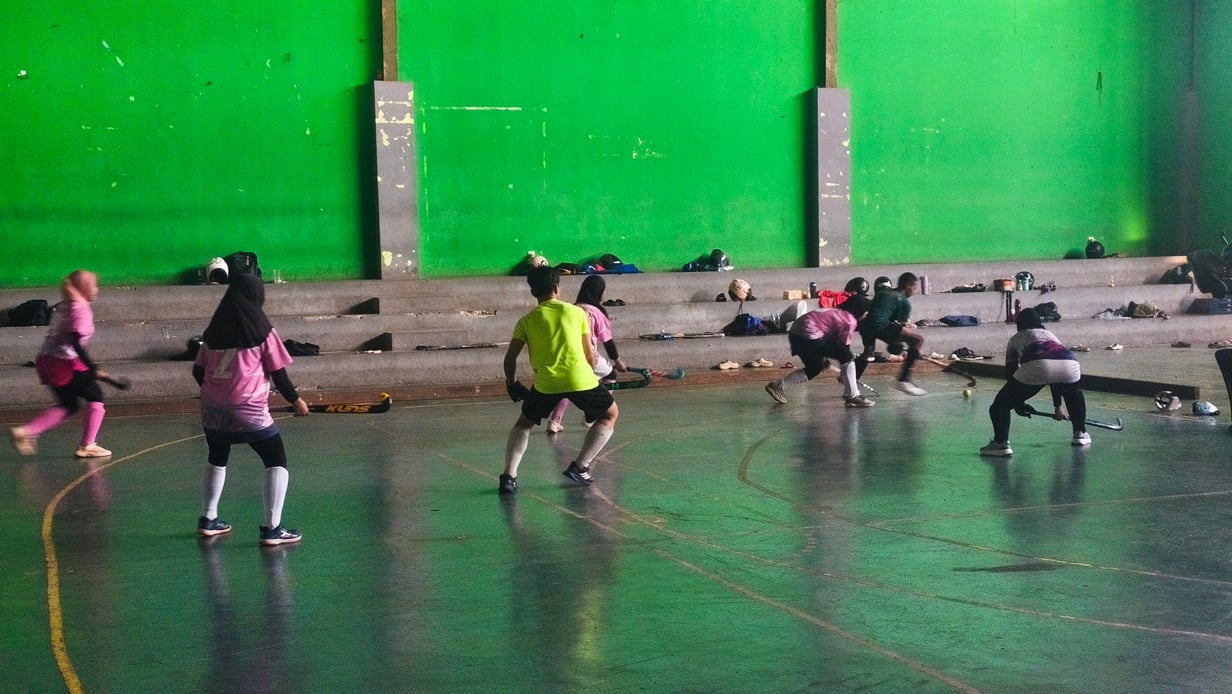
Every player progresses at a different pace. New athletes still need to establish the basics of the game, while those preparing for competition require targeted training based on team needs.
The Kudus hockey training program runs daily, except Sundays, in two sessions. The morning session is held from approximately 7:00 or 8:00 AM to 11:00 AM or 12:00 PM. The afternoon session typically runs from 3:00 or 4:00 PM to 6:00 or 7:00 PM.
Training intensity and content are adjusted to meet competition requirements, including preparations for the Central Java Provincial Sports Week (Porprov).
Yuli strives to ensure that junior players have space to learn from senior athletes by avoiding strict segregation during training sessions.
"To prevent a gap between seniors and juniors, we provide the same training portions. There is no distinction during training," he said.
Meanwhile, player selection for competition squads is conducted through a promotion and relegation system. This mechanism provides athletes the opportunity to demonstrate their progress while fostering healthy competition for spots on the team.
“The process began in February, utilizing the promotion and relegation system,” explained Yuli, describing the team's selection phases.
During competition preparation, training focuses on match-specific requirements. Players refine their shooting, set-piece execution, defensive play, and penalty strategy. Regular practice sessions serve as an opportunity to address weaknesses while improving on-field coordination.
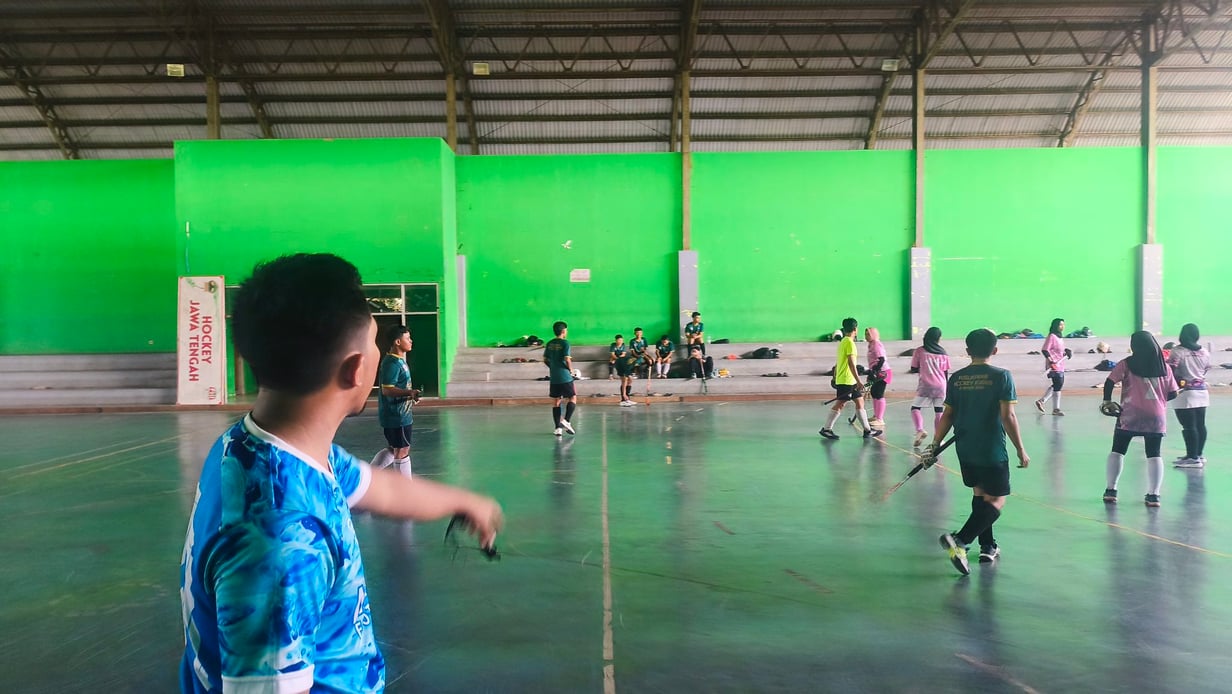
However, technical proficiency is not enough. Athletes must also face opponents with different playing styles to learn how to read match situations and make decisions under pressure.
“Exhibition matches are crucial. If an athlete only plays one match a year, their development will not be optimal,” Yuli said.
For him, competitive experience is an inseparable part of training. The more diverse the opponents, the greater the opportunities for players to test their skills and understand the demands of competition.
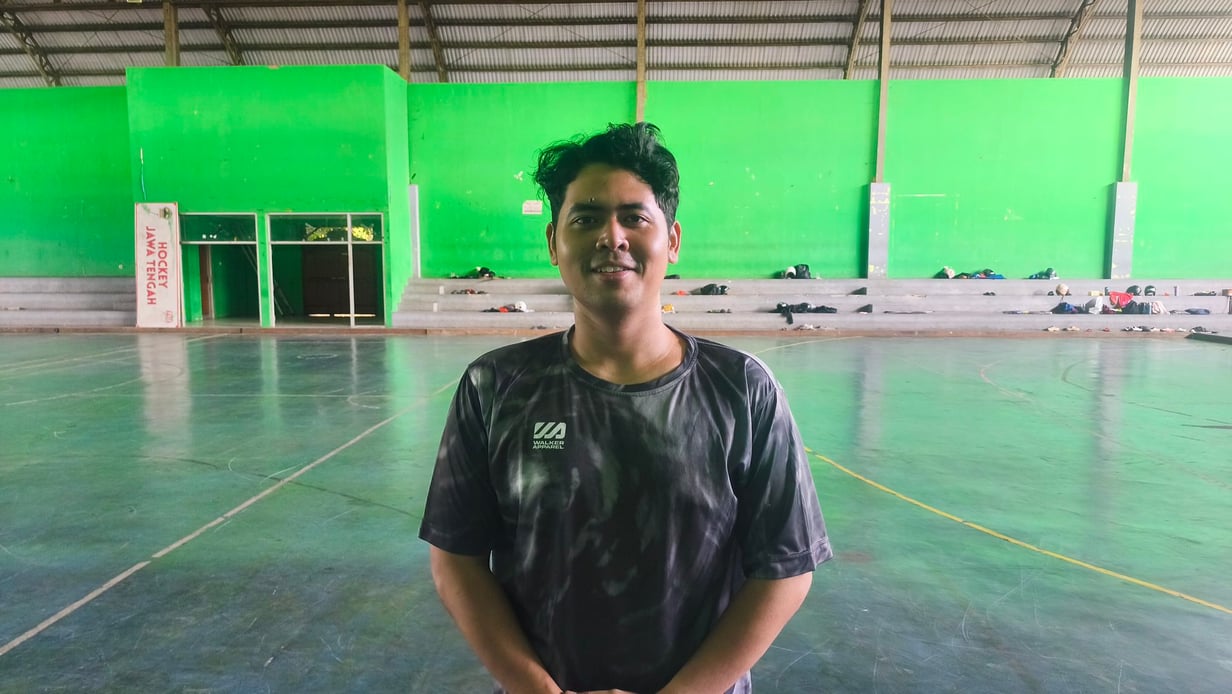
For Yasril Faza Aftoni, his hockey journey began in high school after a friend introduced him to the sport. While his interest wasn't immediate, consistent training led him to pursue the game long-term.
“I was introduced to hockey in high school by a friend. At first, I wasn't interested, but over time, I began to enjoy it and dedicated myself to the sport,” he said.
Under normal circumstances, Yasril trains one to three times a week. This frequency increases when he and his team are preparing for major competitions, such as the Central Java Porprov.
“During Porprov preparations, training takes place five to six times a week,” Yasril stated.
Increased training demands greater consistency. Players must maintain their technical skills while building the physical and mental readiness needed to perform.
Yasril also noted the benefits of competing outside his region. Facing teams from other areas provides experience in benchmarking his skills and understanding match dynamics that aren't always present in routine practice.
“Competing outside the region has significantly influenced my development as a Kudus Regency hockey athlete,” he said.
According to Yasril, competitive play is essential for shaping an athlete’s mentality and professionalism. He shares this experience with younger players through daily training sessions and interactions on the field.
“From seniors and coaches, I have learned a great deal about fundamental techniques, match experience, and team mentality. I now pass these insights on to younger athletes,” he said.
The experience of senior athletes is vital to the development pipeline. Passing on knowledge regarding techniques, teamwork, and match strategy allows junior players to hone their skills effectively.
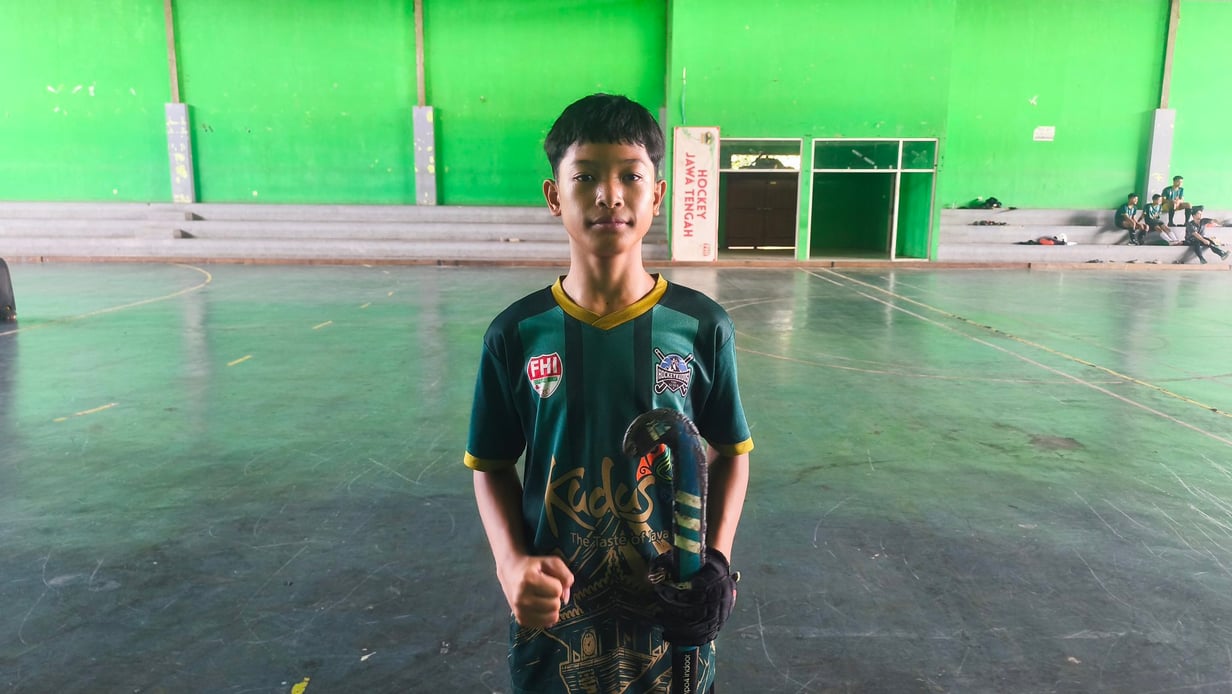
One young player currently navigating this process is Sabelino Ezza Alhakim. At the time of this interview, the 14-year-old athlete has been practicing hockey since the fourth grade.
Before discovering hockey, Ezza had intended to pursue soccer. Encouragement from friends and coaches led him to try the new sport, though he initially had to adapt to different techniques and play patterns.
“Initially, I wanted to stick with soccer. However, after friends and coaches encouraged me to try hockey, I gradually became interested in pursuing it,” he explained.
He admitted that early training was difficult, noting that mastering ball control and basic techniques required significant time and practice.
“Training was quite challenging at first, but once I understood the fundamentals, I began to master the game,” said Ezza.
Competition has since become a crucial part of his growth, offering him the chance to meet athletes from other regions, gain experience, and build the motivation to continue training.
“Every event allows me to make new friends and gain experience. That keeps me motivated to train harder,” he noted.
Ezza has participated in several events, including the Provincial Championship (Kejurprov), National Championship (Kejurnas), Dharma Raj Cup, and the Regional Student Sports Week (Popda). He successfully secured first place in the 2026 Popda.
For Ezza, senior players serve as key role models for skill development. He views their technical proficiency and mentality as essential components to study on his journey as an athlete.
This experience has fueled his ambition to return to the national stage and eventually aim for a spot on the national team. His aspirations highlight how youth development goes beyond increasing player numbers, focusing instead on fostering the motivation to reach higher levels of competition.
The Central Java Provincial Sports Week (Porprov) serves as a benchmark for the development of hockey in Kudus. The competition allows athletes to put their training to the test, while enabling coaches to evaluate individual abilities, team coordination, and readiness for provincial-level competition.
For Yasril, winning a gold medal at the Central Java Porprov is a primary objective for the Kudus team.
“Our immediate goal is to win the gold medal at the Central Java Porprov,” he said.
This ambition is bolstered by a series of achievements recorded by the Kudus hockey team. In the 2024 Central Java Provincial Championship, the U-12 girls' team secured the title while also claiming the award for the division's best player. The U-12 boys' team finished third, with one player earning individual honors as the best player. Additionally, the U-17 squad also placed third.
A year earlier, the Kudus team finished as runners-up in the 2023 Dharma Raj Cup in Senayan after a decisive final against a Malaysian team. Pertiwi noted that between the 2023 Provincial Sports Week (Porprov) and 2026, Kudus hockey athletes have garnered approximately 27 accolades across various competitions.
These achievements reflect the development taking place across various age groups. However, sustaining this performance requires consistency. Senior athletes must maintain their competitive form and experience, while junior players require opportunities to refine their skills before taking on greater responsibilities within the team.
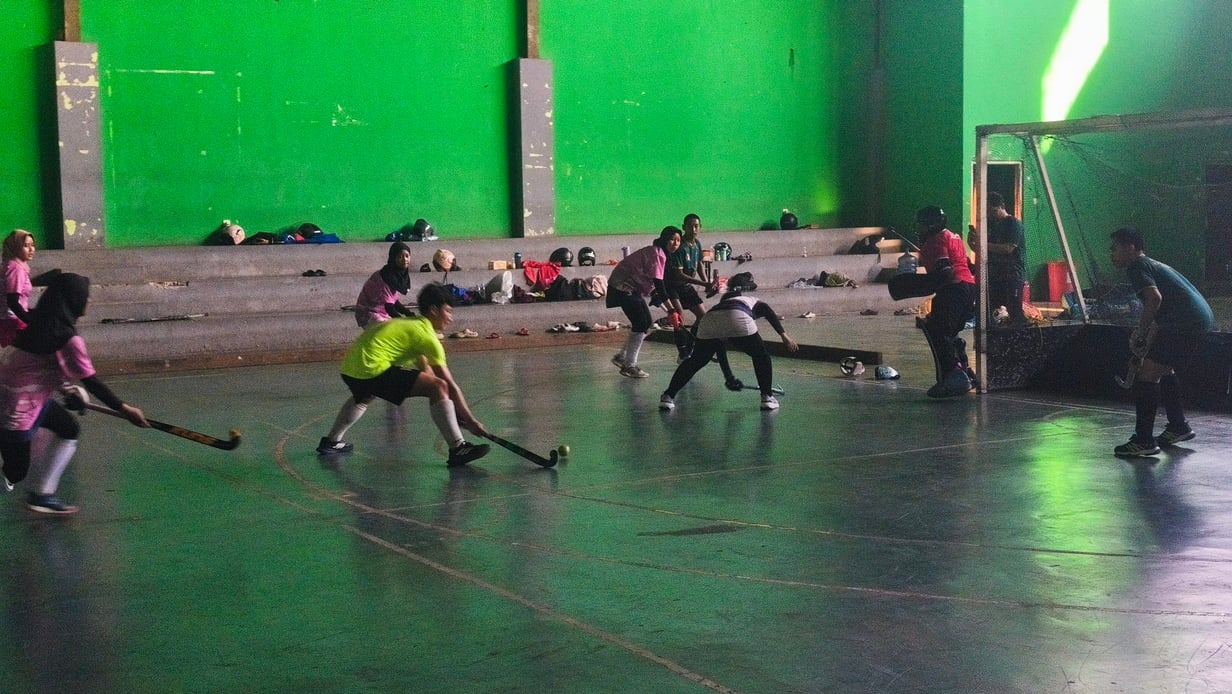
Cross-generational training also faces hurdles regarding facilities and equipment. The Bung Karno Multifunction Sports Hall serves as one of the training venues. When the facility is unavailable, players relocate to an area adjacent to the Bale Jagong field.
The availability of equipment, particularly hockey sticks, has not yet met the needs of a growing number of athletes.
"The district board does have equipment, but the supply is insufficient for the increasing number of athletes, especially in terms of sticks," said Pertiwi.
For newcomers, access to equipment is a fundamental requirement. Without adequate gear, young players have limited opportunities to explore and develop their abilities.
"When a child cannot get a stick to train with, there is a risk they will not return for the next session," she added.
This situation presents a challenge for FHI Kudus in expanding its outreach. The enthusiasm of children discovering hockey through school programs must be matched by adequate training facilities, equipment, and match opportunities.
Yuli hopes that hockey can be introduced more broadly within the education system—from elementary through high school—and further developed through partnerships with universities.
"Our long-term goal is to introduce hockey at all school levels, from elementary to high school, while also building collaborations with universities," she stated.
For Kudus hockey, success in championships serves as both proof of progress and a benchmark for evaluating development programs. Future sustainability hinges on maintaining a pipeline of new talent, ensuring that newcomers have the opportunity to grow into competitive athletes.
From players learning to control the ball to senior athletes sharing their expertise, the development process remains ongoing. Amidst facility constraints and the high demand for competitive experience, effective succession planning serves as the foundation for indoor hockey in Kudus to sustain its success and unlock future achievements. (OEB/YSR/mainkekudus)