
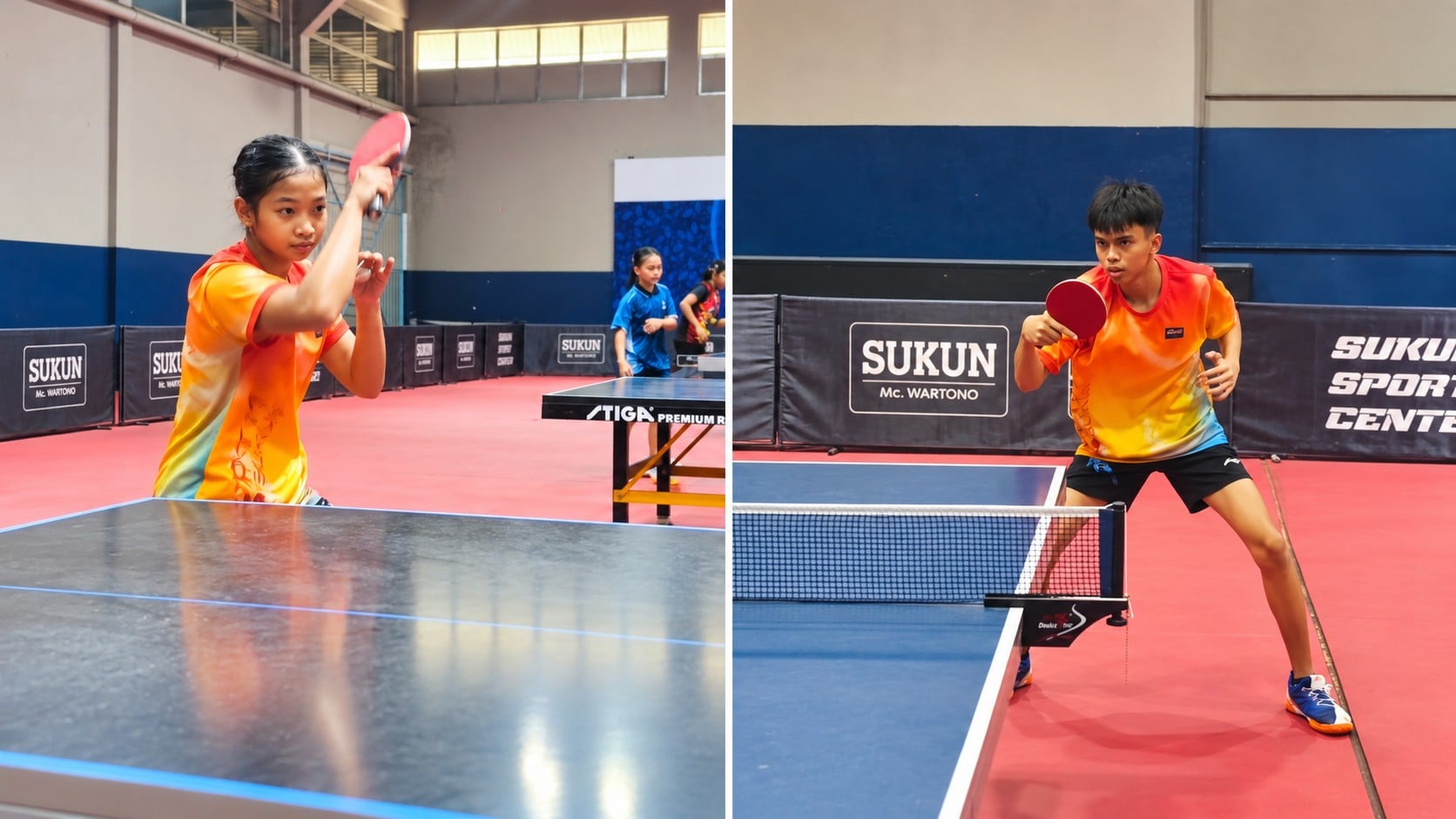
KUDUS — Table tennis development in Kudus is sustained through rigorous training, professional coaching, and early exposure to competitive play. This structured approach is vital for honing athletic talent and ensuring a pipeline of players prepared for high-level competition.
Athlete development centers not only on technical proficiency but also on physical and mental conditioning, discipline, and match experience. Each stage of training provides players the opportunity to address weaknesses, refine their skills, and learn to perform under pressure.
Consequently, development extends beyond any single tournament. Consistent practice, post-match evaluations, and preparation for future events are essential to maintaining athletic progress and ensuring the ongoing renewal of the table tennis talent pool in Kudus.
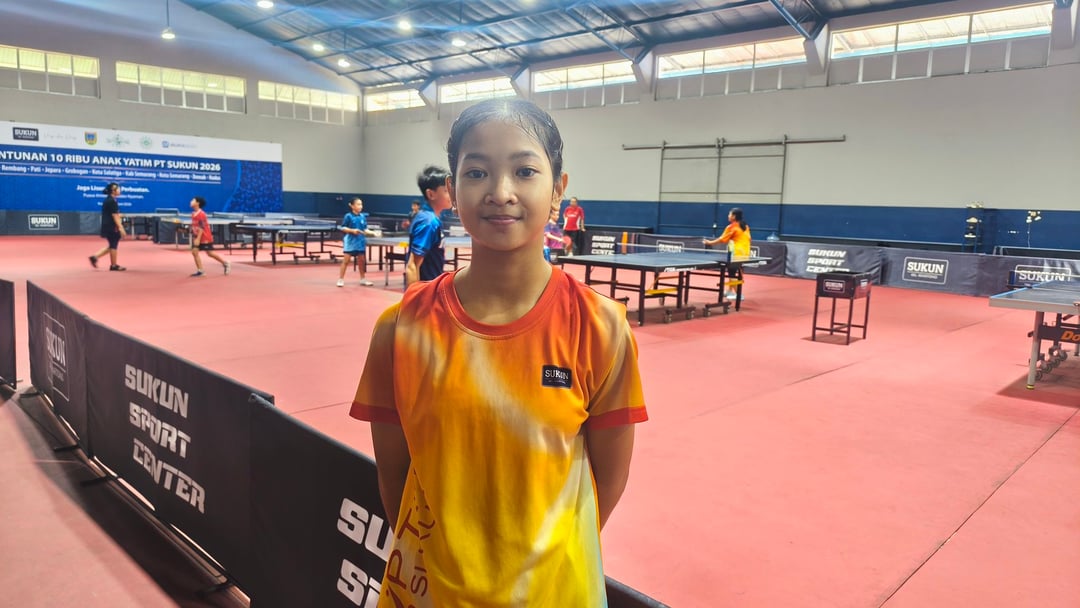
Suravinda is a women's singles table tennis athlete who has been training since primary school. The Magetan-native, who now attends SMP 3 Kudus, first discovered the sport in first grade, and her passion grew until she joined PTM Sukun in sixth grade.
Since then, training has become a daily staple. Suravinda practices every day, including supplementary physical conditioning and specialized serve drills, routines that help her maintain consistency during matches.
Despite her extensive training, she still battles nerves during competition. Suravinda admits that she sometimes feels anxious even with a comfortable lead, fearing that opponents could still mount a comeback.
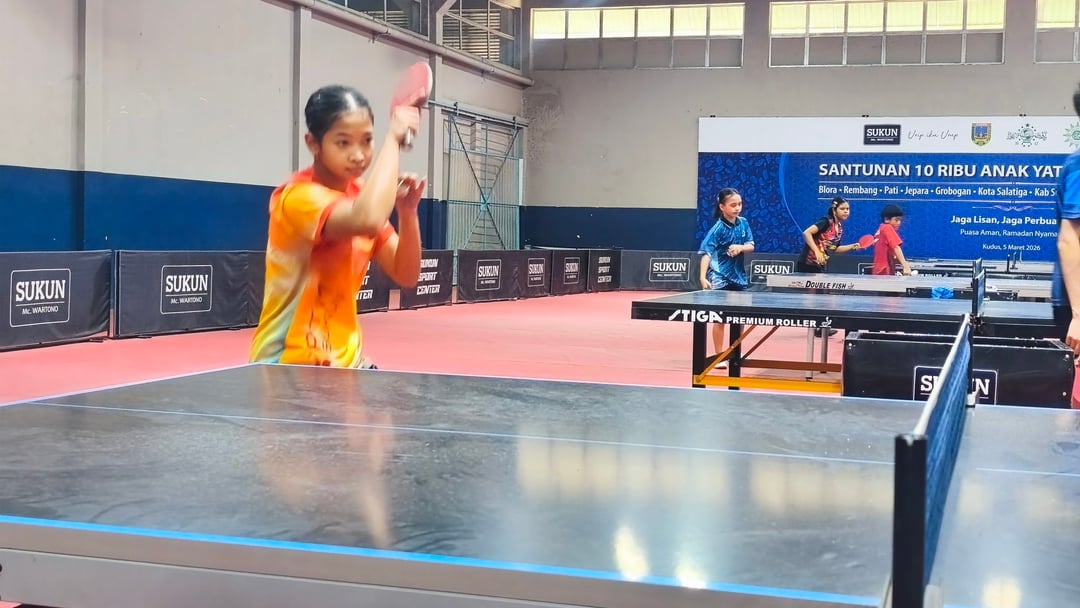
"Sometimes even with a large lead, I still feel nervous. I'm afraid the opponent might catch up," she shared.
To overcome this, Suravinda uses a specific technique: she regulates her breathing and takes small jumps during match breaks before refocusing on the game.
"I usually take a deep breath and then do a few small jumps. After that, I try to focus back on the match," she said.
This simple ritual helps her shift her focus away from the scoreboard, allowing her to approach each point without dwelling on the potential for a reversal.
Off the court, Suravinda balances her education with her training regimen, supported by her family, school, and coaches.
Her perseverance paid off with a gold medal in the women's singles category at the 2026 Central Java Student Sports Week (POPDA). This achievement marks a significant milestone in a journey that began in primary school.
She remains ambitious, however, and hopes that after her success at the provincial level, she will earn the chance to test her skills in international competition.
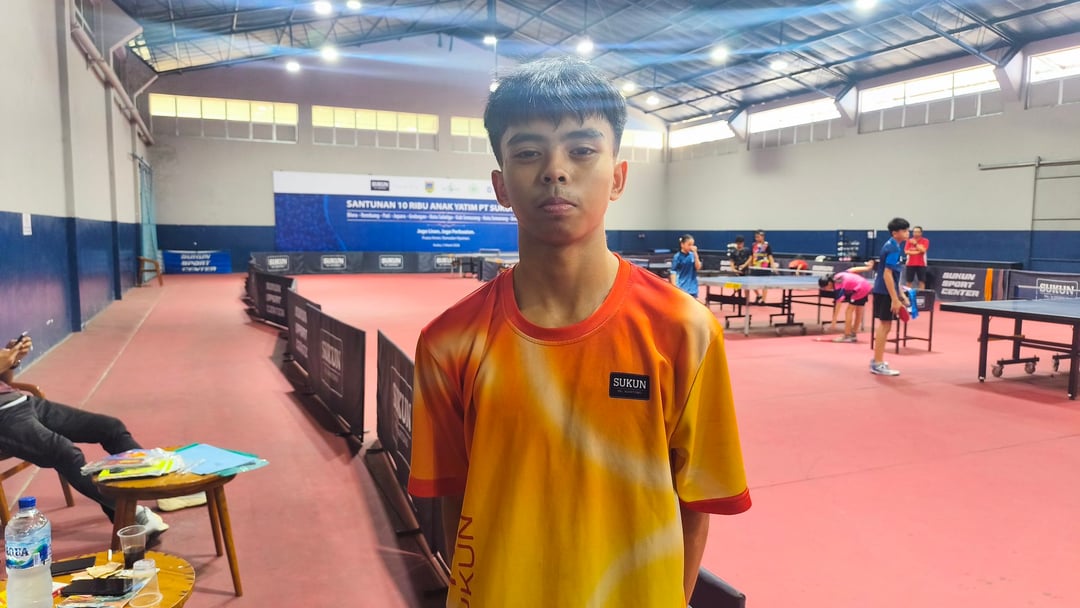
For Nuralip Hakiki, the real pressure mounted as his chances for victory began to slip away. During the 2026 Central Java POPDA final, the men’s singles player from Madura faced a daunting challenge after dropping the first two games to his opponent from Purbalingga.
One more game for his opponent would have ended his title hopes. However, Kiki refused to let that deficit dictate the final outcome.
He rallied to win the next three games, securing a 3-2 victory. The win stands as one of the most memorable moments in his young table tennis career.
Kiki first encountered the sport as a kindergartner, introduced to it by his father. He moved to Kudus for his education about two years before the 2026 POPDA. Now a ninth-grader at SMP 3 Kudus, he trains through the Student Sports Education and Training Center (PPLP).
Beyond scheduled team training, Kiki conducts independent practice sessions to refine his technique and maintain his physical conditioning. Yet, the experience in the POPDA final taught him lessons that extended beyond mere gameplay.
Faced with a deficit, he had to manage pressure while finding ways to regain control of the match. His successful comeback provided a profound sense of relief and pride.
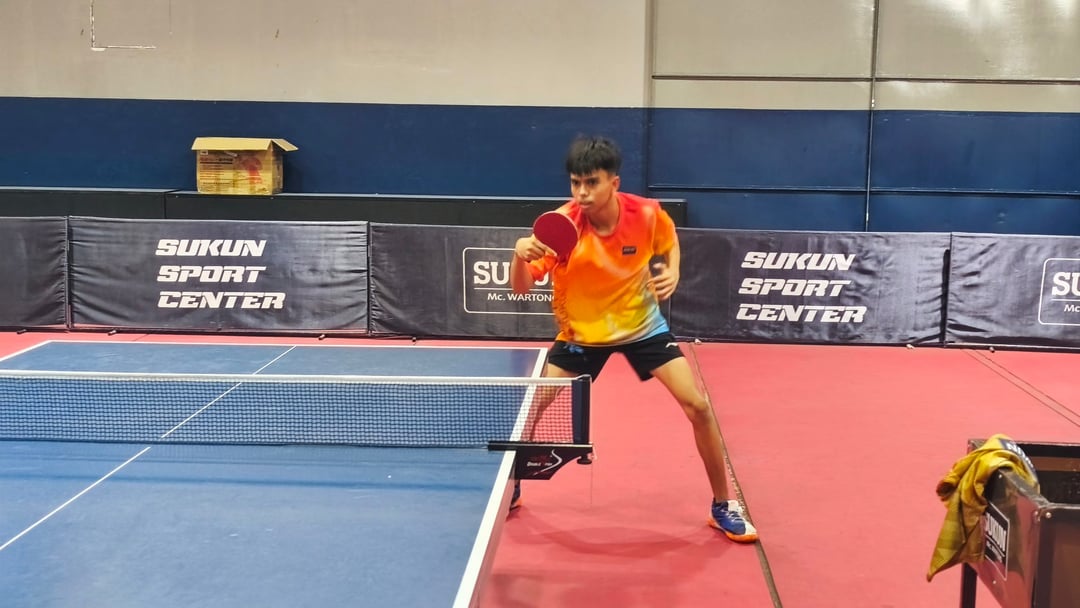
“I felt happy and relieved to win after trailing. To me, it felt like a remontada. This experience has motivated me to keep training and reach greater achievements,” Kiki said.
The term remontada—referring to a successful comeback—perfectly captured Kiki’s struggle in the match. The victory, which once seemed out of reach, was secured only after he managed to close the gap.
The experience has also bolstered his ambition to compete at higher levels. Kiki is now aiming for success at the national championship and hopes to earn a spot in the National Student Sports Week (Popnas).
“I want to perform well at the national level and compete in Popnas. Hopefully, that can be achieved by continuing to train and improve my skills,” he said.
For Kiki, the POPDA final victory serves as essential preparation for future challenges. He recognizes the need to enhance his consistency and decision-making, particularly when facing opponents with varying styles and strategies.
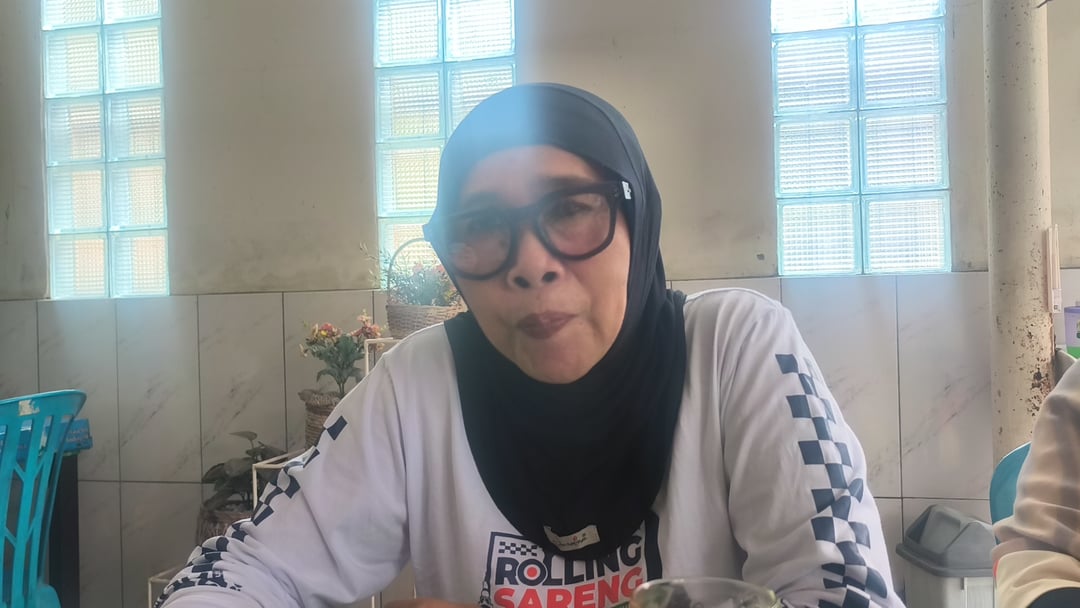
Building resilience against pressure extends beyond match experience alone. How an athlete receives instruction, processes mistakes, and manages emotions is an essential component of the development process.
Heni Sandra Nurwati, Chairperson of PTMSI Kudus Regency, notes that every athlete possesses a unique character, especially when facing high-stakes match situations.
While some players readily absorb coaching cues, others may feel pressured by corrective feedback. These individual differences require coaches to tailor their approach to ensure that instructions do not undermine an athlete's confidence.
This approach is critical during crucial moments in a match. Athletes must learn to move on from previous mistakes, manage anxieties regarding the final outcome, and refocus their attention on the immediate play.
Mental readiness must also be supported by adequate technical proficiency. Coaches must be able to identify player weaknesses, ranging from service execution and ball spin to the ability to return an opponent's serve.
Inconsistent aspects of a player's game can be addressed through targeted, individual training. Consequently, evaluations should focus not only on match results but also on a player's ability to implement strategy and respond to pressure.
Competitive experience serves as a benchmark for this development. As match situations are often unpredictable, the capacity to adapt must be continuously honed through training and mentorship.
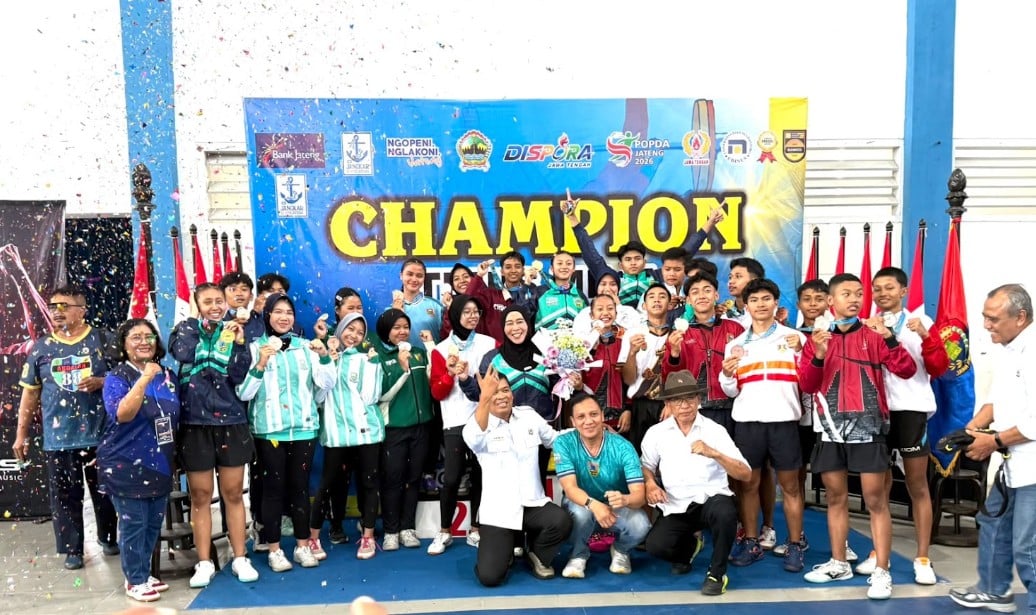
The experiences of Suravinda and Kiki illustrate how mental challenges can arise in contrasting conditions. Suravinda strives to maintain a lead without being consumed by worry, while Kiki has discovered how to rally when trailing.
Both athletes have long paths ahead in their student-athlete careers. Suravinda aims to open doors to international competition, while Kiki targets national-level achievements and an opportunity to qualify for Popnas.
For them, victory at the 2026 Central Java POPDA serves as both a milestone and a learning opportunity to assess their own capabilities. There are techniques that still need refining, strategies to be perfected, and mental resilience that must be continuously developed.
At the table, the score dictates the match winner. However, the experiences of Suravinda and Kiki demonstrate that every point offers a different lesson: how to maintain composure when ahead, and how to find the courage to fight back when the situation is not in one's favor. (OEB/YSR/MainKeKudus)