
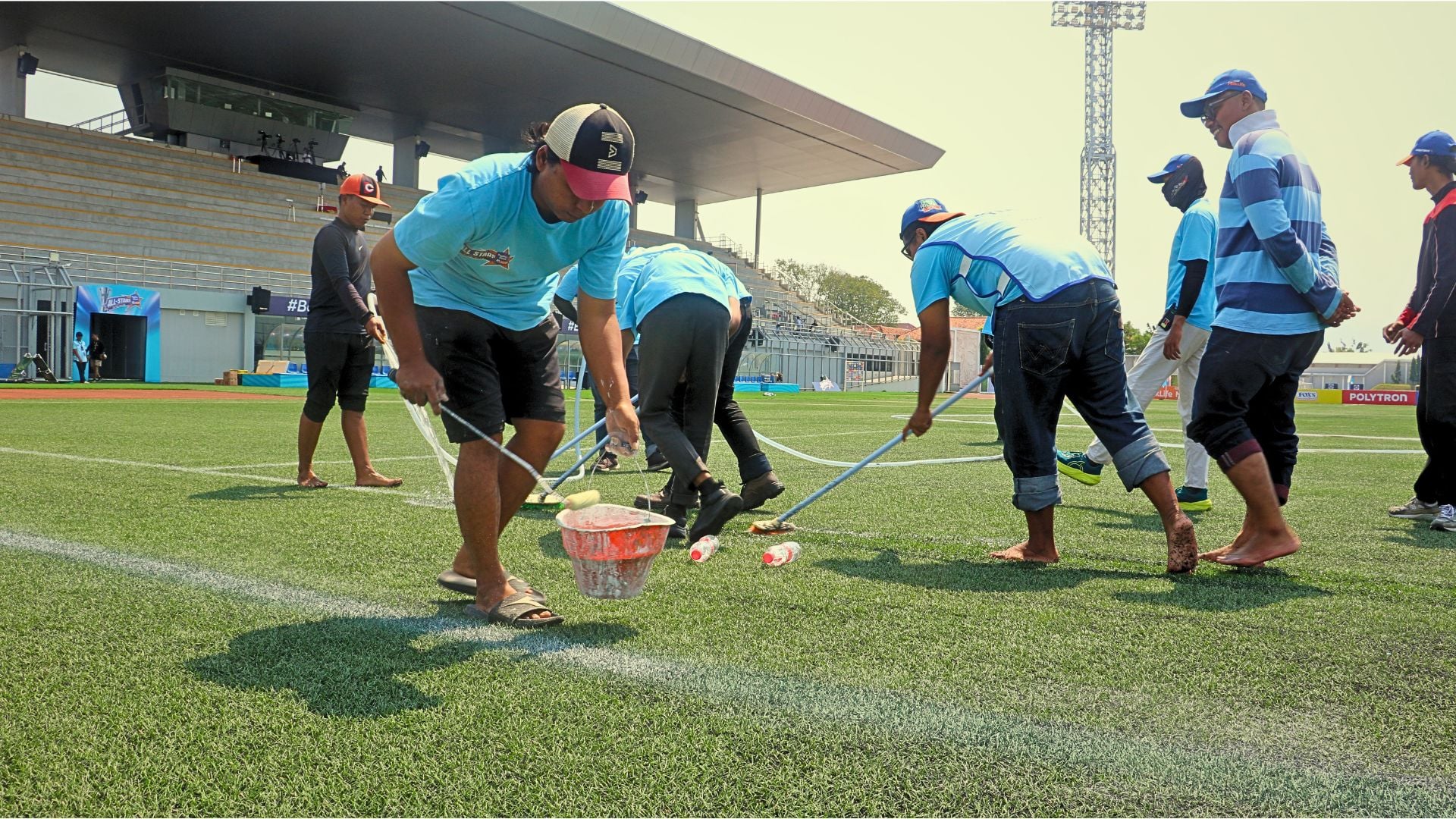
Kudus – The roar of the crowd, celebratory moments, and goals are the most memorable aspects of any football match. At the HYDROPLUS Soccer League All Stars 2025/2026 at the Supersoccer Arena in Kudus, attention is naturally focused on the performances of the young players on the pitch. However, long before the matches begin, a dedicated team works behind the scenes to ensure every fixture meets professional standards.
Well before the stadium crowds arrive, the Supersoccer Arena grounds crew is already at work. They prepare the playing surface, meticulously measuring every dimension and marking the lines to ensure full compliance with regulations. Their job does not end with the final whistle; as spectators vacate the stands, the crew immediately begins readying the pitch for the next scheduled match.
The immaculate state of the field is the result of efforts that begin days prior to the tournament. Preparation for this event was carried out from July 2 to July 3, 2026, by the Supersoccer Arena grounds team.
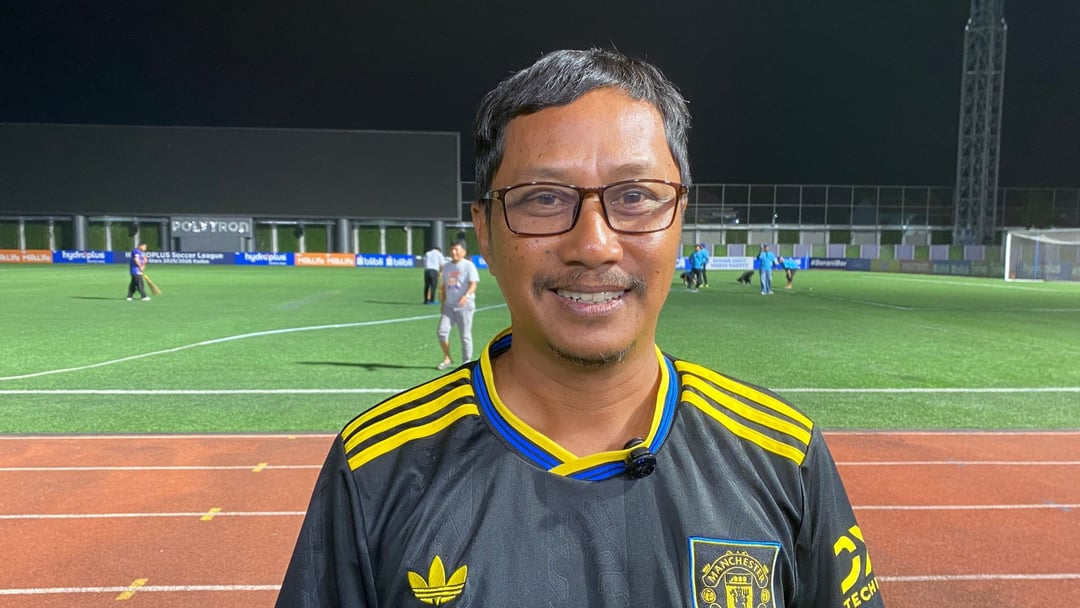
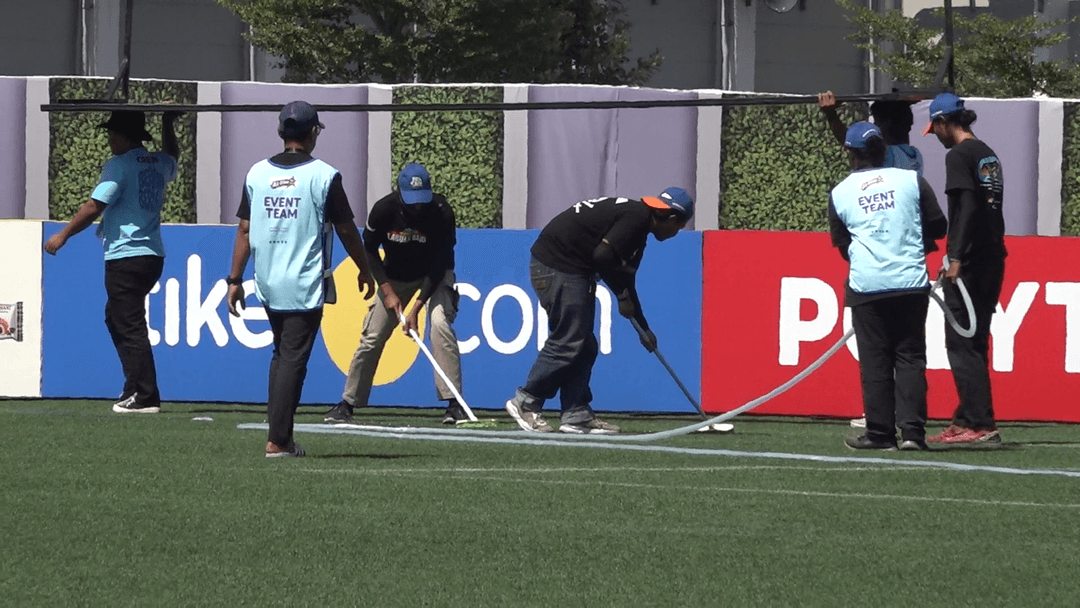
Catur Anggoro, a grounds staff member specializing in pitch markings, along with three assistants, meticulously measured the entire field using tape measures and guide ropes. The lines were then applied using specialized painting trolleys, utilizing paint and calcium carbonate as marking agents.
For the U-18 category, the field follows national standards of 105 x 68 meters. Meanwhile, U-15 matches are played on a 68 x 44-meter pitch, adapted for the nine-a-side format.
“Our primary task is to establish the ideal field dimensions. We use 105 x 68 meters for U-18, and 68 x 44 meters for U-15. Everything must be precise and in accordance with HYDROPLUS Soccer League All Stars standards,” Catur said on Sunday (July 12, 2026).
The process demands extreme attention to detail from the measurement phase. The center circle, penalty boxes, penalty spots, and corner areas must all be exact. Once completed, the field is inspected alongside match officials before it is declared ready for play.
Supersoccer Arena Grounds Manager Rochmansyah Setiawan confirmed that final inspections are conducted in coordination with the referees prior to kick-off.

“Everything was inspected with the referees, from the field dimensions, line thickness, and penalty spots, to the goal sizes. The standards must be met because this event serves as a platform for player development toward higher levels,” he said.
The greatest challenge emerged once the competition began. Throughout the eight-day tournament, a single pitch was used alternately for the U-15 and U-18 categories, which require different dimensions.
This meant that every time an U-15 match concluded, all existing lines had to be cleared before the field could be remarked to U-18 specifications. The entire process had to be completed in approximately one hour to ensure the next match started on schedule.
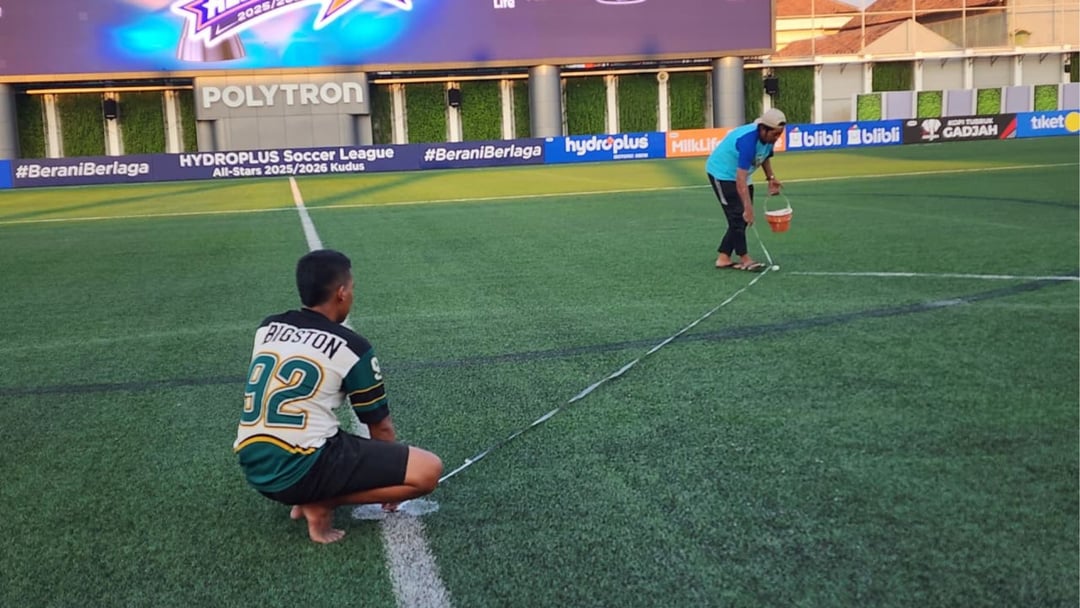
“Our difficulty was when the U-15s played in the morning, the field had to be converted back for the U-18s in the afternoon. All lines had to be erased and repainted within an hour because the next match would start shortly,” Catur explained.
Field configuration changes were carried out twice daily. During the tournament, the team used approximately 25 liters of paint, with an average of five liters per painting session. The entire task was performed collaboratively, from removing old lines and re-measuring to repainting the entire field area.
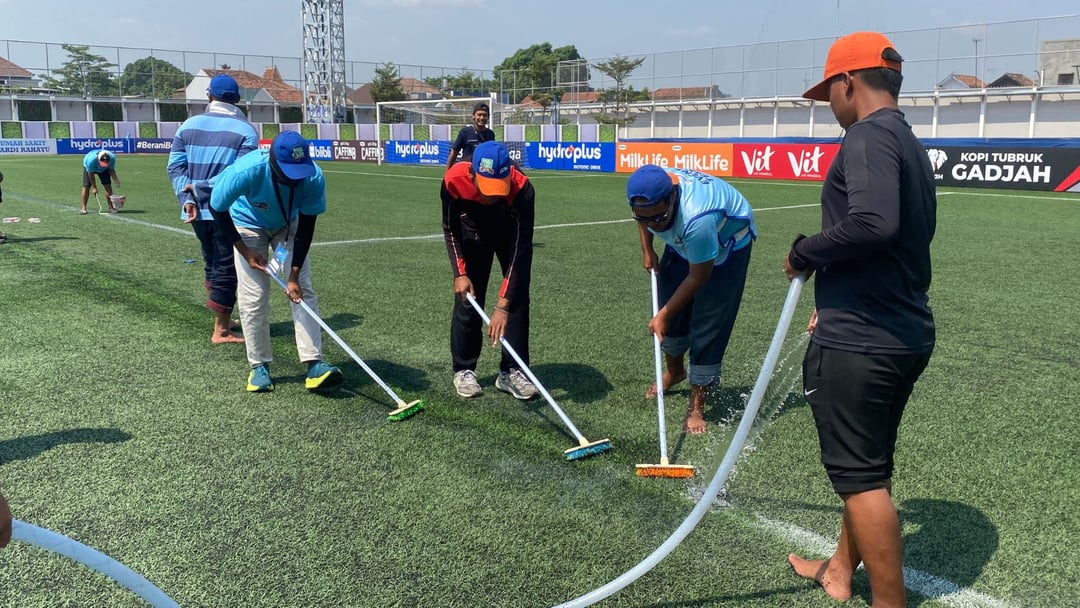
Given the limited time, coordination was essential to ensure all steps were finished before the players entered the pitch.
A similar routine was followed by Ahmad Sauji, who joined as a volunteer. He assisted with the field reconfiguration process every time the match schedule changed.
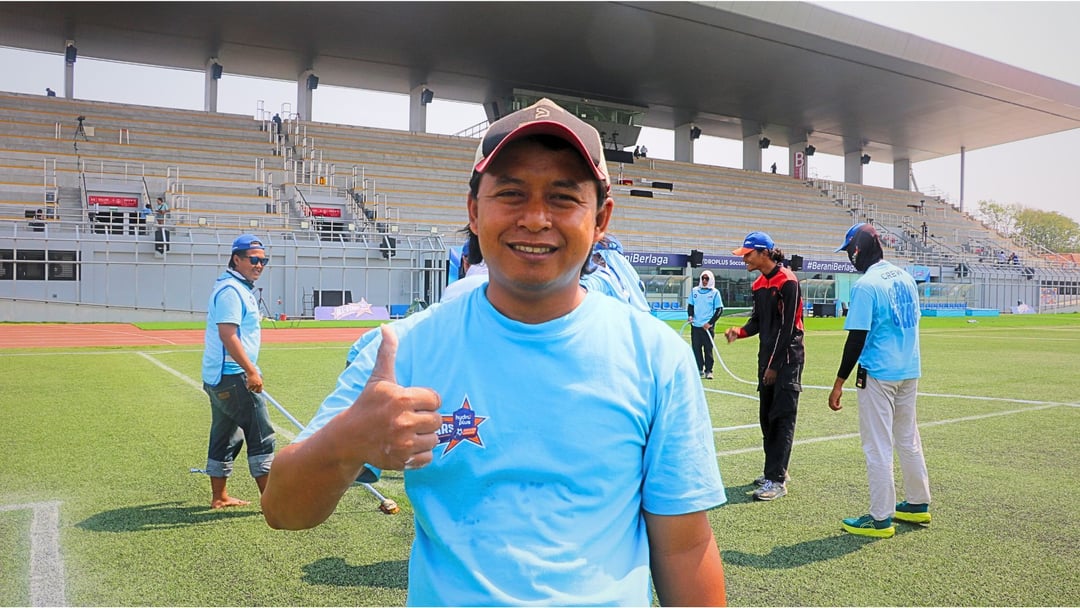
For many spectators, a match ends when the final whistle blows. For Sauji, however, that is when the real work begins. Alongside his colleagues, he returns to the field to prepare the arena for the following day's matches.
Once the stands have cleared, he and his team return to the pitch to adjust the dimensions of the playing area, a routine maintained throughout the duration of the tournament.
“The most memorable part is preparing the field. It is the most demanding task because we must wait for all matches to conclude. Yesterday, we finished around 11:00 p.m. to reset the field. Before kickoff, all equipment must be ready. Even after that, we cannot go home immediately because we still have to conduct a final inspection of the field,” he said.
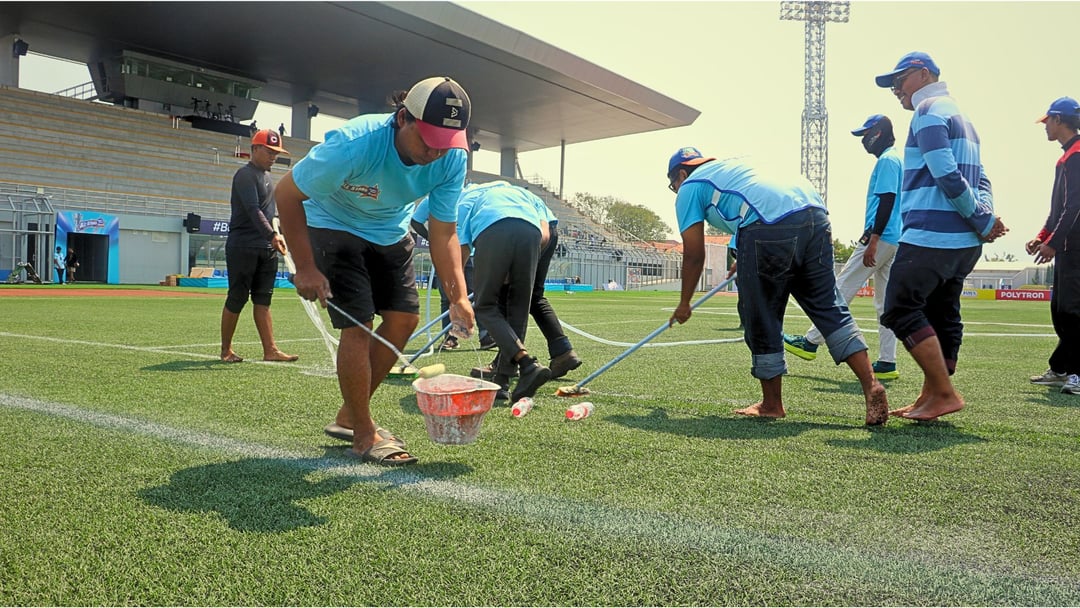
This routine is repeated daily throughout the competition. When play resumes the following morning, the pitch is match-ready, with no indication of the labor-intensive work completed just hours earlier.
For Sauji, his involvement in a tournament featuring teams from Central Java, East Java, West Java, and Jakarta has been a source of pride.
Prasetyo Budi serves another crucial role as a member of the pitch-side medical team. In addition to remaining on standby during matches, he also helps ensure the field remains safe following any adjustments to the playing area dimensions.
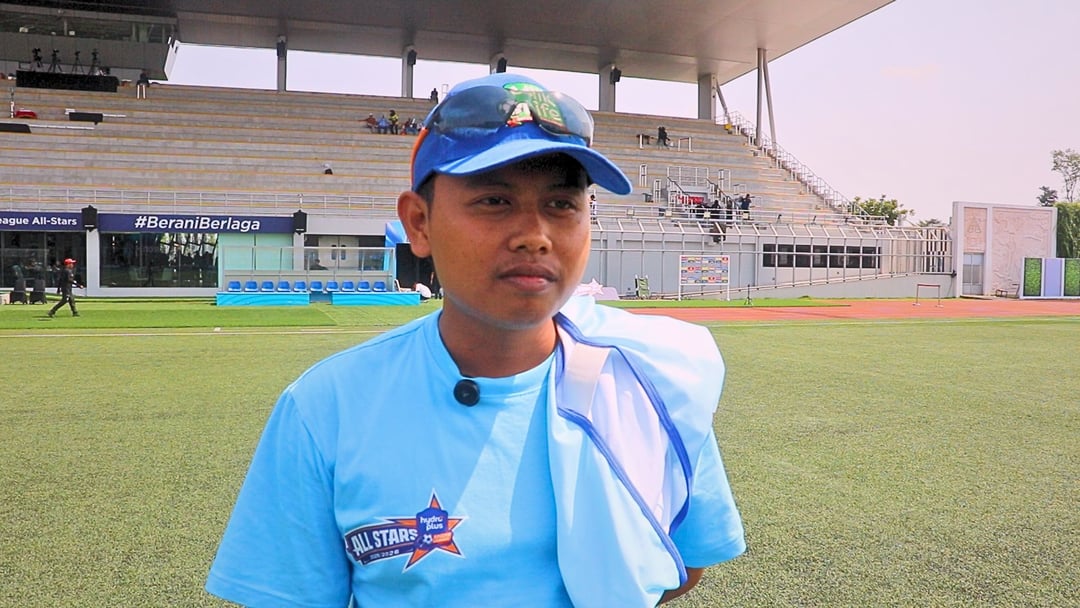
One of his primary duties involves clearing residual line-marking powder before the pitch is prepared for the next match category.
During the semifinals, Budi and his team began their work ahead of schedule. While they typically start at 8:30 a.m. WIB, they were on-site by 8:00 a.m. WIB to account for potential penalty shootouts and ensure the tournament schedule remained uninterrupted.
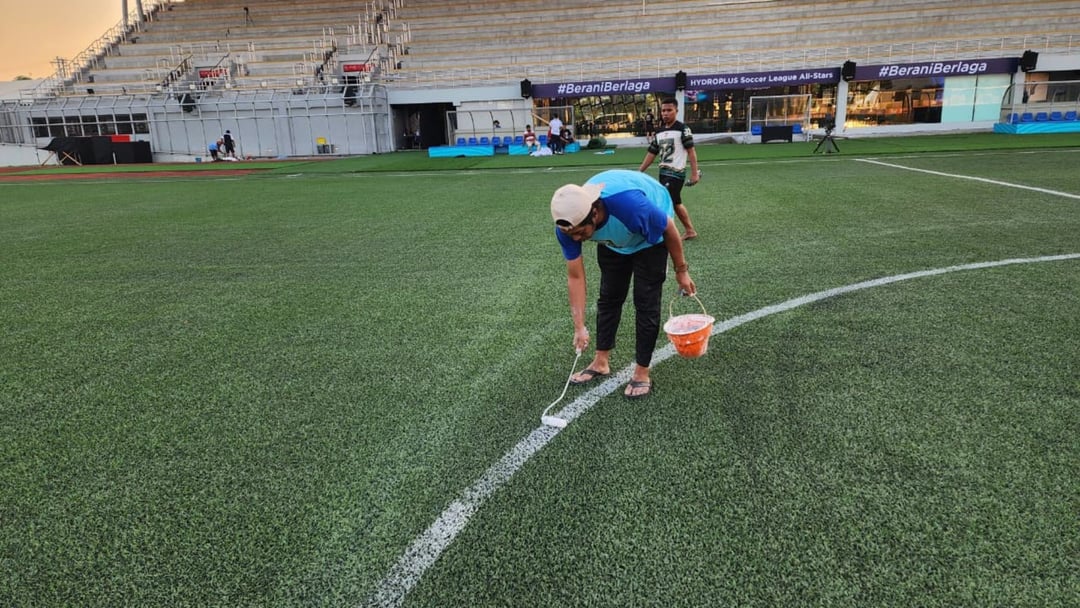
"The biggest challenge is that the field dimensions change multiple times a day to accommodate both U-15 and U-18 matches. Additionally, we must clear the white magnesium used for the boundary lines," he said.
According to Prasetyo, a clean and properly maintained pitch ensures a more comfortable experience for the players and minimizes disruptions during gameplay.
As a Kudus resident, he expressed pride in contributing to a tournament that brings together young talent from across Indonesia.
During a match, spectator attention is generally focused on the players, coaches, and referees. However, before the opening whistle blows, a series of essential operations ensure that the game meets professional standards.
A coordinated effort involving four grounds team members, volunteers, field officials, and stretcher crews works in rhythm. They ensure precise field dimensions, ready match equipment, and swift reconfiguration of the pitch within limited timeframes.
While their work may not appear in match statistics, every meticulously drawn line, every pitch prepped, and every safety check conducted before kick-off contributes to a secure and professional environment for young athletes.
Long before a goal is scored or a trophy is lifted, the true match begins with foundational work. It is from those precisely marked white lines that every game finds its footing. (ITN/DN/mainkekudus)