
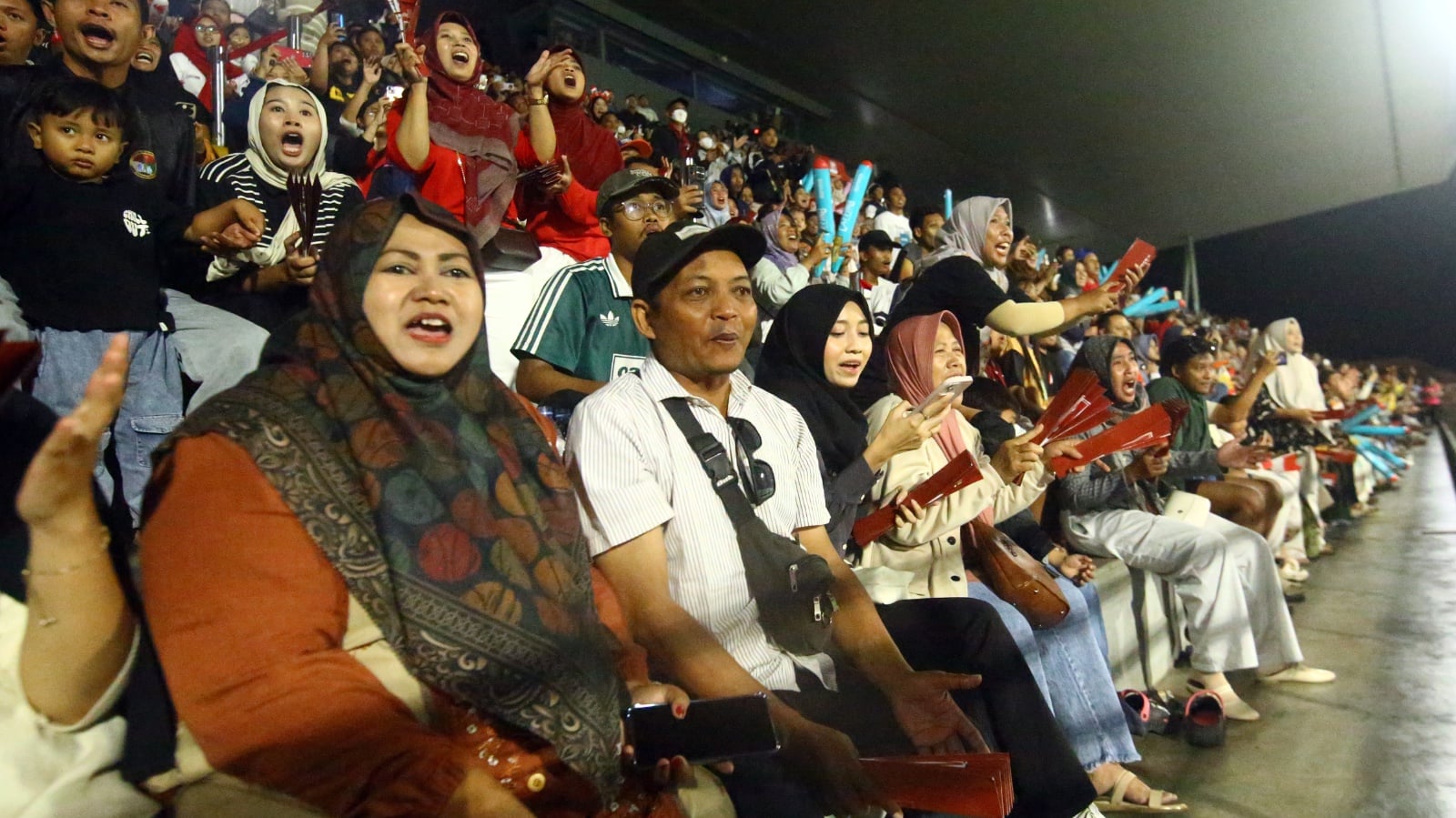
KUDUS – The Caffino Srikandi Merdeka Cup, held from August 14–23, 2026, offered more than just women's football matches at the Supersoccer Arena in Kudus. The participation of U-16 national teams from Indonesia, Thailand, Malaysia, Jordan, Singapore, Saudi Arabia, and Hong Kong, China drew significant local interest, with many fans attending the matches in person.
This enthusiasm was reflected in the spectators' habit of arriving well before kickoff. For the final match, some residents arrived at the arena as early as the afternoon. Knowing the stands have a limited capacity of approximately 1,100 spectators, fans prioritized arriving early to secure their spots.
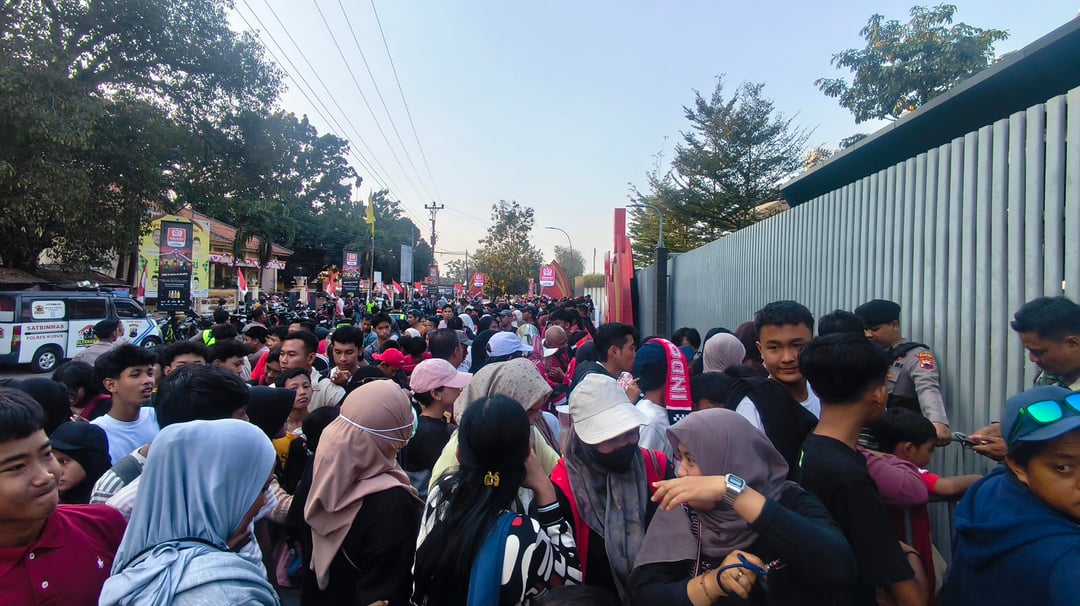
Diandra Bratayudha Putra arrived around 1 p.m. with friends from SMP 3 Kudus. Although the match was scheduled for the evening, he chose to wait to ensure he could witness the game in person.
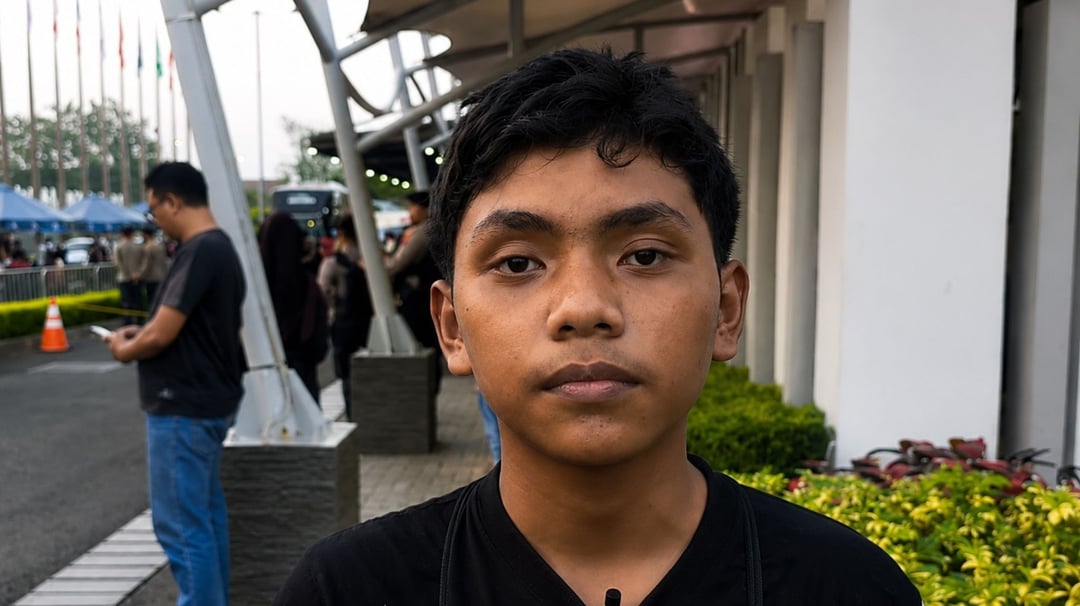
"I came early so I could stay until the evening," he said.
For Muhammad Sanusi, arriving early meant adjusting his daily schedule. He closed his business early to take his wife and child to the arena, wanting to avoid missing out as he had during a previous match.
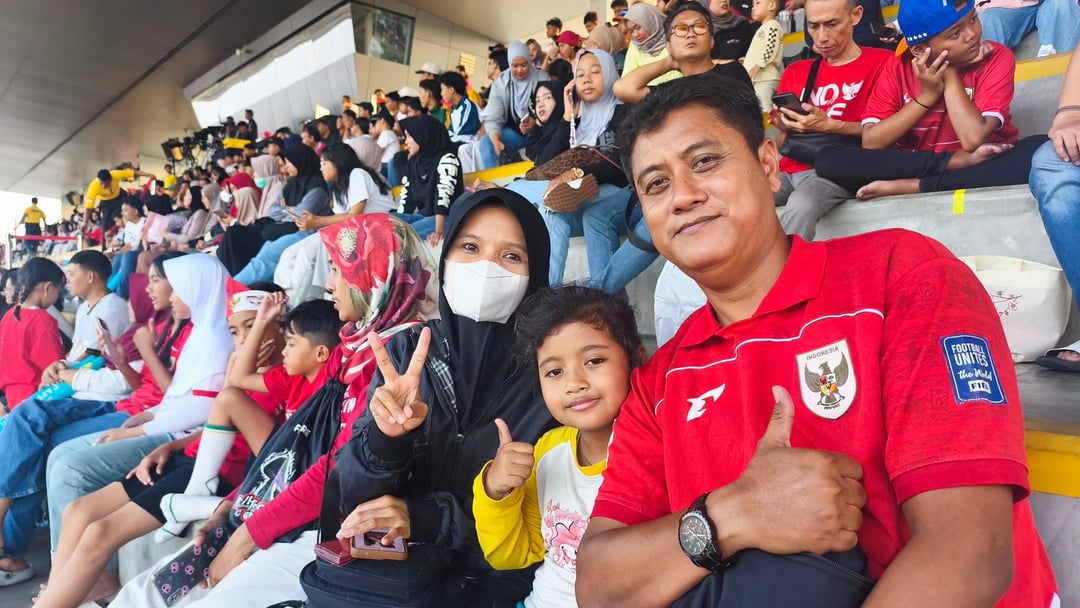
The willingness of spectators to spend their afternoon at the arena highlights the event's significance. They did not merely arrive for the kickoff but made the tournament a central part of their day.
The number of spectators eventually exceeded the stadium's capacity. Those who could not secure a seat did not immediately head home. Instead, they sought alternative ways to follow the match, including relocating to the Srikandi Fair at Rendeng Field and public viewing spots at the Kudus Regency Pavilion.
It was at this point that the tournament's narrative began to spill beyond the stadium. The crowd's enthusiasm ensured that the activity was no longer concentrated in a single location. Residents moved about, gathered, sought out food, brought their families, and found other spaces to remain part of the event.
Pavilion and Srikandi Fair Become Alternative Viewing Hubs
When the Supersoccer Arena stands began to fill, the match did not lose its audience; they simply relocated.
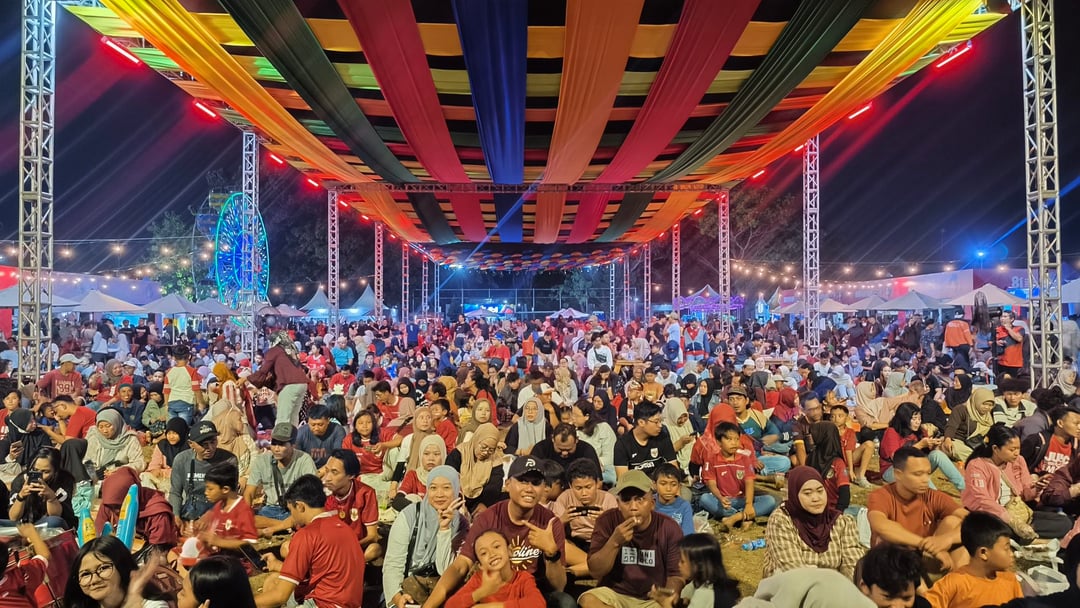
The Srikandi Fair at Rendeng Field became a primary choice. The area offered more than just a broadcast screen, featuring food stalls, children's games, and various activities that allowed residents to soak in the tournament atmosphere without being inside the stadium.
Indra Irawan arrived with his children, initially planning to watch the final from the stands. After seeing how crowded it was, he opted to bring his family to the Srikandi Fair. The children could play while he remained immersed in the excitement generated by the match.
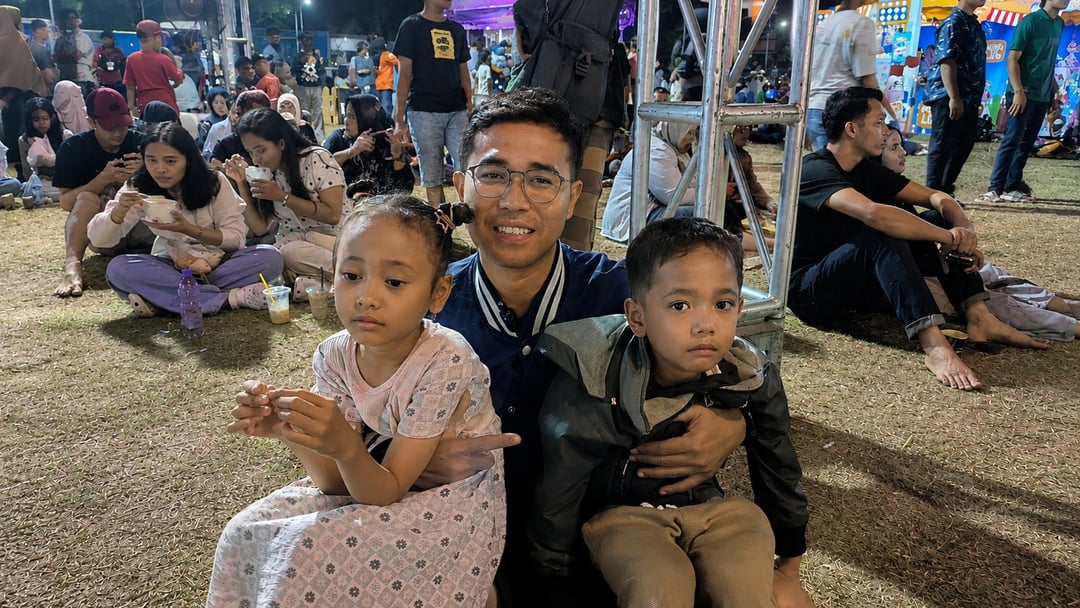
“They should hold these events more often. It really livens things up,” he said.
For Arif Kurniawan, the fair was also a suitable option for a family outing. This was his first visit, and he was drawn not only to the tournament atmosphere but also to the amenities for his children.
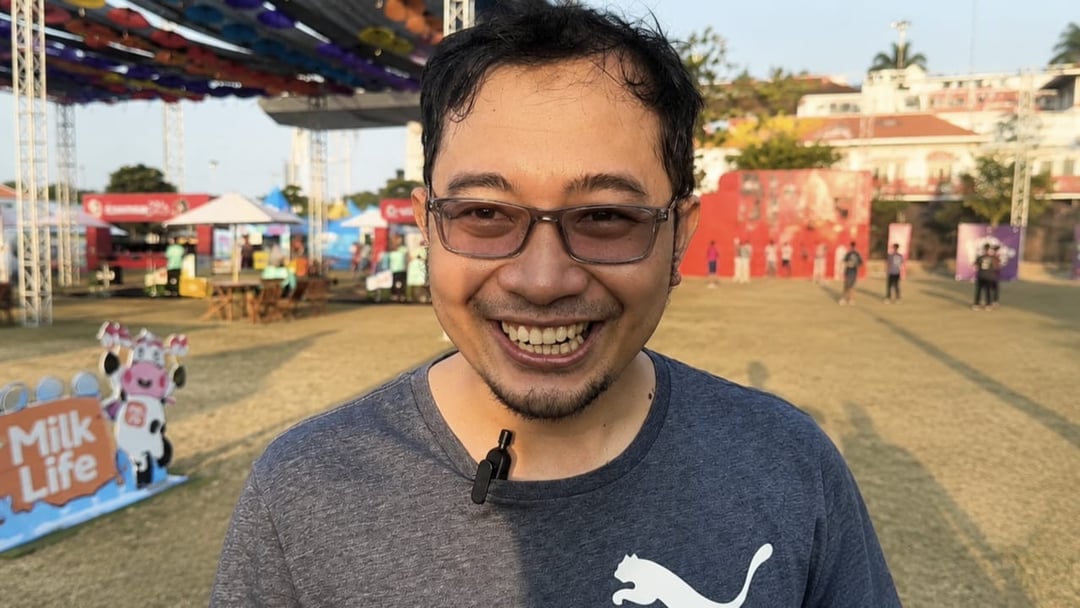
“It's appealing for families, especially with the children’s games. The event is exciting,” he said.
With such a variety of activities, the Srikandi Fair remained busy well before kickoff, allowing residents to arrive early, enjoy a meal, and keep their children entertained before the main event began.
As the crowd in the Rendeng area continued to grow, the courtyard of the Kudus Regency Pavilion served as an alternative public viewing site, drawing between 500 and 600 attendees. Residents unable to secure entry at the stadium were provided with a communal viewing option without needing to head home.
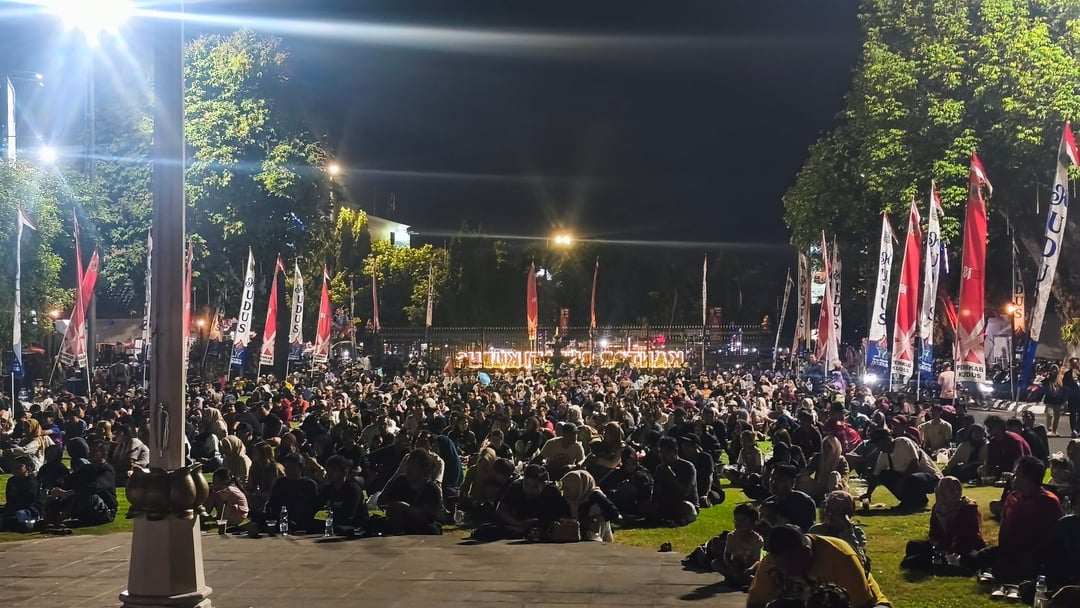
Rizki Kurnia Rosdiansyah was among those who chose this alternative. After failing to enter the Supersoccer Arena, he learned of the pavilion viewing event via social media and arrived early in the afternoon. At the site, attendees watched the match on a screen while purchasing local food and drinks.
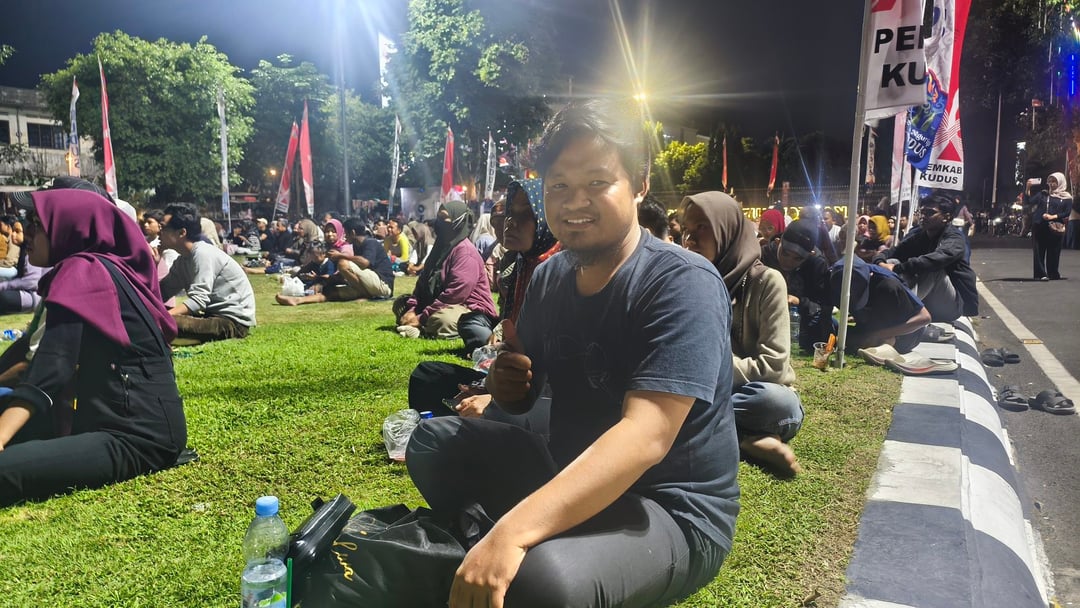
For local authorities, decentralizing the crowd was a strategy to manage large gatherings. Kudus Regency Secretary Eko Djumartono stated that dispersing the audience was necessary to prevent overcrowding in a single location, specifically the Rendeng area.
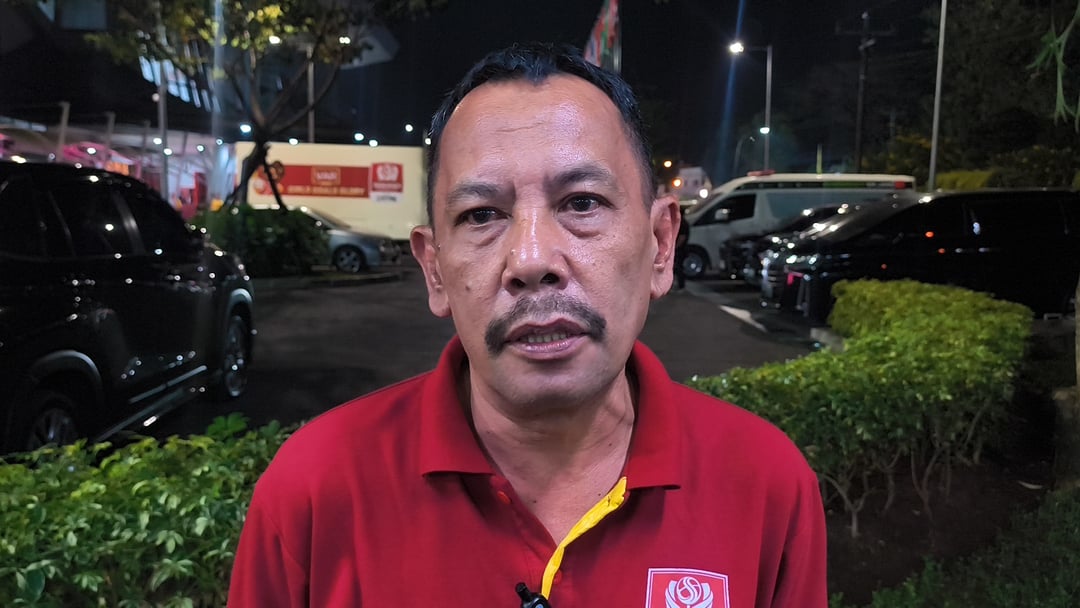
Ultimately, the match was accessible through multiple venues. The stadium served as the primary site for ticketed spectators, the Srikandi Fair functioned as a hub for families, dining, and games, while the Pavilion provided another venue for communal viewing.
This movement of spectators ensured the event extended beyond the main venue, as overflow space was effectively utilized when capacity was reached elsewhere.
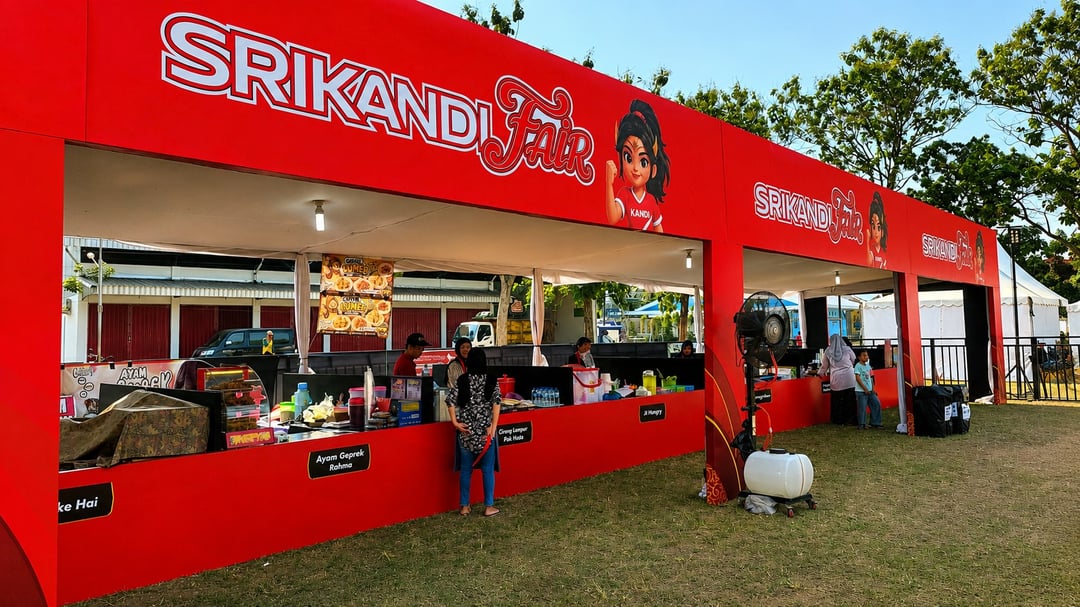
The excitement surrounding the matches has spilled over into local MSME stalls. While spectators arrive primarily to watch the games, their presence at the venue has effectively boosted local business transactions.
At the Srikandi Fair, 32 MSMEs were provided space to conduct sales. Visitors frequently purchase food and beverages before matches, while waiting for public viewings, or after the games conclude.
Rema Octaviana, owner of Dimsum Viral Mpok Rani, reported a significant surge during the final night, selling over 100 portions—a threefold increase over a typical day and double the sales volume recorded on the tournament's opening day.
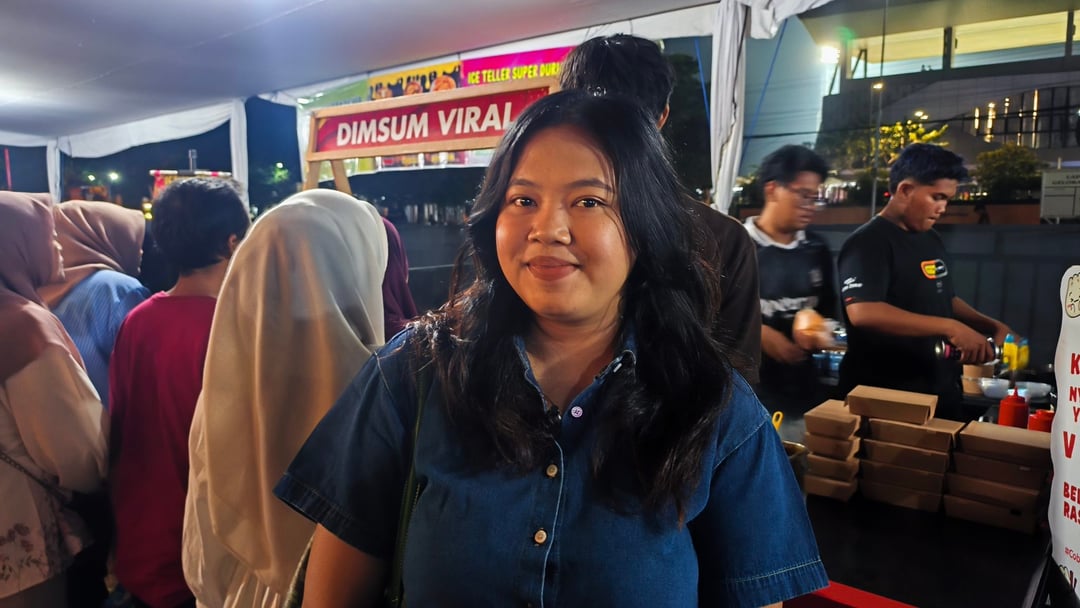
“It was busy even before the viewing started,” Rema noted.
Her customers included not only Kudus residents but also out-of-town visitors and tournament participants.
A similar trend was observed at the Risol Bu Anik stall. Anik Juliati Anti Sari stated that foot traffic typically intensifies in the evening, particularly when the Indonesia national team plays.
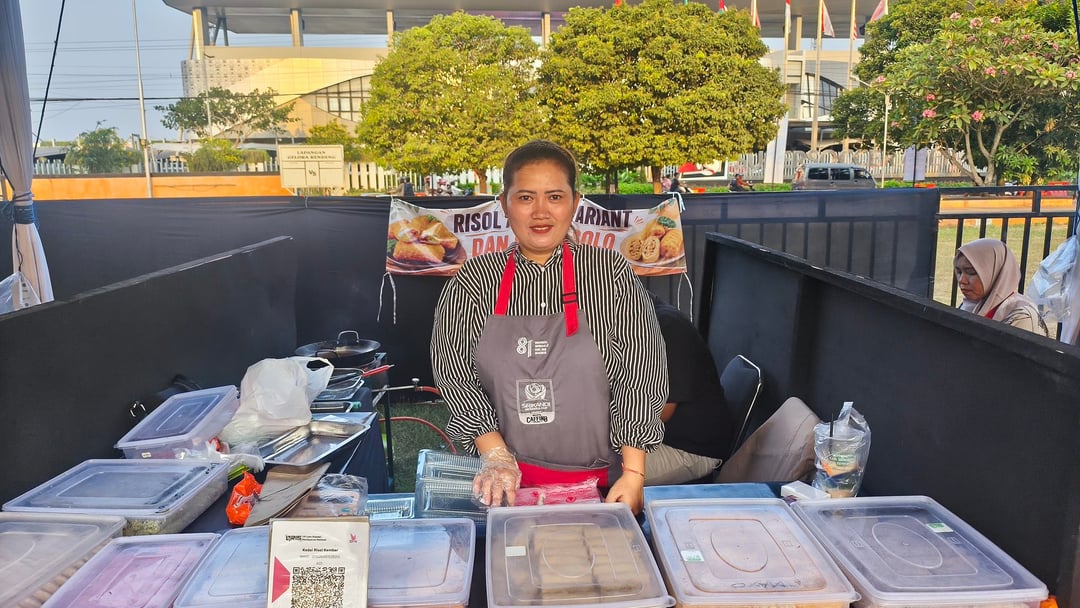
“People are constantly coming and going. On match days, people look for snacks; some head straight to watch the game, while others stop to buy food first,” she said.
Her sales volume generally doubles on matchdays and triples during major public viewings. Operating hours have also extended; where she typically begins in the late afternoon and closes between 8:00 p.m. and 10:00 p.m., she has been operating from 2:00 p.m. until 11:00 p.m. throughout the event.
For business owners, the impact extends beyond sales volume. The large crowds have introduced their products to new customers. Spectators often stop at stalls out of curiosity, families purchase refreshments for children, and those unable to secure seating in the stands remain within the event perimeter to shop.
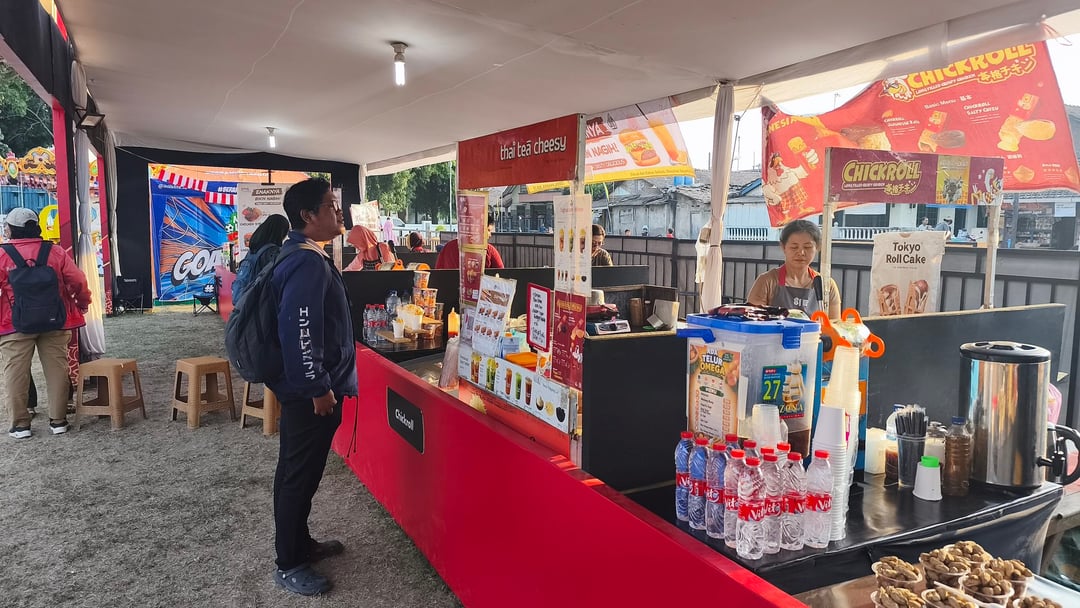
With this model, sports and commerce coexist. The longer people remain in the event area, the greater the opportunity for transactions.
While the impact may be most visible at small stalls, it is precisely there that the influence of an event on the local economy is most closely tied to daily life—through increased foot traffic, higher sales, and extended business hours.
Tournaments draw spectators to the city. This surge in activity creates opportunities for surrounding businesses to thrive.
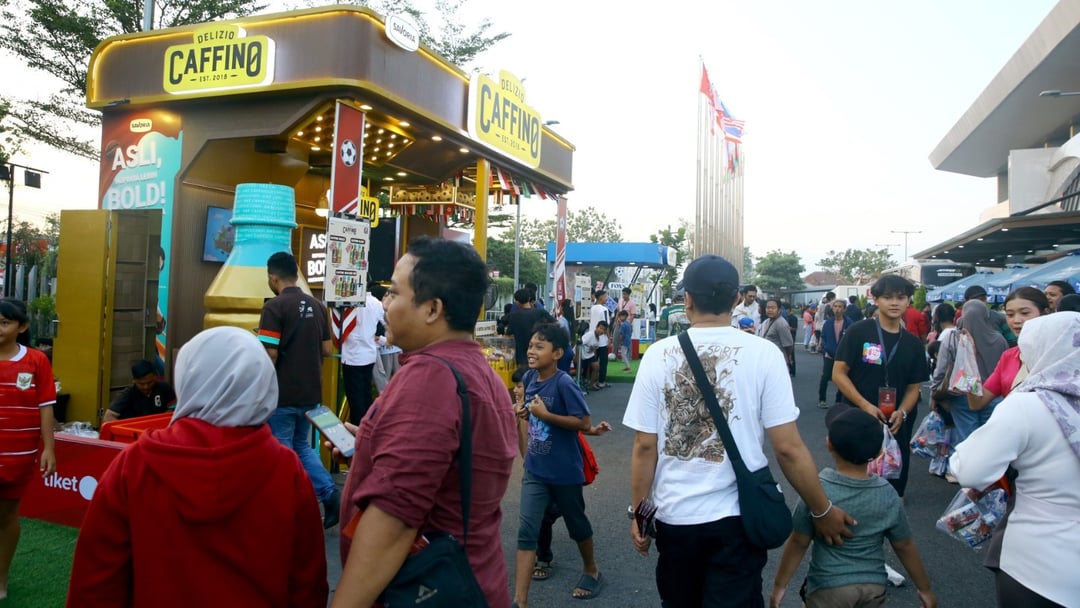
Matches may be held on a single field, but the resulting activity extends far beyond the pitch.
During the tournament, residents arrive in the afternoon, spending time near the arena and dispersing to various locations once the stands are full. Some continue watching from the stadium, while others opt for public screenings at the Srikandi Fair or gather at the Pendopo. Between these movements, other activities unfold: dining, socializing, and shopping.
Spaces that usually serve different functions—stadiums, fields, and pavilion grounds—are used simultaneously for a single purpose. Citizens are not just spectators but active participants in the ecosystem formed around the matches.
For business owners, the crowds mean more customers. For families, the event is an opportunity for shared time. For the city, it brings more people into public spaces simultaneously.
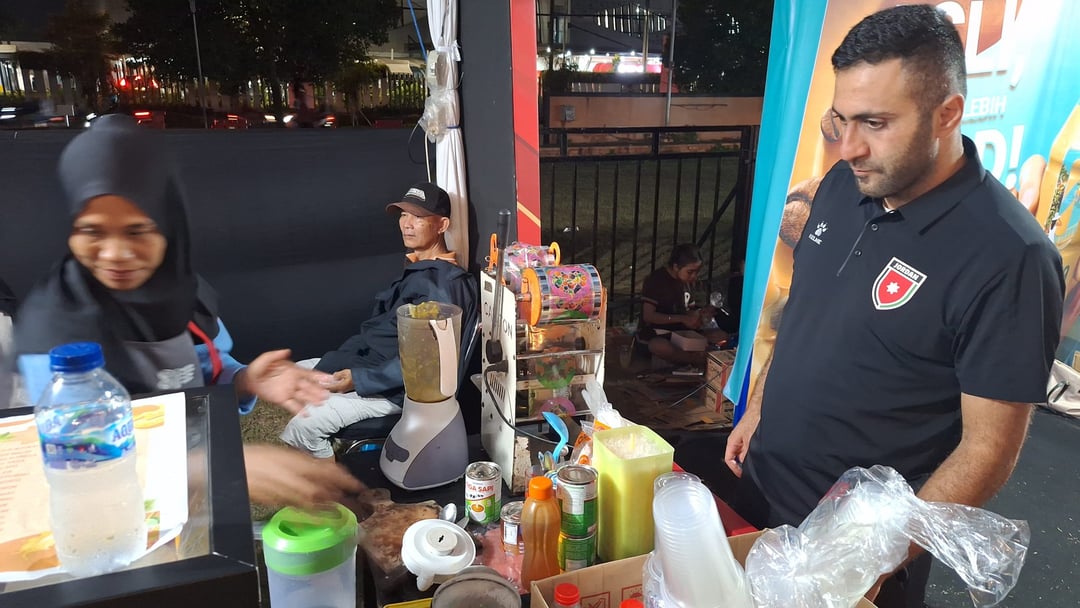
It is not just the number of spectators that stands out, but how they circulate—arriving early, moving between venues, lingering, and departing only after spending time around the event.
The tournament's impact becomes clear here: it is measured not only by the games themselves but by the ripple effect of activity generated around them.
Sports provide a reason to congregate, and the city provides the space. When these factors align, economic and social activity flourishes.
As sports mobilize, so does the city. (OEB/YSR/mainkekudus)