
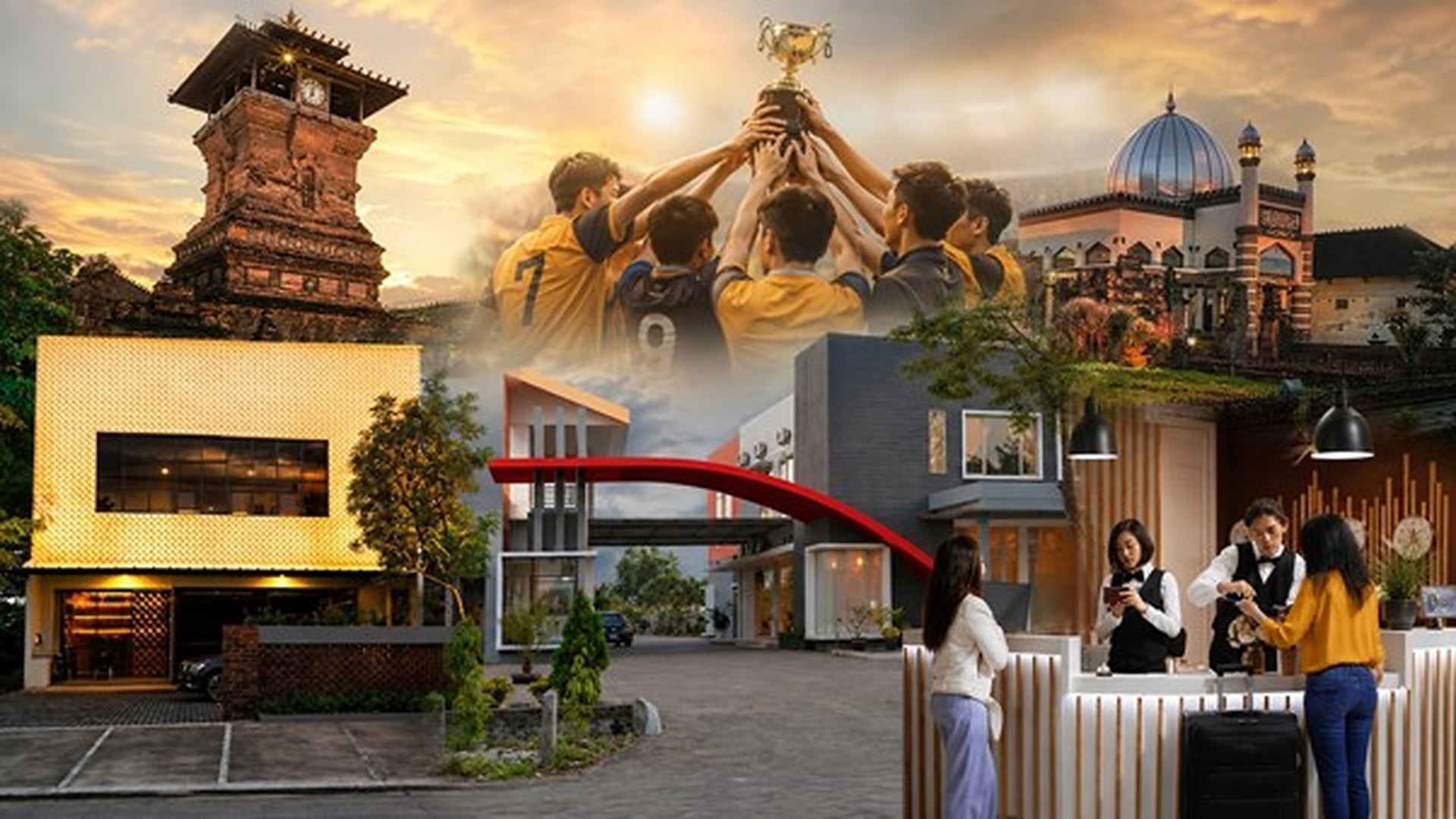
KUDUS – Hosting large-scale sporting events requires more than just competition venues; it demands sufficient accommodation for athletes, coaches, officials, organizers, crews, supporters, and the families of participants traveling from other regions.
In Kudus, this demand has intensified alongside a packed sports calendar that draws participants from various cities and countries. Two-star hotels play a vital role by offering a balance of affordable rates, adequate facilities, and locations that facilitate transit to competition venues.
This option is particularly relevant for large groups. Not everyone involved in an event needs to be housed in the same hotel category. While athletes and officials may stay at specific locations, organizing staff, production crews, support personnel, or family members can utilize other accommodations tailored to their specific needs and budgets.
Two two-star hotels in the Jati area, Hotel King’s Kudus and Sunrise Hotel Kudus, serve as prime examples of lodging options with convenient access to the GOR Djarum Kudus. Both are situated near culinary hubs, the local terminal, and various tourist attractions in Kudus.
A series of sporting agendas has brought a steady influx of visitors to Kudus. Events such as the MilkLife Archery Challenge, the National Junior Archery Championship, the MilkLife Soccer Challenge All Stars, and the HYDROPLUS Soccer League All Stars have contributed to this trend.
The scale of impact broadened further when Kudus hosted international events. The 2026 Caffino Srikandi Merdeka Cup in August brought together U-16 girls' soccer teams from seven countries, including Indonesia, Thailand, Malaysia, Singapore, Hong Kong, Jordan, and Saudi Arabia.
International tournaments of this caliber bring not only players and team officials but also a vast support network, including organizers, production crews, documentation teams, technical staff, transport and security personnel, and various vendors. Accommodation requirements are often distributed across several hotels, with two-star properties frequently utilized by crews and vendors.
From September 9–13, 2026, the pattern of mass arrivals was again evident during the PB Djarum General Audition. The event, held at GOR Djarum in Jati, saw 1,601 participants from across Indonesia, ranging from Sumatra to Papua.
Because many of the young participants were accompanied by parents, families, coaches, or guardians, the demand for lodging far exceeded the number of registered competitors. A single sporting event can bring a significant surge of visitors into the city.
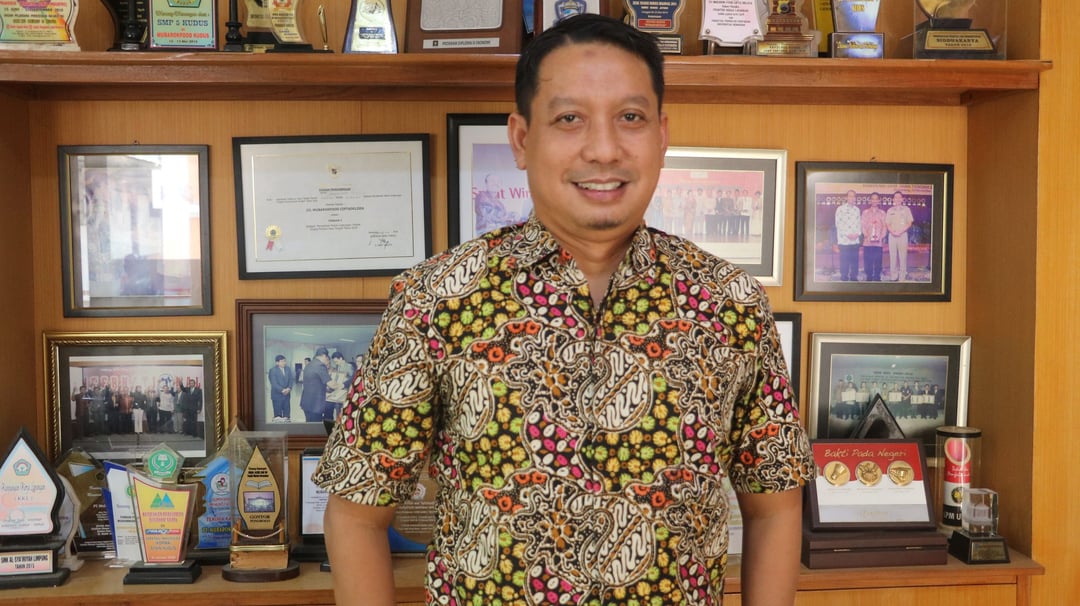
Muhammad Kirom, chairman of the Indonesian Hotel and Restaurant Association (PHRI) of Kudus Regency, identified these sports activities as a primary driver for the accommodation sector.
“Regularly held sporting events significantly influence hotel occupancy. Sports tourism draws participants, officials, supporters, and even athletes' families to Kudus,” Kirom said.
The economic impact extends to other sectors as well, with visitors utilizing local transportation, frequenting restaurants, purchasing souvenirs, and visiting tourist destinations during their time outside the main event schedule.
Kudus’ relatively compact layout further facilitates this mobility, allowing easy access to venues, hotels, culinary centers, and the city center in a relatively short amount of time.
"Thank God, Kudus is a very accessible city. Locations are close to one another, and there is plenty of transportation available," said Kirom.
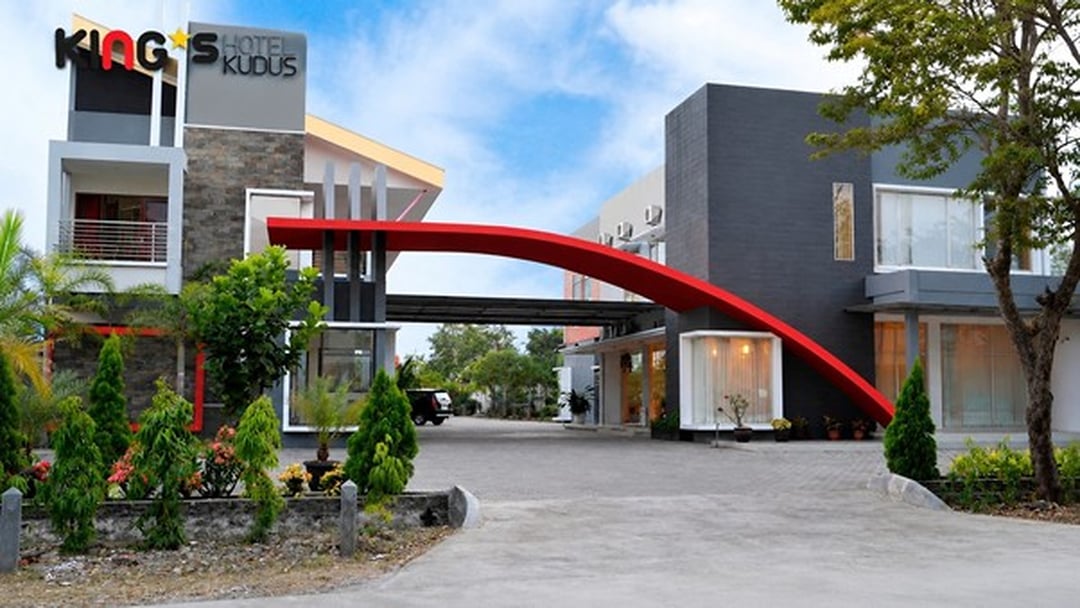
One of the two-star hotels located in the Jati area is Hotel King’s Kudus, situated on Jalan Lingkar Barat Kav. 1, Jati, Kudus Regency.
The hotel is roughly two kilometers from GOR Djarum Kudus. In normal traffic conditions, the trip to the venue takes about five minutes by vehicle. This proximity is a practical consideration for athletes, officials, crew members, and families of participants attending events in the Jati area.
Hotel King’s Kudus offers 32 rooms, with options including Superior Twin, Superior Double, and Deluxe. All rooms are equipped with air conditioning, television, a minibar, a refrigerator, complimentary bottled water, and a bathroom with toiletries.
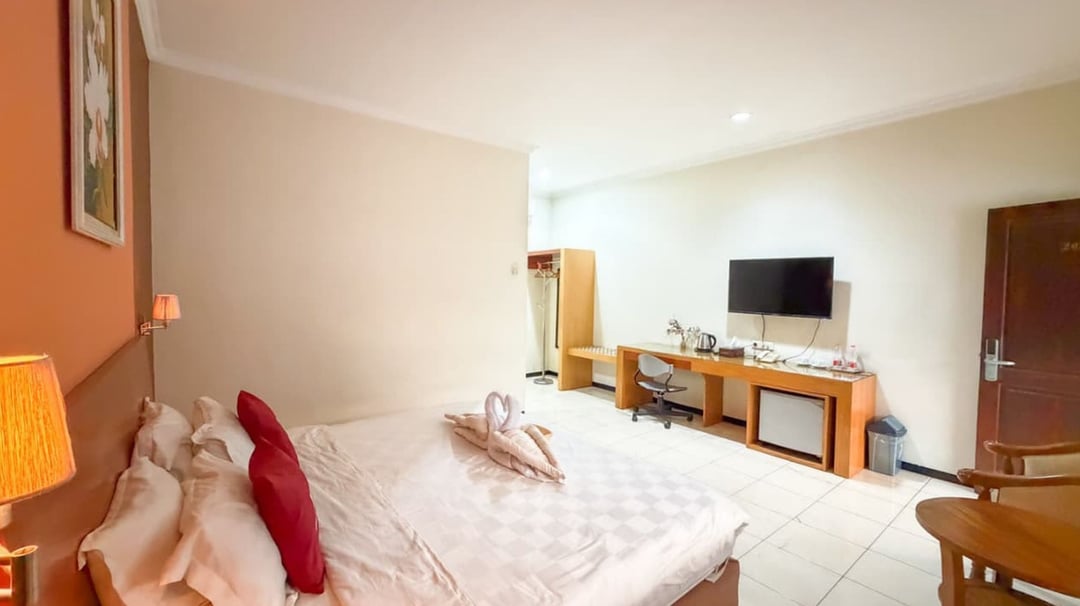
On-site facilities include free Wi-Fi, parking, a restaurant, a function room, room service, and massage services. The restaurant is open from 6:00 a.m. to 10:00 p.m. Western Indonesian Time (WIB).
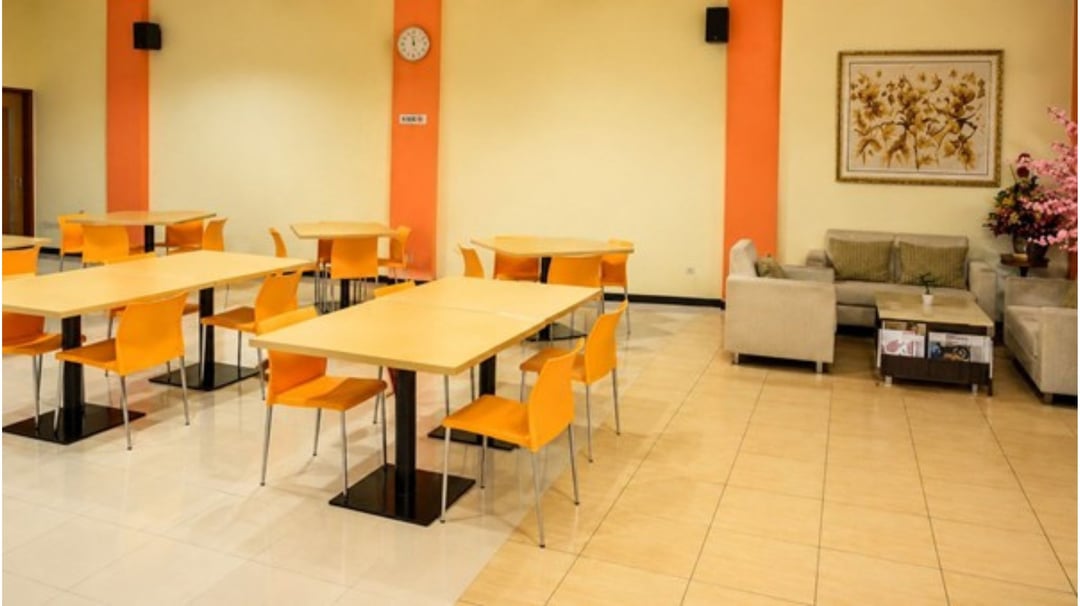
Room rates range from IDR 200,000 to IDR 350,000 per night, depending on the room category and time of booking. For groups requiring multiple rooms over several nights, this price range can assist in managing accommodation costs effectively.
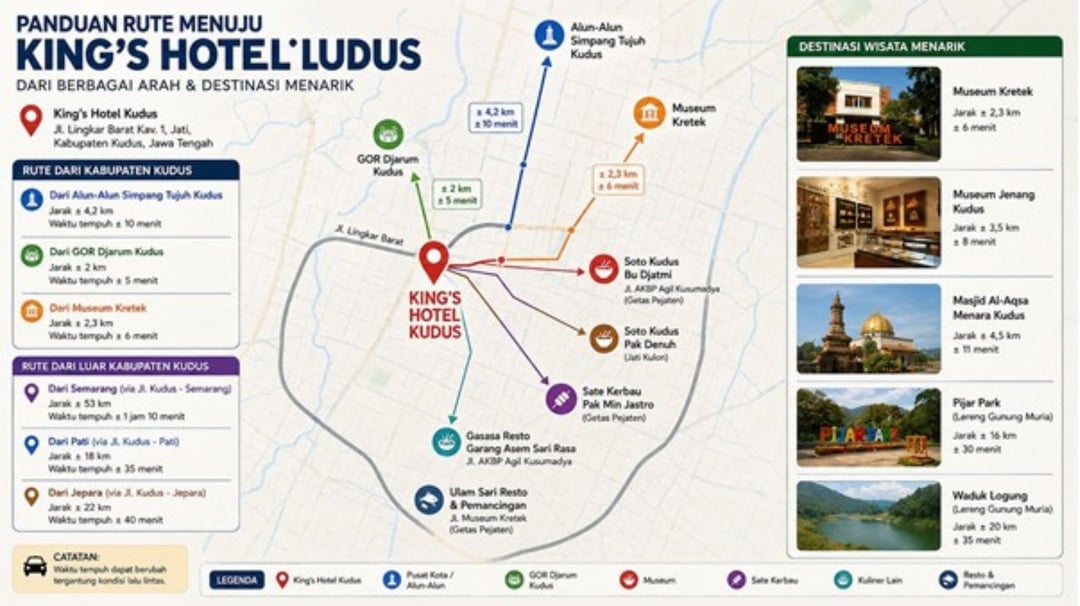
The location in the Jati area also provides access to numerous dining establishments, allowing guests to explore local culinary options without needing to travel to the city center after their activities.
Soto Kudus Bu Djatmi on Jalan AKBP Agil Kusumadya in Getas Pejaten serves chicken and buffalo meat soto. Another popular option is Soto Kudus Pak Denuh in the Jati Kulon area.
For guests looking to sample other local specialties, Warung Makan Sate Kerbau Pak Min Jastro in Getas Pejaten is a notable choice. Garang asem can be found at the Gasasa Garang Asem Sari Rasa restaurant on Jalan AKBP Agil Kusumadya.
For groups or families seeking a more relaxed dining atmosphere, Ulam Sari Resto & Pemancingan on Jalan Museum Kretek offers Indonesian cuisine and freshwater fish dishes.
King’s Kudus Hotel is also located near the Kretek Museum in the Getas Pejaten area. Guests with extra time may wish to visit the Jenang Kudus Museum or the Al-Aqsa Menara Kudus Mosque.
Other local attractions are situated along the slopes of Mount Muria, such as Pijar Park and the Logung Dam. While athletes must prioritize their match schedules and recovery, these locations offer alternative activities for families, supporters, and crew members during their leisure time outside of the venue.

Another two-star accommodation option is the Sunrise Hotel Kudus, located at Jalan AKBP Agil Kusumadya Number 103, Jatimakmur, Jati Wetan.
Situated along the main thoroughfare leading into Kudus city and just one minute from the Kudus Bus Terminal, the hotel offers convenient access for guests arriving by private or public transport.
The hotel is approximately 2.5 kilometers from GOR Djarum, a commute that takes about six minutes by car under normal traffic conditions.
The property features 30 guest rooms, including Superior Queen and Deluxe Queen configurations. Superior rooms measure approximately 12 square meters with a queen-sized bed, while Deluxe rooms offer roughly 16 square meters of space.
Each room is equipped with air conditioning, complimentary Wi-Fi, a smart TV, a bathroom with a hot shower, and windows. The hotel also provides a 24-hour reception and security system, luggage storage, and parking facilities.
For group needs, the hotel provides a small dining area or café and a function room suitable for meetings or coordination sessions while staying in Kudus.
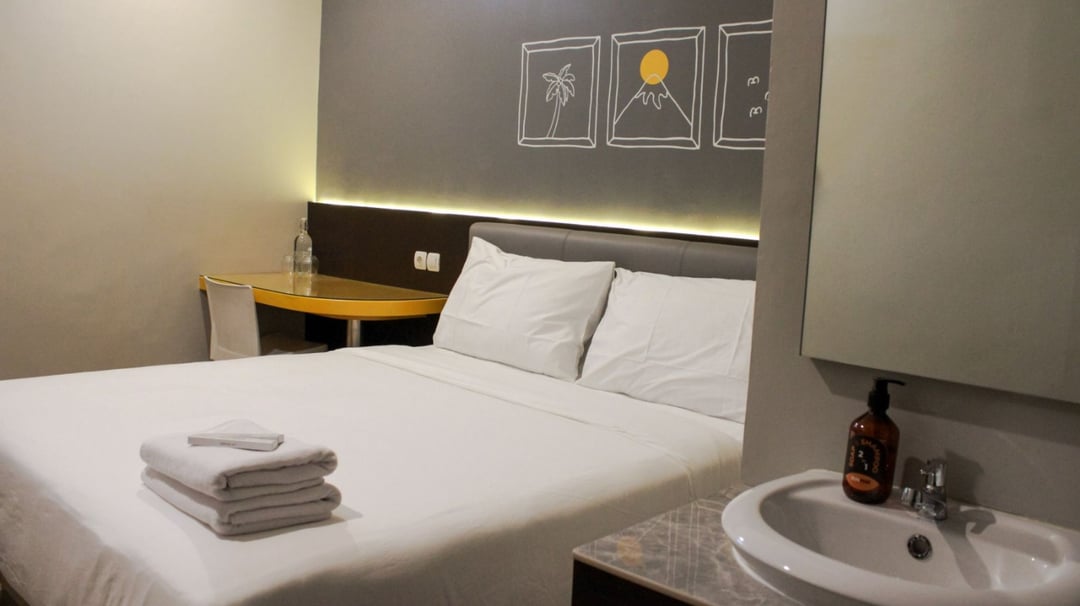
Room rates range from Rp230,000 to Rp300,000 per night, depending on the room category and breakfast inclusions.
Guests have access to several dining options in the Jati area, including Nasi Uduk Rojo Sambel on Jalan AKBP Agil Kusumadya, which offers a variety of dishes such as fried duck, squab, muscovy duck, chicken, and catfish served with an array of sambal.
Soto Kudus Pak Denuh in Jati Kulon remains an alternative choice for those wishing to sample traditional Kudus soto.
For activities outside the hotel, the Kretek Museum is located in the Jati district and is easily accessible by vehicle. The museum documents the history and development of the kretek cigarette industry in Kudus.
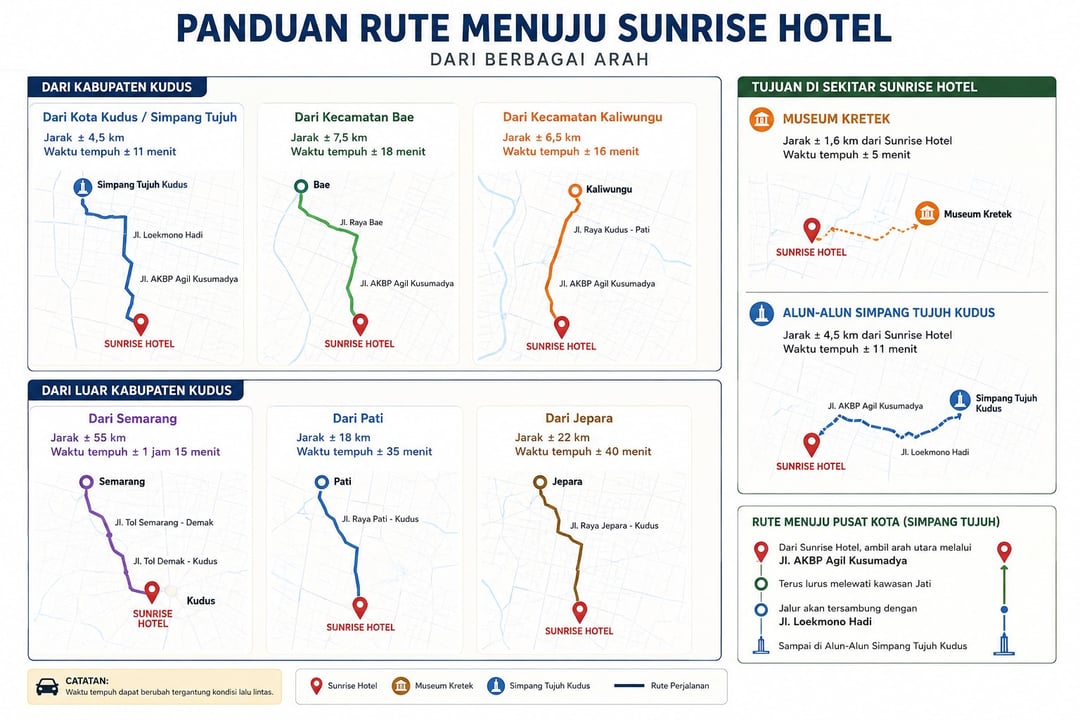
For those traveling to the city center, the Simpang Tujuh Kudus square is located approximately 4.5 kilometers from the Sunrise Hotel, or about an 11-minute drive under normal traffic conditions. The route runs north along Jalan AKBP Agil Kusumadya, connecting to Jalan Loekmono Hadi toward the Simpang Tujuh area.
The variety of dining options and tourist destinations around the hotel can be particularly useful for the families of participants, supporters, or other guests with spare time outside of event schedules.
Guests traveling for sports events have different activity patterns than typical tourists. Competition schedules, training sessions, technical meetings, and preparations mean that hotel check-in and check-out times do not always follow traditional travel patterns.
Crews and organizers also have unique requirements. During large-scale events like the Caffino Srikandi Merdeka Cup, some crew members may begin working before matches start and only return after all venue operations are complete.
Such conditions require hotels to accommodate group needs, ranging from breakfast timing and vehicle access to parking availability and space for coordination.
For the Indonesian Hotel and Restaurant Association (PHRI), service quality is a critical factor as the city increasingly hosts sports events.
“As a host for sports tourism, Kudus must provide maximum service. We continue to educate our members to deliver service excellence so that guests leave with a positive impression of Kudus,” said Kirom.
This preparedness extends beyond athletes. During an event, hotels must accommodate coaches, officials, organizers, crew, participants' families, and supporters simultaneously.
With a diverse guest profile, hotel requirements vary. Some prioritize proximity to the venue, others consider room capacity, while some groups are more price-sensitive due to the size of their contingent or the length of their stay.
A packed sports calendar also increases the demand for rooms during specific periods. When major events take place, guests arrive at nearly the same time, leading to rapid depletion of room availability.
This situation makes accommodation mapping a crucial part of event preparation. Organizers must calculate the number of participants, officials, and crew, as well as room needs, proximity to the venue, and transportation.
“The supply of rooms in Kudus is actually quite limited. When a major event occurs, almost all hotels are booked because of the large number of contingents,” Kirom noted.
The presence of various hotel classes is therefore necessary to distribute guests. Higher-rated hotels can serve athletes, officials, or specific guests, while two-star hotels provide options for crew, organizers, chaperones, and groups requiring more affordable rates.
The King’s Hotel Kudus and Sunrise Hotel Kudus fill this segment. Both offer essential facilities, relatively affordable rates, and close proximity to GOR Djarum and the Jati area.
The relationship between sports events and the accommodation sector is interconnected. Hotels require transportation access, guests need dining options, and time away from matches often leads visitors to souvenir shops or tourist destinations.
Kirom believes that cooperation among stakeholders is essential for the development of sports tourism.
“Synergy between event organizers, tourism operators, transport providers, and hotels is key to successfully developing sports tourism,” he stated.
When discussing sports tourism, the focus often centers on venues, match quality, participant numbers, and event promotion. However, a city's ability to provide adequate accommodation is equally critical to its capacity to host large influxes of visitors.
The Caffino Srikandi Merdeka Cup highlights the accommodation requirements for an international event that draws not only players and officials but also organizers and crew. The PB Djarum General Auditions reflect a different pattern, with 1,601 participants arriving from various regions alongside their support ecosystems.
Both examples underscore the necessity for a diverse range of hotel options.
Two-star hotels serve a unique purpose beyond being a fallback when other options are fully booked; they cater to guests seeking strategic locations, essential amenities, and budget-friendly rates.
For those attending events in the Jati area and GOR Djarum, Hotel King’s Kudus and Sunrise Hotel Kudus are two viable options. Beyond their proximity to the venues, both offer access to dining, the city center, and various tourist attractions.
Ultimately, the event experience is defined by more than just what happens in the arena.
“A hotel is not just a place to sleep. It is the first face a guest sees upon arriving in Kudus,” said Kirom.
As the sporting calendar expands, the demand for diverse accommodation increases. Two-star hotels complement the hospitality landscape in Kudus, reinforcing the city's readiness to host visitors for various sporting events. (ITN/mainkekudus)