
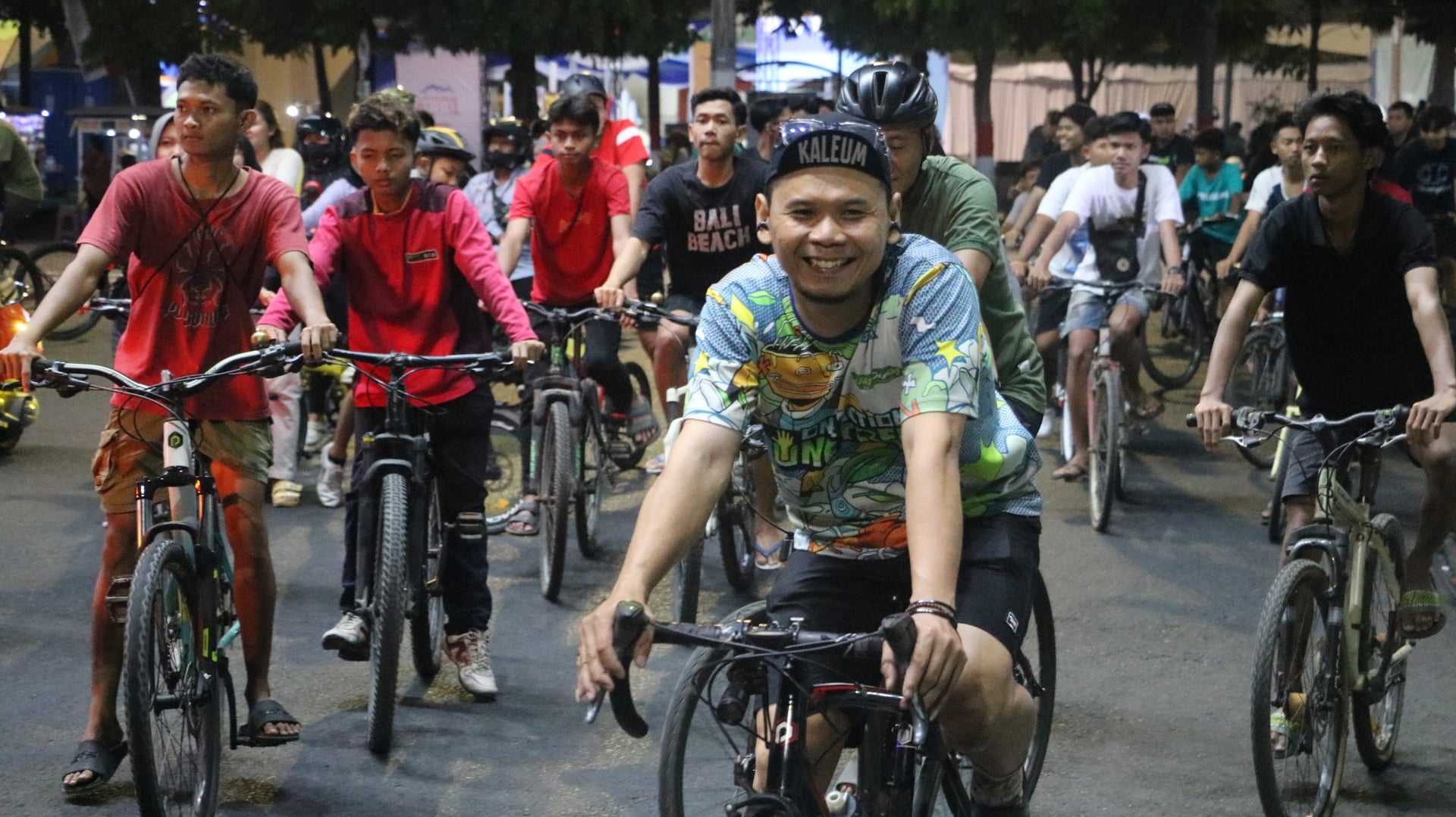
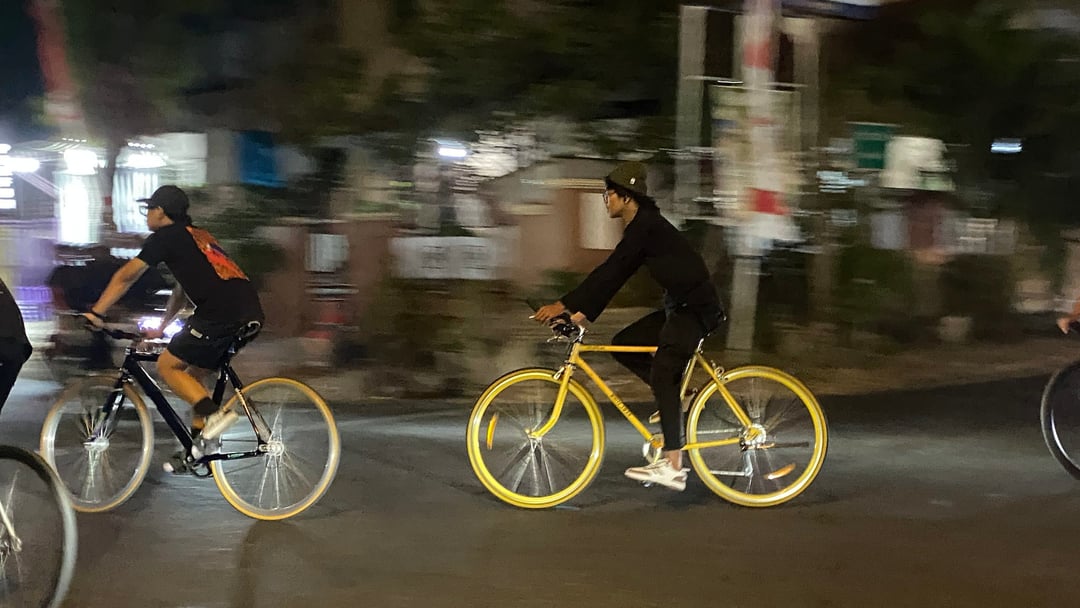
KUDUS – A Friday night at the Kudus Town Square. A gentle breeze cuts through the Simpang Tujuh area. Near the pedestrian bridge, the sound of bicycle chains and bells begins to ring out. One by one, cyclists arrive from all corners of the city, riding everything from heavy-suspension mountain bikes, practical folding bikes, and BMXs to aerodynamic racing bikes and elegant classic roadsters.
There is no starting line, no uniform team jersey, and certainly no podium awaiting at the finish. Here, there are no seconds to beat; everyone gathers for one fundamental reason: to ride together.
That night, the Kudus Last Friday Ride (KLFR) held its 153rd volume. Approximately 500 to 600 cyclists filled the city streets, rolling slowly along Jalan Sudirman, heading toward Pentol, passing through Bejagan Kiri, Megawon, and Japan, circling the historic Kretek Museum area, crossing the former Matahari Kebarat site, turning east at the Jember intersection, and finally returning to Simpang Tujuh.
For those in the pack, this journey is more than just moving from point A to point B. Late-night cycling offers a new way to experience Kudus. The city, usually a blur when viewed from a car window or motorcycle helmet, suddenly slows down. Dimly lit street food stalls, the aroma of coffee from roadside cafes, and small shops preparing to close appear clearer, quieter, and more authentic.
Yet, Volume #153 is just one small chapter of a long narrative. Long before such a large group took over the night streets, this movement has relied on a spirit of consistency dating back to 2012.
KLFR was not born from formal board meetings or grand strategic planning. It sparked from casual conversations among friends at a street corner in 2012. Soni, one of the original founders, recalls the simplicity of their initial dream, inspired by the Critical Mass movement in Yogyakarta that successfully united diverse groups of people.
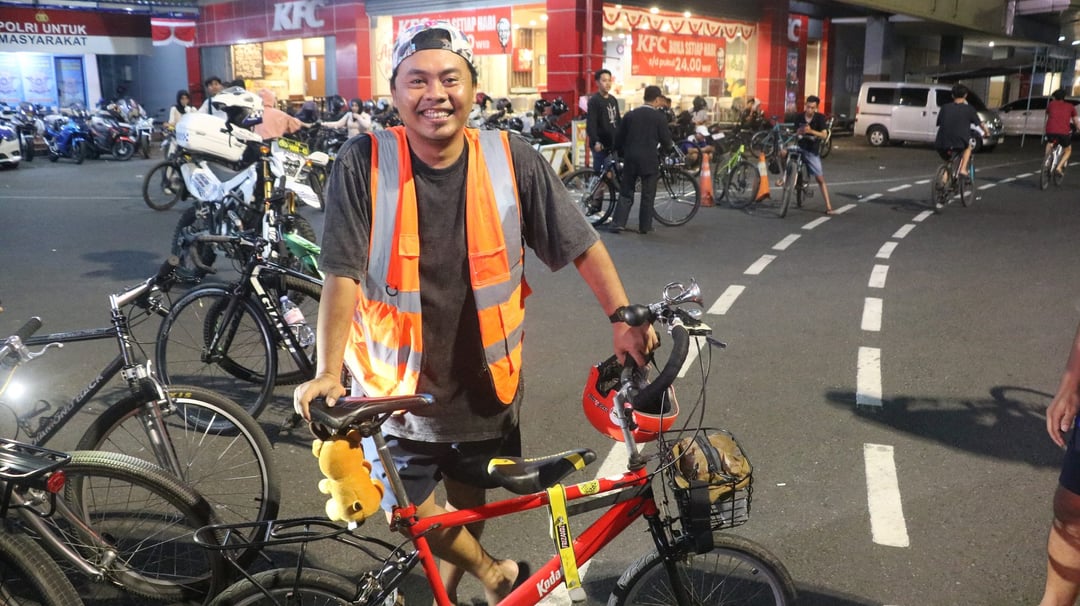
“KLFR started from a casual chat,” Soni recalled. “It was inspired by a similar movement in Yogyakarta. At the time, there was no complex concept; we just wanted to create a space for group riding while signaling to other road users that cyclists exist.”
The date was chosen intuitively: the last Friday of every month, with the Kudus Town Square as the designated meeting point. Driven by the sight of roads increasingly dominated by fossil-fuel-powered machines, this simple schedule evolved into a tradition that has endured for over a decade.
One principle remains strictly upheld: inclusivity. Anyone can join without complex registration or fees. There is no need to belong to a specific cycling club, and no reason to feel intimidated by the brand of bicycle one rides.
“If you want to join, just show up, and we will ride together,” Soni added.
This simplicity effectively dissolves the barriers between organizers, established community members, and the general public, allowing anyone to merge into the group without feeling like an outsider.
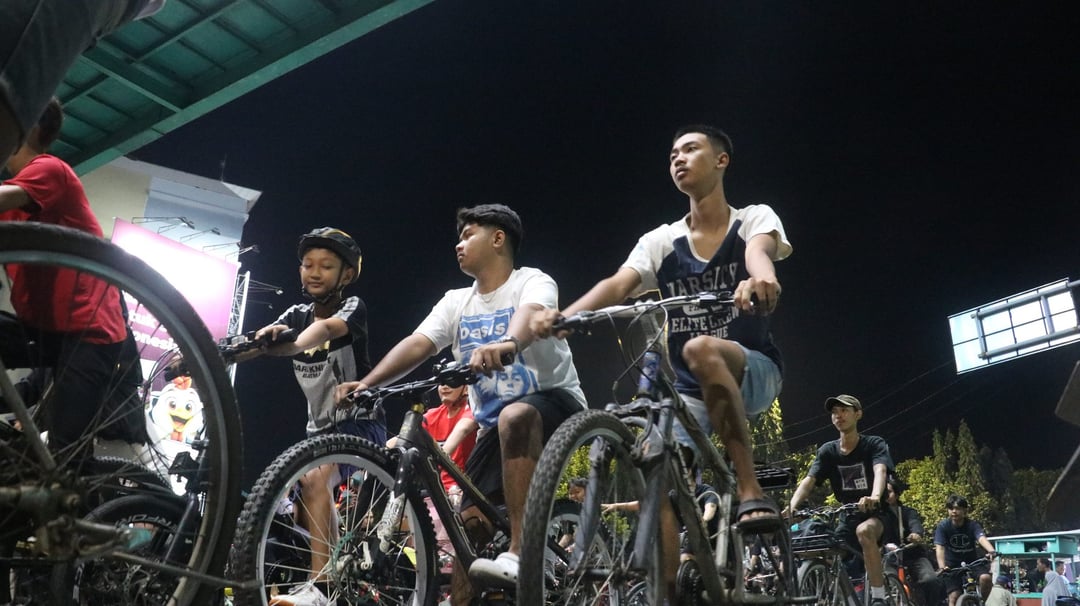
In its early days, KLFR attendance was minimal. However, as word spread through social media and community networks, the small assembly steadily grew into a major gathering.
Organizers once tracked attendance by distributing stickers at the starting point. When 300 stickers were claimed within minutes, they realized the enthusiasm for cycling in Kudus had far exceeded their expectations.
"We used to track participants with stickers. We would make 300, and they would be gone instantly. Now, it feels awkward to use stickers because the group has become so large," said Soni with a chuckle.
Today, the event draws cyclists from well beyond Kudus, with participants from neighboring regencies such as Jepara, Pati, and Demak routinely riding dozens of kilometers to celebrate the tradition on the last Thursday of the month in Kudus.
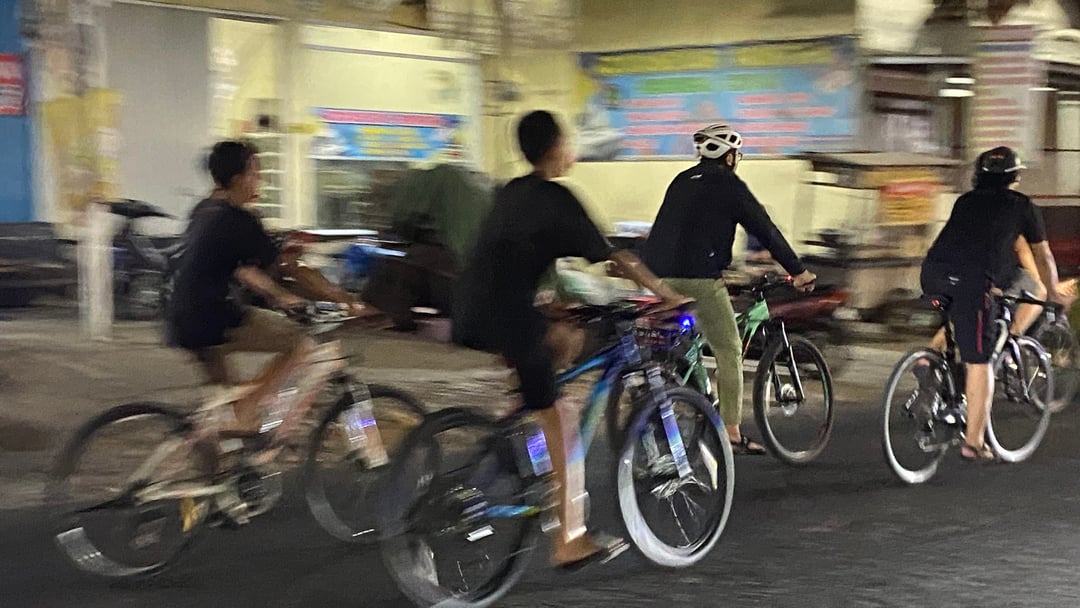
This expansion presents technical challenges. A procession stretching hundreds of meters can no longer move without coordination. Traffic management must be more precise, especially when crossing busy intersections or traveling through congested areas.
While routes were initially determined spontaneously, they are now planned in advance. Experienced cyclists are designated as marshals to manage traffic at critical junctions, ensuring the safety of participants and other road users.
"As it gets more crowded, we definitely need a route plan that includes traffic control," Soni explained.
Volume 153 followed a diverse route, starting from Jalan Sudirman, heading toward Pentol and Bejagan Kiri, and continuing to Megawon and Japan.
The group passed the Kretek Museum before moving through the X Matahari Kebarat area and toward the P4tan Jember intersection, eventually concluding at Simpang 7.
For participants, the rotating route keeps the experience fresh, revealing familiar streets in a new light during evening rides.
For the cyclists, exploring new routes each month is always a refreshing experience. Rinto Gus Panoraga, PIC of Rodalink Kudus and head of the Rodalink Cycling Community, who has been involved for the past year, notes that the nocturnal atmosphere remains an unmatched draw.
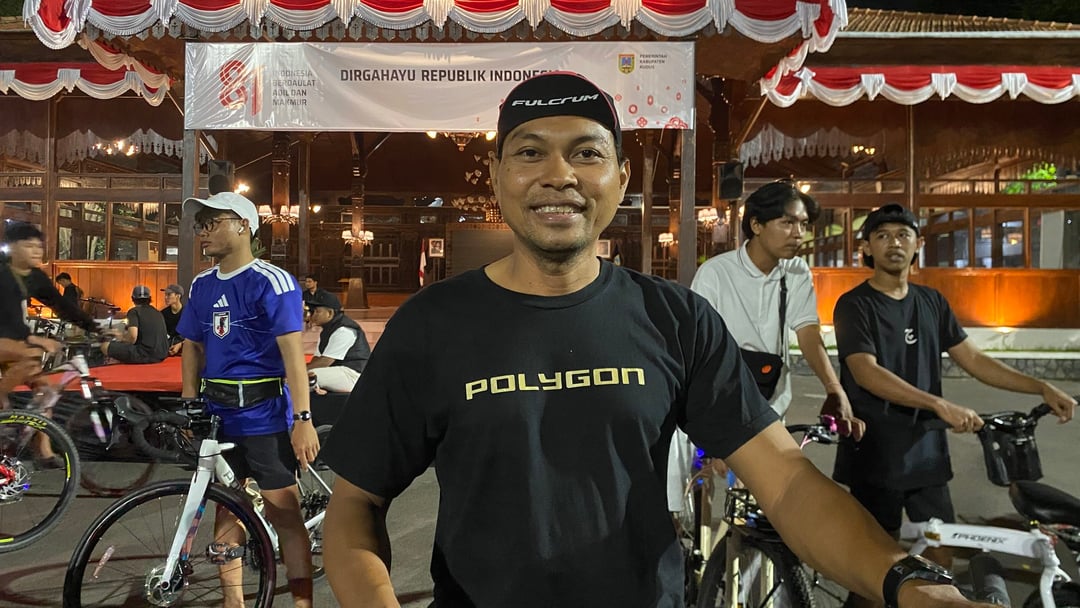
“We chose night rides because traffic is lighter and the weather is cooler. Plus, the routes vary, which makes it enjoyable,” Rinto said.
A relaxed pedaling pace allows the mind to unwind from the stress of a hectic week. Night cycling makes the urban environment feel more human-centric.
“Friends also get to discover new spots along the way, like traditional food stalls, coffee shops, and local stores,” he added.
This slower pace offers a chance to truly experience the surroundings—a perspective rarely captured when driving a car or riding a motorcycle at high speeds. Kudus becomes more than just a blur of buildings outside a window; it emerges as a vibrant, living space.
The core appeal of KLFR lies in the diversity of its participants. Within this group, there are no social barriers or lifestyle pretensions. High-end bicycles costing tens of millions of rupiah ride alongside vintage models with weathered paint.
“The beauty of KLFR is that it accommodates every type of community,” Rinto noted proudly.
“Whether it's BMX, folding bikes, mountain bikes, road bikes, or even classic vintage bicycles, everyone is welcome. It is a fantastic way to meet new people.”
This variety of equipment facilitates natural conversation, breaking the ice between strangers who might find themselves chatting about gear ratios or navigation while riding side by side.
For independent cyclists not affiliated with a formal group, KLFR offers a welcoming environment. Ulil Hidayatil Masroh, affectionately known as Saroh, discovered the group through Instagram and found it to be a perfect fit.
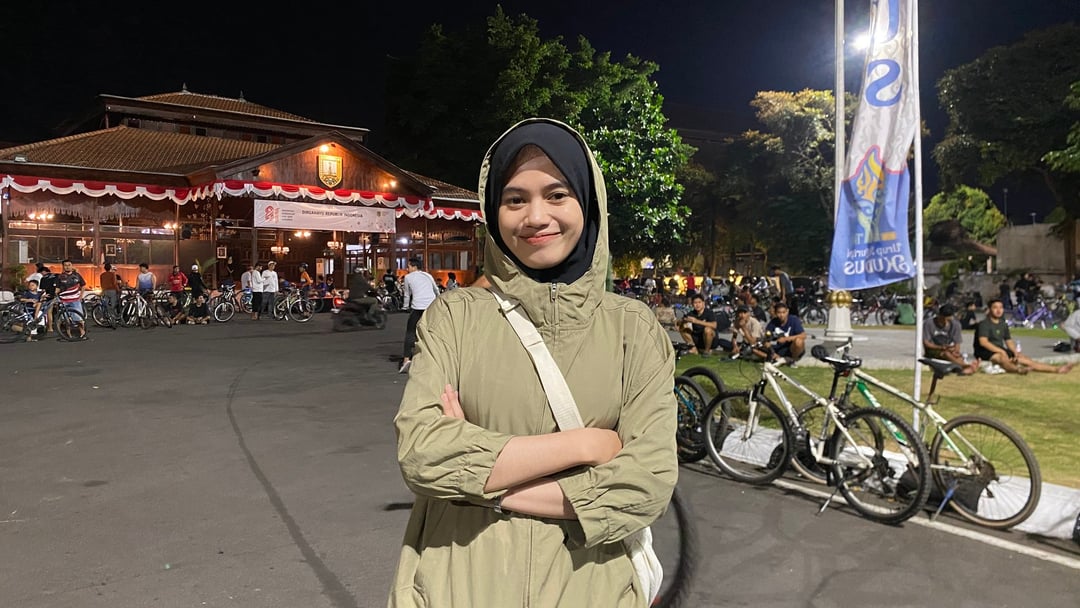
Driven by curiosity and a passion for cycling, Saroh decided to head to the Kudus Town Square in early 2025.
“I was interested in joining because I love cycling. When I learned about this event, I decided to join for the fun of it,” said Saroh.
Before joining KLFR, Saroh typically cycled alone. Her daily route was routine, circling the Oasis area, passing through Ngembalrejo, and heading back home to Rendeng. However, cycling alongside hundreds of others at KLFR completely transformed her perspective on the sport.
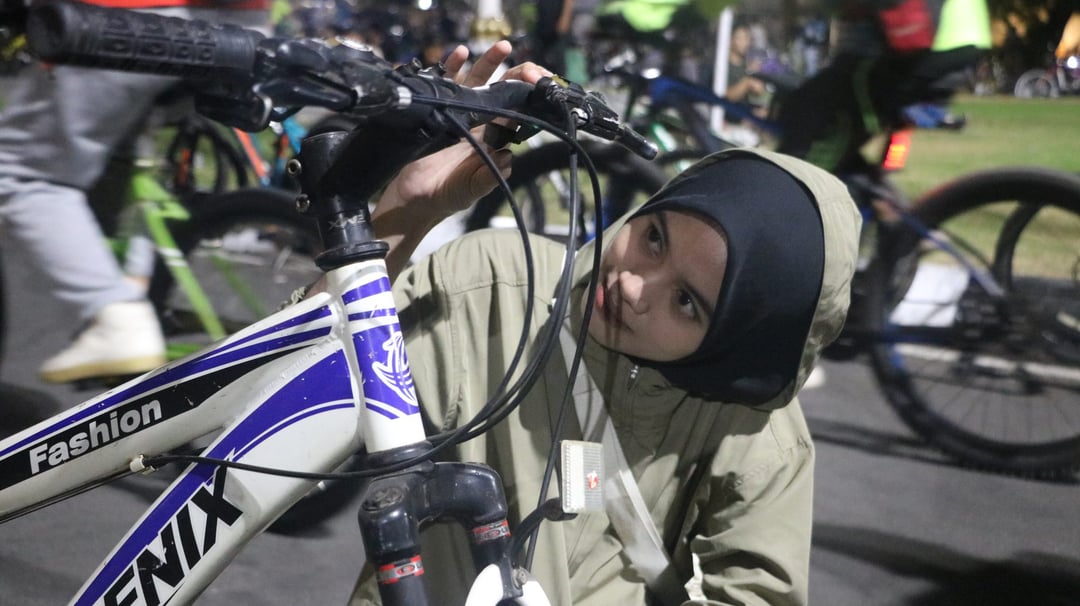
“It was a really exciting experience because I usually cycle alone, then suddenly I was cycling with a large group. There were also many fun people,” she said.
Saroh’s story illustrates the social effectiveness of KLFR. One does not need a club membership or expensive gear to enjoy the city streets in a safe and enjoyable environment.
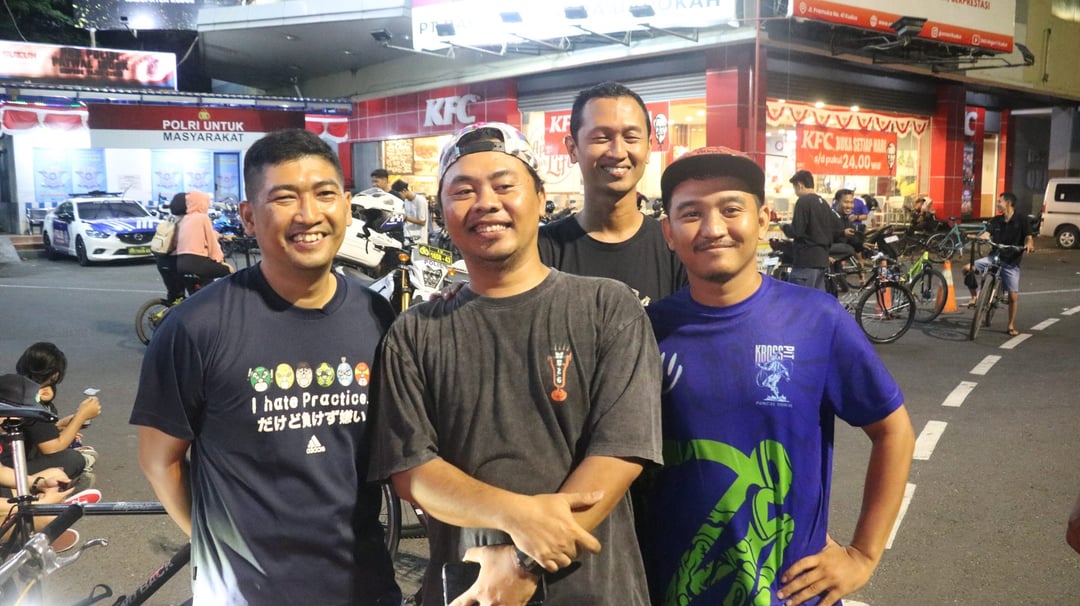
Over time, KLFR has evolved from a simple evening sports event into a fluid space for social interaction. Participants are motivated by different factors; some aim for a workout, others use the opportunity to socialize with peers, while some simply look to expand their network.
However, once the ride begins at the Town Square, these background differences fade away. The group moves as one organic unit, with members pacing themselves to ensure no one is left behind.
From Rinto's perspective, this monthly tradition serves an important educational purpose for the public. Indirectly, KLFR promotes a healthy, environmentally friendly lifestyle amid the pervasive issue of vehicle pollution.
"It also encourages our friends to become stronger cyclists, save fuel, be environmentally friendly, and eventually serve as an example for children to stay physically active," he said.
Interactions between communities throughout the journey have fostered a sense of solidarity among cyclists in Kudus and the surrounding areas. They learn to respect road space and cultivate the habit of sharing the asphalt fairly.
Maintaining an independent movement for 14 years without major sponsors or a rigid organizational structure is no small feat. The keys are consistent repetition and a sense of collective ownership.
As the end of the month approaches, text messages and digital posters circulate on social media. City residents automatically recall an unspoken promise: the last Friday night of the month is time to ride.
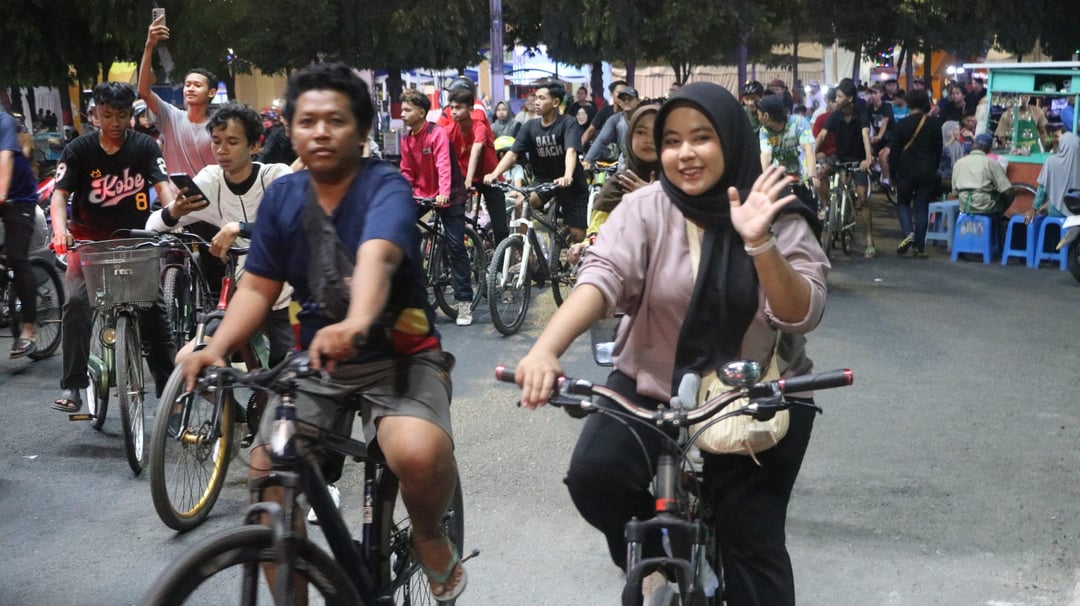
Beyond recreational and social values, Soni emphasizes that KLFR carries a symbolic mission advocated since its inaugural edition: demanding public awareness regarding the rights of cyclists on public roads.
The presence of hundreds of cyclists occupying city streets for several hours serves as a subtle yet firm reminder that roadways are not the exclusive domain of motorized vehicles. Cyclists are legitimate road users entitled to safe and comfortable space.
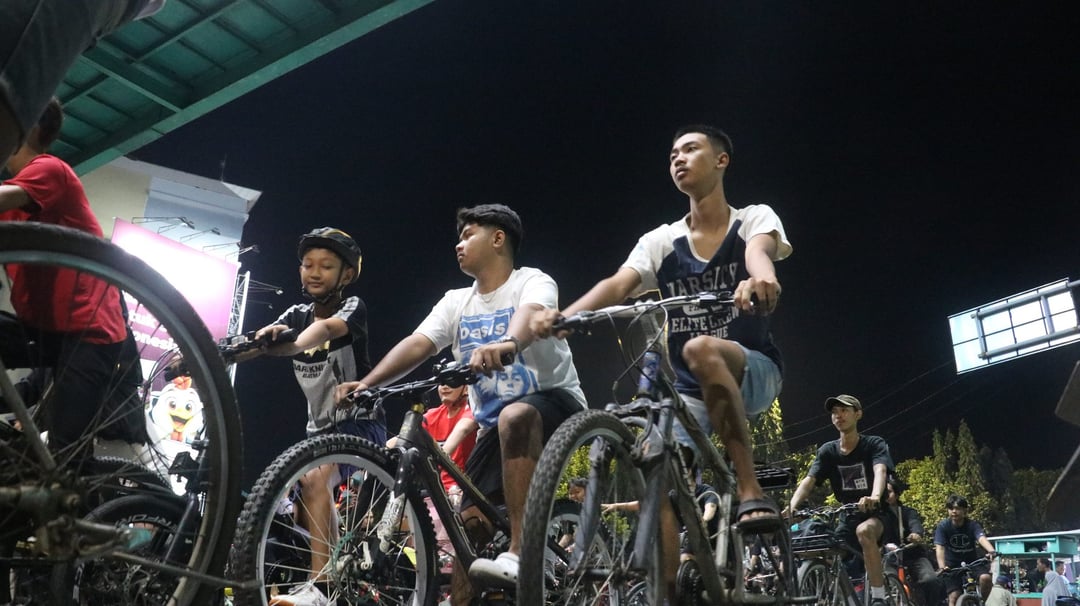
"The message we want to convey is simple: we are on the road," asserted Soni.
According to him, the presence of cyclists needs to be further considered in the planning and management of road space. This attention is not only necessary for those cycling for sport but also for citizens who rely on bicycles for daily mobility.
"The hope is certainly for more attention to be paid to providing safe and comfortable road space for people using bicycles, whether for exercise or daily commuting," he continued.
Therefore, Volume #153 is more than just a number in the KLFR journey. It holds an accumulation of stories built over 14 years: new friendships formed on pedals, conversations sparked along the way, routes winding through the darkness of night, and the collective dedication of city residents who refuse to surrender all road space to motor vehicles.
At every event, participants arrive with different bikes, backgrounds, ages, and motivations. Yet, once the ride begins, those differences fade into a unified rhythm of pedaling. There is no pressure to be the fastest or the most prominent. Everyone moves as part of a group that looks out for one another.
The founders' hopes are modest. They simply want the light of this movement to endure: consistent in execution, warm in camaraderie, increasingly well-organized, and open to anyone who wishes to join the ride.
"The hope is that it remains consistent, stays vibrant, and becomes even more well-organized," said Soni.
He also hopes the spirit of cycling fostered through KLFR does not end when the group reaches its destination. The goal is for that energy to carry over into daily life, encouraging more residents to choose the bicycle as a mode of transport.
"We hope the cycling enthusiasm does not end with the monthly KLFR event. Ideally, the bicycle should become a daily mode of transportation," he concluded.
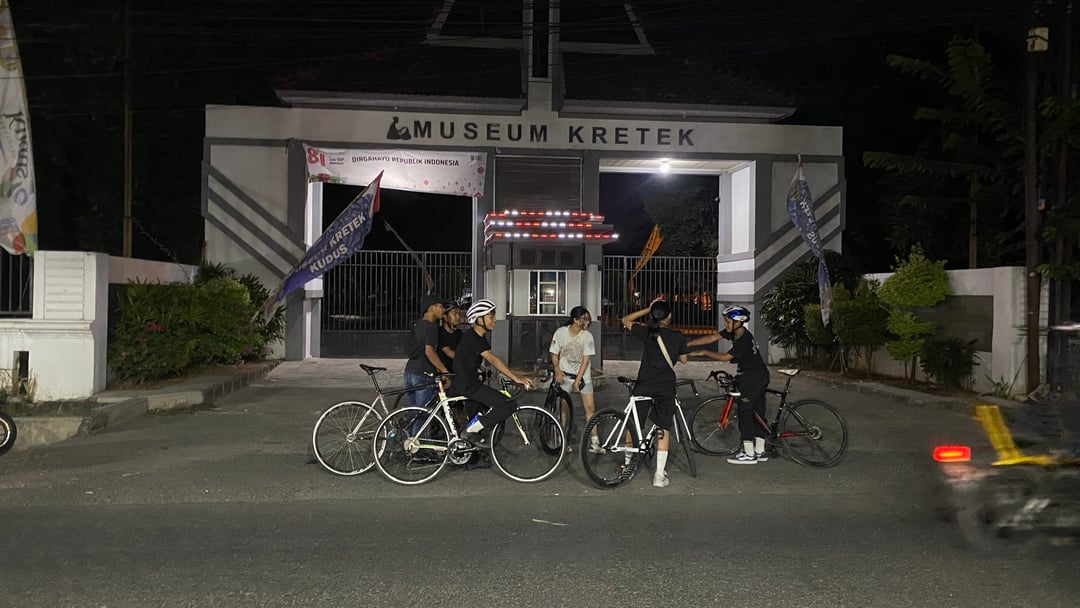
When the last Friday of the following month arrives, bicycle wheels will turn once again beneath the pedestrian bridge at the Kudus Town Square. Old and new participants will reunite, share greetings, and pedal through the Kudus night air. Rather than racing to be the fastest, they simply continue to pedal, keeping the tradition alive on the city streets. (FZ/mainkekudus)