
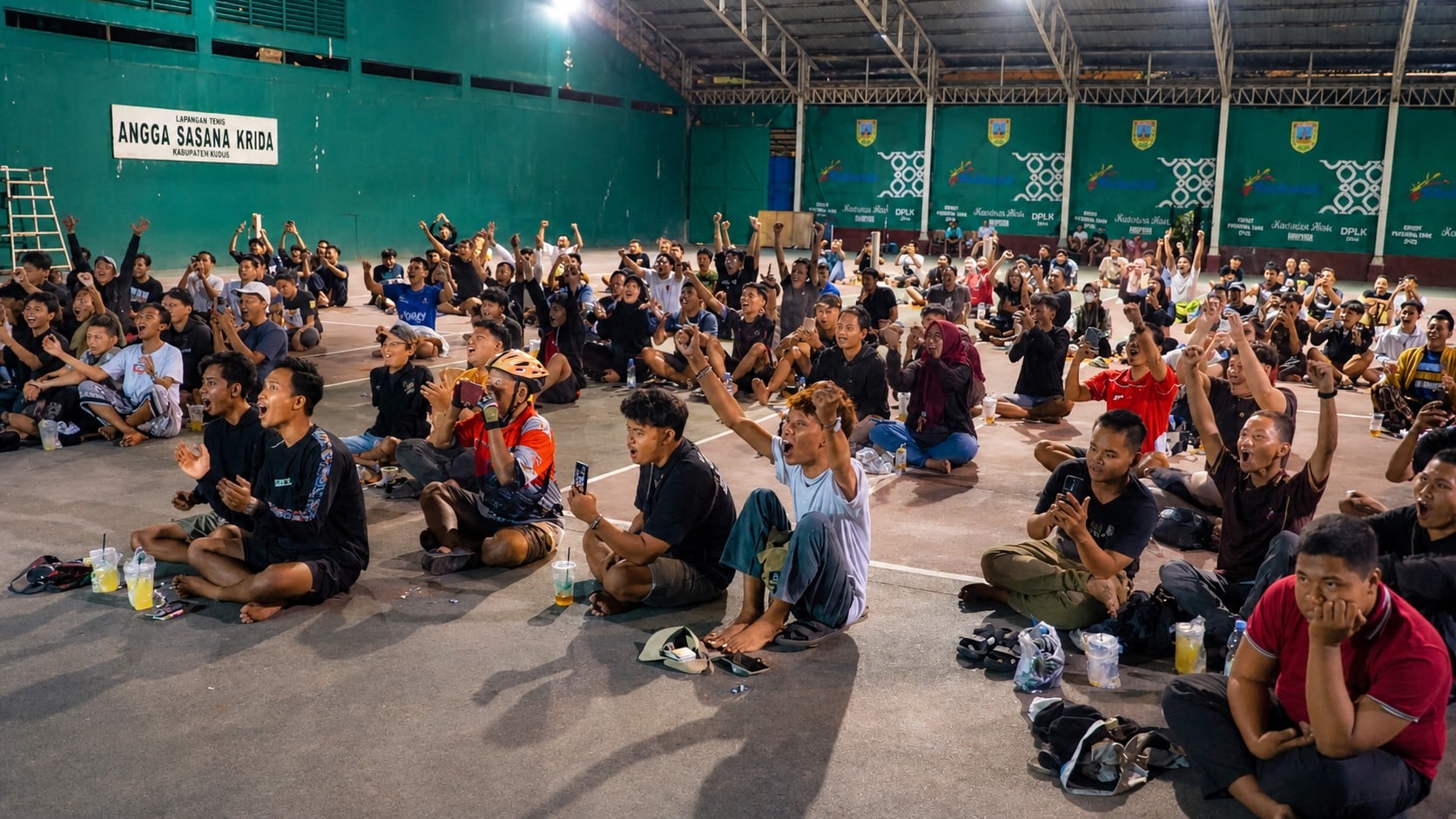
Kudus – Applause and cheers erupted every time the Indonesian national team approached the Singaporean penalty box. Some spectators stood, while others joined in shouting their support. That night, a facility typically used for tennis was transformed into a public viewing hub for the residents of Kudus.
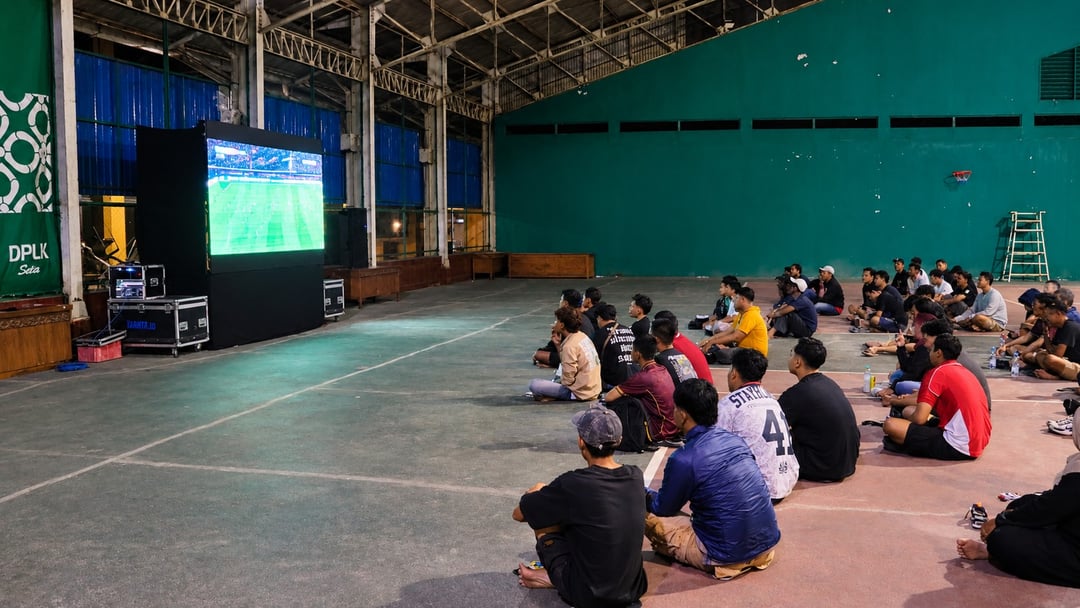
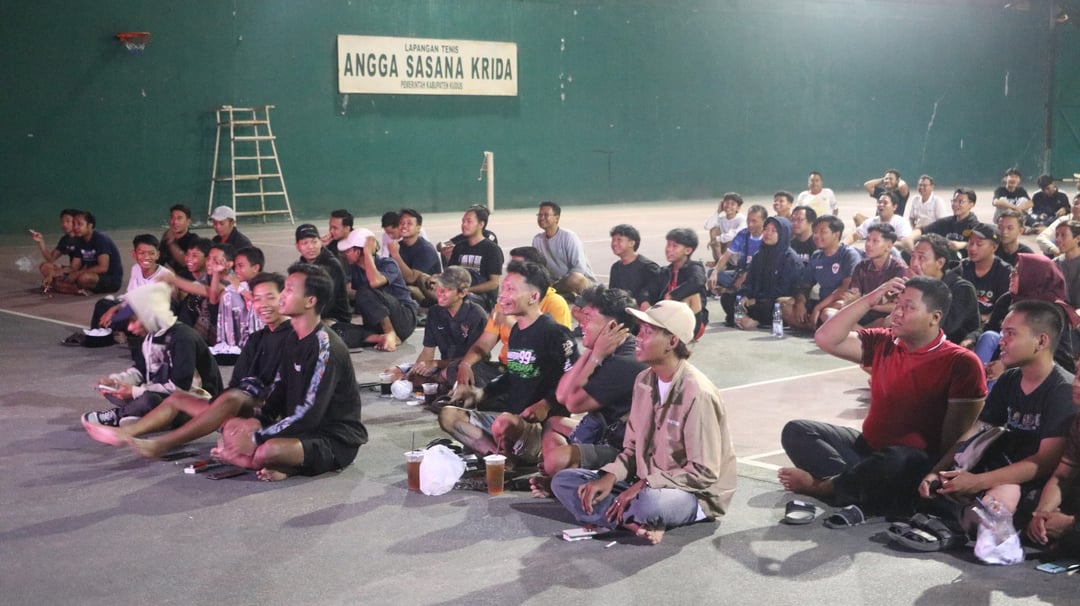
On Friday evening, September 25, 2026, the Indonesian national team faced Singapore in a FIFA ASEAN Cup 2026 Division 1 Group A match at the Gelora Bung Karno Stadium in Jakarta. Hundreds of kilometers from the arena, residents of Kudus watched Indonesia's opening match on a screen at the Angga Sasana Krida Indoor Tennis Court, located on the west side of the Kudus Regency Pendopo.
Fans arrived with family, partners, friends, or alone. When Indonesia scored, a collective roar filled the room, bringing the tennis court to life throughout the match.
Hosting public viewings for national team matches is not new for the Kudus Regency Government. Similar events have previously been held at the Simpang Tujuh Town Square and the Kudus Regency Pendopo. While the venues may change, the spirit remains the same: providing a space for residents to share in the excitement of sports.
For the Indonesia-Singapore match, a viewing party was initially scheduled at the Kudus Regency Pendopo. However, as the site was being prepared for other events, organizers relocated the gathering to the Angga Sasana Krida Indoor Tennis Court to ensure the event could proceed.
The relocation occurred because the Kudus Regency Pendopo is currently being prepared for the MURI record-breaking attempt for the Tari Lajur Caping Kalo dance.
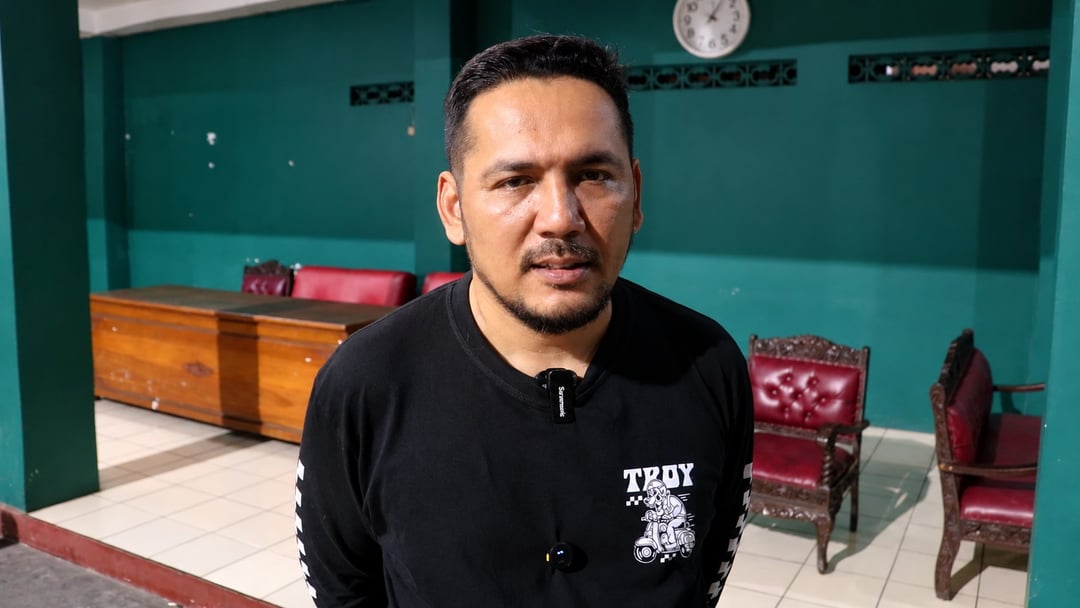
The Head of the Kudus Regency Communication and Informatics Office, Satria Agus Himawan, who served as an event organizer that night, stated that the tennis court was selected as an alternative due to its sufficient capacity to accommodate the crowd.
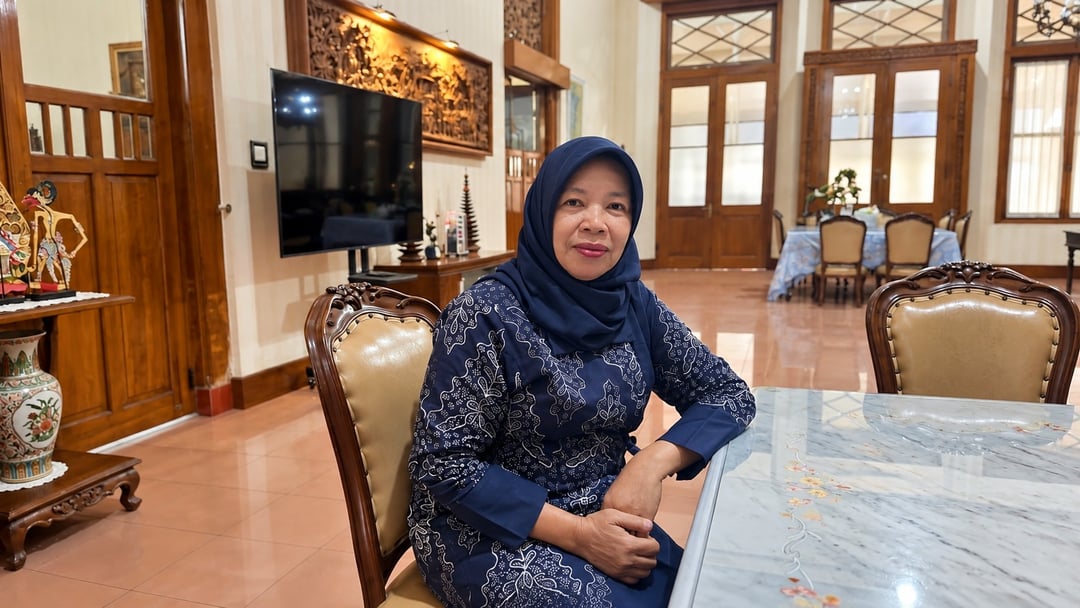
Meanwhile, the Head of the General Affairs Division of the Kudus Regency Regional Secretariat, Abdjad Atfiyah Noor, noted that the Angga Sasana Krida Indoor Tennis Court has been in operation since approximately 1989 and is managed by the Regional Secretariat's General Affairs Division.
The facility primarily serves as a sports venue for regional government and Forkopimda employees. It can also be utilized for district-level competitions or situational government activities.
“This is only an emergency arrangement because the pavilion is being used for another event,” said Abdjad.
Therefore, the use of Angga Sasana Krida for the public viewing event does not alter the venue's primary function. It serves as a solution when the originally planned location becomes unavailable.
On the other hand, moving the venue highlights the continued enthusiasm of residents for sports. Rather than canceling the activity when the pavilion was unavailable, the Kudus Regency Government utilized alternative facilities so residents could still gather and support the national team.
This choice also provided a unique experience. For some spectators, the public viewing of Indonesia against Singapore was their first time visiting the Angga Sasana Krida Indoor Tennis Court.
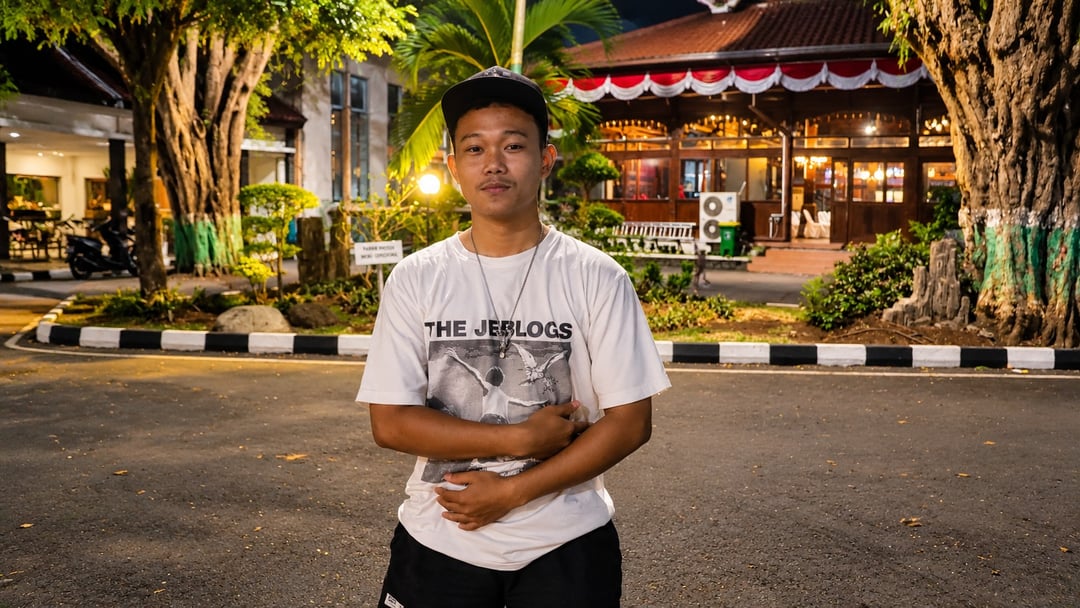
Muhammad Rifki Abdurrahman, a Dawe resident, admitted he had never been to the Angga Sasana Krida Tennis Court before. He learned about the public viewing event on social media and decided to attend to watch the match with other residents.
His first impression was brief.
“It’s exciting, fun, and crowded,” he said.
The atmosphere became more lively when Indonesia scored. Ragnar Oratmangoen opened the scoring in the 13th minute, followed by an Ole Romeny penalty in the 74th minute. Indonesia secured a 2-0 victory.
For Rifki, the public viewing event also provided an opportunity for national team supporters to meet and show their support together.
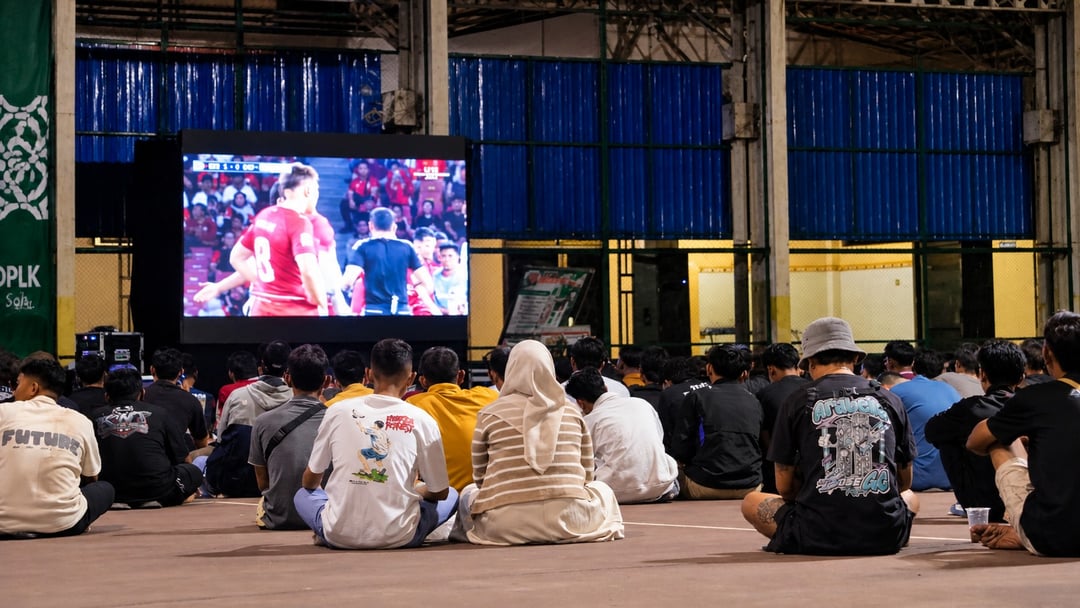
It was not just the goals that drew reactions from the crowd. Every scoring chance, foul, and attack into the penalty box sparked nearly simultaneous responses from people who might have been strangers to one another.
The match became a focal point. Residents attending with families, partners, friends, or even alone sat in the same space, cheering for the same team.
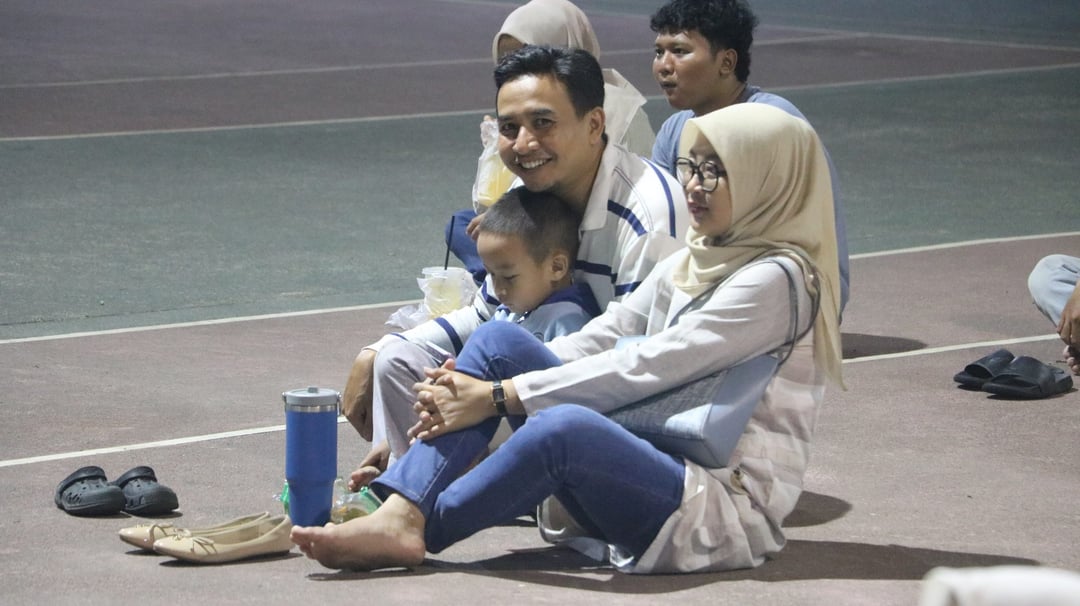
Haris Irwanto traveled from Kaliwungu with his wife and child after learning about the public screening event on social media, intending to watch the match with his family.
He described the atmosphere at the tennis court as both lively and enjoyable.
“It’s exciting,” he said.
Haris suggested that similar events should be held in the future. He noted that if the Angga Sasana Krida venue were used again, he would likely attend, as the environment is relatively quiet and comfortable for family viewing.
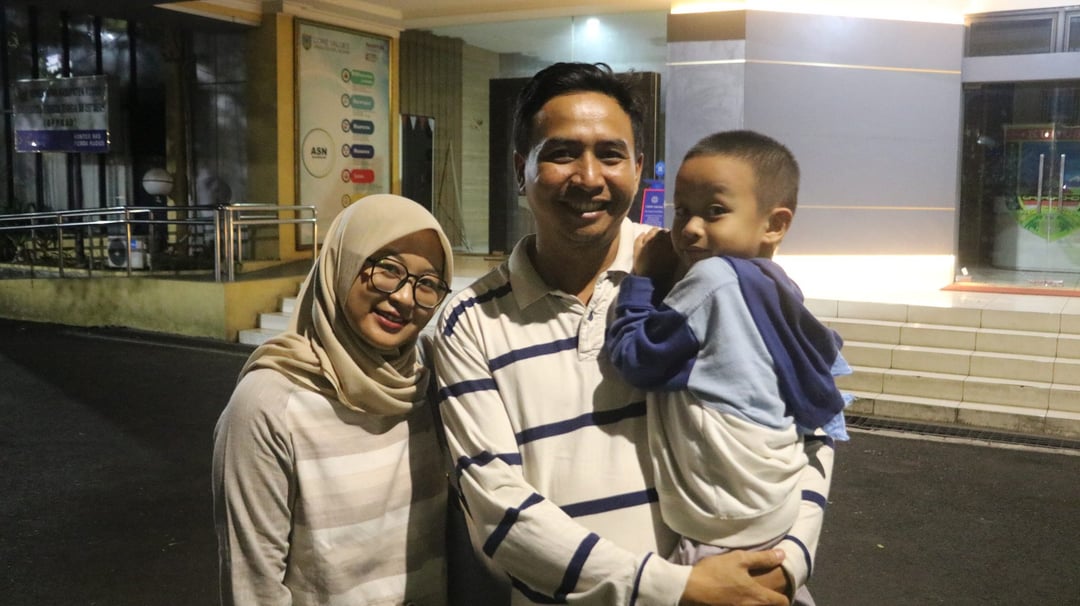
That evening, the tennis court temporarily served a broader purpose. A venue typically reserved for sports and government activities became a community hub united by football.
The activity extended beyond the court itself, as the influx of residents spurred secondary economic activity in the surrounding area.
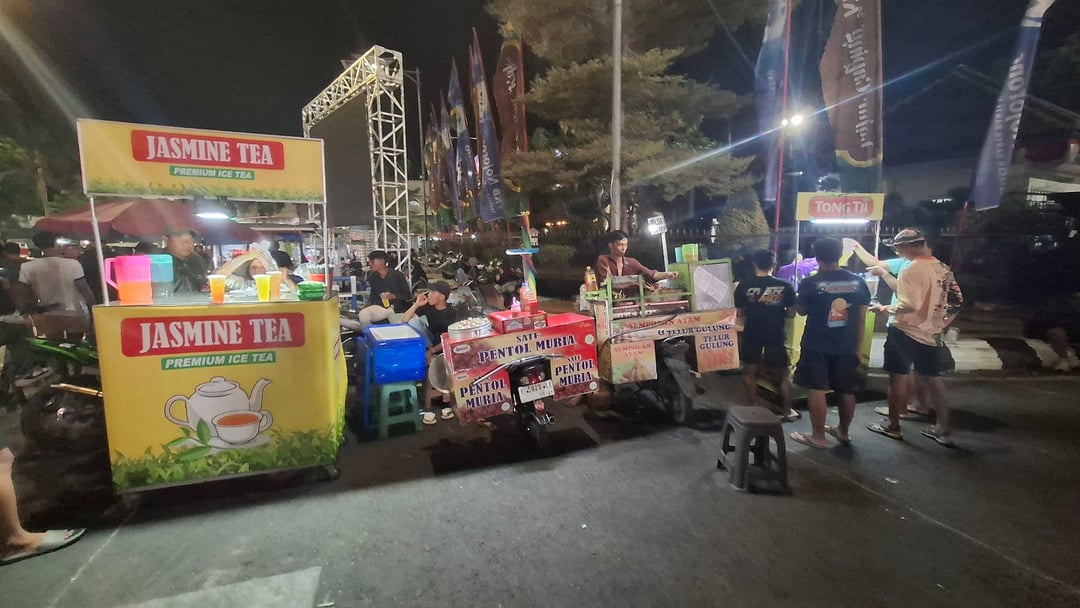
Throughout the match, vendors capitalized on the crowd to sell their wares. Among them was Ahmad Teguh Riyanto, who sold iced tea and iced orange juice.
He noted a significant boost in sales compared to regular days when no events are held in the area, driven by spontaneous purchases from the spectators.
“I hope there will be more events like this,” he said.
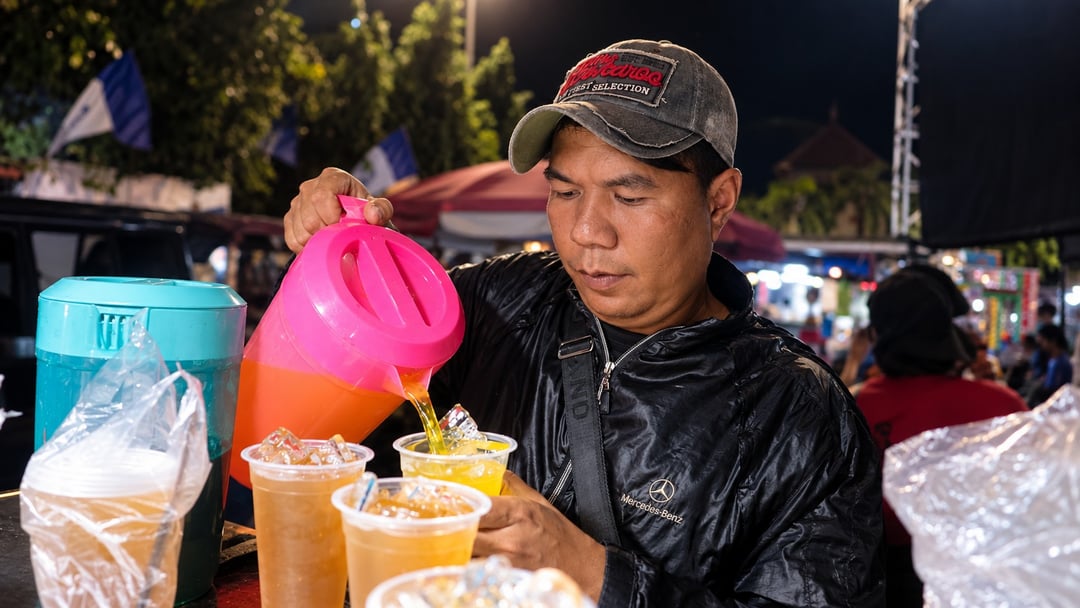
While the presence of vendors was not part of the initial event planning, they were permitted to sell their goods as long as they remained orderly.
For future events, organizers are considering a more structured approach to involving local Kudus MSMEs. This would allow sporting events to create greater economic opportunities for the community.
The scale of the event that night was modest, yet the momentum was clear: as residents gathered for sports, secondary needs emerged. Food and beverage services, in particular, saw an immediate boost.
This pattern is often mirrored in larger sporting events. As athletes, officials, spectators, and the public congregate, economic activity thrives well beyond the arena. From culinary offerings and transportation to lodging and small businesses, sports act as a catalyst for growth in other sectors.
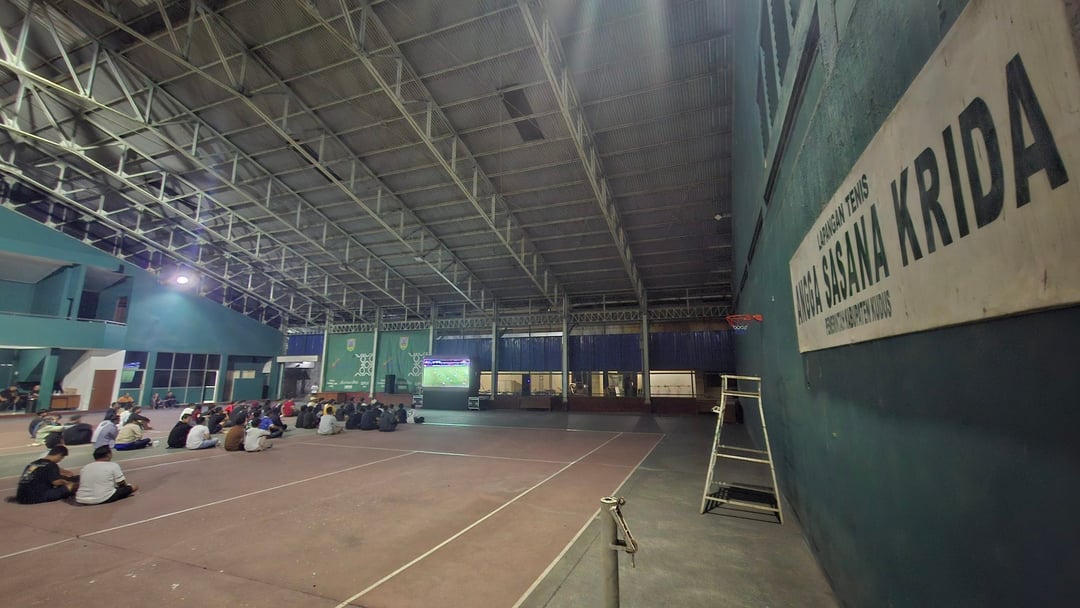
Despite its capacity to host public screenings, Angga Sasana Krida is not fundamentally designed as a multi-purpose public space.
Abdjad stated that the field is reserved for sports facilities within the Kudus Regency Government and is not available for public rental. There are currently no plans to repurpose it as a general-purpose public facility.
For the screening, organizers provided screens, internet connectivity, and a sound system. Spectator access was directed through the west side of the Pendopo, following the road between the Pendopo and Building B toward the tennis court. Parking was located near the Public Order Agency (Satpol PP) post on the west side.
Regarding comfort, the semi-enclosed architecture of the building can lead to poor ventilation and stifling heat when filled to capacity.
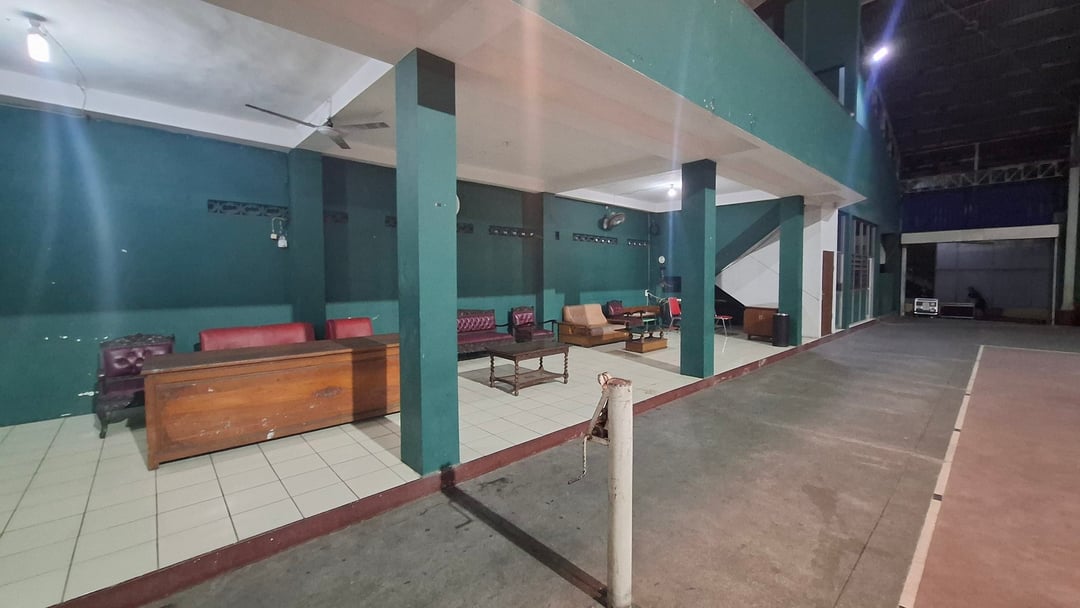
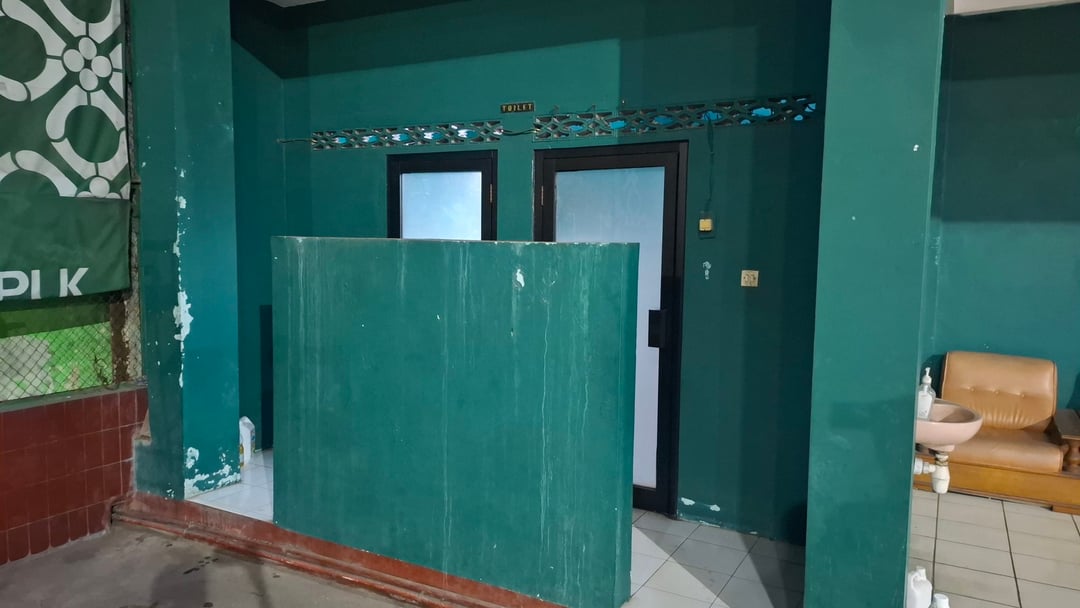
Satria noted the discomfort during the screening, suggesting that the Pendopo remains the more ideal location whenever it is not occupied by other agendas.
The Pendopo is equipped with a large videotron and integrated television network, eliminating the need for organizers to bring external equipment. From a technical standpoint, these facilities significantly simplify event preparation.
Ultimately, Angga Sasana Krida served as an alternative out of necessity. While the field offers ample space for spectators, its primary function remains dedicated to sports and government activities.
The experience underscores that venue limitations do not necessarily halt a planned activity. When a primary space is unavailable, other facilities can be repurposed situationally to ensure community engagement continues.
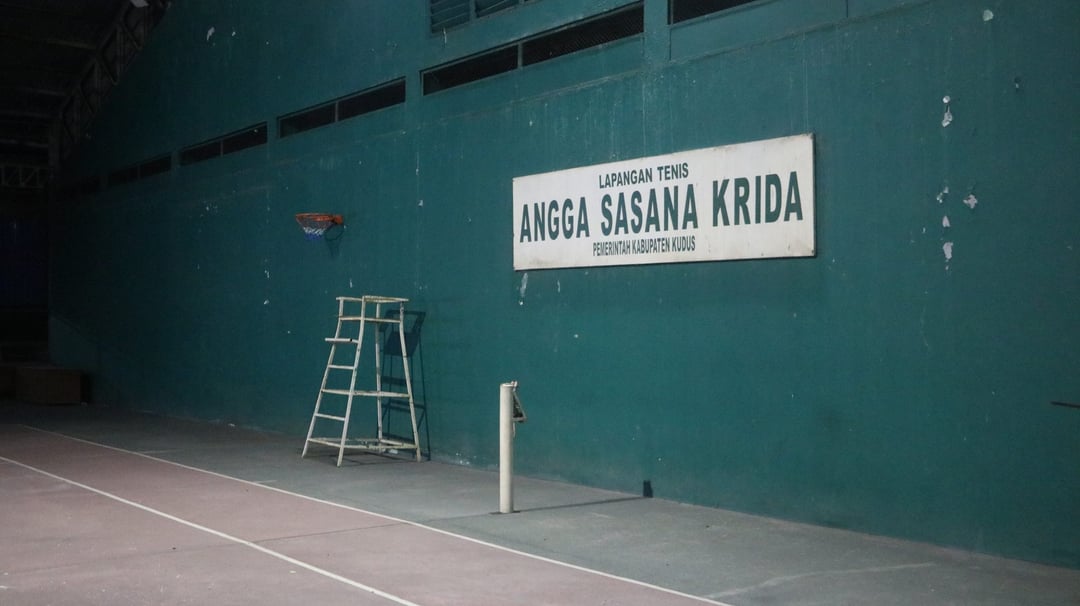
The public screening of the Indonesia versus Singapore match demonstrates the Kudus Regency government’s commitment to accommodating citizen enthusiasm for sports. When the Pendopo was unavailable, the event proceeded at the Angga Sasana Krida Indoor Tennis Court as an alternative venue.
For the Kudus administration, providing space for such activities is essential to sustaining a vibrant local sporting culture—not only through competitive events but also by fostering community engagement with major athletic milestones.
This culture serves as a key pillar for developing sports tourism in Kudus. A city with an active sports scene and high community participation provides a robust ecosystem for hosting larger-scale events.
The economic impact extends well beyond the arena. The crowd at the screening created opportunities for local food and beverage vendors. For larger events that attract athletes, officials, and visitors from outside the region, similar activity can stimulate sectors such as accommodations, transportation, culinary services, and local SMEs.
The Kudus Regency government continues to view the Pendopo as the most ideal location for future screenings, provided there are no scheduling conflicts. Officials have also indicated that similar events may be held again, depending on venue availability and the municipal agenda.
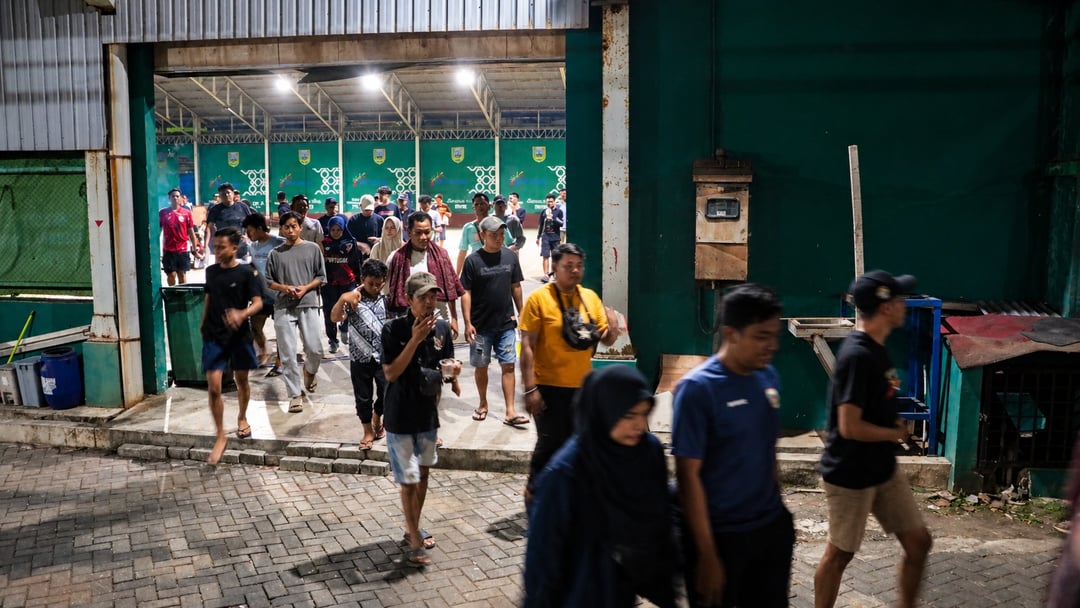
Following Indonesia’s 2-0 victory, fans slowly exited the Angga Sasana Krida. While the court has since returned to its daily function as a sports facility, the event showcased how such venues can unite the community while simultaneously driving local economic activity. (HNR/mainkekudus)