
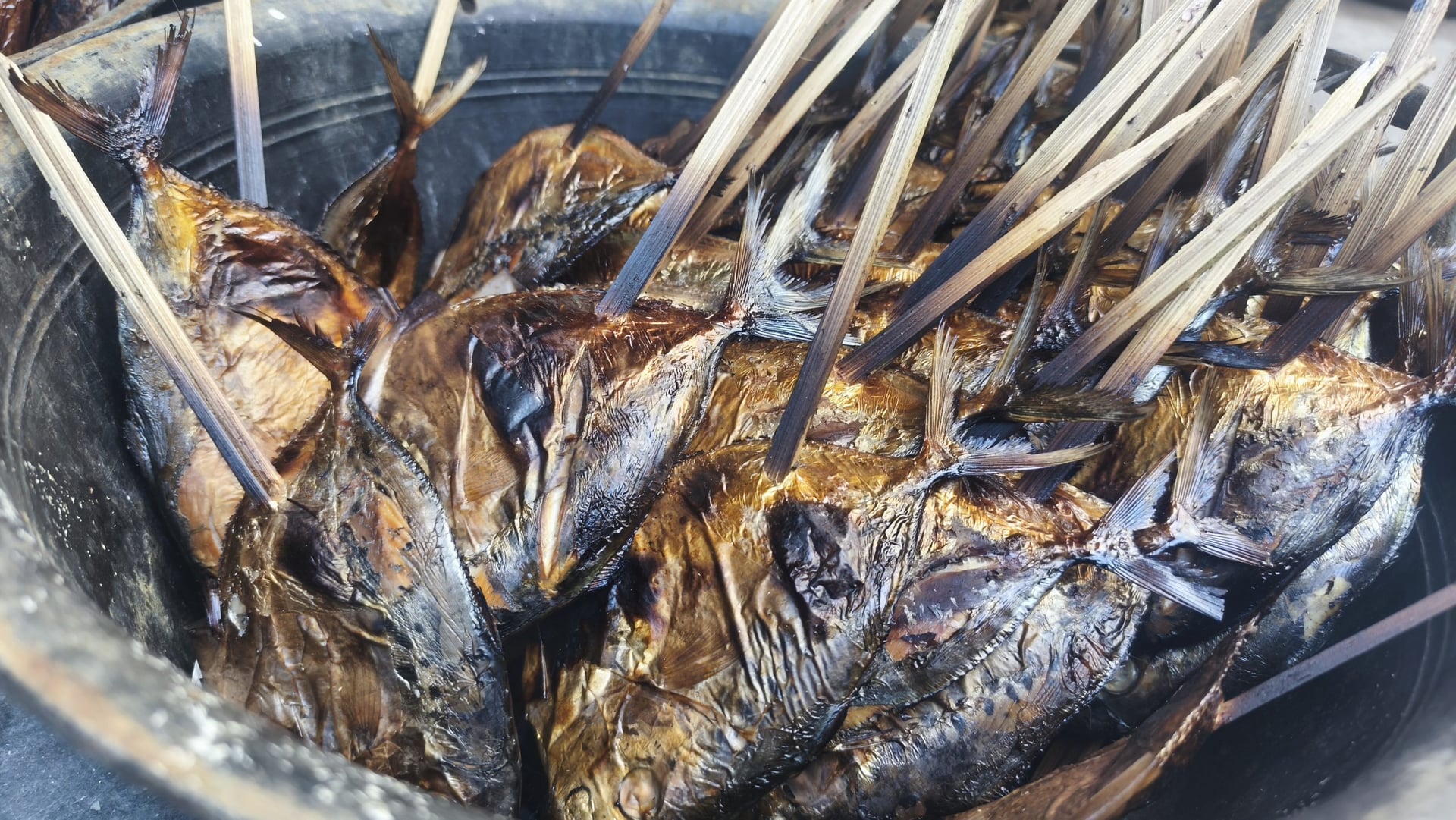
KUDUS – Nearing midday, activity at the Maju Jaya smoked fish production house is already underway. Previously frozen fish are prepared and skewered with bamboo before being arranged over a furnace for the smoking process.
Smoke gradually fills the production area. No seasonings are added before the fish enter the furnace, as the process relies entirely on heat to cook the fish, with the smoke providing its signature aroma.
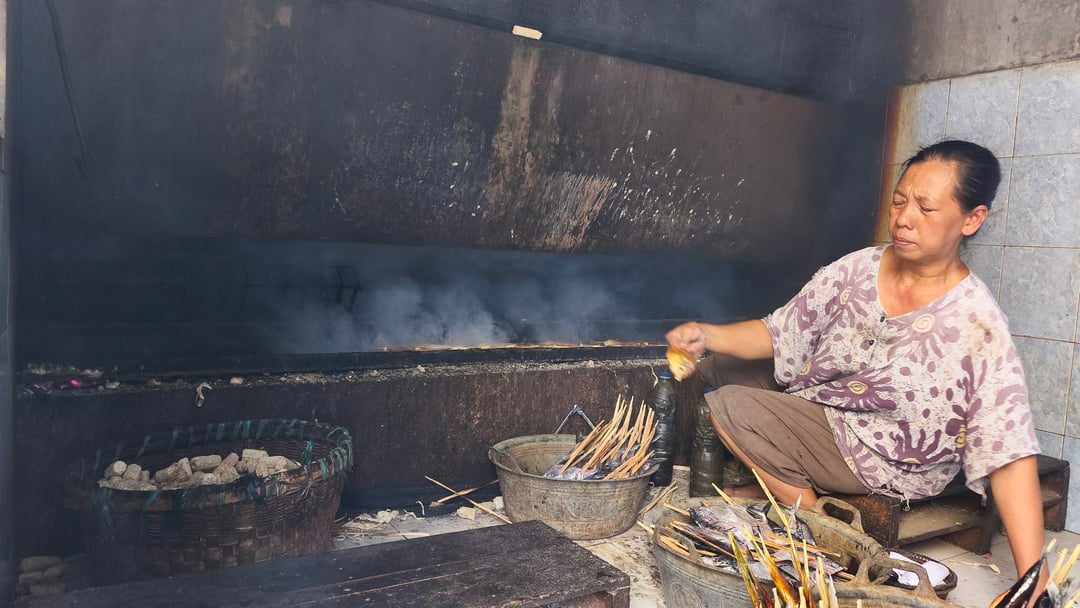
This activity takes place in Kalirejo Village, Undaan District, Kudus Regency. For those accustomed to seeing smoked fish as a side dish at markets or from street vendors, visiting the production site offers a firsthand look at the steps taken before the product is ready for sale.
Maju Jaya Smoked Fish is one of the businesses still maintaining this tradition. Owned by Eko Prasetiyo, the enterprise has been in operation since 1997 and is now managed by Eko as the second-generation owner.
The story of Maju Jaya Smoked Fish began during a trip Eko's parents took to Rembang, where they observed local fish smoking techniques that piqued their interest.
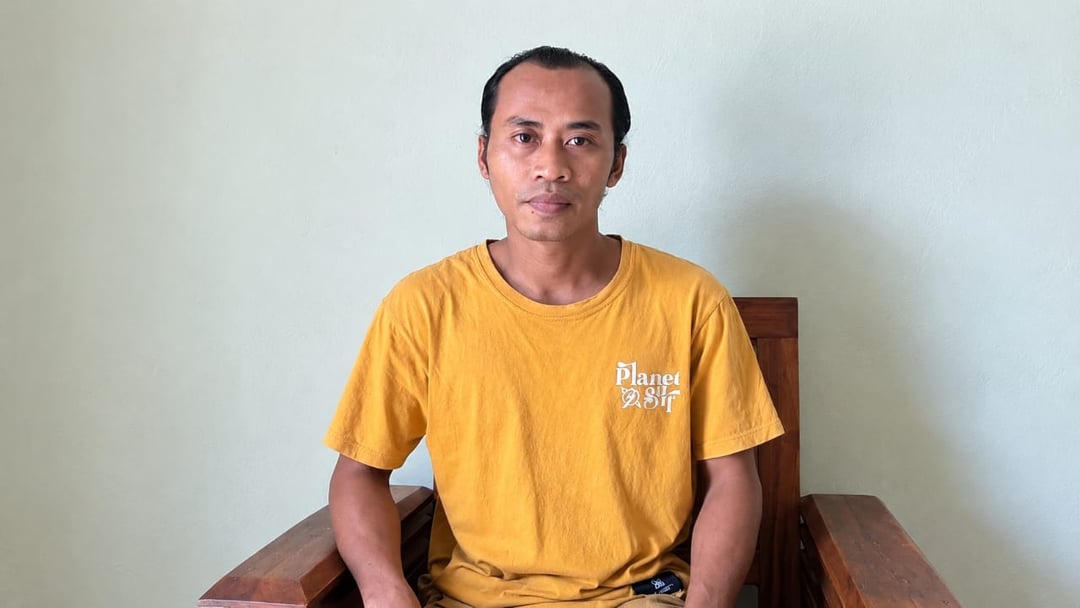
"My parents visited Rembang and saw people smoking fish. They asked questions and eventually tried to replicate the work," Eko explained.
The knowledge they acquired was brought back to Kalirejo and implemented. Over time, these experiments developed into a business that has been maintained and eventually passed down to Eko.
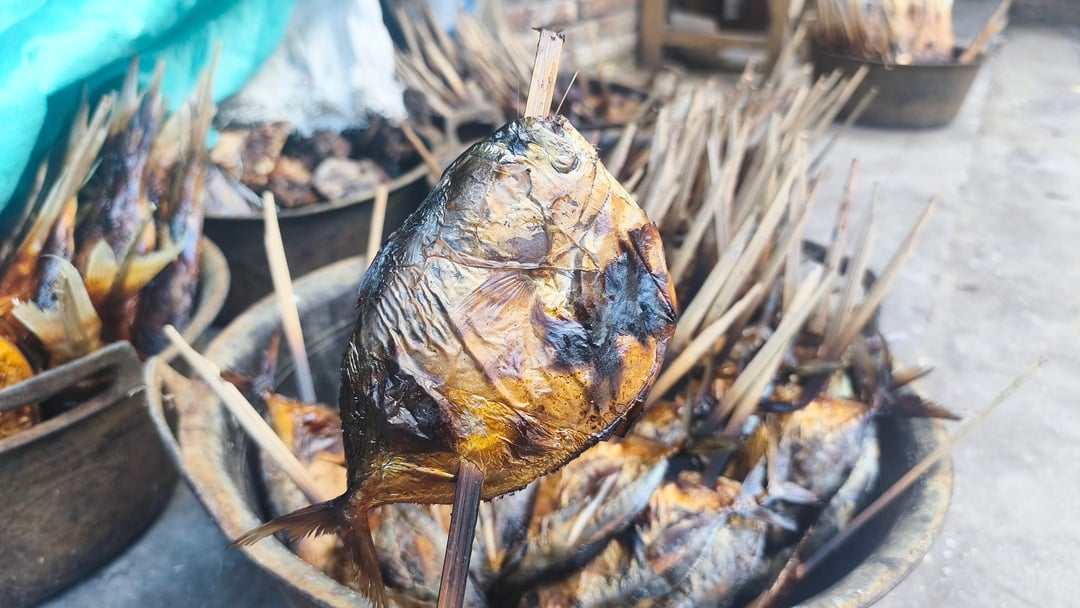
Although the operation has spanned decades, the processing steps remain relatively simple. While the fish require little preparation before entering the furnace, each step is strictly followed to ensure the raw materials are properly prepared for smoking and eventual sale.
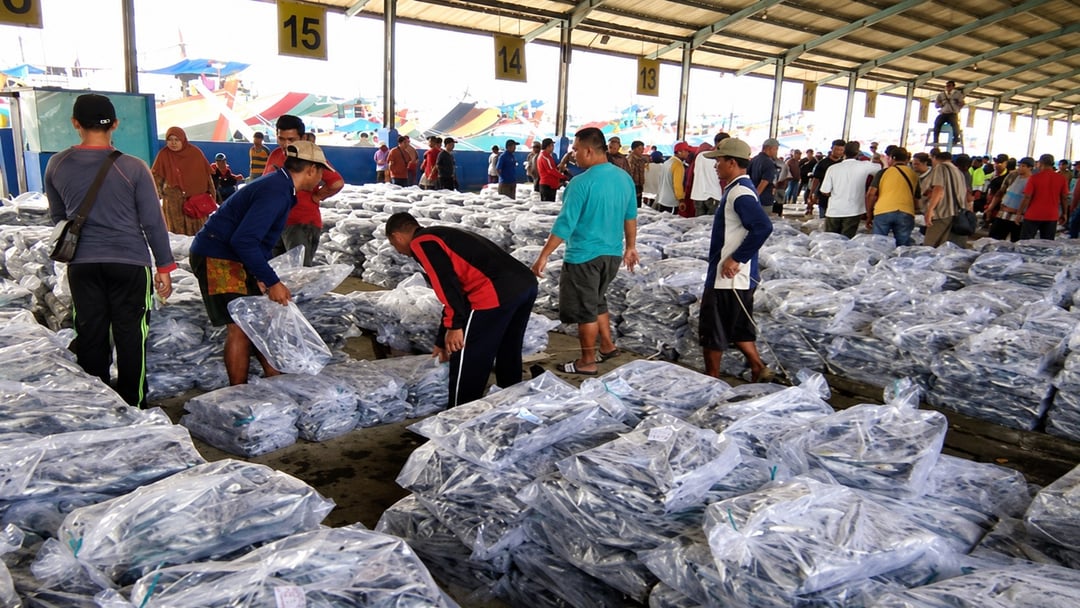
Raw materials for Maju Jaya Smoked Fish are sourced from the fish market in Juwana, Pati. The fish are purchased in a frozen and pre-packaged state before being transported to the production facility in Kalirejo.
Upon arrival at the production site, the fish are not immediately placed on the kiln. The frozen fish undergo a preparation stage where they are first soaked in water. Once ready, they are skewered with bamboo and arranged for the smoking process.
The available raw materials vary, as the types of fish processed depend on the supply obtained from Juwana.
“There are many types of fish. We have mackerel tuna, barracuda, catfish, stingray, snapper, and many more,” Eko explained.
This diversity of raw materials offers customers more variety while allowing production to adapt to fish availability. Some varieties naturally see higher demand than others.
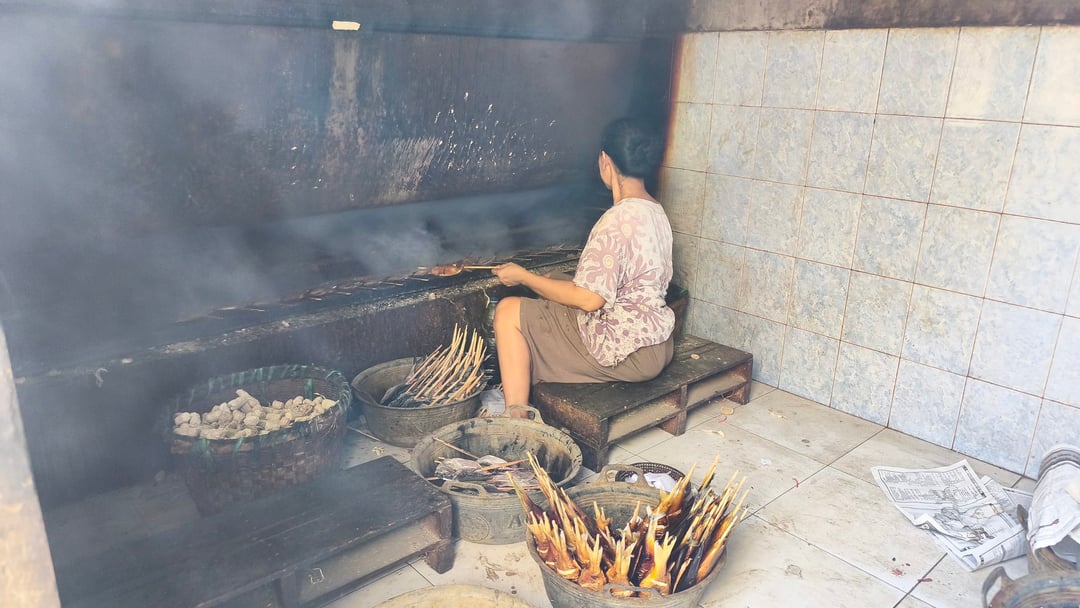
There is one aspect that sets this smoking stage apart from standard fish cooking. Before entering the kiln, the fish are not marinated or seasoned.
Eko maintains this approach for a specific reason.
“Sea fish do not need seasoning because they are already savory. Seasoning is only added when they are cooked later,” Eko said.
Consequently, after the preparation phase, the fish go directly into the smoking process. The heat from the kiln cooks the fish, while the smoke provides the final flavor and aroma.
This method also gives customers the flexibility to prepare the fish at home to their liking, whether as a simple side dish or as part of a more elaborate meal.
At the production house, the focus remains on the smoking process itself. By skipping lengthy marination steps, the natural character of the raw material is preserved until the final product is finished.
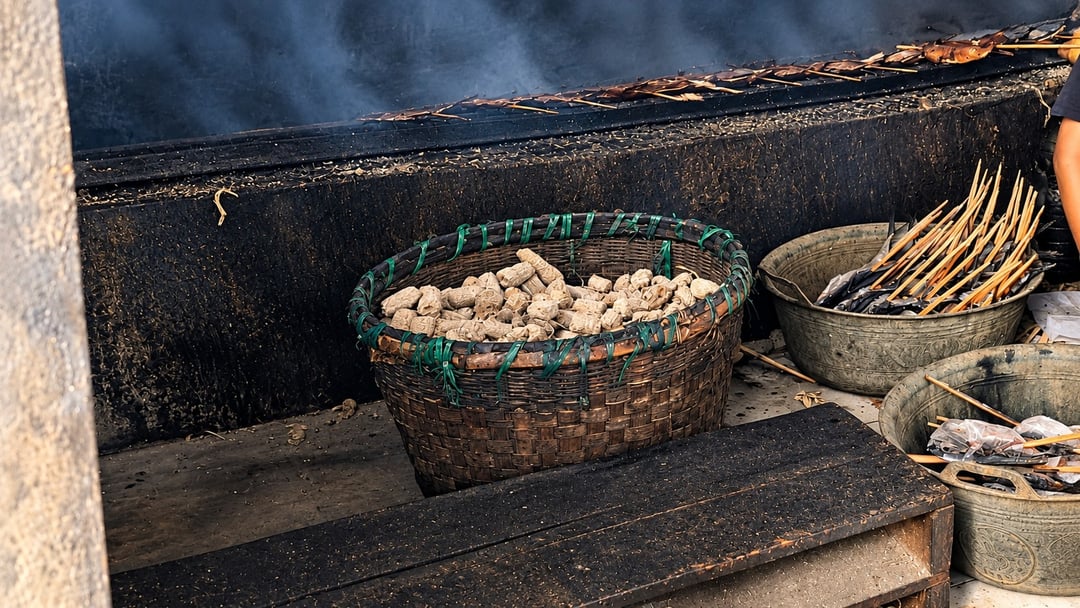
Beyond the fish, fuel is essential to keep production running. Eko has traditionally used coconut shells to generate the necessary heat and smoke.
Coconut shells possess unique characteristics when burned because they release oil. However, sourcing this material has become increasingly challenging. According to Eko, much of the supply is being bought in bulk to meet industrial demand.
This situation forces the production house to look for other materials so that the smoking process does not rely on a single type of fuel. Dried corncobs are now used as an alternative when coconut shells are scarce.
This fuel transition is part of the adjustments made during a business operation spanning nearly three decades. As long as the necessary heat and smoke are produced, production can continue even when the primary fuel is unavailable.
The smoking process for approximately one quintal of fish takes about an hour. This duration can be adjusted based on the quantity of fish being processed.
During this time, the fish are left on the furnace until they reach the required level of doneness. Once completed, the fish are removed and prepared for sale.
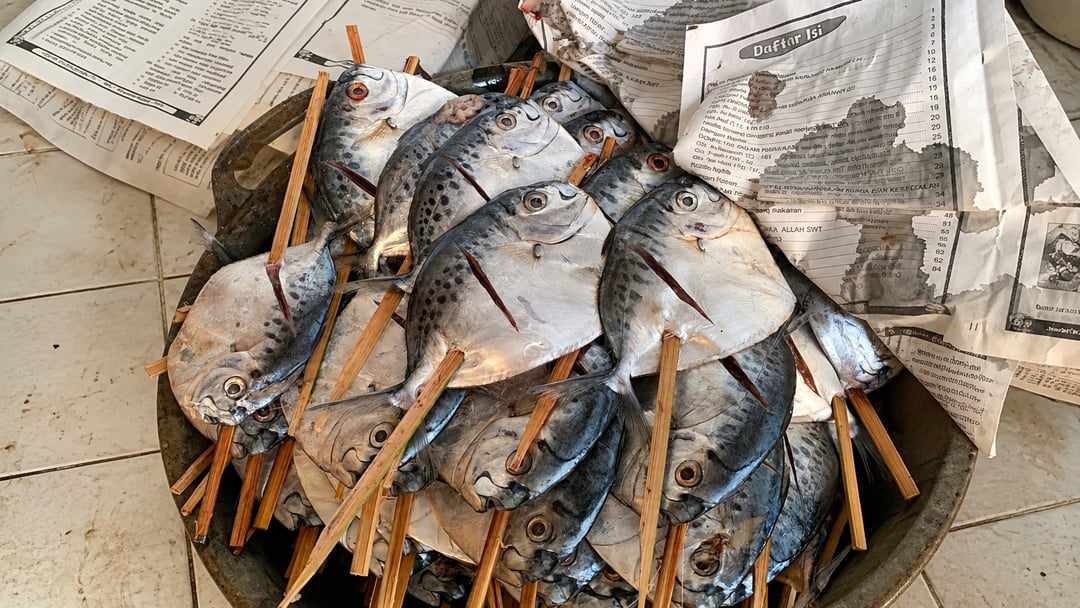
Ikan Asap Maju Jaya processes about two quintals of fish daily. Among the various types produced, stingray, tuna, and local varieties like semar and muniran are highly popular with customers.
Prices vary depending on the type and format of the product. Pre-cut portions sell for approximately IDR 2,500 to IDR 3,000 each, while tuna is priced at about IDR 2,500. In addition to marine fish, freshwater carp is available at IDR 10,000 for three fish.
These products are not only sold to customers visiting the Kalirejo facility directly. The smoked fish is also marketed to various locations, including Klambu Market, Tawang Market, and Brati Market.
Another distribution channel involves retail merchants who collect fish from the production house for resale. Through this model, products from Ikan Asap Maju Jaya are accessible to consumers without requiring them to travel to the smoking facility.
This marketing reach links production activities with the work of small-scale vendors. Once the fish are smoked, they move from the producer to the merchants before finally reaching the consumer.
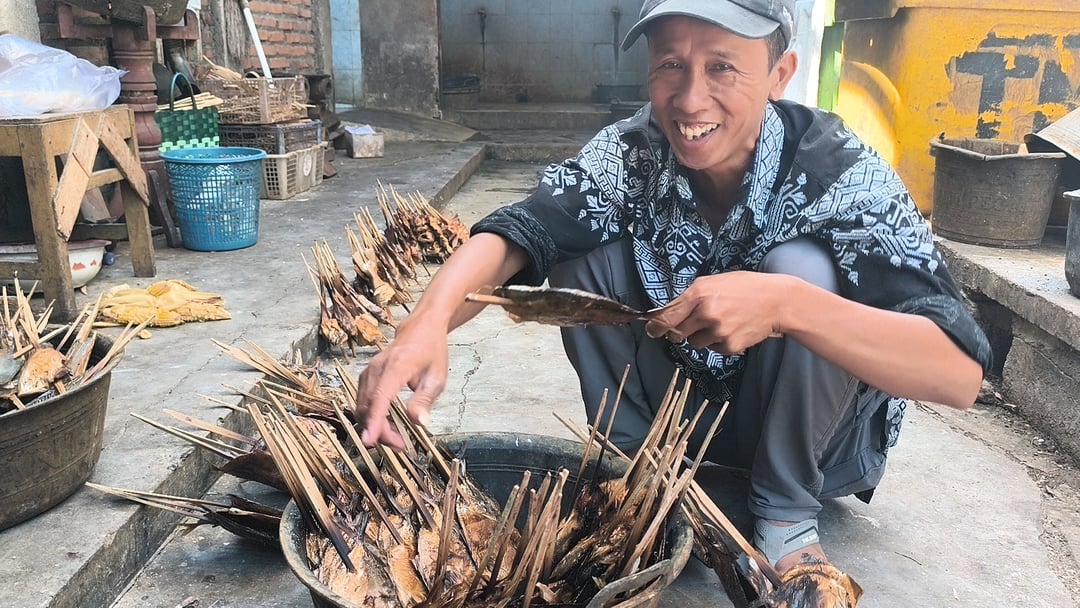
Sodikin is one of the merchants who regularly sources smoked fish from Eko. For the past five years, he has been a customer of Ikan Asap Maju Jaya, reselling the products to the public.
Sodikin sells the smoked fish by traveling through neighborhoods and setting up roadside stalls. His daily sales figures fluctuate.
"On a busy day, I can sell up to 300 fish. When it is quiet, it is around 150 fish," Sodikin said.
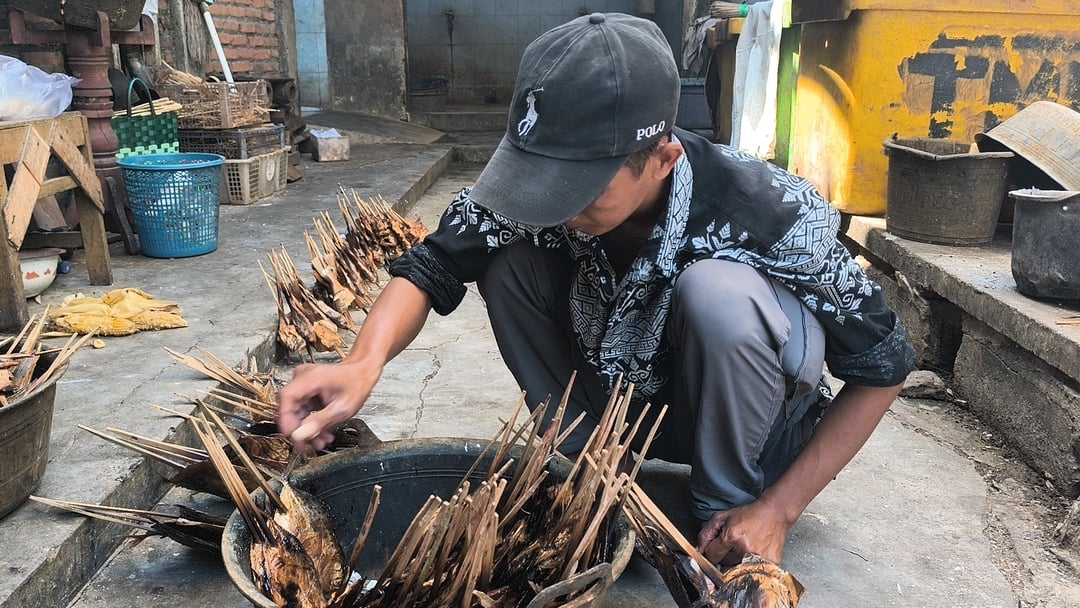
Sales fluctuate with the seasons; during the dry season, for example, numbers tend to decline slightly. Despite this, Sodikin continues his daily trade.
In addition to selling smoked fish, he operates a small store offering basic household necessities. Selling smoked fish remains a key component of his livelihood.
"The important thing is to keep going. Thankfully, it's enough to get by," he said.
Sodikin’s story illustrates how the smoked fish industry supports the livelihoods of other small traders. Products processed in Kalirejo are sold directly to the community through these vendors.
This relationship has spanned years. For the production house, these traders act as vital distribution channels, while for Sodikin, smoked fish provides a reliable product for his customer base.
Ikan Asap Maju Jaya has also explored channels beyond traditional markets and retail traders. Around 2020, during the height of the Covid-19 pandemic, the business experienced a surge in online orders.
This increased demand brought new challenges. The issue was not only securing buyers but also managing the quality of raw materials when large stocks were on hand.
Eko noted that limited storage space became a significant obstacle during that period.
"If the stock is large, the freezer here isn't big enough or we don't have enough of them," he said.
Storage capacity is critical because the fish arrive frozen and must remain properly preserved before processing. As raw material volumes grow, storage facilities must scale accordingly.
This situation highlights that rising demand involves more than just increasing production; it requires expanding infrastructure, from raw material supply chains to storage facilities.
For a business operating since 1997, adapting to these changes is part of staying sustainable. While marketing patterns evolve, production capabilities and facilities must keep pace.
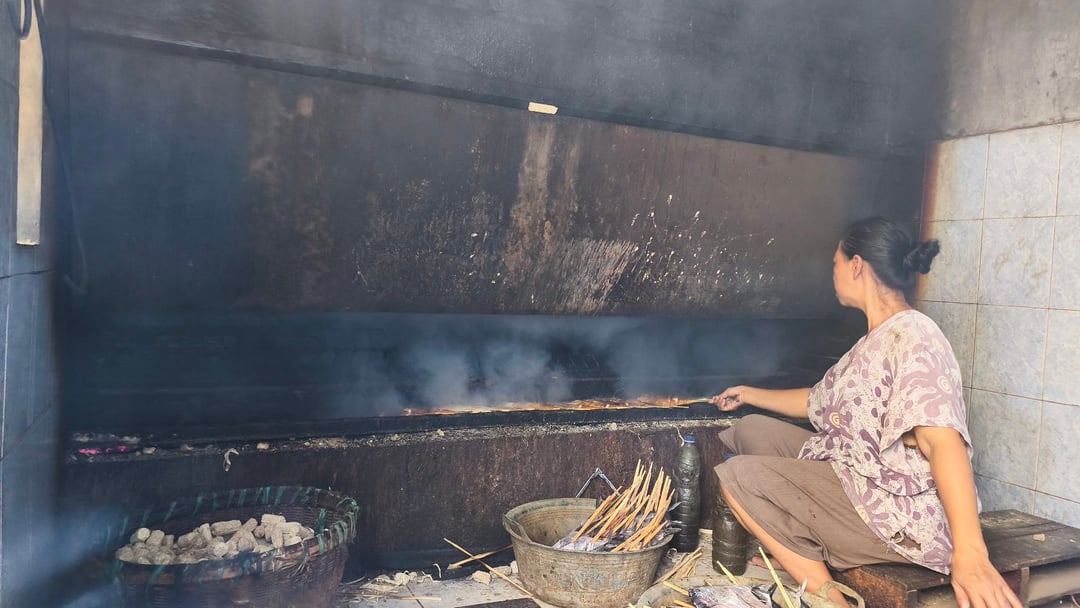
The Ikan Asap Maju Jaya production house serves as more than just a processing facility. Curious members of the public are welcome to visit and observe the smoking process in action.
Sales typically begin around 1:00 p.m. WIB. For those interested in watching the fish being smoked, Eko recommends arriving between 2:30 p.m. and 3:00 p.m. WIB.
The production house is located on Jalan Kudus-Purwodadi, Kalirejo Village, Undaan District, Kudus Regency, specifically in Gang Manggis, RT 03/RW 03.
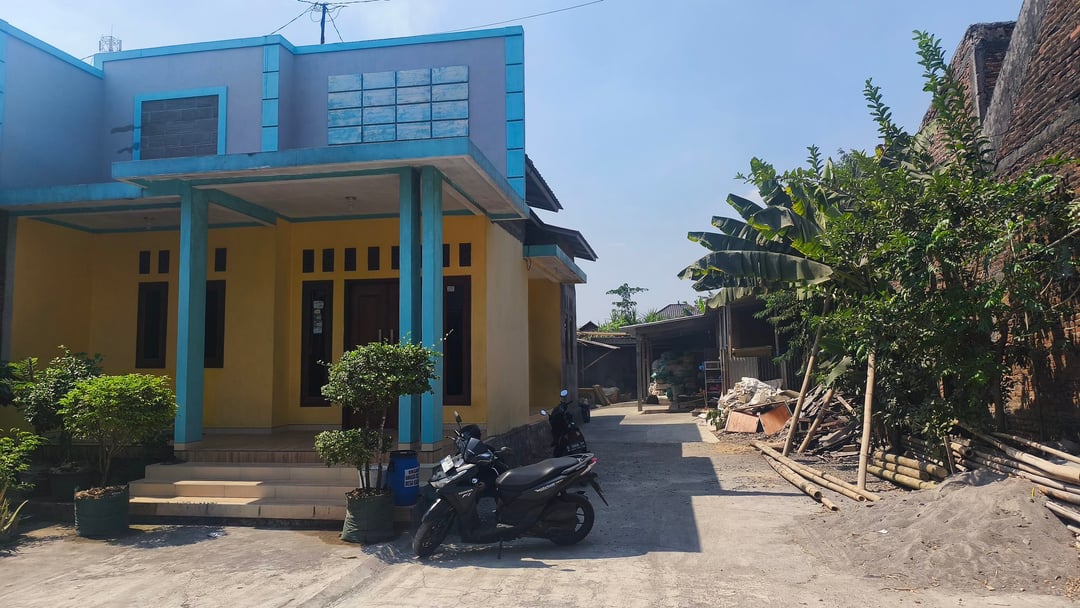
Visiting during production offers a unique perspective beyond simply purchasing ready-to-eat smoked fish. Visitors can observe the production facility, the ovens, and the workers' activities firsthand.
The smoked fish is available for direct purchase on-site, allowing visitors to bring home fresh, just-processed products.
For those interested in local culinary traditions, this experience highlights the complexity of food production, including the labor, business owners, and economic activity involved before products reach markets or street vendors.
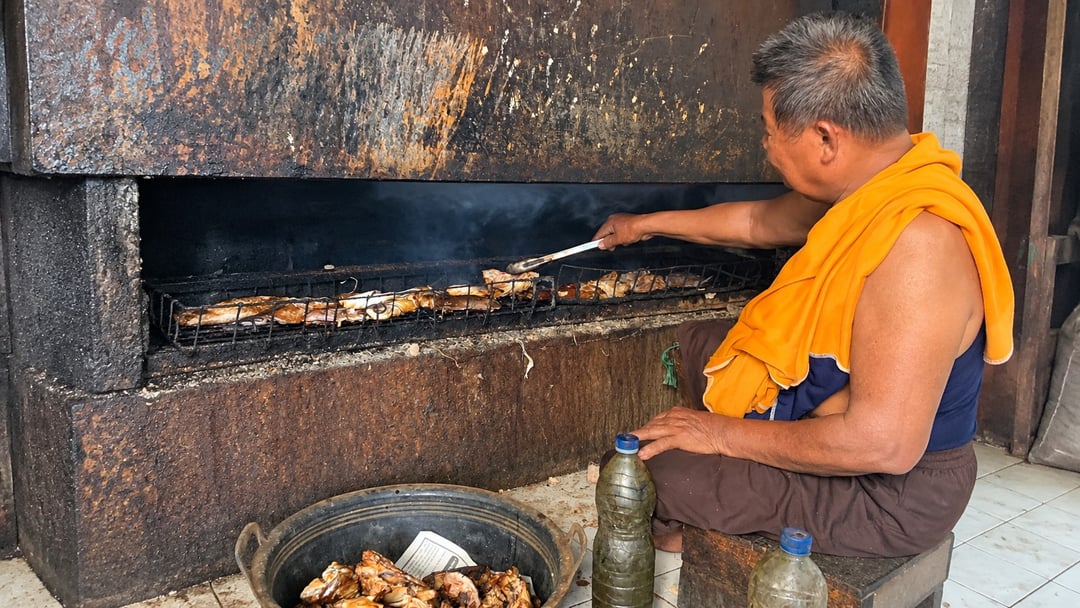
The Ikan Asap Maju Jaya business has operated since 1997. It began modestly after Eko's parents visited Rembang and brought back techniques that eventually grew into a multi-generational family enterprise.
The business has evolved over the years. When coconut shells are scarce, for example, corn cobs are used as fuel. Sales, initially reliant on traditional markets and retail vendors, have also expanded to include online orders.
The business maintains strong ties with vendors like Sodikin, who has sourced products from the facility for years. This partnership ensures that the smoked fish enterprise supports not only Eko's family but also the livelihoods of other local traders.
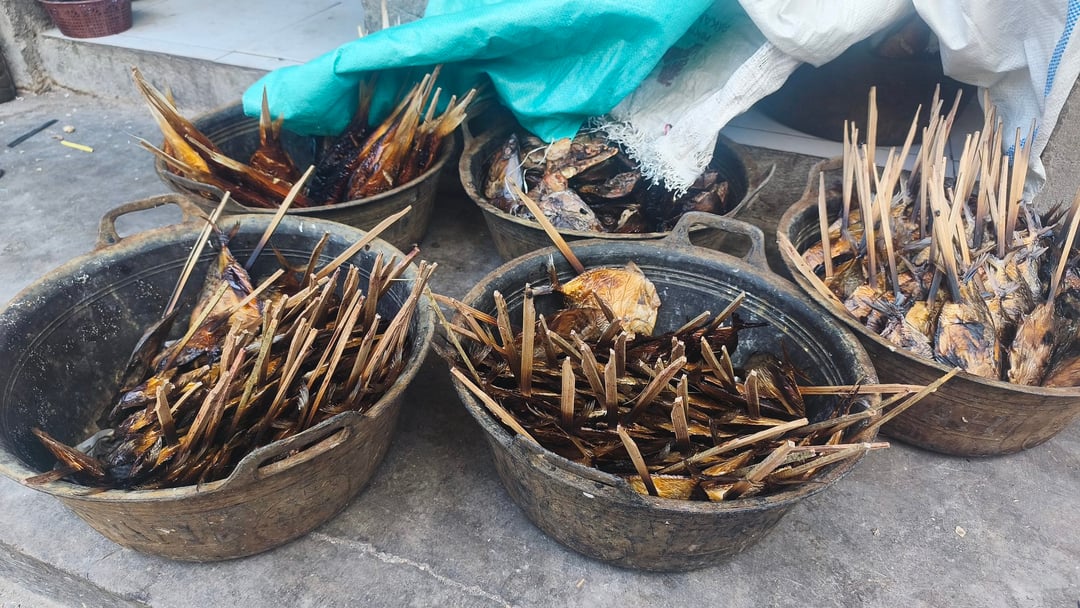
Today, production continues in Kalirejo Village. The traditional ovens remain in use, fresh fish from Juwana continues to serve as the raw material, and the business remains a staple for local buyers and traders alike.
For visitors, the production house offers a deeper understanding of smoked fish—not merely as a finished food product, but as the result of a rigorous process and a family legacy that has spanned nearly three decades.
From the expertise gained in Rembang and passed down by Eko in Kalirejo, the smoking process continues to endure. Despite shifts in raw materials, fuel, marketing strategies, and storage requirements, the traditional, simple method of processing fish with heat and smoke remains the cornerstone of Ikan Asap Maju Jaya today. (OEB/mainkekudus)