
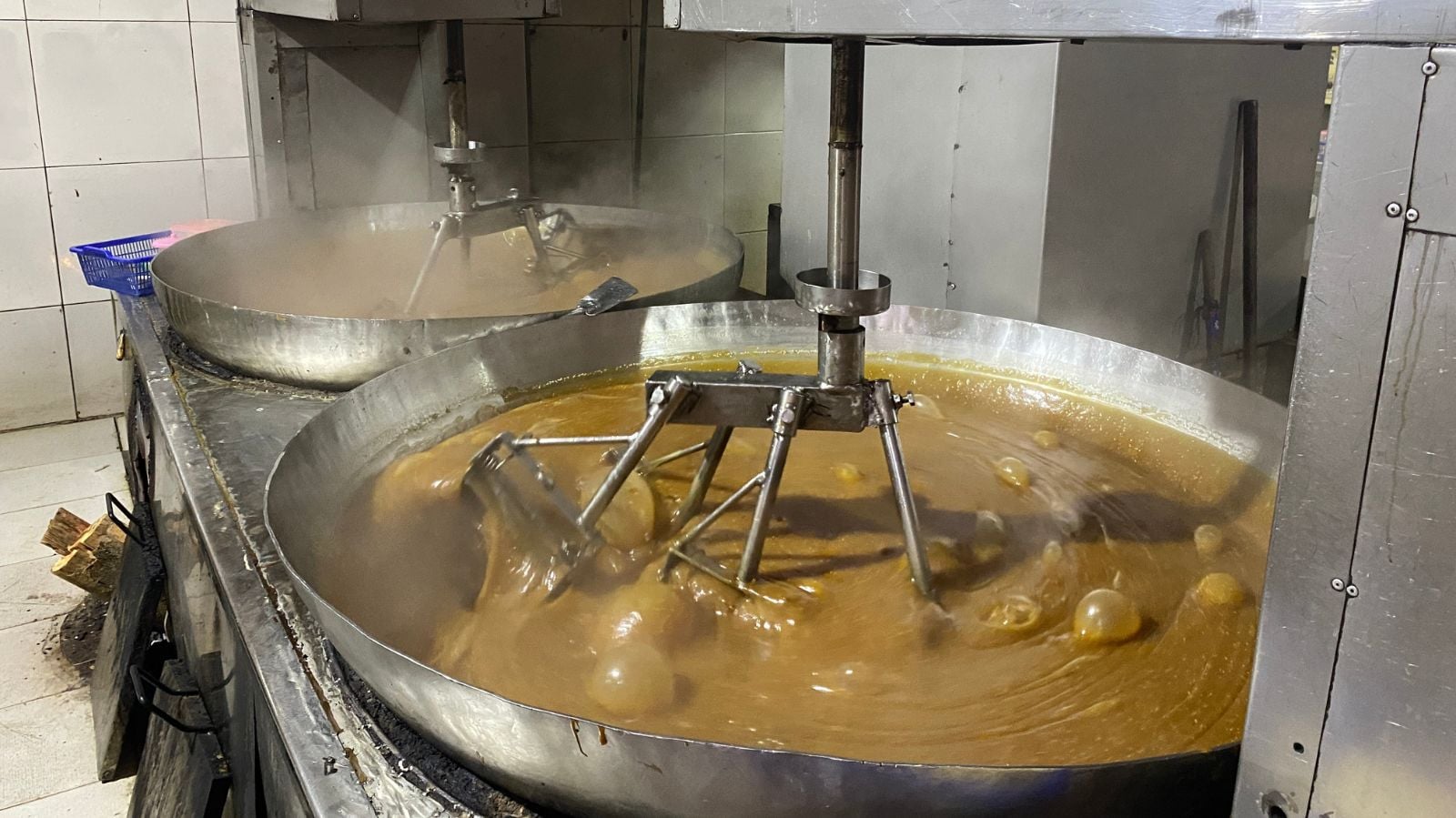
KUDUS – In the Jenang Mubarok production kitchen, making jenang is not a task completed in a single cycle. Before flour, coconut milk, and sugar are combined in the cauldron, all ingredients undergo a rigorous inspection. The production process proceeds through material preparation, mixing, hours of cooking, cooling, slicing, and finally, packaging.
In one section of the kitchen, the jenang batter is stirred in a large cauldron with the assistance of a mixer. Below, wood fires maintain a steady heat. Maintaining precise temperature is critical, as excessive heat can cause a burnt aroma, while insufficient heat can compromise the texture.
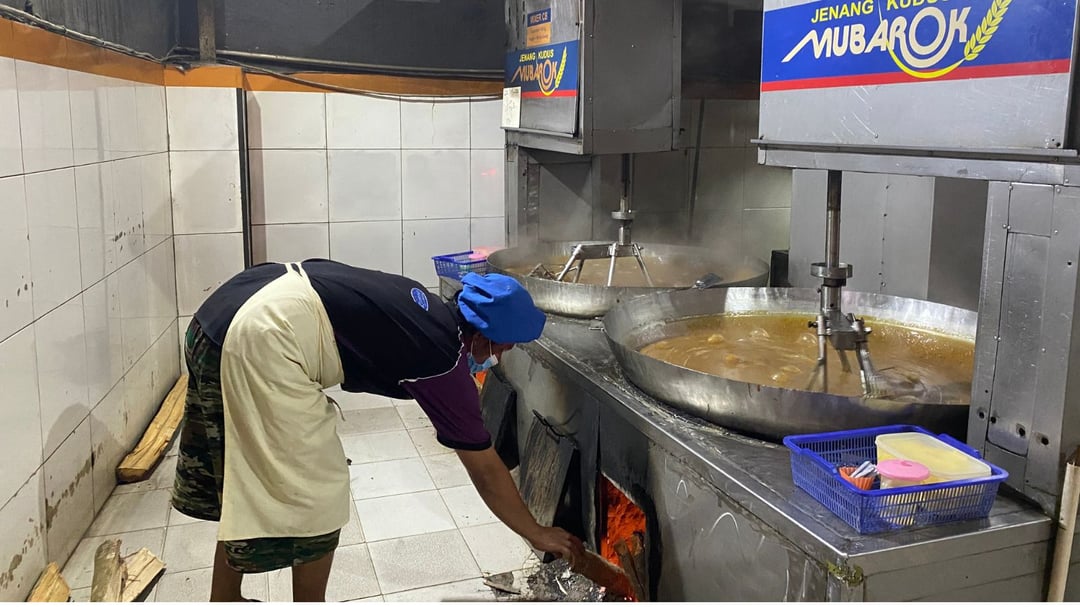
From this kitchen, simple ingredients like glutinous rice flour, coconut milk, and sugar are transformed into jenang, which is then packaged as a signature souvenir of Kudus. The labor-intensive process takes hours of production before the final product is ready for consumers.
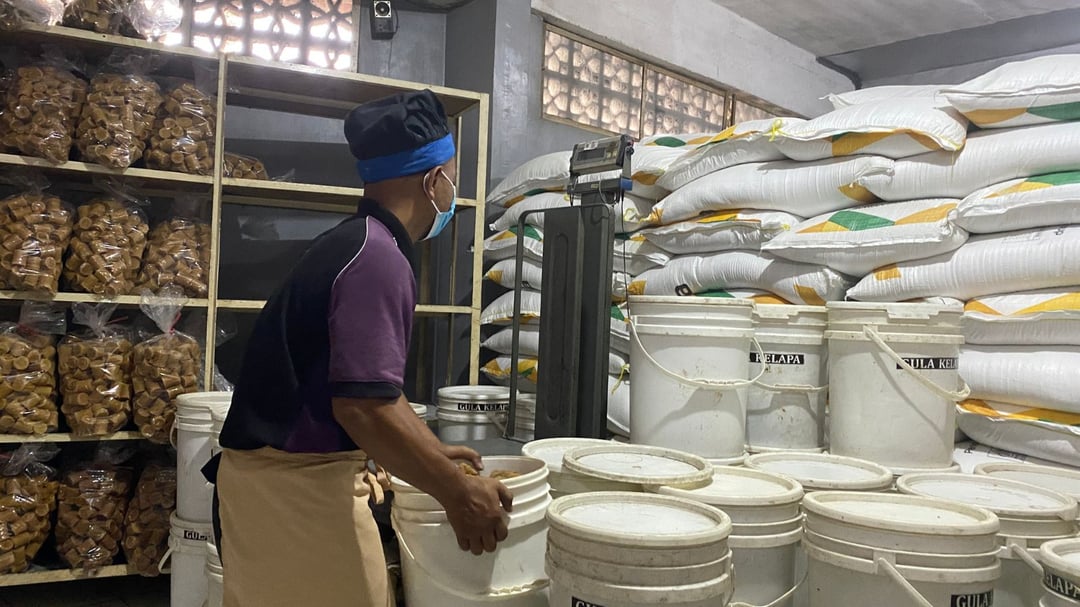
Mubarokfood successor, Mafas Andar Moyan, explained that the production process begins with raw material inspection. Every incoming shipment is evaluated by the quality control (QC) team using both sensory organoleptic assessments and chemical analysis.
Moisture content and viscosity are among the key metrics checked before materials are approved for use. Once cleared, materials are stored in the warehouse and assigned a lot number.
This system enforces a first in first out (FIFO) protocol, ensuring that the oldest inventory is used first. Only after this stage do the materials proceed to the processing phase.
Stored coconuts are grated to produce coconut milk. Meanwhile, the sugars used in the recipe—including palm sugar, granulated sugar, and coconut sugar—are dissolved with the coconut milk at approximately 95 degrees Celsius.
The flour is prepared by dissolving it in processed coconut milk. Once the mixture is ready, it moves to the cooking phase.
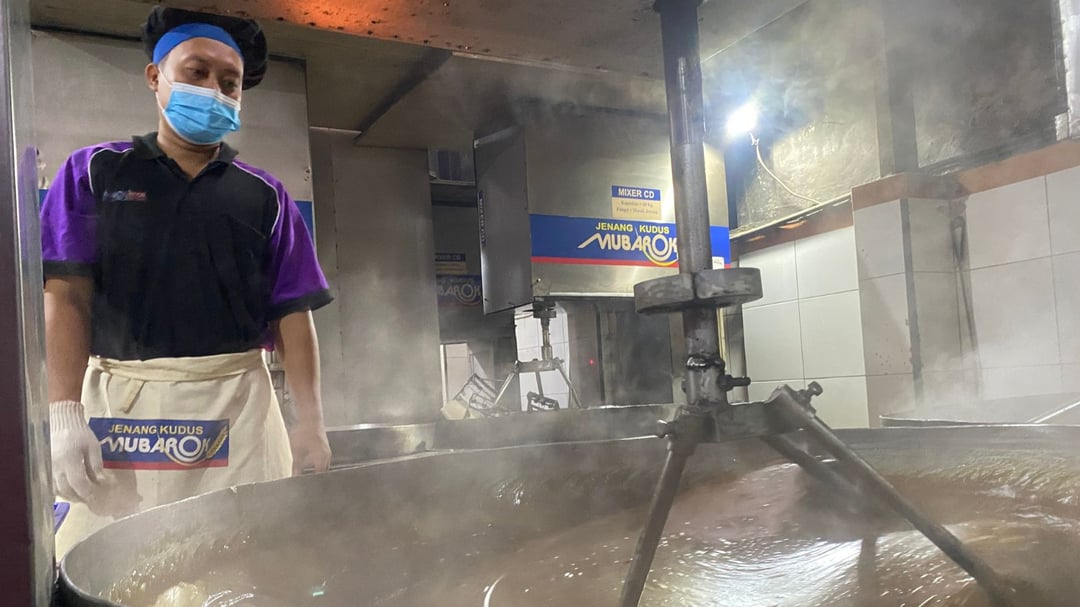
A mixture of sugar, flour, and coconut milk is placed into a mixer within a large cauldron. The dough is then cooked for about four to five hours.
Throughout this process, the consistency of the dough must be continuously monitored until it reaches the desired state. Around 15 people are involved in the mixing stage of production.
Once the primary cooking is complete, additional ingredients such as margarine and flavoring are added based on the specific variety of jenang. However, the dough is not immediately removed from the cauldron.
Doneness is checked periodically. Organoleptically, cooked jenang has a soft, sticky, and chewy texture. Afterward, the product undergoes laboratory testing, including checks for viscosity and moisture content.
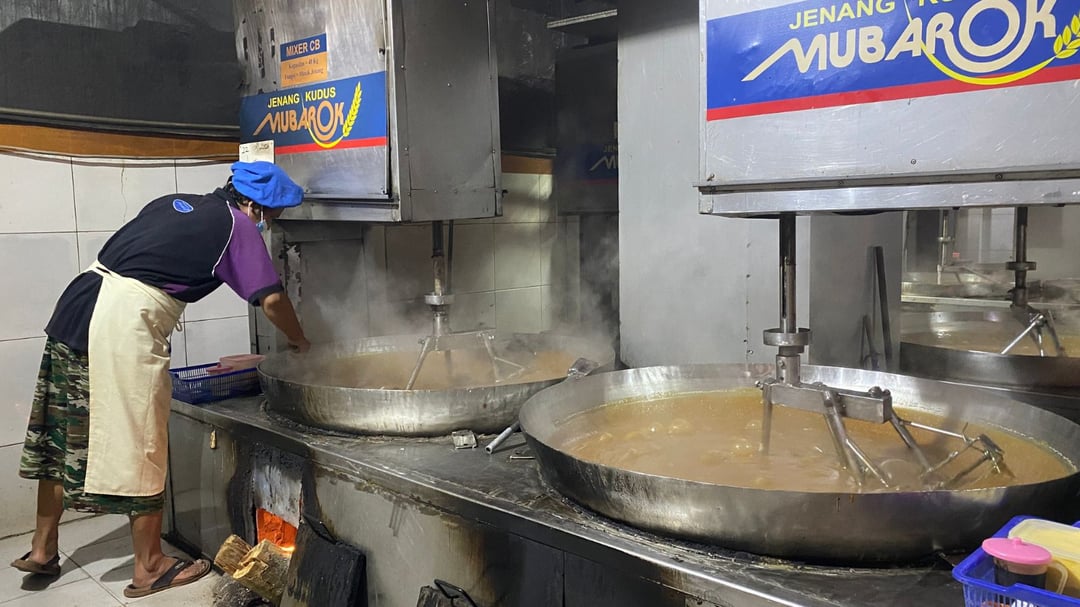
Only after all parameters are satisfied is the jenang removed from the cauldron.
The hot dough is then moved to a cooling room. The room is climate-controlled to lower the temperature of the jenang, which is initially around 95 degrees Celsius.
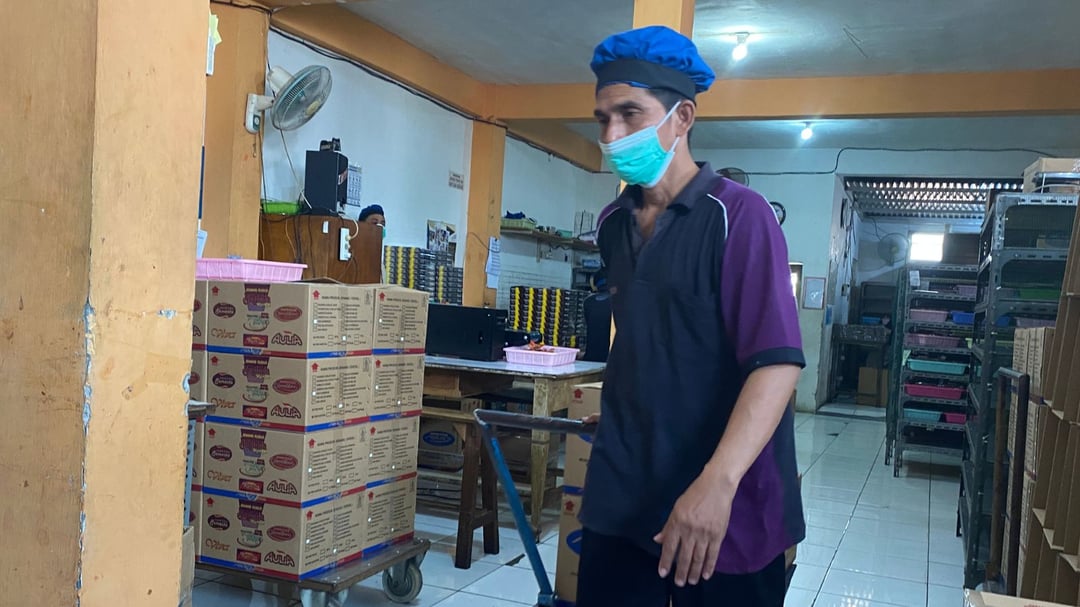
The following day, the cooled jenang undergoes slicing and packaging. About 30 to 40 people are involved in the slicing process. Daily production can reach approximately 700 to 800 kilograms.
Joko Sumarno, Head of the Processing Unit at Mubarokfood, is among the workers directly involved in the jenang production process. He has been involved in these operations since 2010.
According to Joko, one of the most critical stages is when the sugar syrup and flour mixture are poured into a cauldron over an open wood-fired flame, requiring precise maintenance of the heat.
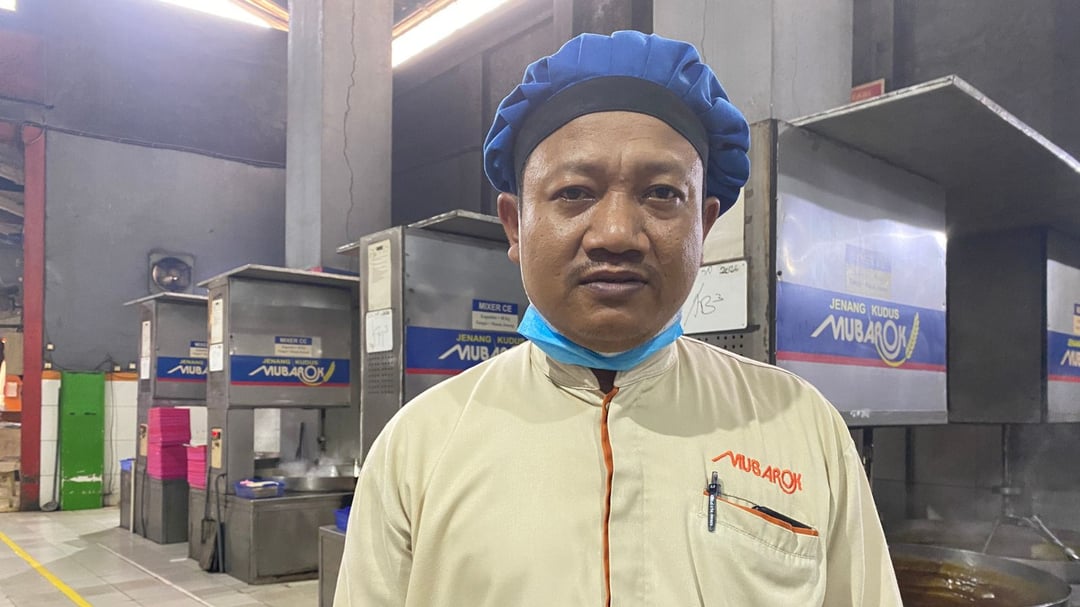
Excessive heat can cause jenang to develop a burnt aroma, while insufficient temperatures result in a texture that is overly soft. Consequently, the cooking process cannot be rushed.
Mastering jenang production requires dedicated training. Joko notes that it takes approximately one to two months to fully grasp the process.
Spending four to five hours near the cooking vats is part of the daily routine. The wood fire must be carefully maintained at a precise temperature to ensure the product meets quality standards.
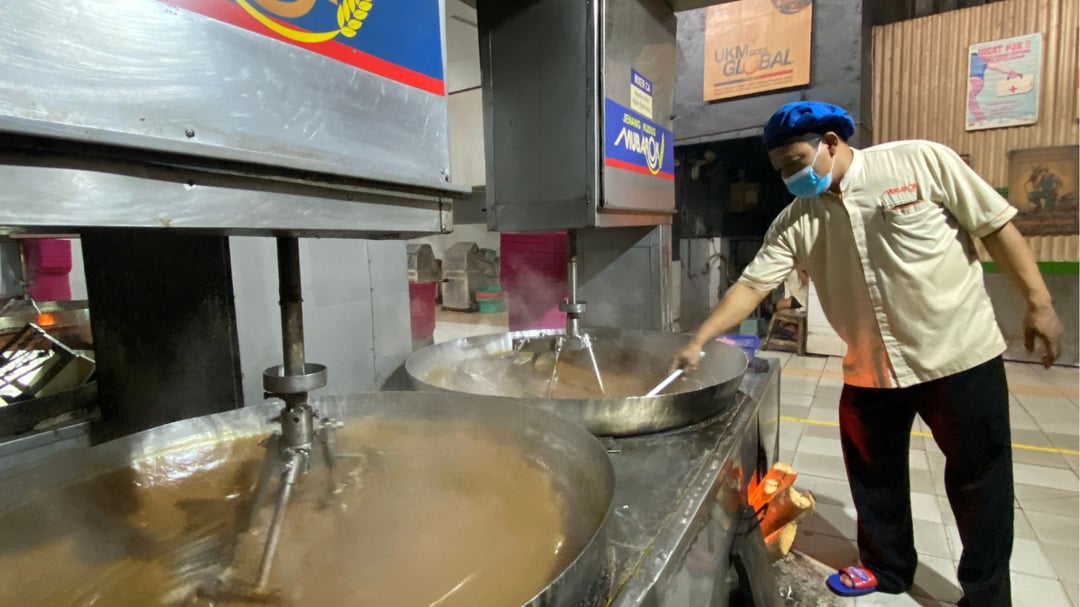
For Joko, his work is deeply tied to preserving jenang as a traditional food. He expresses pride in contributing to its creation and sharing it with a wider audience.
He believes it is essential to protect and introduce jenang to the younger generation to ensure the traditional treat remains well-known.

Production efforts recently converged with the Caffino Srikandi Merdeka Cup 2026, as athletes arrived in Kudus for competition. Beyond the field, some participants and officials took the opportunity to explore local culinary products.
Jenang Mubarok was among the sites visited. Guests from Saudi Arabia, Hong Kong, and Malaysia toured the facilities to observe production and learn about the history of the treat, with many purchasing souvenirs.
For Mafas, these visits serve as a platform to introduce jenang to those unfamiliar with the snack, though he noted that such events do not guarantee an immediate surge in sales.
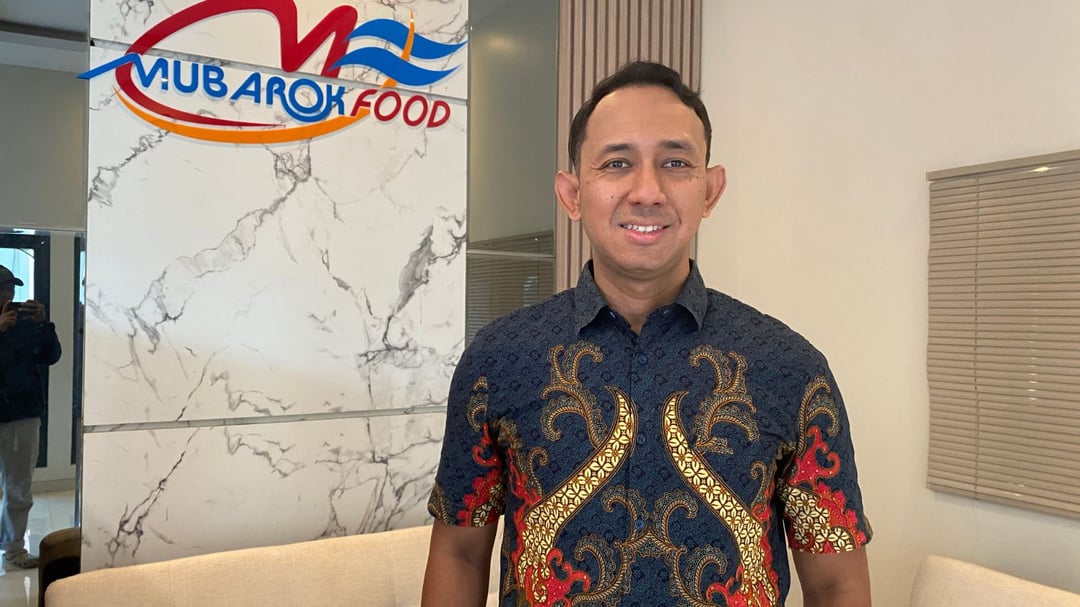
This event serves as a strategic opportunity to introduce local products to participants from across the region and overseas. Coordination with organizers and relevant stakeholders is underway to ensure that event participants have the opportunity to visit and engage with local products.
In addition to traditional *jenang*, the company offers other products such as *dodol* and *jenang* chocolate. *Jenang* chocolate, in particular, is seen as an appealing option for younger athletes participating in sports events.

Danielle and her teammates from the Hong Kong, China U-16 Women's National Team had the opportunity to visit the Jenang Museum. They toured the dioramas detailing the production process and sampled Kudus' signature *jenang*.

For athletes traveling to Kudus to compete, such visits offer a meaningful experience beyond the field. It allows them to gain a deeper perspective on Kudus, not just through sports, but by witnessing the culinary traditions ingrained in the local community.
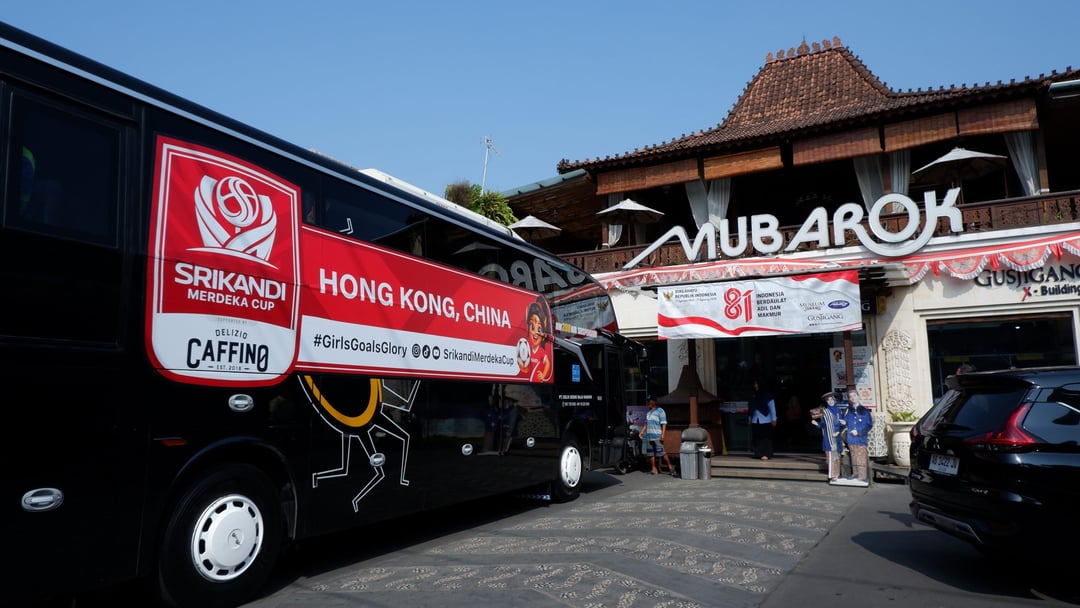
For athletes and team officials, time away from the playing field offers a unique opportunity to explore the local culture, from visiting regional landmarks and sampling traditional cuisine to learning about local history.
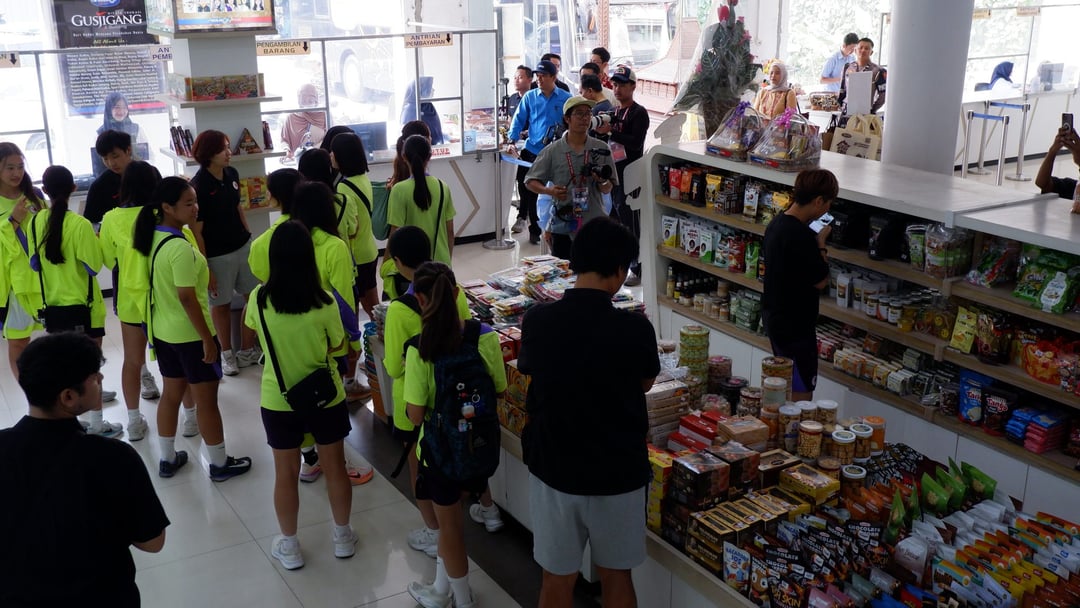
The Hong Kong U-16 women's national team’s visit to the Jenang Museum highlighted this cultural exchange. Through dioramas, international guests were guided through the traditional production process—from ingredient selection and cooking in large cauldrons to final packaging. For local producers, the museum provides a platform to showcase Kudus' culinary heritage to a global audience, while visitors gain a deeper understanding of the craftsmanship behind the flavors.
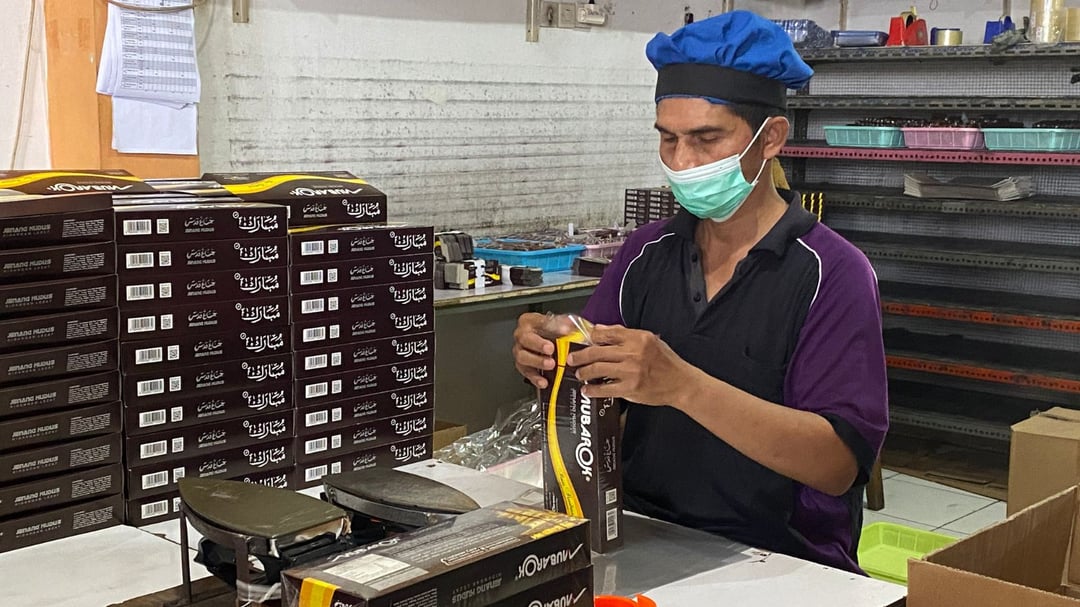
The visual displays detail the precise methods required to produce each box of jenang. Starting with the curation of raw materials—flour, coconut milk, and sugar—the mixture is cooked consistently for four to five hours. Skilled workers must carefully manage temperature and monitor the texture throughout the cooking process before the cooling, cutting, and final packaging stages, which involve a large workforce.
These exhibits underscore that jenang is more than just a retail commodity; it is a product of dedication, manual craftsmanship, and meticulous standards maintained through generations.
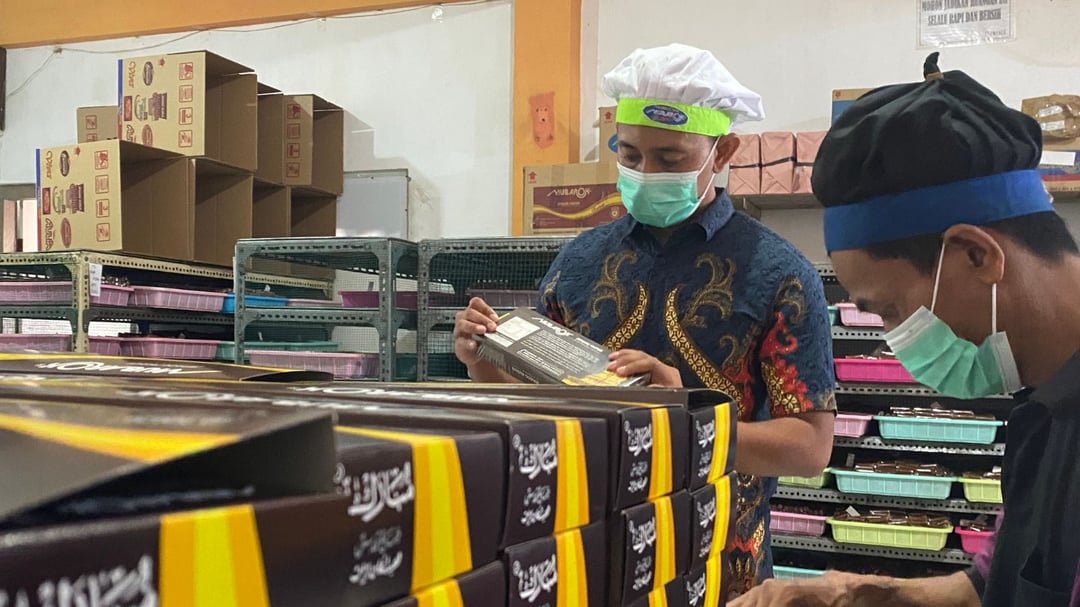
The Caffino Srikandi Merdeka Cup championship has bolstered sport tourism in Kudus, as visiting athletes gain not only competitive experience but also a lasting connection to local heritage.
While consuming a piece of jenang takes only moments, appreciating the history and dedication behind its craft offers a profound insight into a local tradition that remains resilient in the face of modernization. (ITN/mainkekudus)