
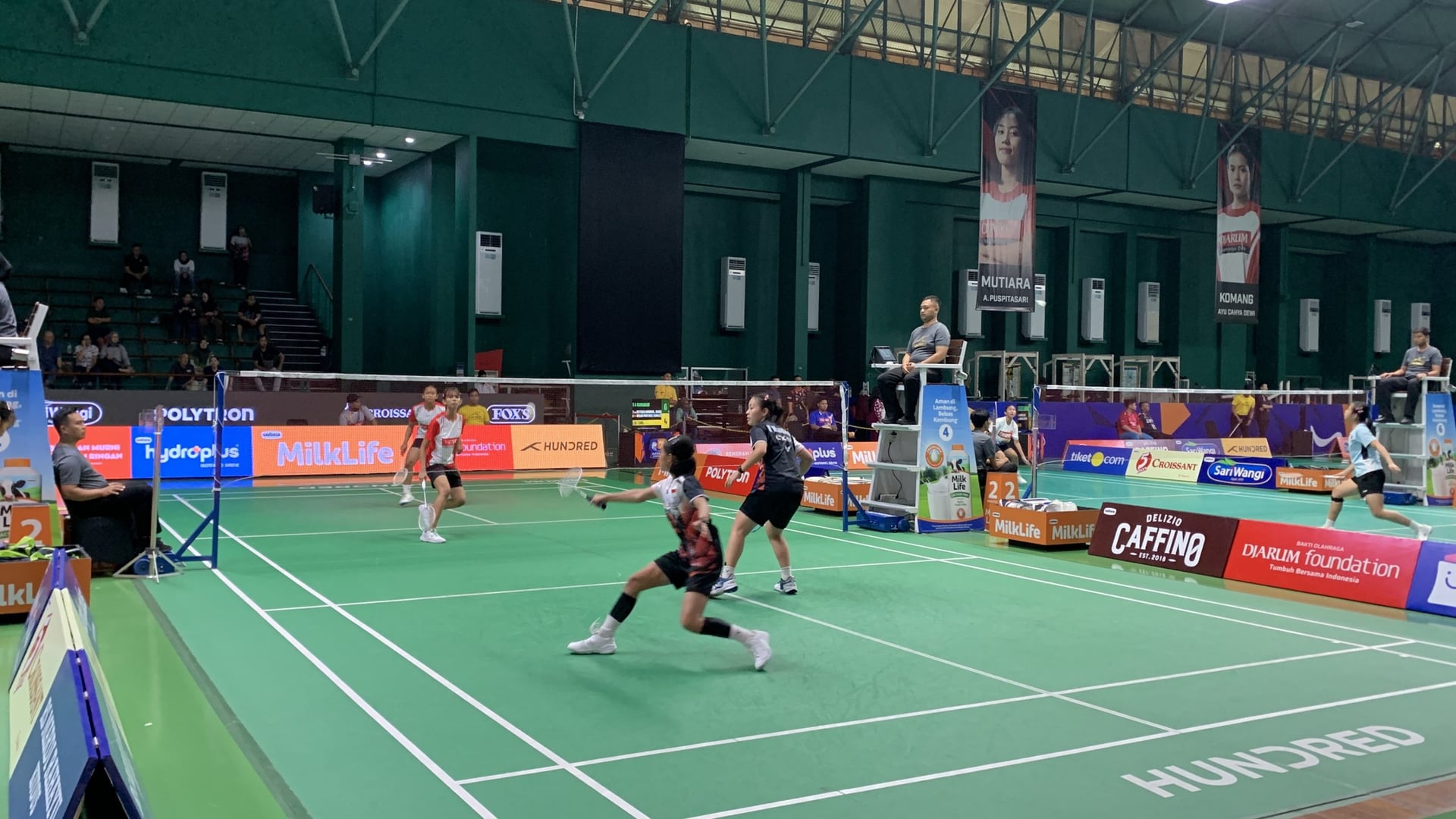
KUDUS – The sound of shuttlecocks striking rackets echoes through the GOR Djarum Jati in Kudus, mingling with the bustling activity of athletes. Between the courts and team benches, young players from various nations have gathered, united by a shared ambition to showcase their peak performance.
Some athletes are busy preparing before taking the court, while others study their opponents to analyze the dynamics of the match. This convergence brings a unique energy to the MilkLife Superliga Junior 2026, a competition featuring Indonesian badminton clubs alongside international participants.
Beyond the pursuit of victory, the tournament serves as a platform for junior players to experience international competition, test their skills, and develop the mental fortitude required for team-based play.
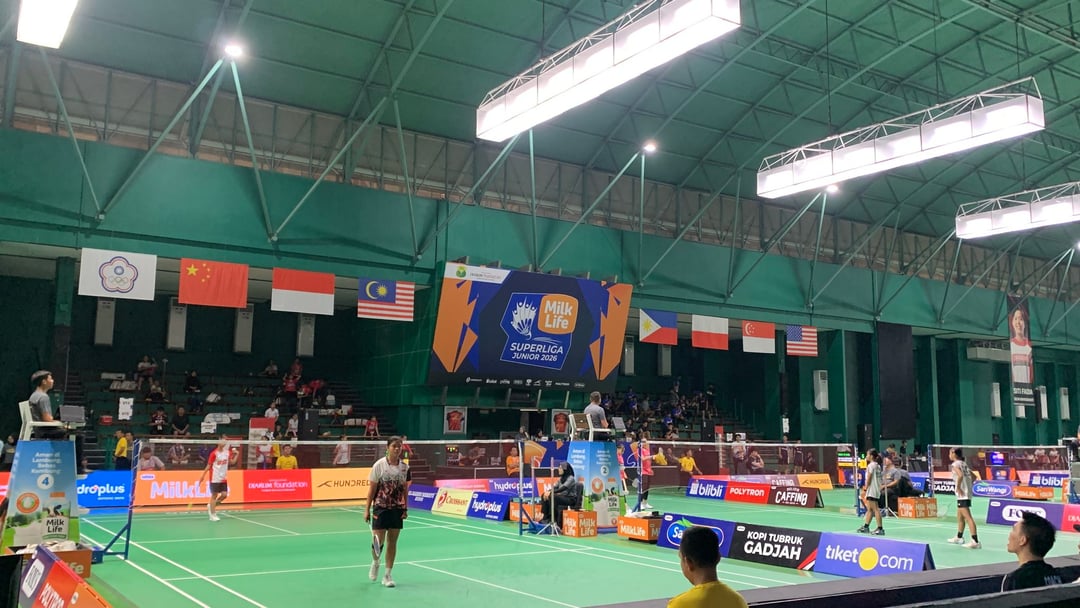
MilkLife Superliga Junior 2026 serves as a meeting point for junior clubs and teams from Indonesia, Malaysia, Singapore, the Philippines, China, Chinese Taipei, Poland, and the United States. According to Superliga Director Achmad Budiharto, 710 athletes across 85 teams are participating in the U-13, U-15, U-17, and U-19 age categories.
Indonesian participants include PB Djarum, Jaya Raya, Mutiara Cardinal, Talenta Manado, Champion Klaten, Victory Bandung, Suryanaga, Champion Kudus, Taqi Arena Badminton Academy, Exist, Pelatprov Jatim, Gideon Badminton Academy, and Power Rajawali.
Meanwhile, international participants include Malaysia's Bukit Jalil Sports School, Singapore Badminton Academy, Henan Province China, C.Y. Foundation Badminton from Chinese Taipei, the United States' Global Badminton Academy, and the Polish national team.
From the Philippines, the lineup features MIA Elite Philippines, a team strengthened by U-19 athlete Nica Ysabel Seno Gulpany, as noted in the provided transcript.
Budi explained that the Superliga Junior was designed from the outset as an inter-club championship connecting domestic and international participants. Initially, the competition featured only the U-17 and U-19 categories; however, it has since expanded to include the U-15 division, totaling four age groups this year.
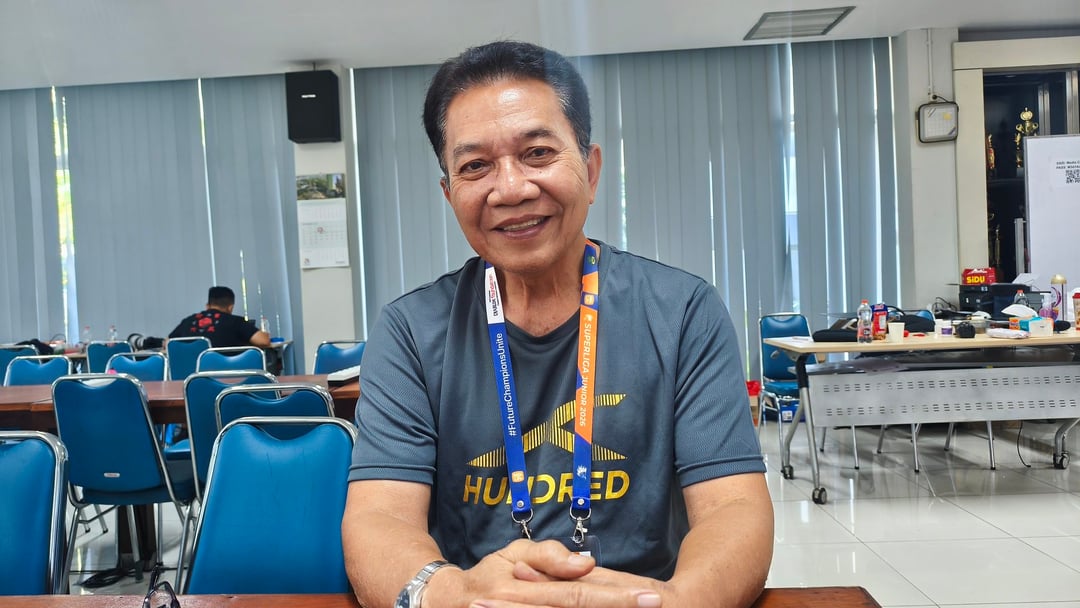
“From the beginning, our goal was to integrate domestic and international players. This provides Indonesian clubs the chance to compete in a team format while facing opponents from countries with advanced badminton development,” Budi explained.
The expansion of international participation is a key update for this year's edition. While foreign participants previously competed only in the U-17 and U-19 categories, international teams are now also included in the U-15 group.
Teams from Chinese Taipei, China, Malaysia, and Singapore are competing in this category. This initiative is designed to introduce Indonesian players to the international competitive environment at an early age.
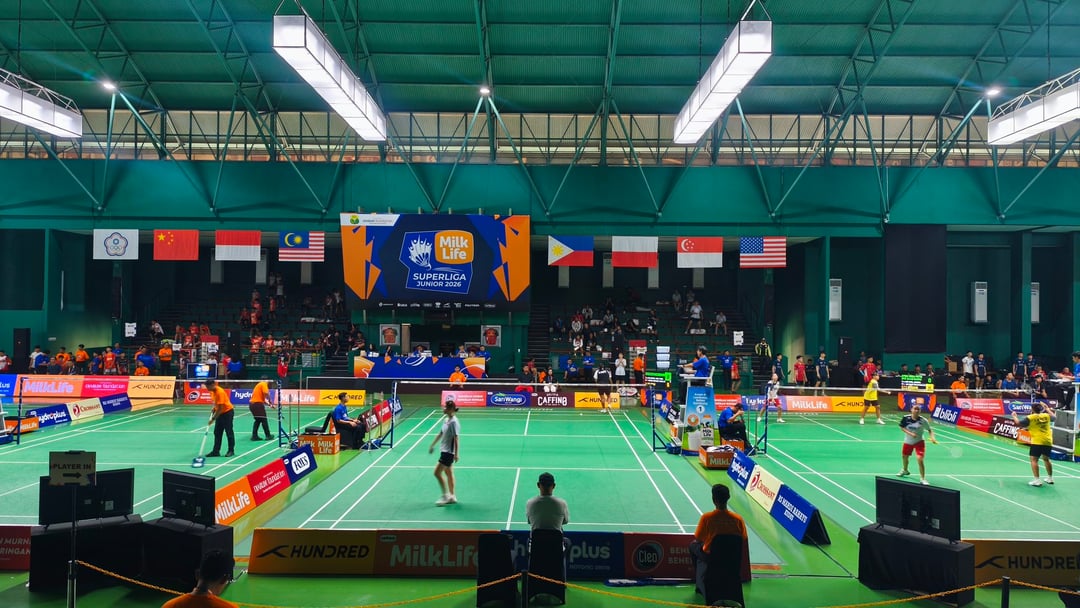
According to Budi, the experience of competing against international athletes is essential for player development, particularly as team events impose different pressures compared to individual matches.
“This is part of the player maturation process. We want to prepare them to develop the right mental fortitude for team competition,” he said.
The tournament adopts the Thomas Cup and Uber Cup format, with each team fielding three singles and two doubles. This composition is intended to evaluate a club's strength across both singles and doubles sectors simultaneously.
Budi explained that ideally, a club requires seven players to fulfill the format: three for singles and four to form two doubles pairs.
In the early stages of the event, some clubs brought only four or five players, a risky approach should an athlete sustain an injury and be unable to continue.
Higher roster requirements inevitably impact club finances, especially since the Junior Superliga operates on an invitation-only basis.
“Ideally, a club needs seven players, but clubs must also manage their budgets as this is an invitational championship,” he explained.
Regarding participant support, organizers provide different facilities for foreign and domestic clubs. International participants receive hotel accommodation, daily meals, and local transportation throughout their stay in Indonesia, including airport transfers and transport to the competition venue.
Meanwhile, international travel costs to and from Indonesia remain the responsibility of each foreign participant.
Domestic clubs receive support through financial subsidies intended to reduce participation costs.
Nevertheless, Budi acknowledged challenges in hosting international competitions in Kudus, noting that some foreign participants have raised concerns regarding hotel accommodation standards and meal options in the city.
Another issue concerns venue capacity. According to Budi, Kudus lacks an arena large enough to accommodate significant crowds. Past experiences during the BWF Super 100 event highlighted these limitations, as many spectators could not be accommodated.
For the 2026 Junior Superliga, attendance early in the competition remains modest, consisting mostly of participants. Budi hopes public enthusiasm will grow as the tournament moves into the final rounds on Friday, Saturday, and Sunday.
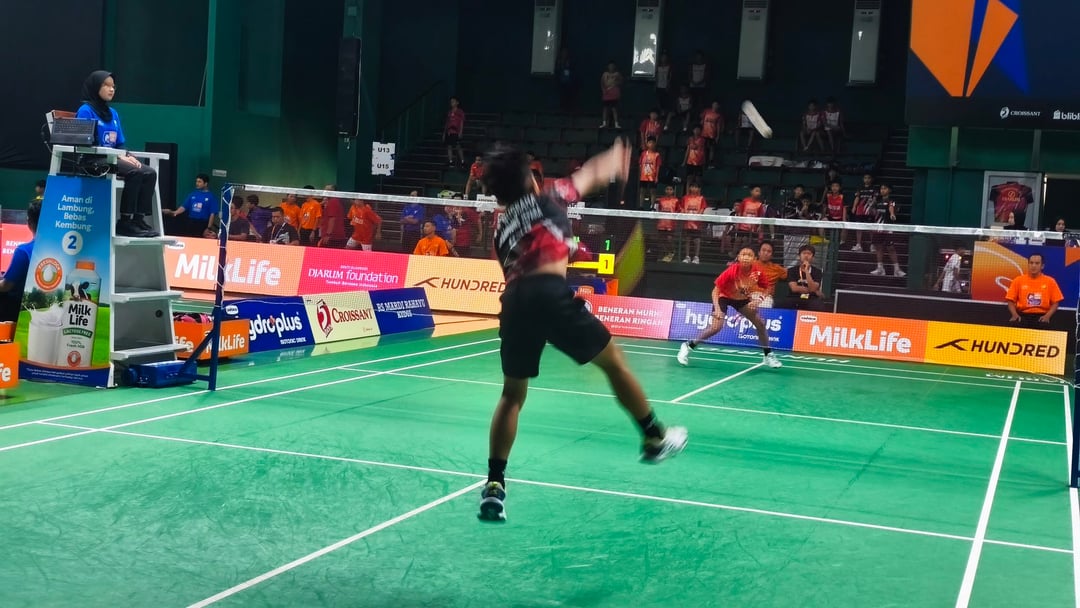
Competition against international clubs presents a unique challenge for participants from Indonesia. Preparation involves more than just technical skills; it requires adapting to the tempo and playing styles of opponents.
This is a key focus for the Taqi Arena Badminton Academy, a club from West Bandung Regency competing in three categories: boys' U-13, girls' U-13, and girls' U-15.
Taqi Arena coach Abrar Kharim Sastra Wardana expressed hope that all athletes will perform at their peak and secure the best possible results. The experience gained during last year's Junior Superliga serves as vital preparation for the current edition.
In previous appearances, Taqi Arena athletes demonstrated they could hold their own against international club players. This experience is expected to provide the foundation for another strong performance.
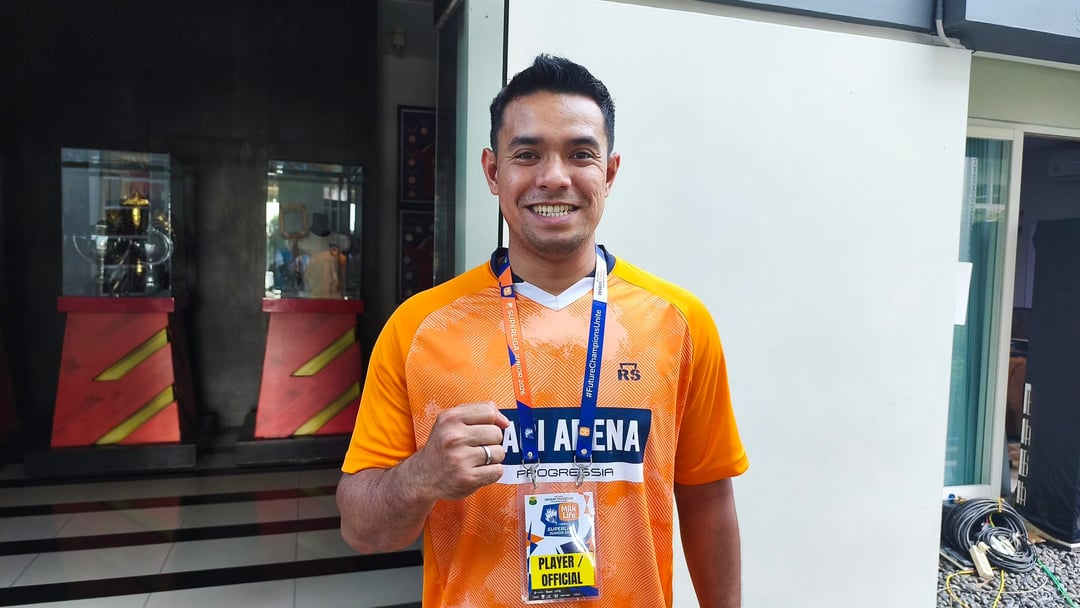
"Our hope is that the children play at their best and achieve excellent results. We are building on last year's experience, when Taqi Arena athletes proved they could compete against international club players," Abrar said.
However, there is a technical adjustment to navigate: this year, the scoring system has shifted from 21 points to 15 points, a change that forces players to anticipate a faster pace of play.
Abrar noted that international opponents typically employ fast and aggressive styles, requiring his players to adjust quickly to avoid falling behind in match tempo.
"The main thing we are anticipating is the change to a 15-point system. This format makes the game significantly faster, and opponents from other countries may have already adapted to that style of play," he explained.
Beyond technical ability, competing against international athletes provides valuable match experience. Players gain exposure to different playing patterns and learn to make real-time adjustments against varying opponents.
According to Abrar, cross-border competition offers insights that are not always available in domestic club matches.
"The primary benefit is match experience. They get to meet athletes from other countries and learn how to understand and adapt quickly to different playing styles," he said.
Mental development and team cohesion are also central to Taqi Arena's program. Abrar explained that team unity is fostered not only through on-court training but also through daily communal life in the dormitory.
Athletes are accustomed to shared routines from waking up until they retire for the night. These habits are intended to build a strong bond, ensuring every team member is conditioned to support their teammates.
"We build cohesion through their daily routines. From the moment they wake up until they go to bed, the children are encouraged to stay together and engage in various collective activities," he explained.
According to him, this habit also fosters mutual care among teammates. If a team member loses motivation or feels discouraged, their peers are expected to provide support.
Evaluations were also conducted after the team competed on the first day. At that time, Taqi Arena had just participated in the U-13 girls' category. Abrar noted that players who lack experience in team sports require psychological support.
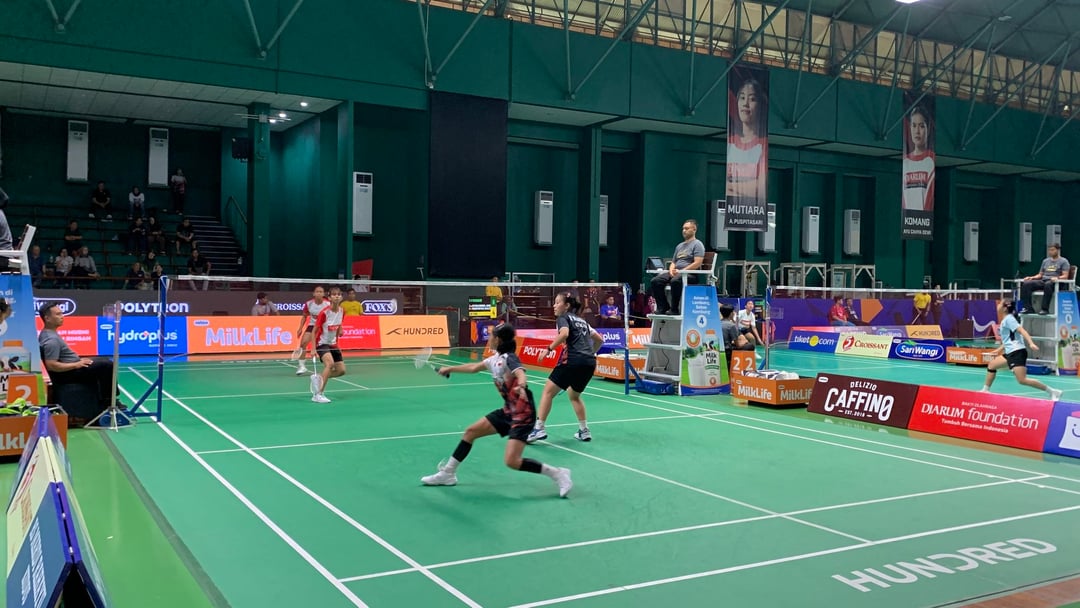
He wants the athletes not to be overly burdened by the team's overall score. The main focus is directed at the individual readiness of each player when it is their turn to compete.
"The evaluation is focused more on maintaining the children's psychological well-being. They do not need to be overly affected by the team score, but must remain truly focused and ready when fielded in a match," he said.
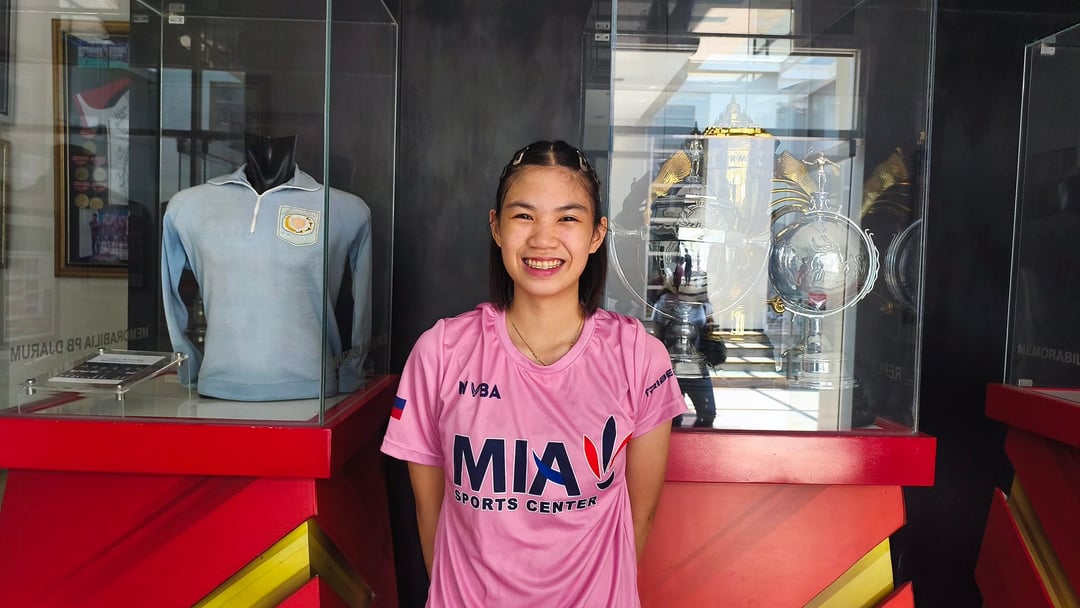
A different experience was felt by Nica Ysabel Seno Gulpany, a U-19 athlete from MIA Elite Philippines. This is her second visit to Kudus. Although not her first time, the competition atmosphere continues to leave a distinct impression.
Nica admitted that she felt nervous seeing the participants so seriously preparing themselves. The hustle of the athletes before the match showed that every team arrived with their own readiness and ambitions.
"My first impression was that everyone looked very prepared. I felt a bit nervous seeing how busy everyone was with their preparations," she said.
However, that atmosphere did not dampen her enthusiasm for the competition. Instead, she expressed appreciation for the facilities and the reception she received while in Kudus. She noted that the people she met were very welcoming, making the atmosphere feel warm.
"The facilities are excellent. The people here are also very kind, and the atmosphere feels warm," she said.
To face the tournament, Nica and her teammates train every day under the guidance of their coach. Discipline is one of the key pillars they maintain throughout their preparation process.
Her goal is not only to secure victories but also to improve her playing skills through the matches she plays.
"I train every day with the coach and my teammates. We strive to maintain discipline during our preparation. My goal is to continue improving my skills and hopefully achieve victories," she stated.
The opportunity to compete against Indonesian athletes and participants from other nations has provided Nica with valuable experience, allowing her to test her skills against higher-level players.
This experience served as a platform to identify her weaknesses and understand areas requiring further improvement.
“This has been an excellent experience because I could compete against athletes playing at a higher level,” she said.
Looking ahead, Nica hopes to apply the lessons learned toward her development as an athlete. She aims to continue refining her abilities, maintaining her confidence, and adopting a positive mindset when facing various challenges.
According to Nica, belief in one's own ability is essential to remain resilient in competitive environments.
“The most important things I want to learn are self-confidence and a positive mindset. We must always strive to grow,” she stated.

Ultimately, the gathering at GOR Djarum Jati was about more than just lifting a trophy. Amidst club rivalries and varying playing styles, the young athletes were given the opportunity to encounter international standards of play, learn collaboration, and broaden their competitive experience.
Kudus served as the stage where they met, competed, and gained lessons that will prove vital for their long-term journeys in badminton. (OEB/YSR/mainkekudus)
