
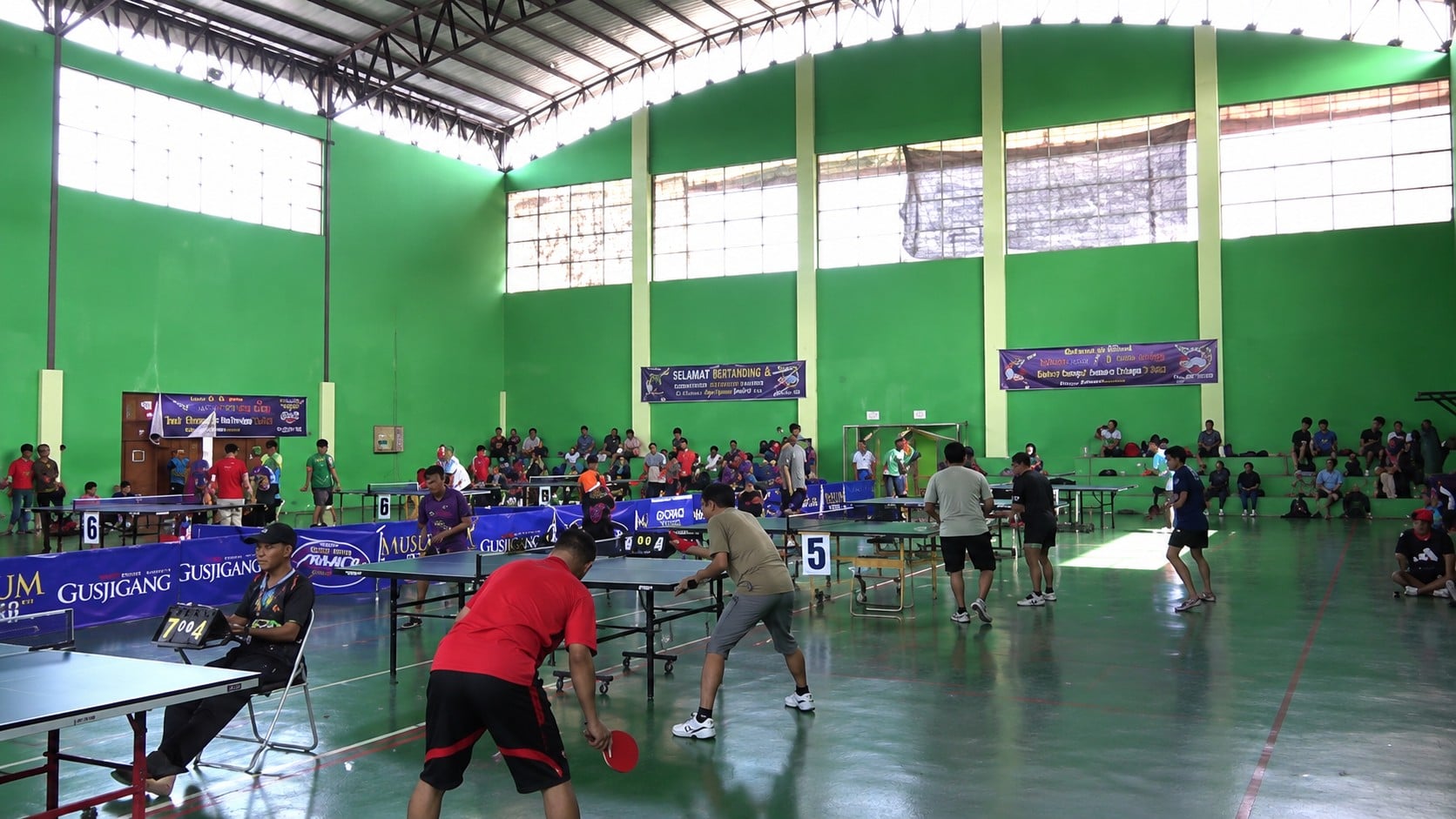
KUDUS — The rhythmic sound of table tennis paddles hitting balls echoed through the Balai Jagong Indoor Tennis Hall in Kudus on Sunday (July 5, 2026). Inside, hundreds of athletes vied for victory, while outside the arena, a different story unfolded. Vendors served a steady stream of customers, families gathered while awaiting match schedules, and local residents spent their weekend enjoying the matches alongside local culinary offerings.
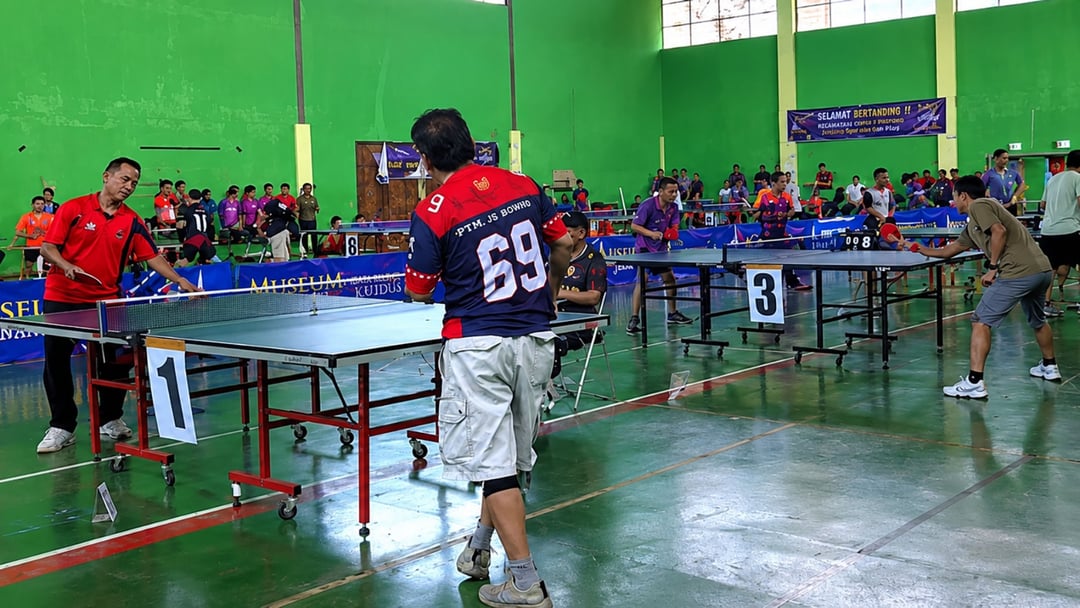
The 2026 Mubarok Food Table Tennis Competition offered more than just sporting stakes. The championship served as a gathering point for regional athletes, a platform for developing table tennis talent, and a catalyst for social and economic impact within the local community.
A total of 154 participants across various age groups and competition classes took part. The atmosphere was electric from the opening rounds, with cheers from the stands fueling the athletes as they gave their best performances.
The final stages of the 2026 Mubarok Food Table Tennis Competition featured intense rivalries that lasted until the final match. Every player displayed their full capabilities to vie for the title, validating their rigorous training efforts.
In the final results, Suharjanto Purhartono, also known as Tono, representing Dekom 88 Semarang, secured the championship title. Rama of Wedak Adem Semarang took second place, followed by teammate Huda in third, while Kevin from Benli Semarang placed fourth.
Local athletes also made their mark, with Daka from Nusantara Kudus taking fifth place, Zidna from GPS Kudus in sixth, Kiki from Spinlab in seventh, and Agung from Peci Kudus rounding out the top eight.
These results underscore that the tournament was not merely about naming a winner, but about bringing together athletes from various clubs to compete with sportsmanship, foster professional networks, and test their skills on a shared stage.
The pulse of activity extended well beyond the tables. In the area surrounding the hall, local economic activity thrived as crowds of visitors arrived throughout the day.
For Masrofah Noviantika, sports tournaments always bring fresh opportunities.
As a drink vendor near Balai Jagong, she witnessed firsthand how the competition transformed a normally quiet area into a bustling hub filled with athletes, participants' families, officials, and spectators.
“It is usually quiet when there are no events, but it gets quite busy during events like this,” she said.
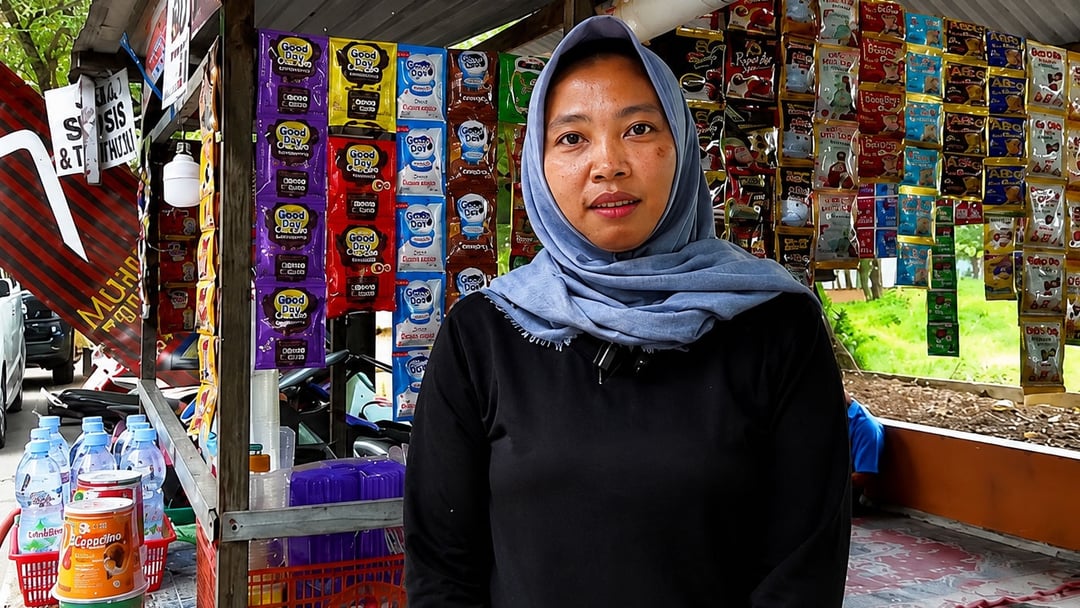
Warm weather made cold drinks the top choice for visitors. Athletes finishing their matches, parents accompanying their children, and spectators all stopped by to quench their thirst.
“Iced drinks are the most popular. Since mineral water is already provided inside the venue, customers prefer buying iced tea or iced coffee,” she noted.
For Masrofah, the more sports competitions held in Kudus, the greater the opportunities for small businesses to grow.
“When there are frequent events like this, it gets crowded, and sales increase,” she added.
Nadiatul Faiqoh, owner of a kiosk located near the competition venue, shares similar sentiments.
She reported a significant rise in customer traffic compared to typical days, noting that many patrons were new faces likely visiting from out of town to participate in or watch the tournament.
“It gets lively here, many people arrive, so turnover automatically goes up,” she said.
“I am not entirely sure, but these faces are rarely seen around here,” she added.
These vendors' stories illustrate that sports events do more than spark competition on the field; they stimulate economic activity that directly benefits micro-enterprises surrounding the venue.
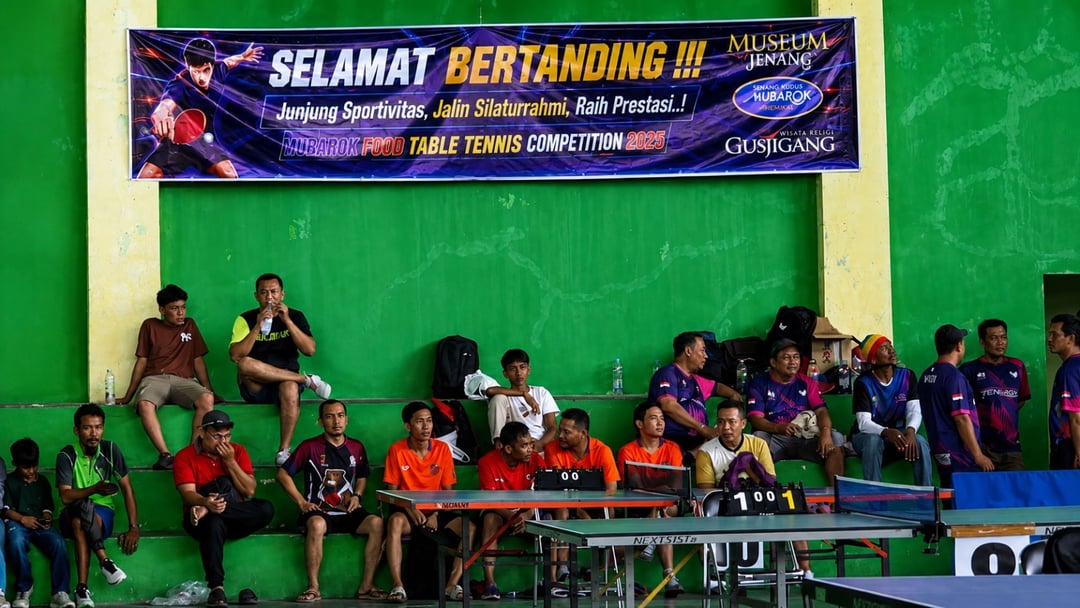
For attendees, the tournament also offered a unique experience.
Spectator Siti Marfuah said she enjoyed the match atmosphere combined with the diverse culinary options near the arena. “It is very interesting. We could watch the athletes perform, and there were also many snacks available,” she remarked.
She noted that the convenience of the venue enhanced the overall viewing experience. “The city is clean, and the parking area is nearby, making it easy to access,” she stated.
This environment highlights how sports can serve as a social hub. Whether visiting to compete, support family, trade, or simply spectate, people come together in a warm, interactive space.
Beyond the excitement, the Mubarok Food Table Tennis Competition 2026 remains focused on its primary objective: cultivating athletic talent.
Committee Chairman Joko Mulyono stated that this year's event features 154 athletes from various regions and competition categories. “In total, there are 154 participants from diverse backgrounds and classes,” he said.
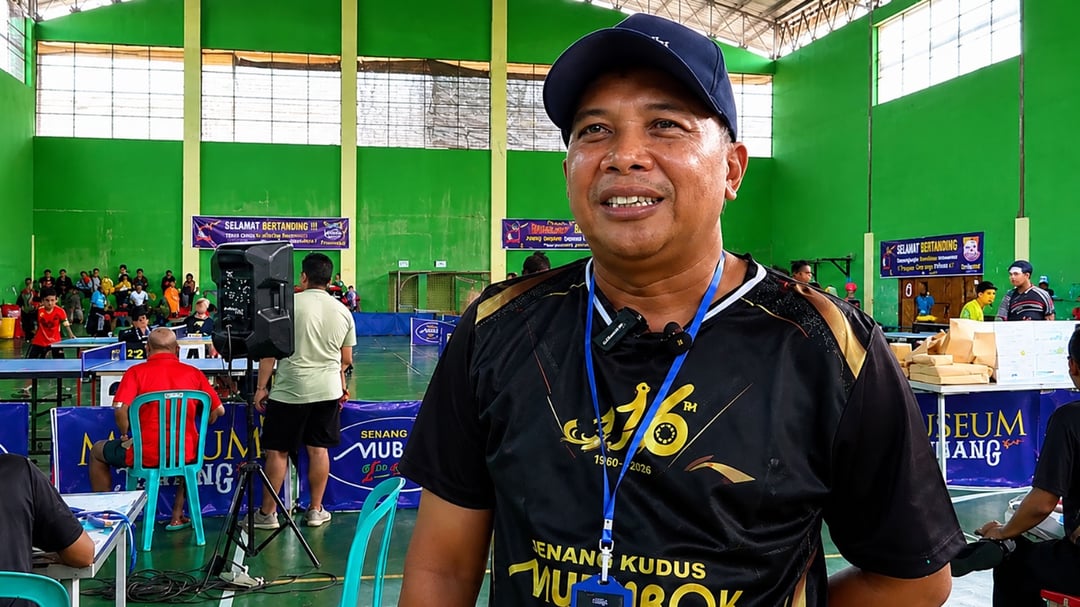
According to Mulyono, the primary value of this championship extends beyond merely crowning a winner. “First, it fosters camaraderie, and second, it serves to identify talent for development toward higher-level competitions,” he said.
He noted that the tournament is part of the ongoing anniversary celebrations for Mubarok Food. “Yes, this is held to mark the Mubarok Food anniversary,” he added.
Mulyono hopes the championship will become a sustainable fixture. “I hope this event continues to be held in Kudus Regency,” he stated.
Hj. Heni Sandra Nurwati, Chair of PTMSI Kudus, believes the participation of seasoned athletes adds significant value to the growth of table tennis in the region.
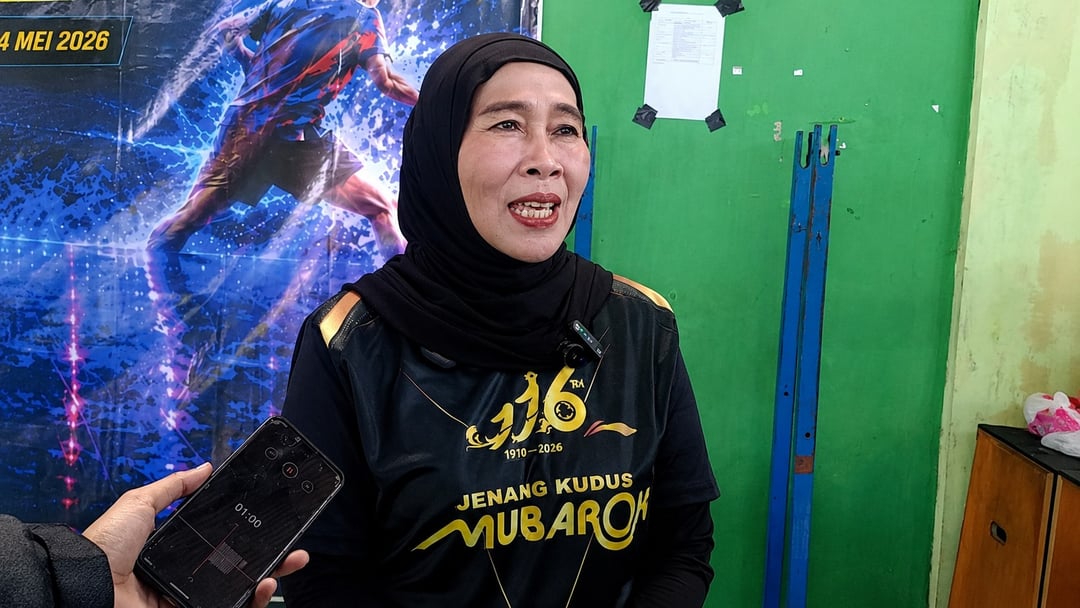
She pointed out that several national-level players are participating. “Many top players are involved, including Daka, and even national team member Ayuka is competing,” she said.
For young athletes, the opportunity to observe national players in action provides invaluable experience that cannot be replicated in daily practice.
Heni added that Kudus maintains a strong tradition of sports development through clubs such as PTM Sukun. Therefore, she believes collaboration between sports organizations and the business sector is crucial for sustaining such competitions. “Hopefully, this can become an annual event,” she said.
She emphasized that consistent competitions simplify the process of evaluating athlete performance from the local to the national level. “This event is vital for assessing the talent pool in Kudus, Central Java, and throughout Indonesia.”
She stressed that early-stage development must be supported consistently through frequent match play. “This is necessary to identify national-level athletes within their respective categories,” she concluded.
For Semarang-based top athlete Suharjanto Purhartono, commonly known as Tono, returning to compete in his hometown is always a special experience.
The winner of the 2026 Mubarok Food Table Tennis Competition said he was grateful to participate in the tournament hosted by the jenang manufacturer, Mubarok Food. For him, the event is not just about competing for accolades, but also serves as an opportunity to pass on his experience to the next generation.
Beyond delivering his best performance on the table, Tono hopes his presence inspires young athletes to keep refining their skills. “This event is truly excellent for young athletes,” he said.

For Tono, his participation is about more than just achievement; it is an opportunity to share enthusiasm and inspire the next generation. He believes every tournament serves as a venue to test one's skills while maintaining the competitive spirit.
National player Ayuka Pratiwi from Semarang also shared her experience, marking her debut in the Mubarok Food Table Tennis Competition as a memorable occasion.
“This is my first time participating in a Mubarok Food event,” she said.
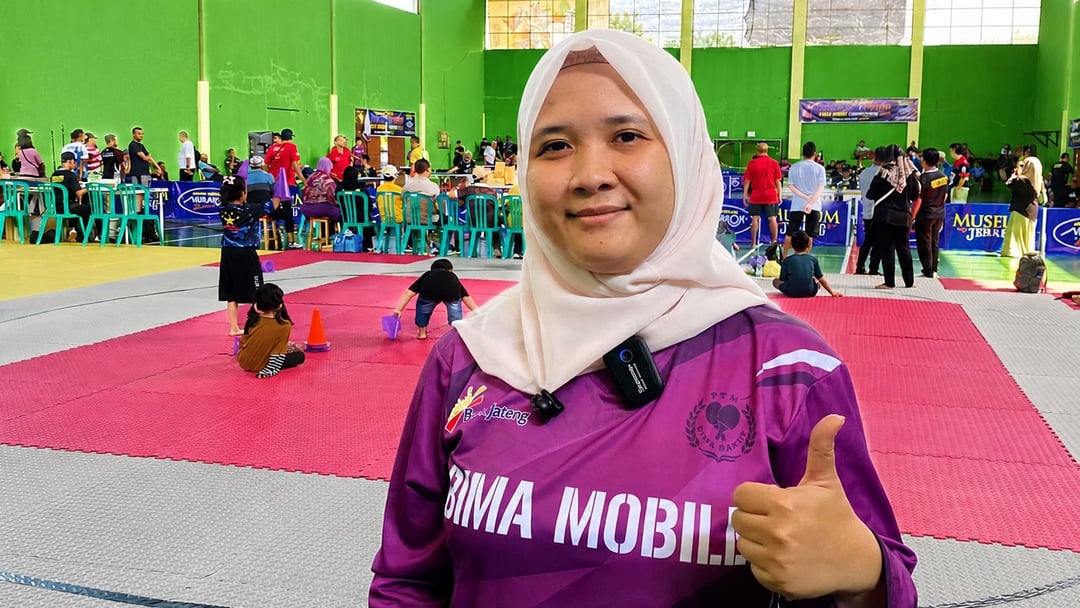
For Ayuka, the enthusiasm of participants and spectators alike provides the energy that fuels every match. The lively arena and the spirit displayed by the competitors create a warm and passionate atmosphere. “There are many participants, the enthusiasm is high, and everything is evenly matched, so it will be exciting,” she noted.
A similar perspective was shared by Semarang team coach Mahyudin. He views the tournament as part of a long-standing sports culture in Kudus, which he says has a strong tradition of fostering sporting events that keep the spirit of competition and athlete development alive. “Kudus has been a sports hub for a long time, and it remains so today,” he said.

He added that increasing the number of competitions provides more opportunities for young athletes to gain the competitive experience necessary to build their mental fortitude and enhance their performance quality.
Behind the organization of the championship, corporate support remains a key factor in ensuring the event's success.
Mubarok Food CEO H. Muhammad Helmi stated that the company's involvement represents their commitment to supporting table tennis development while strengthening the collaboration between the business sector and the sports community.

According to Helmi, the presence of the Mubarok Food booth during the event served as a platform to introduce the company's products to participants from various regions.
“We provided a booth here to raise brand awareness for Mubarok, especially since many participants traveled from out of town,” he said.
However, Helmi emphasized that the company’s primary objective extended beyond marketing.
“It is about how we can provide benefits to the community and table tennis enthusiasts,” he added.
He noted that the company’s commitment to sports will continue through various collaborations, including the upcoming Muria Trail Run 2026, scheduled for August 1–2.
Through synergy between the private sector, sports organizations, athletes, and the public, Helmi hopes more sporting events will be held in Kudus to broaden the impact on both athlete development and the local economy.
“We hope for continued, harmonious cooperation that benefits everyone, particularly for the advancement of table tennis,” he concluded.
This championship demonstrated that the value of a tournament is not measured solely by its winners. At Balai Jagong, the table tennis event served as a training ground for young athletes, strengthened community ties, created opportunities for small businesses, and fostered social interactions that brought sports closer to the public. (BRO/mainkekudus)