
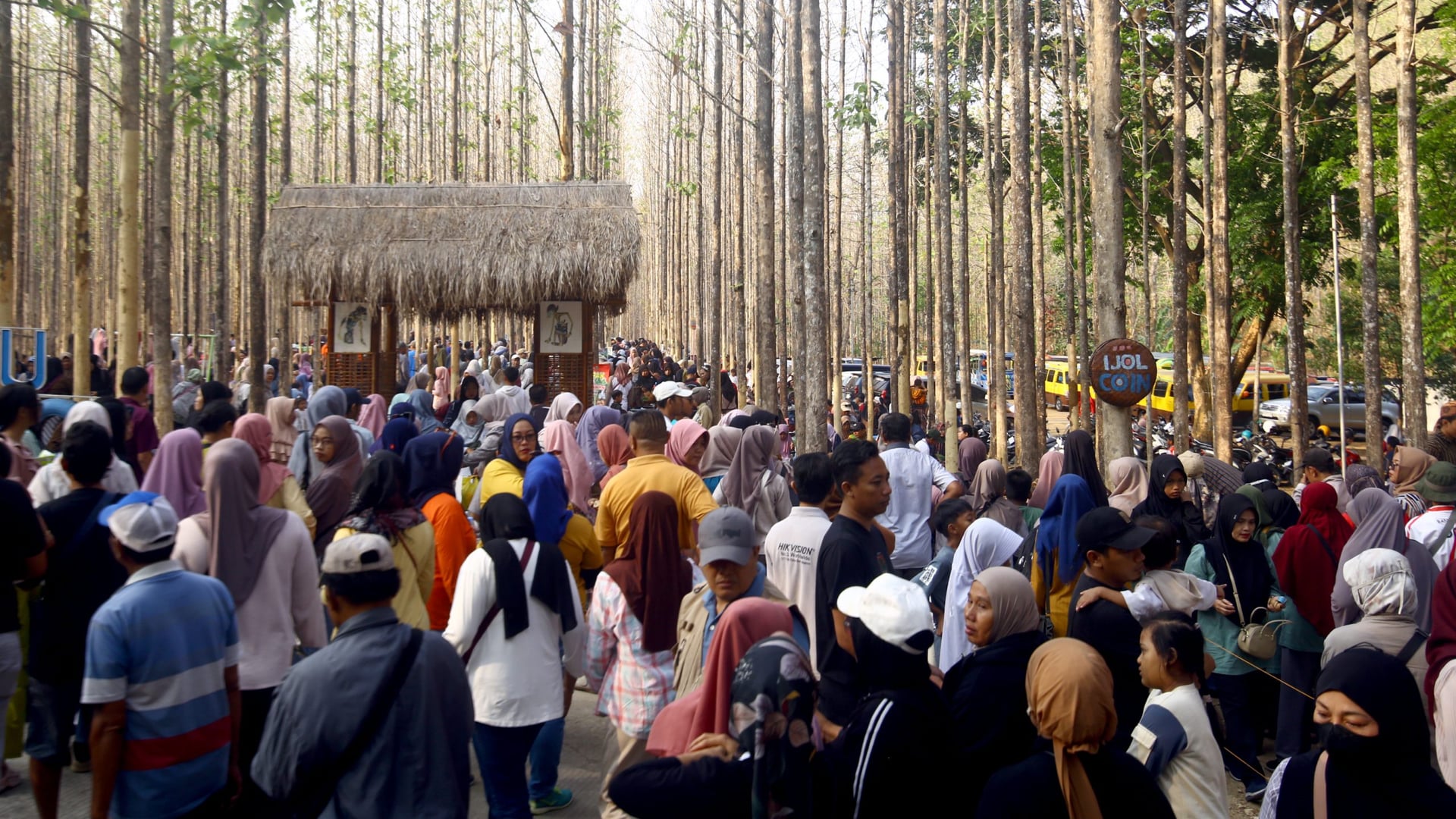
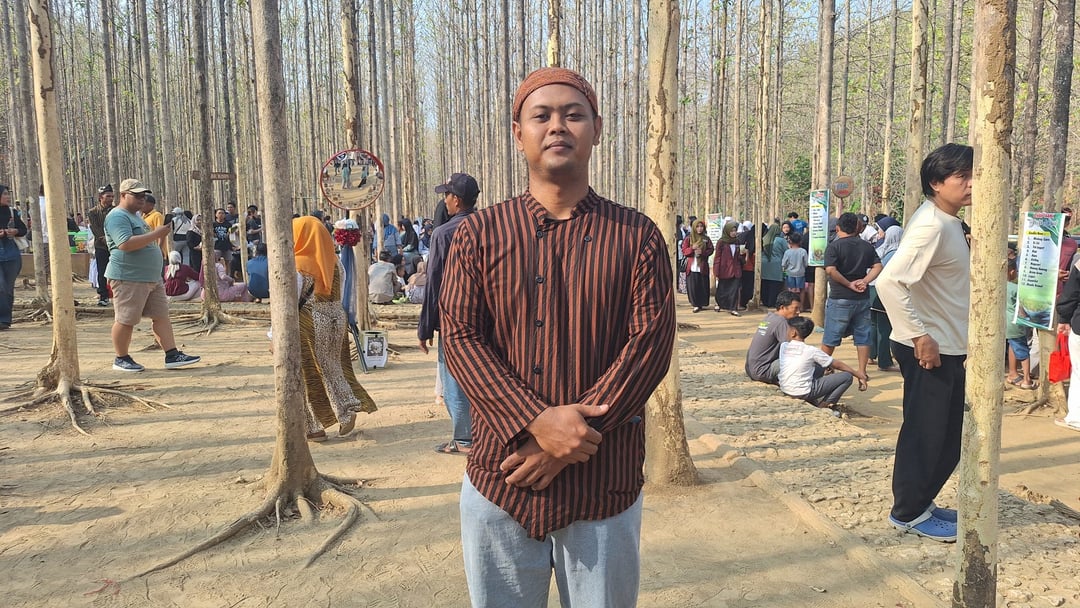
KUDUS – An array of traditional foods is served among the teak trees in the Alas Jati Sewu area of Wonosoco Village, Undaan District, Kudus Regency. This unique atmosphere can be found at Pasar Sarwono, a culinary tourism destination that offers a shopping experience using wooden coins and takes place only once every 35 days.
Pasar Sarwono offers a departure from typical culinary tourism. Visitors come not only to enjoy vintage delicacies but also to experience a traditional market atmosphere set within a forest, observe local community life, and participate in various recreational activities.
The market’s uniqueness attracts a diverse crowd, ranging from families and community groups to students looking to explore traditional cuisine while observing local village economic activities firsthand.
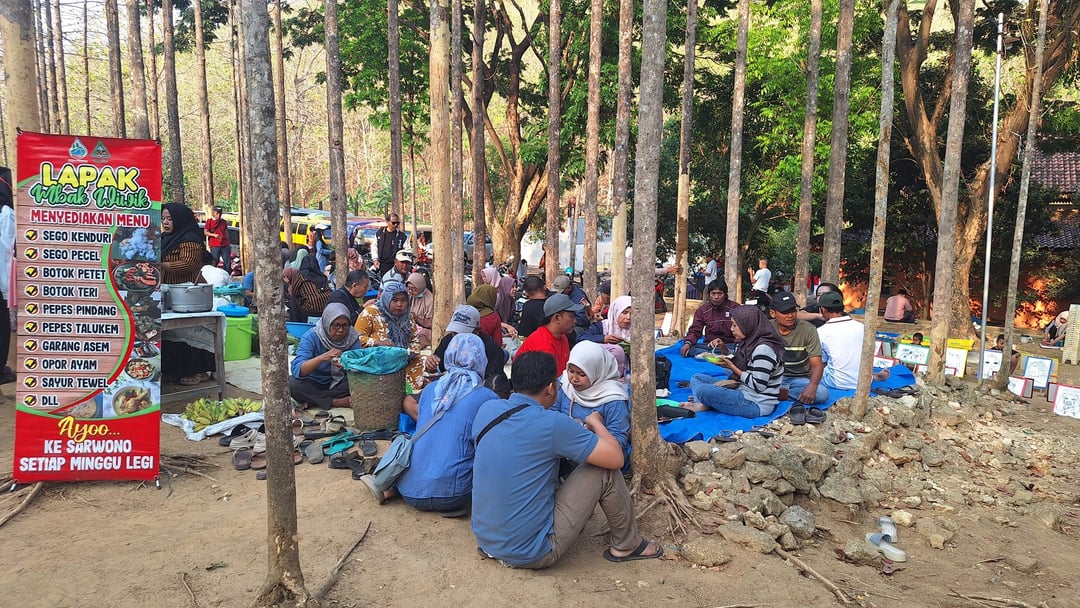
A major draw of Pasar Sarwono is the variety of traditional food offered by local residents. Visitors can find dishes such as corn rice, karak rice, tiwul, getuk, and rice flour porridge. These hearty meals and market snacks are part of an effort to reintroduce dishes once staples of rural life.
The market’s setting beneath the shaded teak trees provides a distinct experience. Visitors can browse the food stalls, select their desired dishes, and enjoy their meals in an open-air area surrounded by the cool, natural environment.
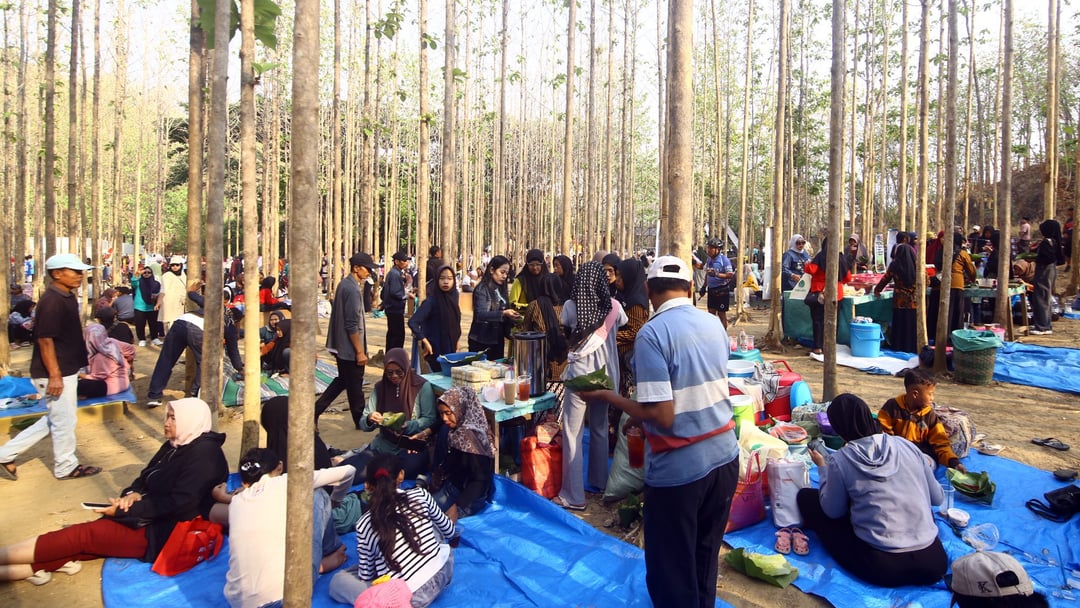
Diva and Aliyyah, students at MTs Mu’allimat NU Kudus, were among the visitors experiencing the atmosphere firsthand. They arrived with a school group to conduct interviews and observe activities at the market.

Prior to their visit, they were unaware of the market’s existence in the teak forest, having learned about the destination from their teacher.
Upon arrival, the bustling atmosphere of the market was a highlight for the students.
“It’s crowded and really exciting,” one of the students remarked.
They were also captivated by the forest environment and the unique system of using wooden coins for transactions.
“The place is beautiful, and using coins is quite unique,” one of them added.
For these students, Pasar Sarwono provided a fresh experience, allowing them to explore a traditional market, discover a variety of local foods, and observe commerce within a village setting.
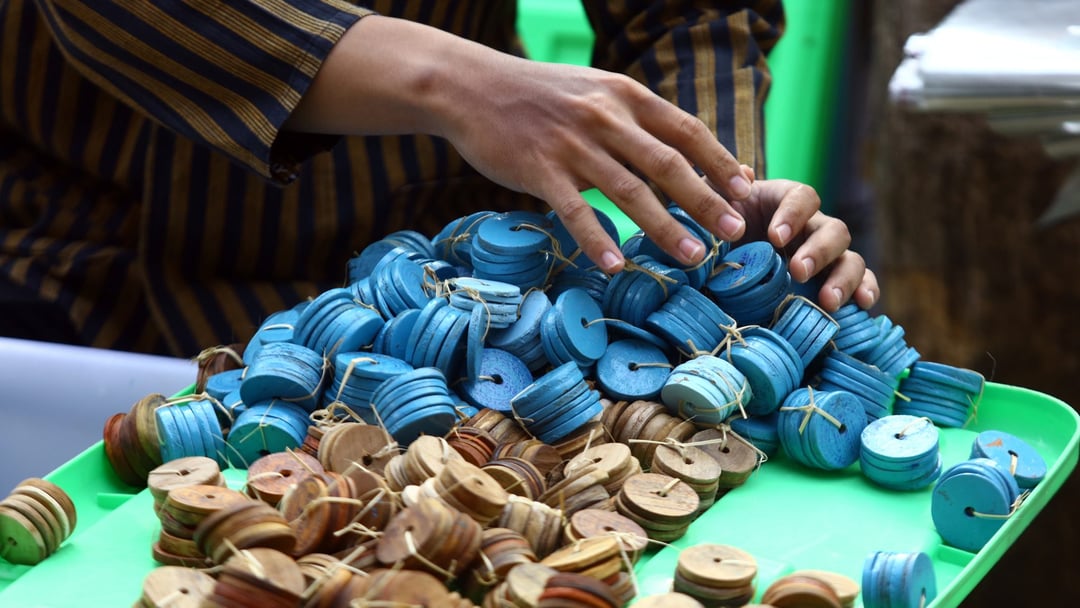
Visiting Sarwono Market offers a unique experience, as patrons do not pay for food directly with the Indonesian rupiah. Instead, they must exchange their currency for wooden coins at a designated kiosk to conduct transactions within the market.
Tri Budi Wahono, Director of the Wonorekso Village-Owned Enterprise (BUMDes) and manager of the Wonosoco Village tourism site, explained that the system was intentionally implemented to provide a distinctive shopping experience.

"We use a wooden coin concept for transactions, with denominations ranging from IDR 2,000 to IDR 6,000," Tri explained.
According to Tri, using coins also streamlines transactions because vendors do not need to provide change. If the cost of the food does not match the coin denomination, vendors add extra items to balance the price accordingly.
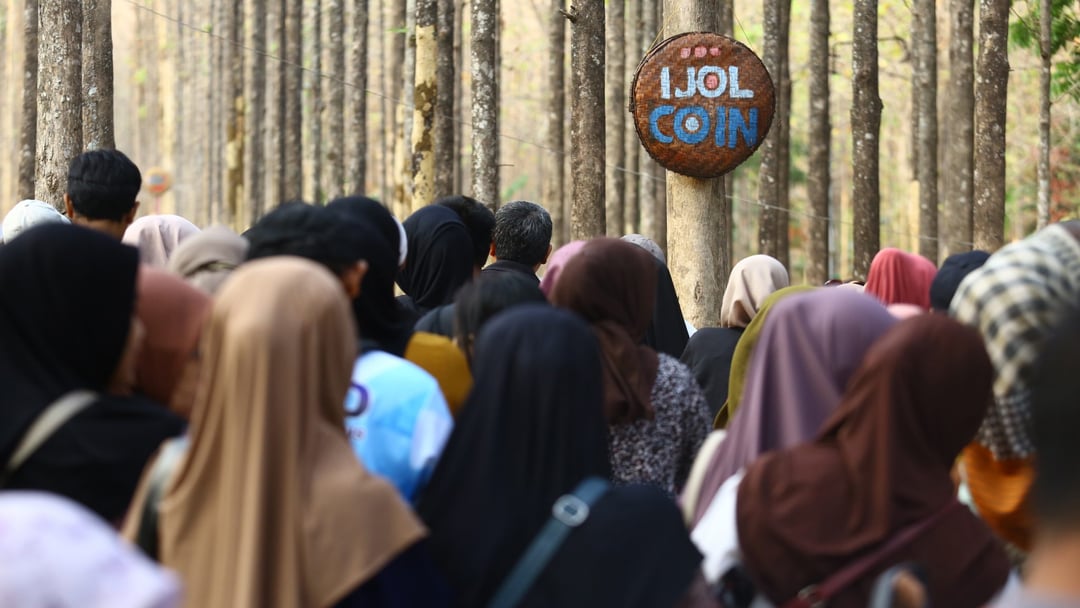
Management has set a standard food price of approximately IDR 5,000, excluding certain sides such as chicken or eggs. By adjusting their food choices, visitors can enjoy traditional cuisine at a relatively affordable cost.
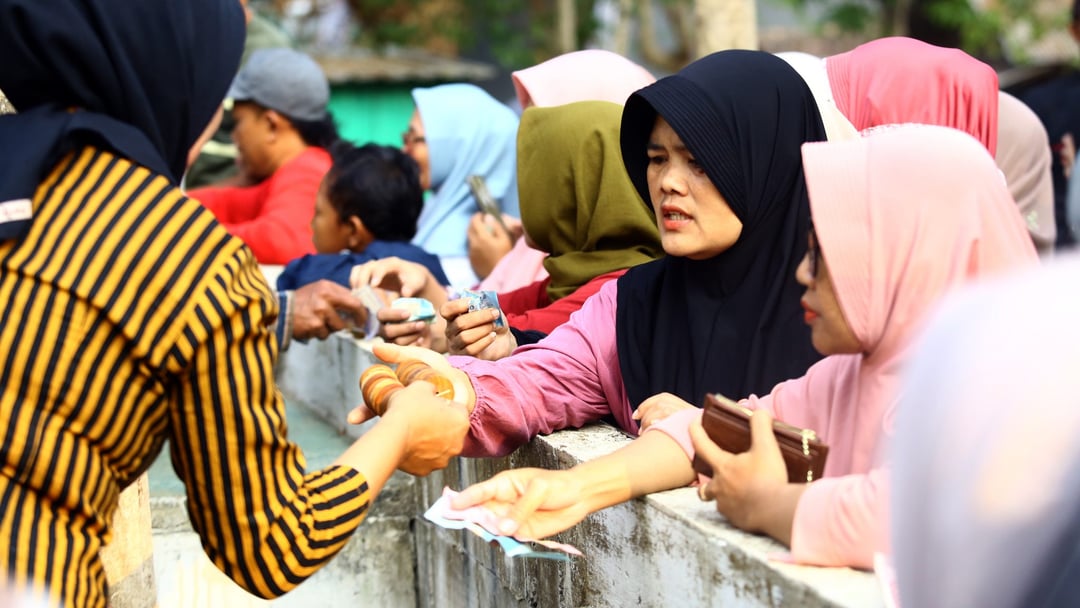
This wooden coin system has become a hallmark of Sarwono Market. Visitors are not merely purchasing food; they are engaging in a transactional mechanism that is central to the site’s tourism concept.
The unique nature of Sarwono Market is also being utilized as an outdoor learning tool. Apik Ilma Annisa and Ulil Bashiroh, teachers at MTs Mu’allimat NU Kudus, brought their students to the market as part of an entrepreneurship-themed co-curricular activity.
During the activity, students were tasked with observing the environment and interviewing vendors. They were guided to directly witness trade operations, ranging from the products sold to the interactions between sellers and buyers.
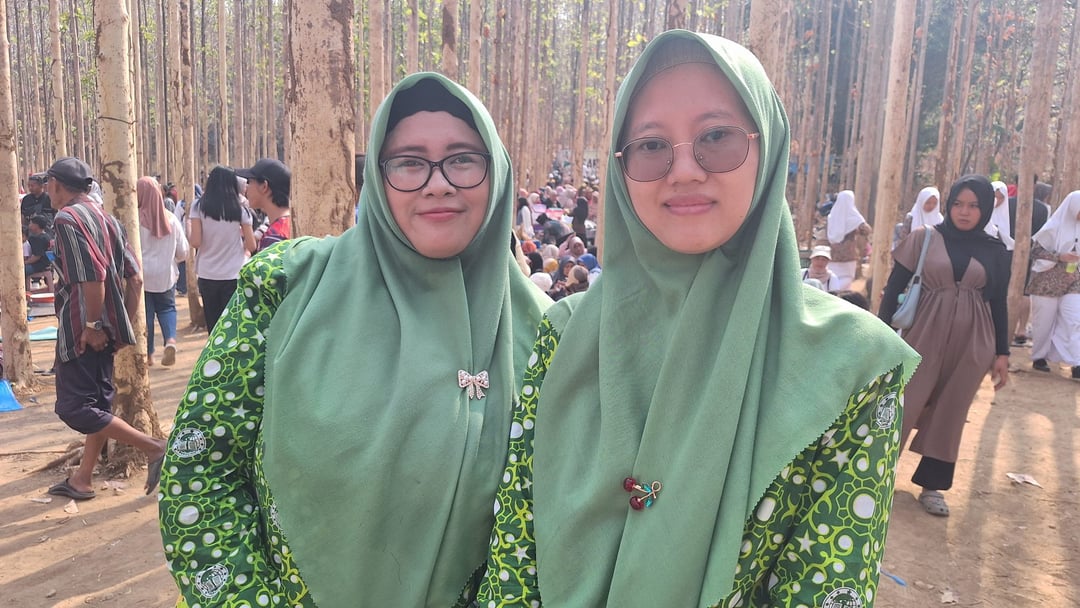
"We invited the students to observe the entrepreneurial activities in Wonosoco Village," said Apik Ilma Annisa.
According to Apik, Sarwono Market was selected for its unique charm, particularly in introducing traditional foods to the younger generation. The event also provided students the opportunity to learn about the economic potential driven by village businesses.
Through direct observation, the students are expected to grasp that entrepreneurship goes beyond classroom theory, rooted instead in the experience of seeing and engaging with business operators.
"We hope they are inspired to pursue entrepreneurship in the future, perhaps by starting businesses at home or for their own career paths," Apik explained.
The visit demonstrated that Sarwono Market serves not only as a recreational destination but also as a learning space for introducing students to traditional culinary arts and community economic activities.
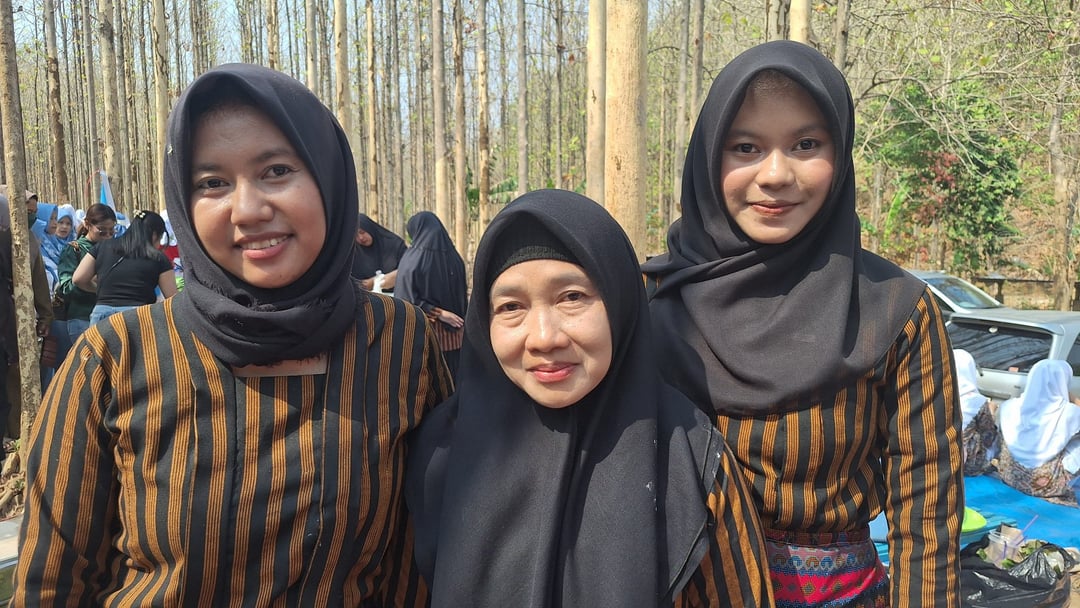
Among the dozens of stalls enlivening the market, Sri Listianingsih is one resident who uses the event to market Wonosoco Village specialties. She has been selling her goods for approximately one year, offering nasi sok and nasi opor.
Preparations begin a day before the market opens. Sri prepares seasonings and ingredients, including processing fish and meat at night, to ensure all dishes are ready to serve as soon as visitors arrive.
For each event, she prepares around 300 portions. This figure is adjusted based on her past sales experience and the anticipated visitor turnout.
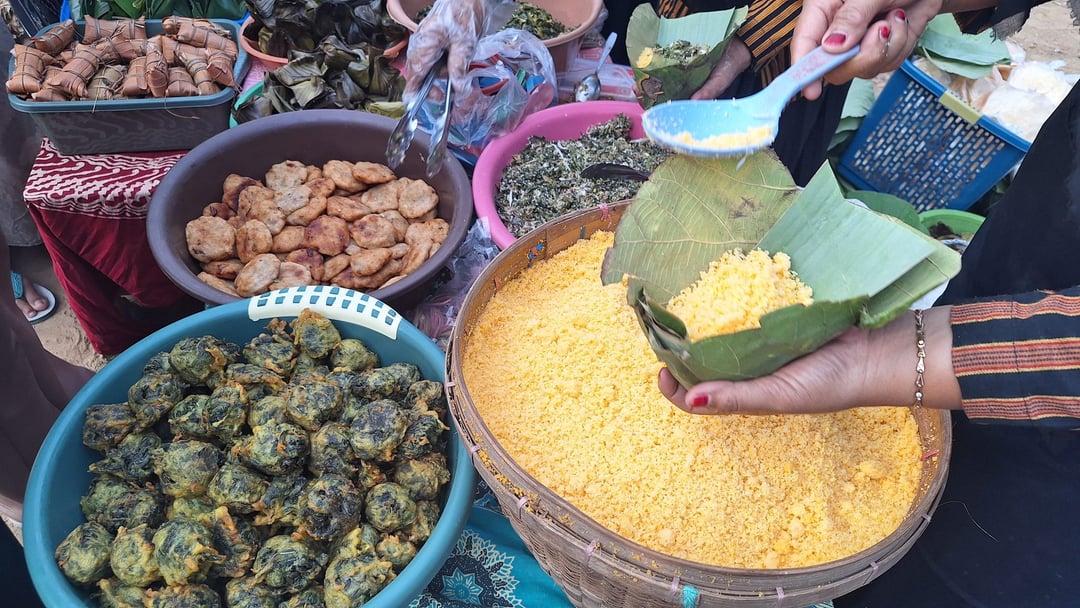
On busy days, her stock can sell out by 9:00 a.m. WIB, just two hours after the market opens.
Sri recounted one experience where she generated around Rp2 million in revenue within three hours, with all her food sold out.
“During my last experience, I made about Rp2 million in three hours, and thank God, all the food sold out,” she said.
This experience highlights the opportunities available to local vendors through the Pasar Sarwono event. In addition to showcasing authentic village culinary delights, the market provides residents with an opportunity to generate supplemental income from their food businesses.
Sri hopes that the market will continue to operate and attract an increasing number of tourists.
“Yes, I hope it grows busier and keeps its unique character so it can continue running smoothly,” she added.
This sentiment aligns with ongoing efforts to preserve traditional cuisine as part of the tourism identity of Wonosoco Village.
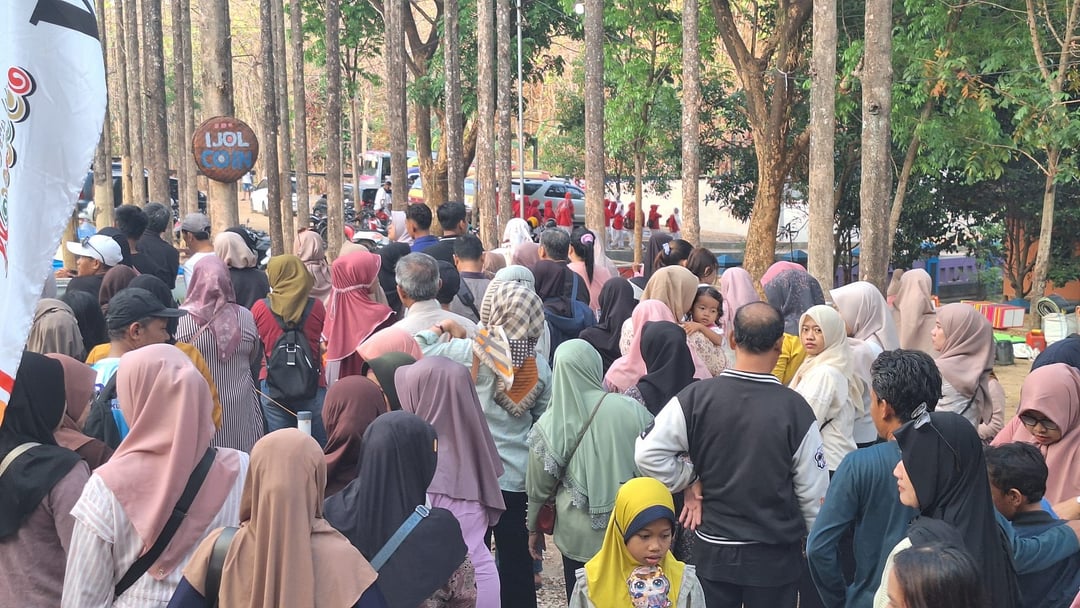
Pasar Sarwono was first established in December 2022. According to Tri Budi Wahono, the idea emerged when the Wonorekso Village-Owned Enterprise (BUMDes) observed a decline in tourism in Wonosoco Village following the COVID-19 pandemic.
The village's relative isolation from the city center and main access roads posed a challenge in attracting tourists. Management then took the initiative to host an event with distinct appeal to encourage visitors to travel to Wonosoco.
Initially, the teak forest area that now serves as the market site had not been fully developed. BUMDes identified the potential to transform the space into a tourist destination, eventually developing the traditional culinary market concept.
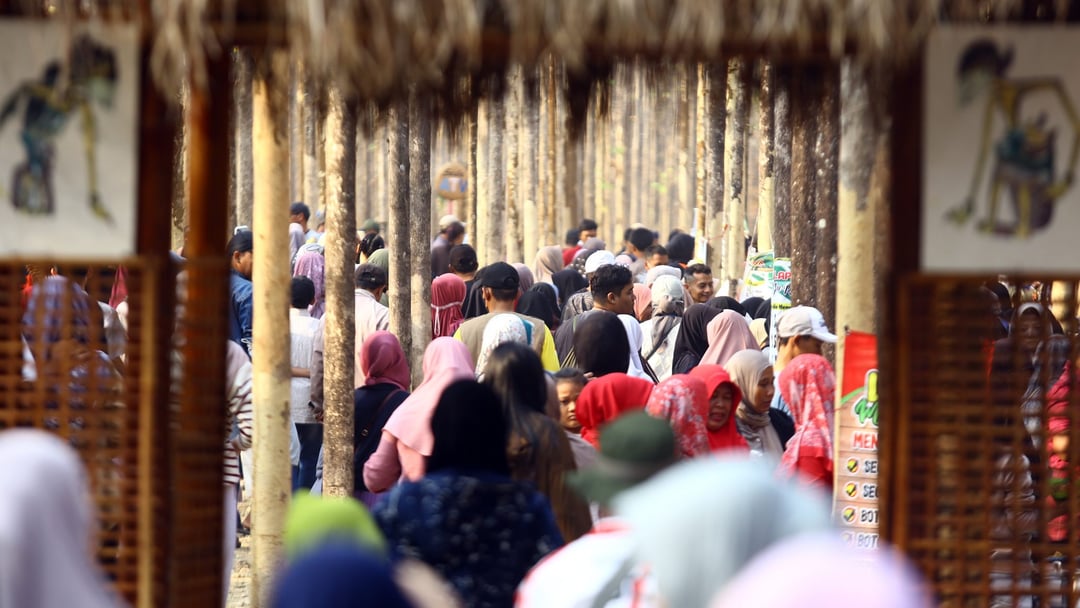
The name Sarwono is a portmanteau of the Javanese words "sar," referring to a market, and "wono," meaning forest. The name reflects the concept of a market held in the middle of the Alas Jati Sewu teak forest.
Meanwhile, the nickname "mystical market" (pasar gaib) that frequently appears on social media is not an official concept related to supernatural elements. According to Tri, the term stems from the creativity of content creators looking to make promotions more engaging and pique public curiosity.
The market is intentionally held every "selapan," a cycle in the Javanese calendar that lasts 35 days. This interval was chosen to prevent visitor fatigue while allowing management time to prepare new innovations for each event.
“We observed that if it's too frequent, visitors might lose interest. That’s why we chose to hold it once every selapan, every 35 days,” explained Tri.
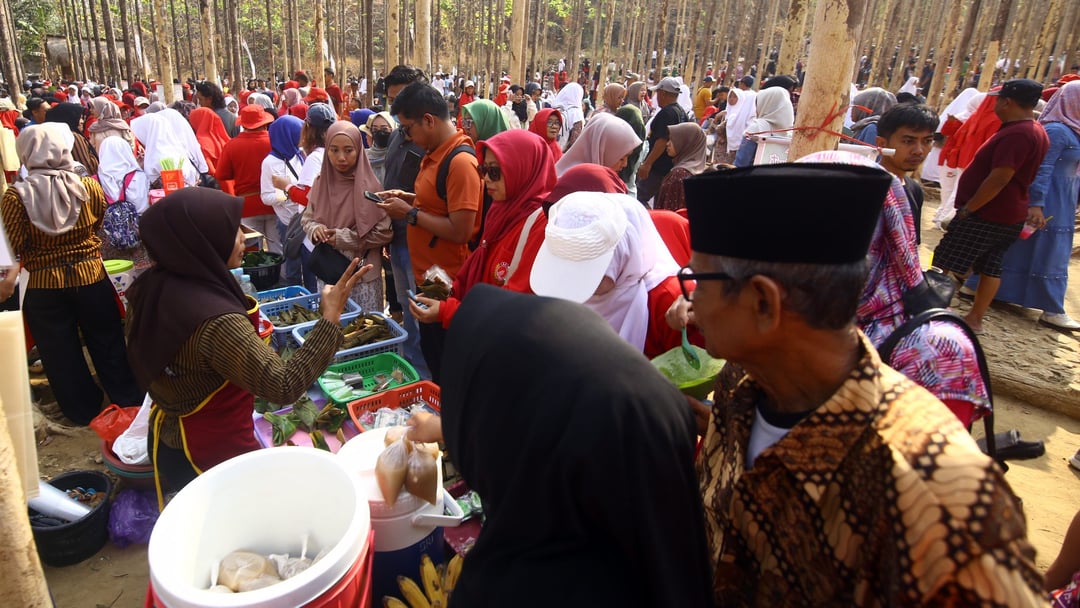
Community involvement is a primary objective in the development of Sarwono Market. Tri noted that 33 merchants from Wonosoco Village have successfully completed the registration and selection process conducted by the Village-Owned Enterprise (BUMDes).
Management vets the food and beverage offerings to ensure they align with the traditional culinary theme. This coordination of inventory also serves to maintain menu variety and prevent unfair competition among vendors.
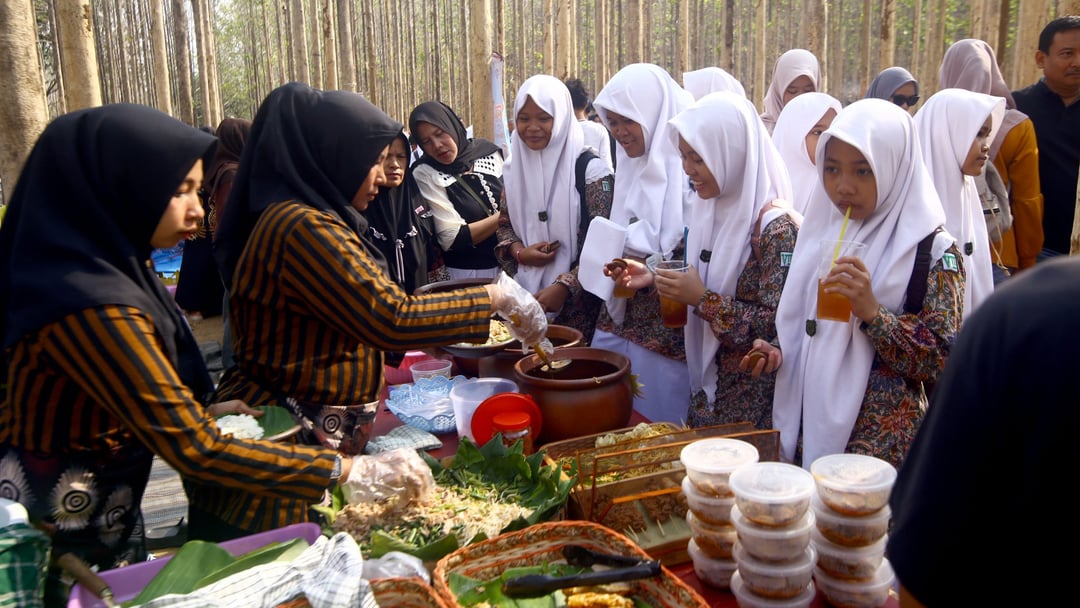
Beyond providing retail opportunities, the market's operations engage residents in various support roles, ranging from management and sanitation to parking services. The village’s Family Welfare Empowerment (PKK) team also provides support for community-based business activities.
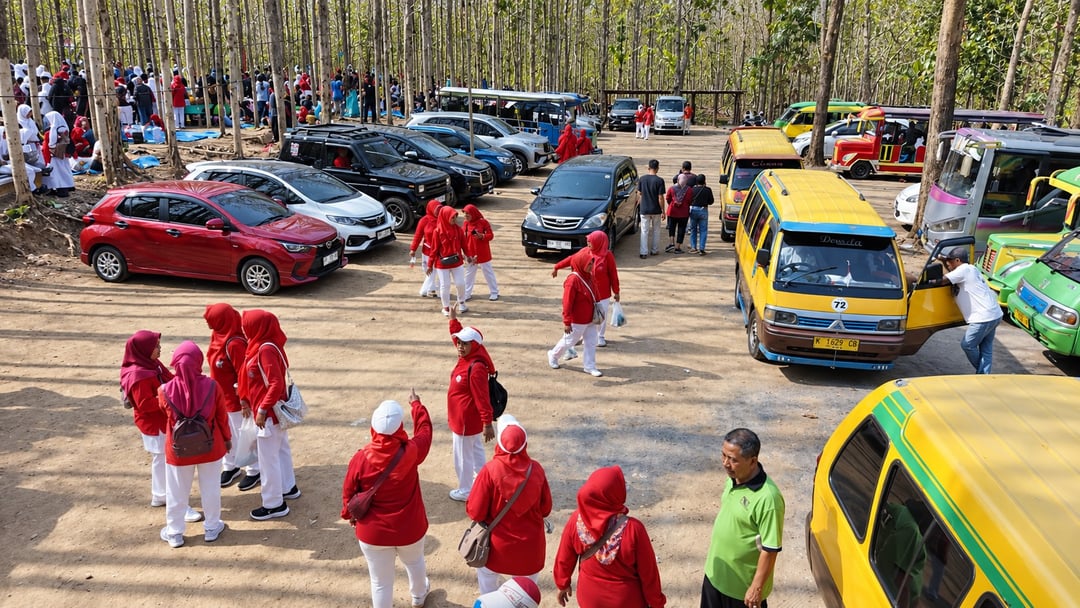
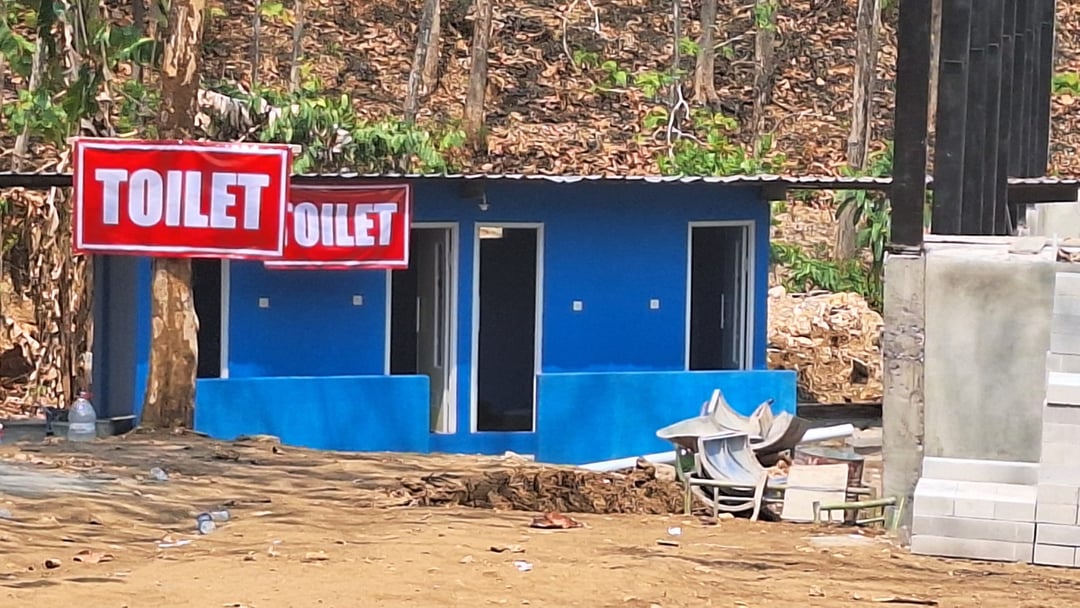
Wonosoco Village Head Setiyo Budi stated that the village administration remains committed to the sustainability of Sarwono Market, as it has become a local landmark.
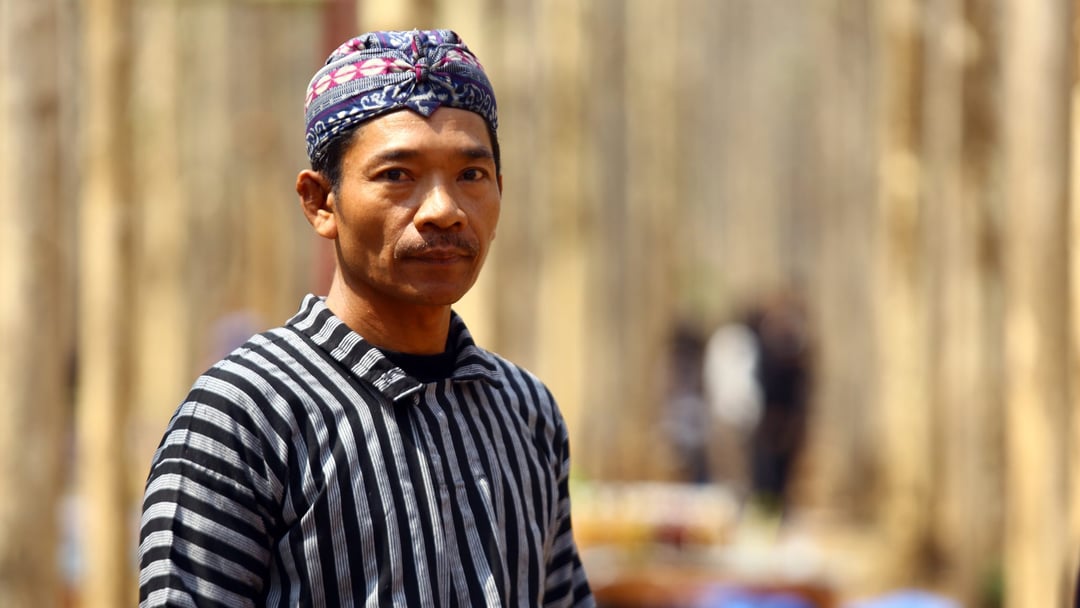
"In our view, Sarwono Market has become an extraordinary icon for Wonosoco Village," he said.
He explained that one form of government support is the capital injection provided to the Wonorekso BUMDes, which manages the market operations.
According to Setiyo, the residents' enthusiasm is reflected in their active participation, both as vendors and support staff. The market's presence has created additional income opportunities for the local population.
Tri has noted these changes since the market began operations. Before the development of Sarwono Market, most residents relied primarily on agriculture for their livelihood. Now, villagers have the opportunity to supplement their earnings through commercial activities during market hours.
"Since the establishment of the Sarwono market, residents who typically stayed home have been able to earn daily income through these activities," Tri said.
While individual vendor earnings fluctuate based on visitor numbers and product demand, organizers view local community involvement as a vital component of the village's tourism development goals.
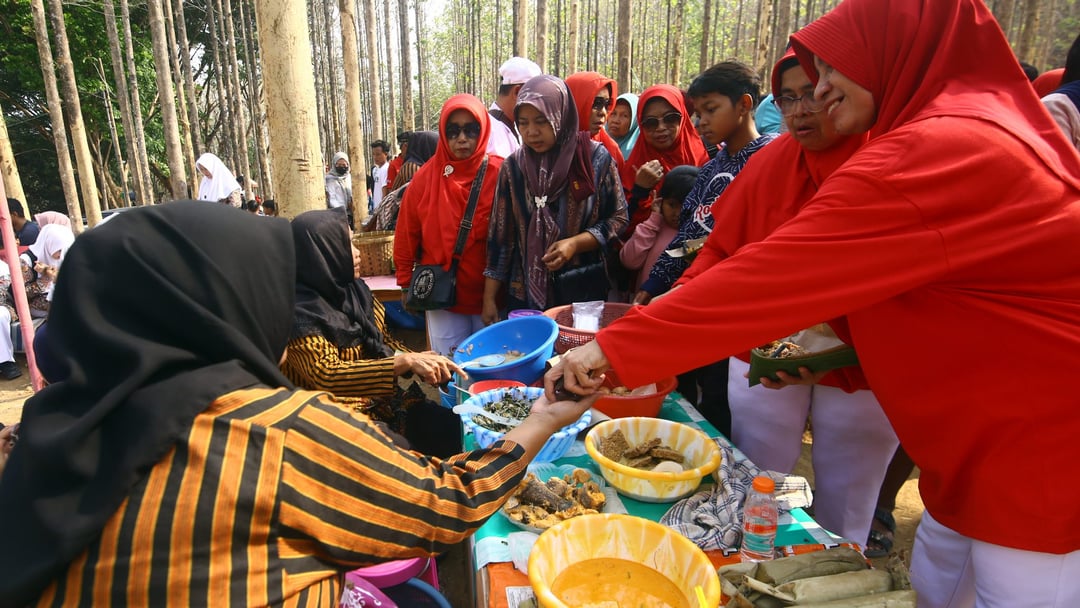
The impact is also evident in attendance figures. Tri noted that the Sarwono Market initially drew about 300 visitors, a number that has grown steadily through social media promotion and collaboration with content creators.
During the peak period between June and July 2025, organizers recorded approximately 4,000 visitors within a three-to-four-hour window, with vendors reporting total sell-outs of their inventory.
This success demonstrates how recurring tourism initiatives can generate economic opportunities for the local community.
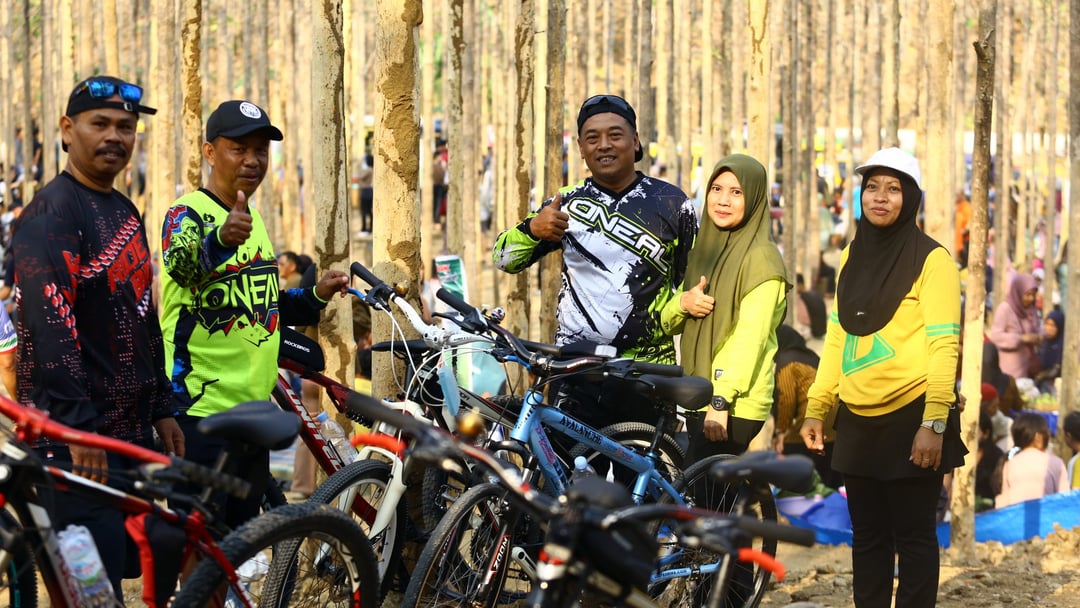
Sarwono Market has also become a preferred destination for community groups. H. Muhaini Yoyo of the Fun Bike Nabung Sehat Club in Kudus noted that he has visited the market several times with his group.
He attributed the group’s repeat visits to the cool and pleasant atmosphere. The group departs from Kudus early in the morning to ensure they arrive while the market is still active, allowing time to enjoy the various offerings.

"The location is pleasant, the ride is cool, and it's comfortable. We haven't had any issues," said Yoyo.
According to Yoyo, the variety of food options is a key draw for return visits. Beyond the culinary experience, visitors can also enjoy live entertainment provided on-site.
For community groups, visiting Sarwono Market serves as an opportunity to combine group activities with recreation. The open setting and shaded environment provide a welcome destination following exercise sessions.

Beyond culinary offerings, organizers provide several recreational activities, including ATV rides, stilt walking, and a swimming pool. A stage is also available for musical performances, where visitors are welcome to perform.
This blend of dining, recreation, and entertainment offers a variety of activities for visitors traveling with families or groups.
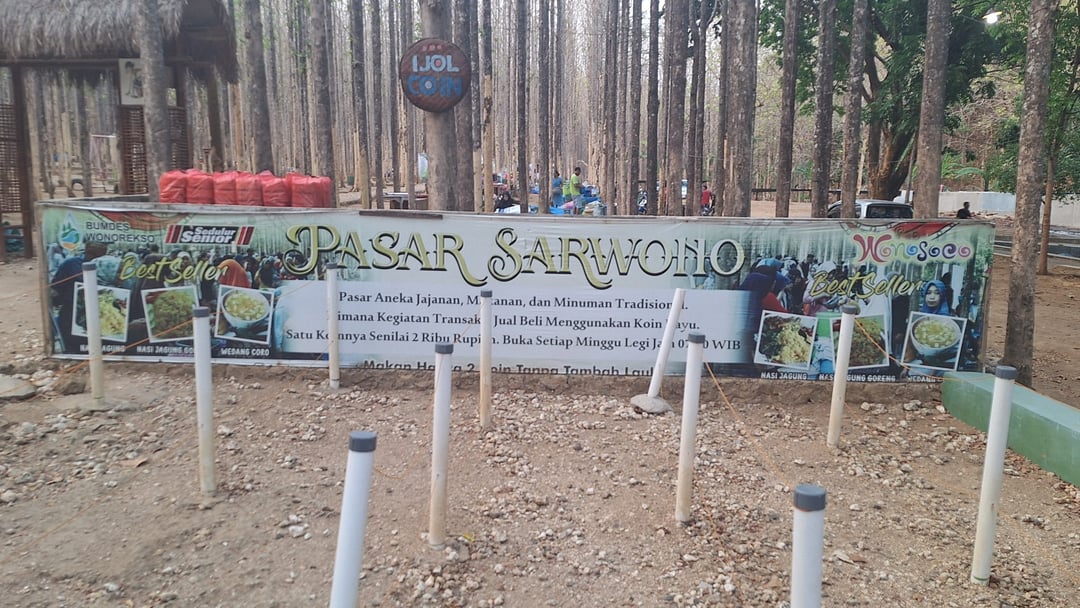
Pasar Sarwono is located in the Alas Jati Sewu area of Wonosoco Village, Undaan District, Kudus Regency, Central Java. Visitors coming from downtown Kudus can travel toward Undaan District, then proceed to Wonosoco Village and the market area near Sendang Dewot.
The market operates every Minggu Legi on the Javanese calendar, roughly once every 35 days. According to organizers, the market is open from 7:00 a.m. to 10:00 a.m. WIB. Given the limited operating hours, visitors are encouraged to arrive early.
The following information may be useful for those planning a visit.
Organizers note that unused coins can be exchanged back for cash. Visitors are advised to bring cash for coin conversion and to verify the latest fees and facilities before traveling.
Details on the market schedule and activities are available on the official Pasar Sarwono website.
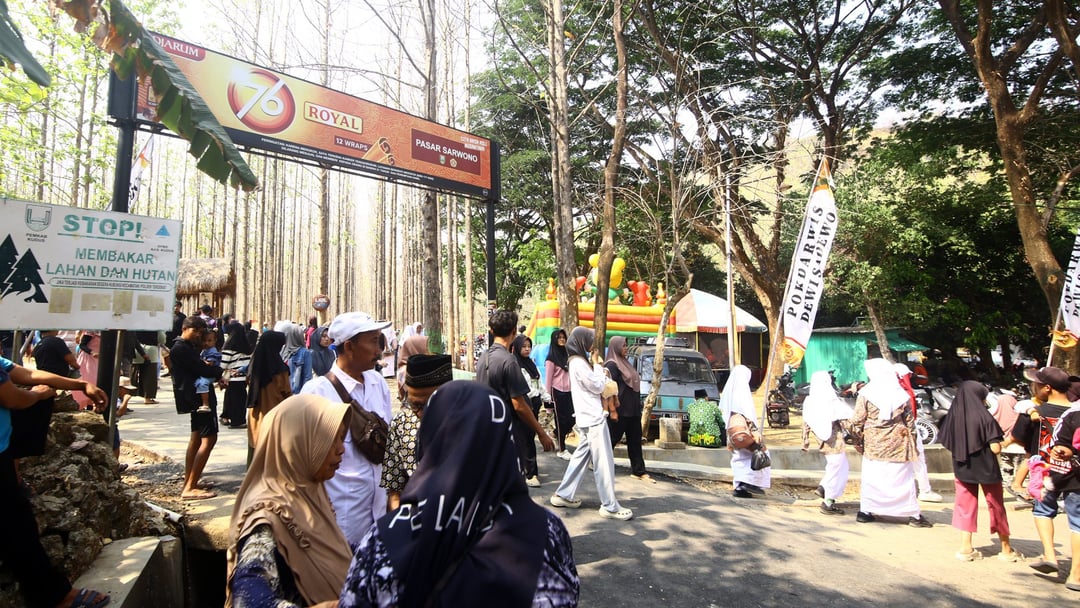
Pasar Sarwono demonstrates how village forest potential and traditional cuisine can be developed into a community-led tourist attraction. Visitors enjoy a unique shopping experience, while residents gain a venue to showcase local products and boost their income.
Setiyo Budi hopes that Pasar Sarwono will continue to grow through innovation, including by introducing a wider variety of traditional menu options to encourage return visits.
Tri Budi Wahono echoed similar sentiments, stating that for management, a market's success is defined not merely by foot traffic, but by the tangible benefits provided to the community.
"We hope the Village-Owned Enterprise (BUMDes) continues to serve the community, and that the Sarwono Market helps strengthen the local economy," he said.
For tourists seeking a unique experience in Kudus, the Sarwono Market offers a chance to savor traditional cuisine amidst a teak forest while gaining insight into life in Wonosoco Village. Visitors should confirm the Sunday Legi schedule before traveling, as the market operates only once during every 35-day cycle of the Javanese calendar. (REDAKSIMKK)