
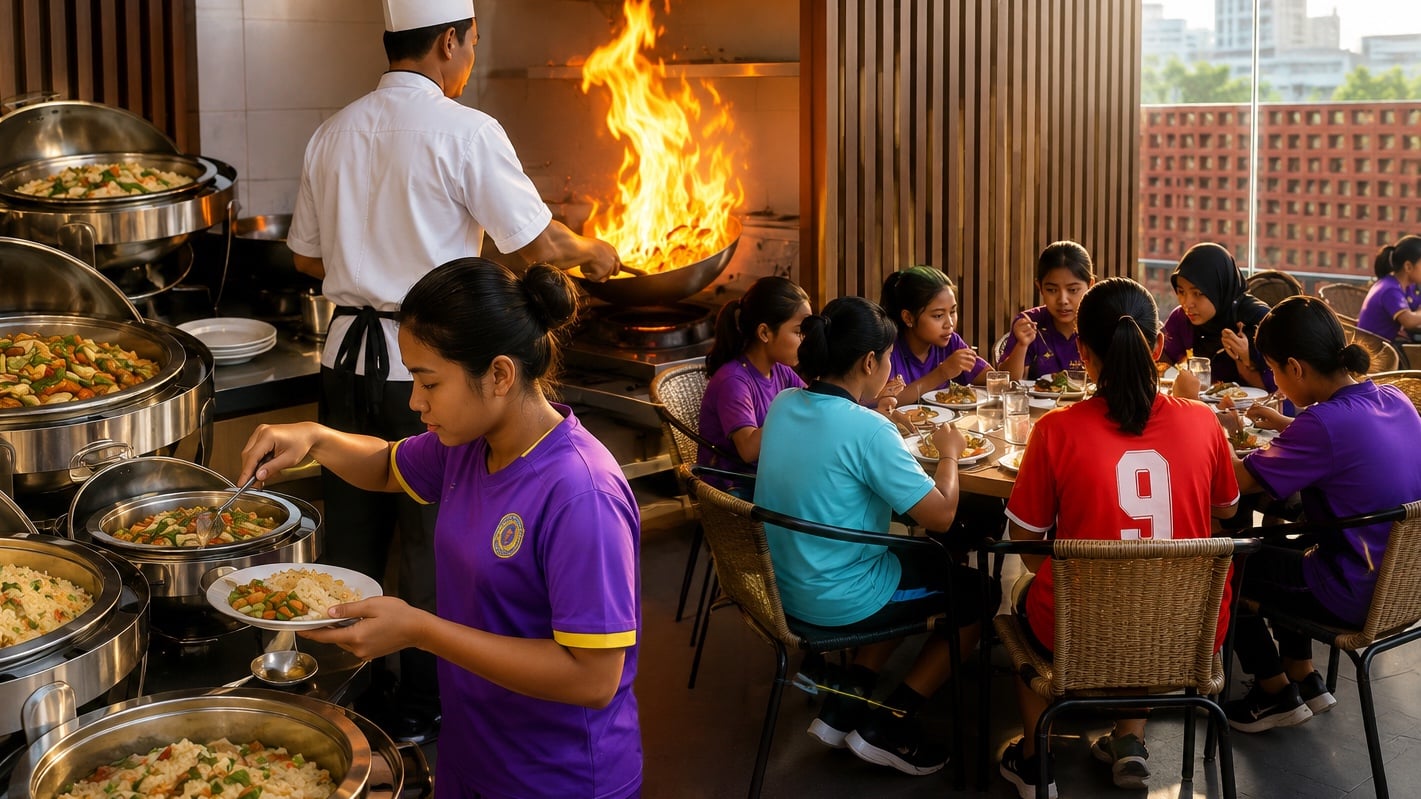
KUDUS — While matches are played on the pitch, for athletes in the HYDROPLUS Soccer League All Stars 2025/2026, their time in Kudus is also defined by the local flavors fueling their journey.
Between rigorous training schedules, matches, and limited downtime, players from across Indonesia have seized the chance to explore Kudus through its culinary heritage. Some are tasting water buffalo soto for the first time, while others begin their day with a serving of lentog tanjung before heading to the tournament arena.
This simple cultural immersion has created a narrative beyond soccer. The arrival of hundreds of athletes, officials, families, and supporters has not only energized the tournament but has also provided a significant boost to local food vendors and the hospitality sector in the City of Kretek.
Nina Khasanah, a local lentog tanjung vendor, is among those feeling the impact. Since the start of the HYDROPLUS Soccer League, her stall has experienced significantly higher traffic than usual.
“Praise be to God, there has been about a 30 percent increase in sales since the start of the HYDROPLUS Soccer League,” she said on Sunday (July 5, 2026).
According to Nina, lentog tanjung has become the most sought-after dish among visitors from out of town, many of whom are specifically seeking out the local delicacy out of curiosity.
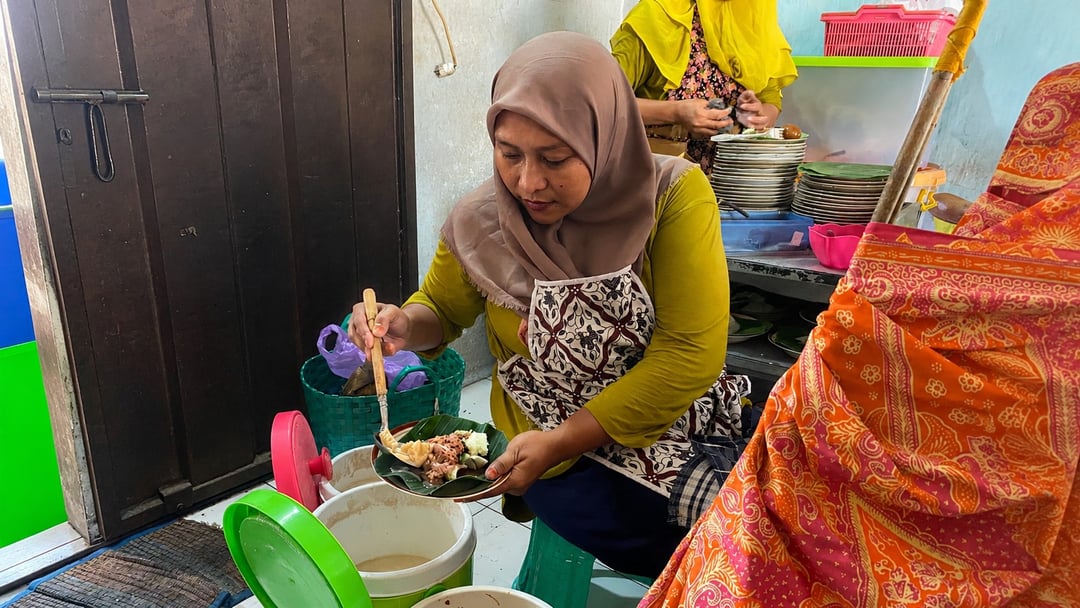
Lentog tanjung consists of compressed rice cakes, young jackfruit curry, tofu, and braised eggs, served in a savory broth. To accommodate athletes and visitors preparing for the day ahead, Nina opens her stall as early as 4:00 a.m.
“The taste is quite distinct from dishes in other regions, which is why so many guests are curious to try it,” she said.
For Nina, the sporting event has provided a tangible economic benefit. “Events like this are crucial for us because we see a very noticeable increase in sales,” she added.
Beyond lentog tanjung, other local delicacies have also provided new culinary experiences for the athletes. Samba Persada team captain Khalishah Safitri shared that her stay in the City of Kretek offered her first taste of water buffalo soto. “Of the Kudus specialties, I have only tried the water buffalo soto so far,” she said.
Khalishah noted that the dish, featuring water buffalo meat, bean sprouts, and egg, offered a savory flavor profile different from the chicken soup common in her home region of East Java. “It's different from the chicken soto I usually eat back home,” she remarked.
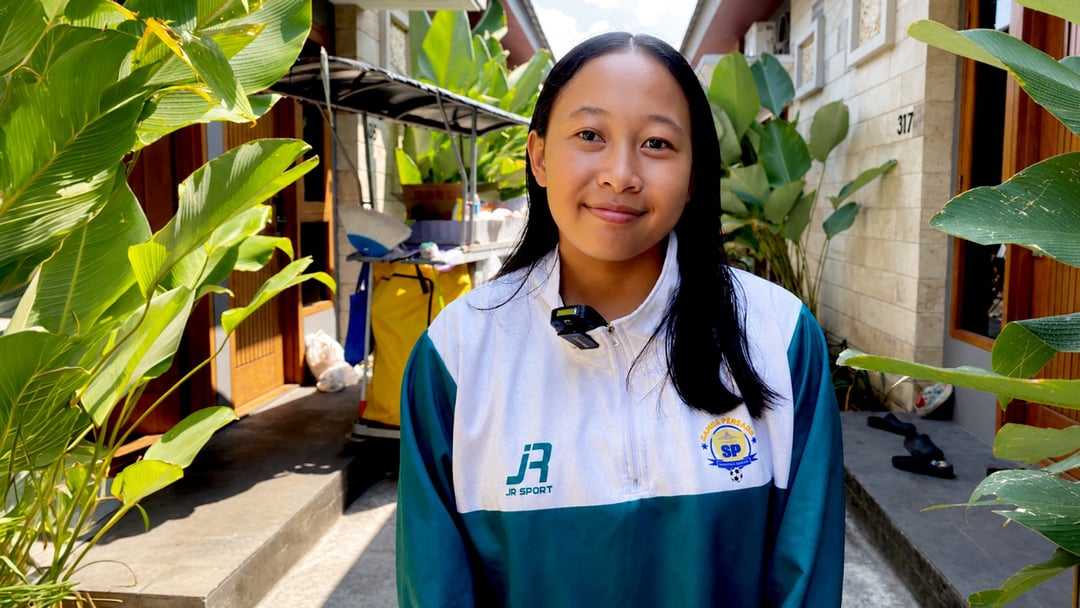
For her, the experience goes beyond simply enjoying regional specialties; the meals also help meet the energy requirements needed to compete in the tournament.
“There is plenty of protein, which helps boost my energy after training and before matches,” she said.
Khalishah believes that tasting local food is part of the experience of competing in a new city, as every region has a culture that can be discovered through its culinary scene.
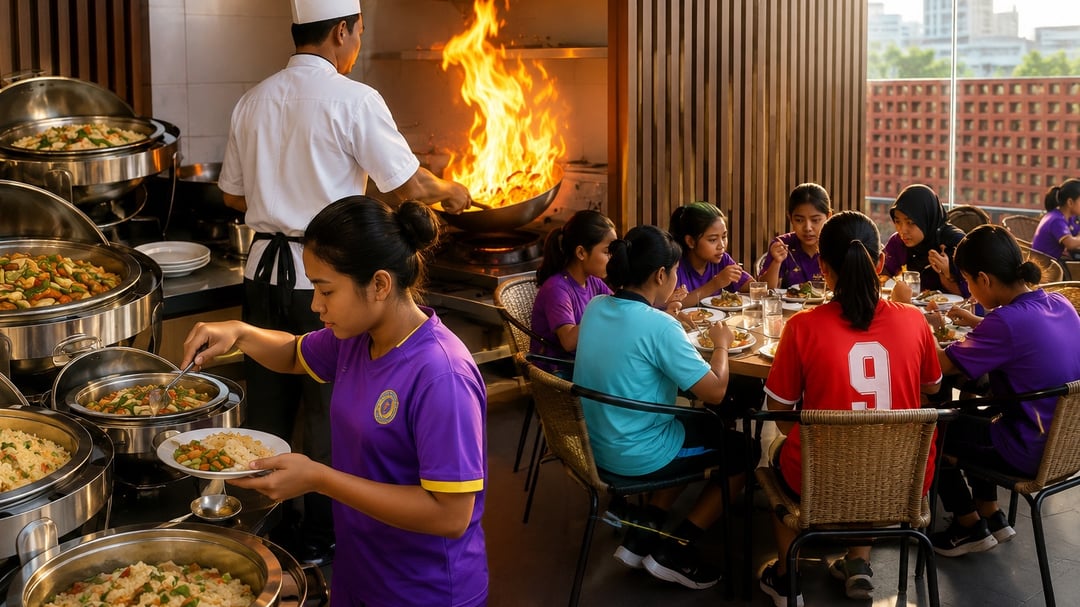
Attention to nutrition is also a key component during the competition. At the hotel where the athletes are staying, every menu is prepared with the dietary needs of young athletes in mind to keep them in peak condition throughout the tournament.
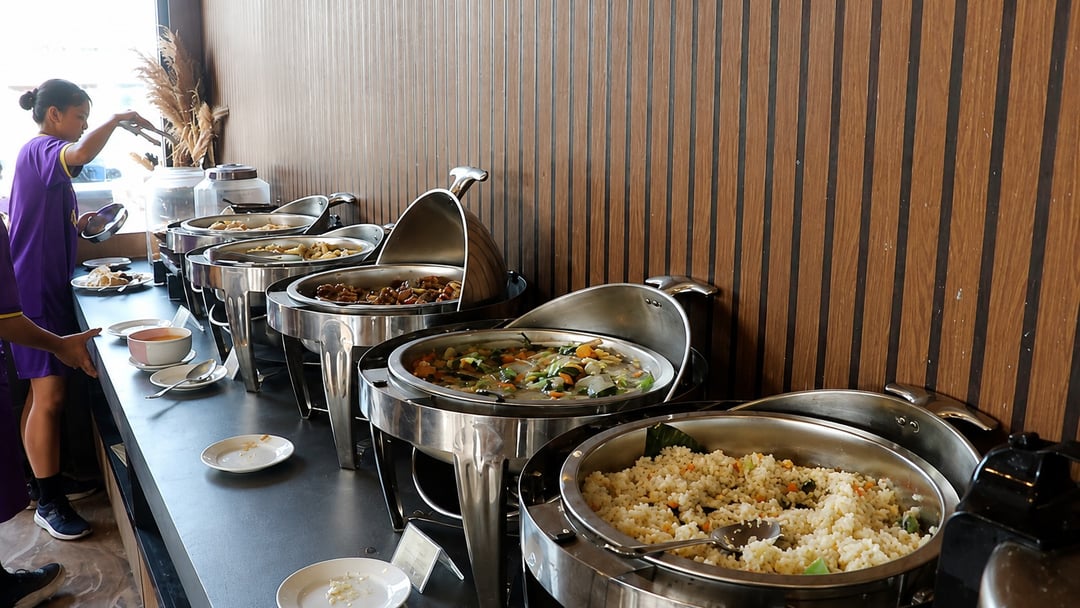
Executive Chef of Hotel Sapphire Kudus, Ali Mustawa, stated that the served menu differs from those offered to regular guests. Beyond avoiding overly spicy flavors, every dish is designed to ensure the athletes' nutritional needs are met.
“Because the majority of these athletes are still children, we create non-spicy menus. We always provide two protein options, typically chicken or boneless fish fillet,” Ali explained on Sunday (7/5/2026).
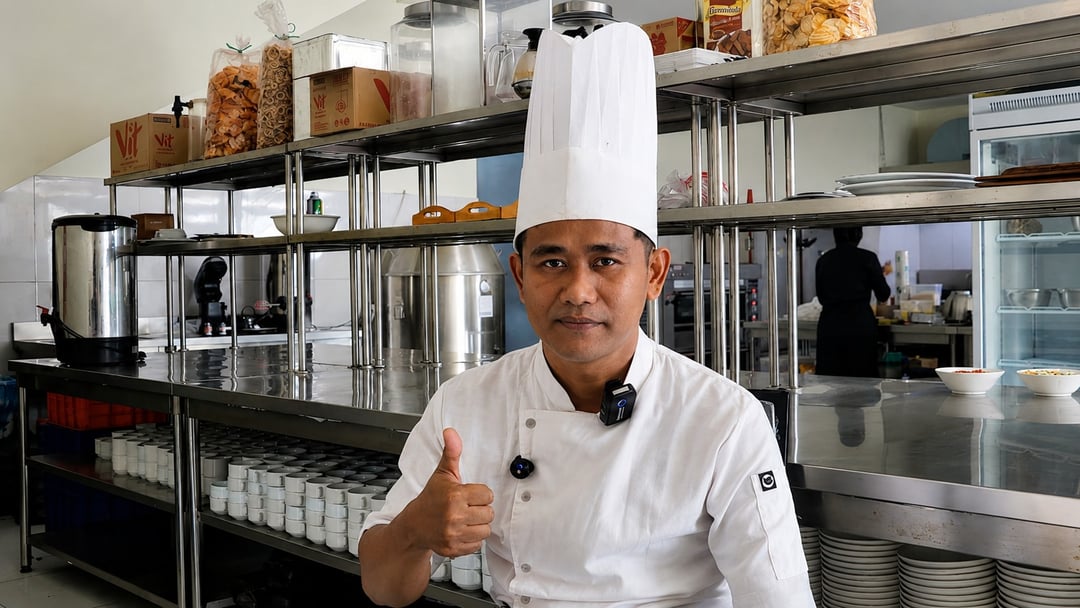
He added that each meal is also accompanied by vegetables, porridge, various steamed tubers, fruits, and desserts. “What matters is that their intake of carbohydrates, protein, and fiber remains balanced,” he said.
Although the menu is tailored to the athletes' requirements, Hotel Sapphire continues to introduce local Kudus specialties to its guests. “Soto Kudus, chicken pindang, beef pindang, and buffalo soto are among the local dishes introduced to guests from various regions,” he noted.
Ali revealed that the most popular dishes among the athletes are simple meals consisting of rice with chicken and fresh fruit.
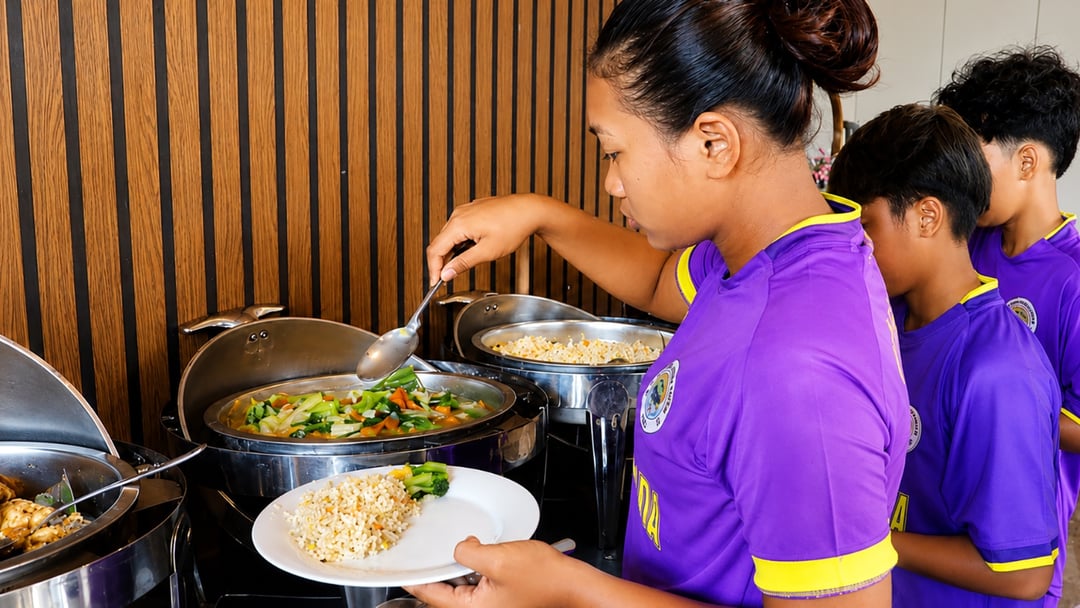
“Young athletes have larger appetites. They prefer full meals featuring chicken and fresh fruit. Our main challenge is ensuring food is available on time due to their packed schedules and the need for rapid refilling,” said Ali Mustawa, Executive Chef at Hotel Sapphire Kudus.
The surge in tournament activity has also been felt by the hotel. Executive Housekeeper Sahid Bawono noted that occupancy rates have risen since participants and officials began arriving in Kudus. “This event has had a very positive impact on hotel occupancy,” he said.
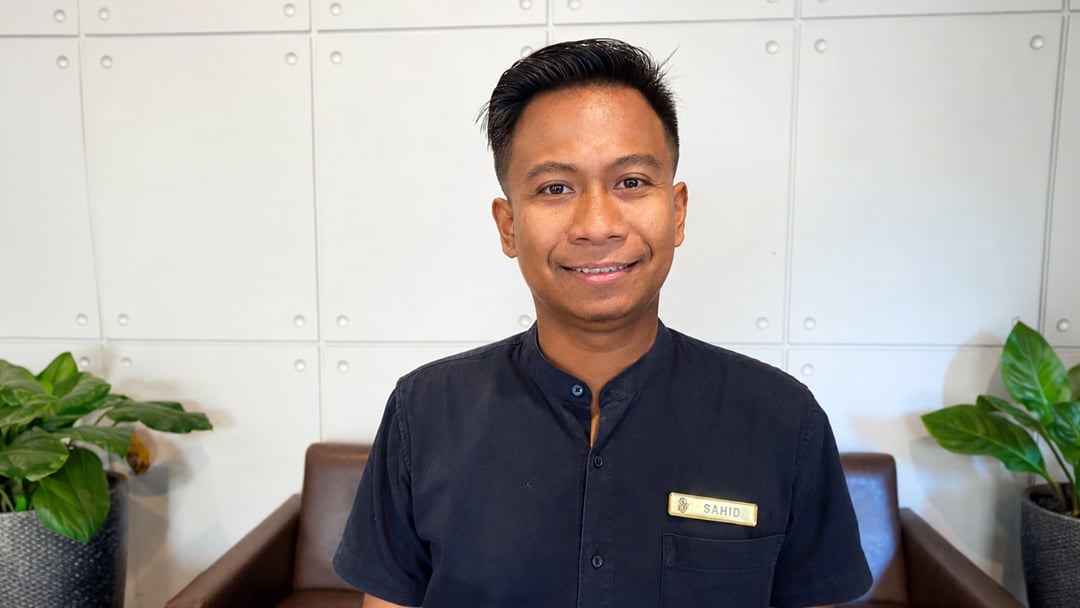
Beyond room bookings, athletes are also utilizing various hotel facilities to support their activities throughout the competition.
“In addition to room occupancy, athletes are making use of our facilities, from open areas for jogging and stretching to the swimming pool for post-match relaxation. The increase in guests has allowed us to add staff, creating new job opportunities,” he explained.
The 93-room hotel has tailored its services for the athletes and officials, streamlining room assignments and ensuring all facilities meet the demands of the tournament.
For the players, nutrition is a critical factor in maintaining fitness and accelerating recovery after training and matches. Samba Persada team captain Khalishah Safitri praised the hotel's menu, noting that it effectively supports the athletes' needs.
“I had fried rice and chicken porridge this morning. The hotel is comfortable and the food is delicious. The chicken porridge is my favorite,” said Khalishah.
However, she suggested that future menus could better cater to athletes' specific needs, particularly regarding protein content.
“Going forward, maybe there could be more protein to help with faster post-match recovery,” added Khalishah.
The athletes' stories in Kudus extend beyond match results and field rivalry. Between training and matches, they are discovering local flavors, local businesses are seeing increased demand, and the hotel is adapting its services to support its guests. From the dining table to the field, their journey in the 'City of Kretek' is an integral part of their competition experience. (ITN/mainkekudus)