
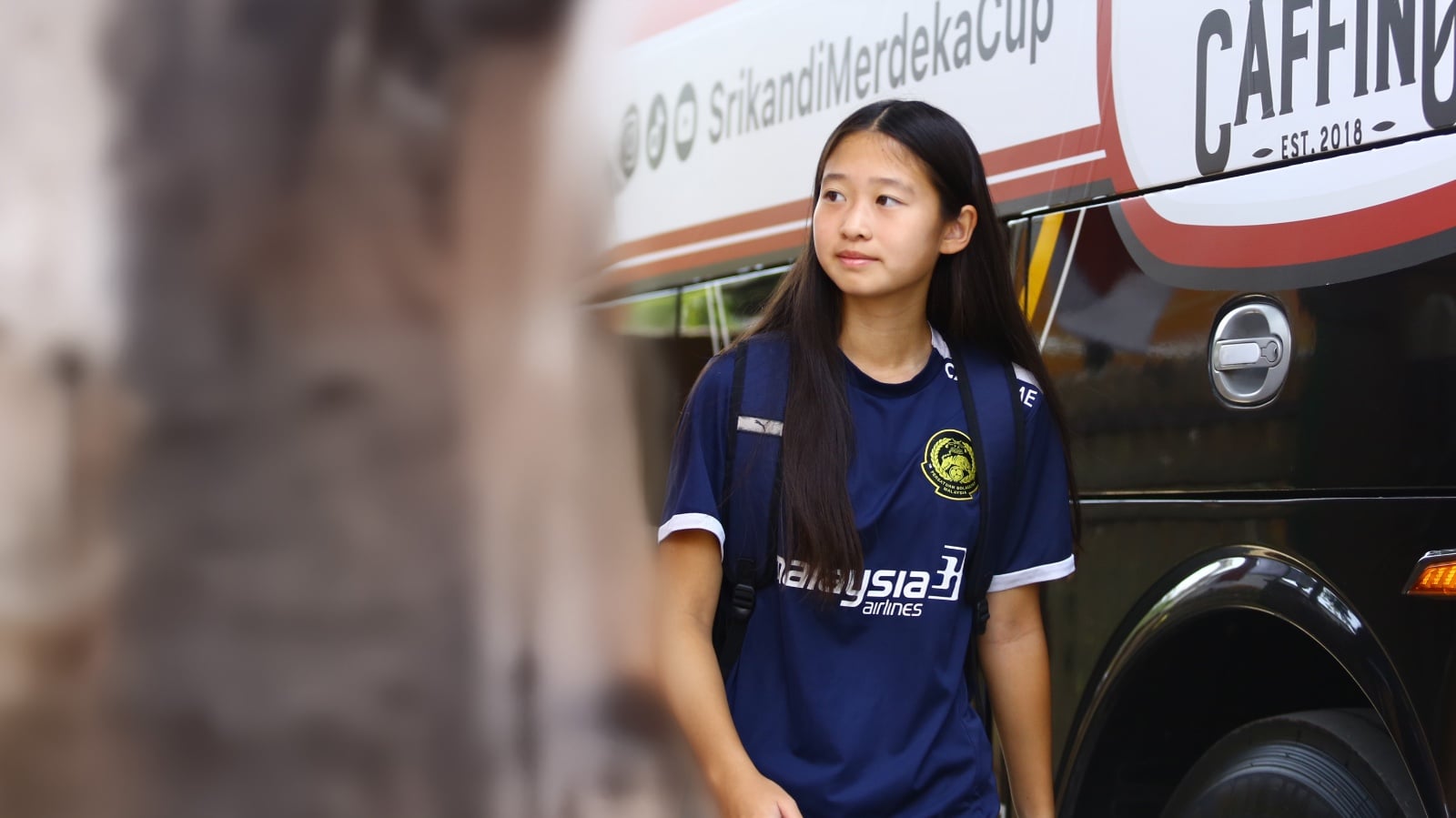
KUDUS – Under-16 national women's teams from seven countries are currently in Kudus to compete in the 2026 Caffino Srikandi Merdeka Cup. On Wednesday (Aug. 19, 2026), the Hong Kong, China U-16 squad visited the Jenang and Gusjigang Museum, while the Malaysia U-16 team toured the Alfa Shoofa batik production house and gallery.
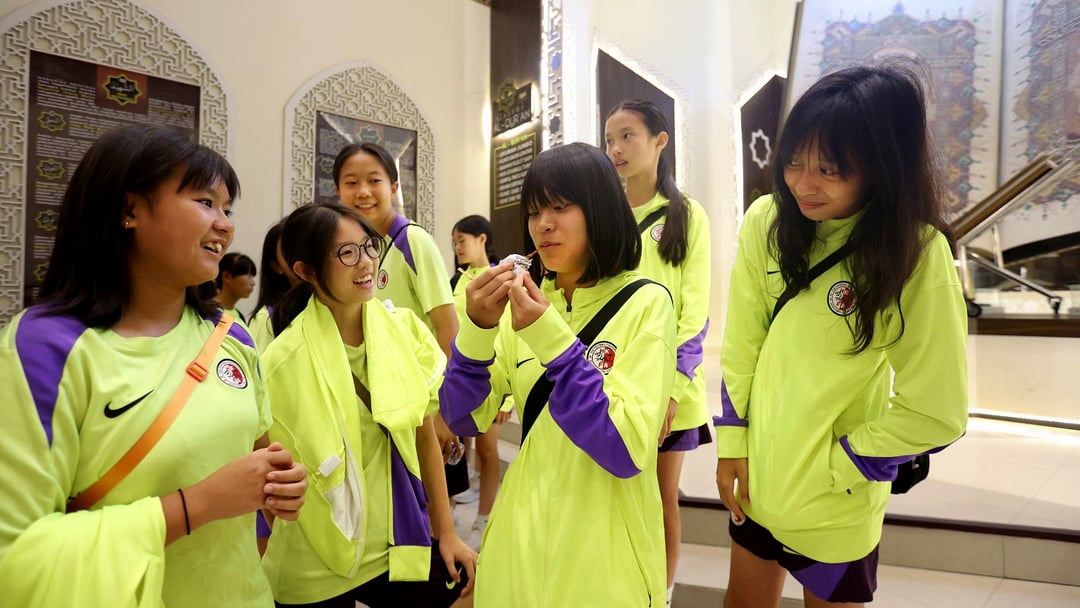
The visit by the Hong Kong, China squad began with an introduction to traditional jenang confectionery at the museum. Players and officials explored the museum's collection while learning about the history of the treat, its production process, and its significance to Kudus culture.
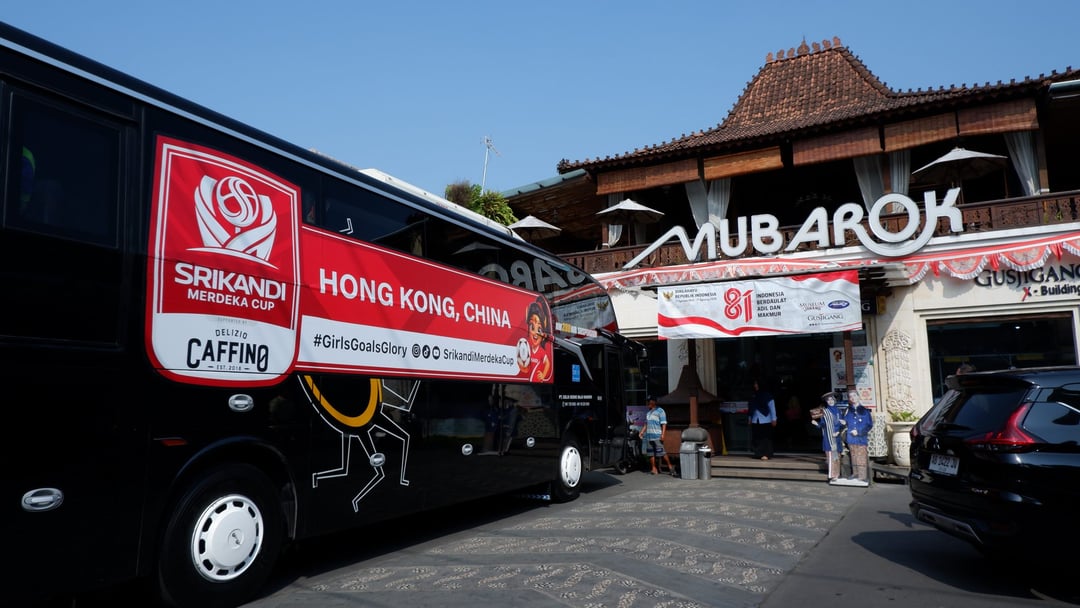

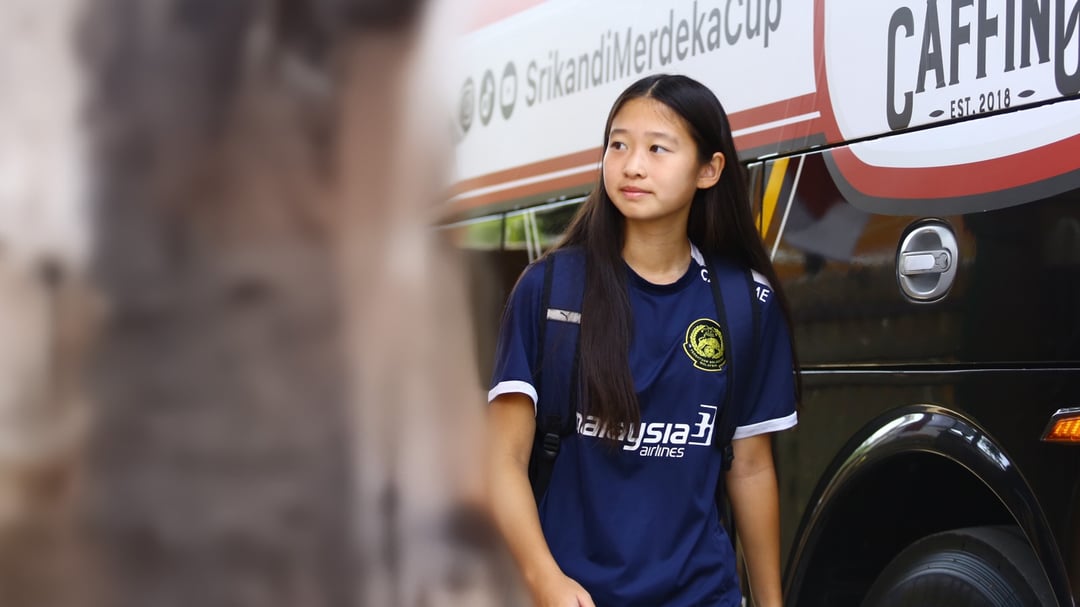
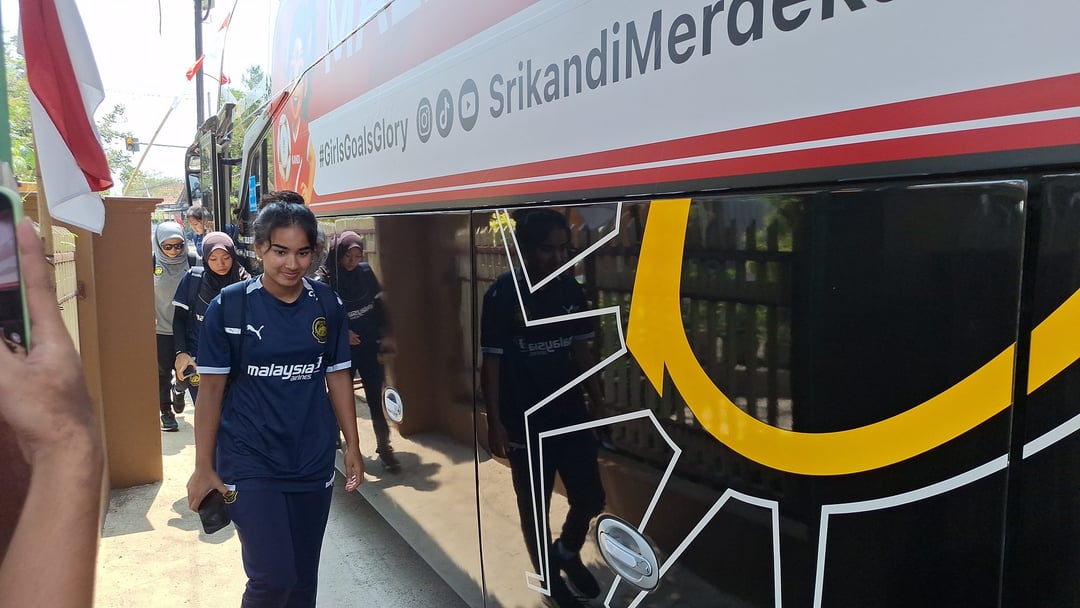
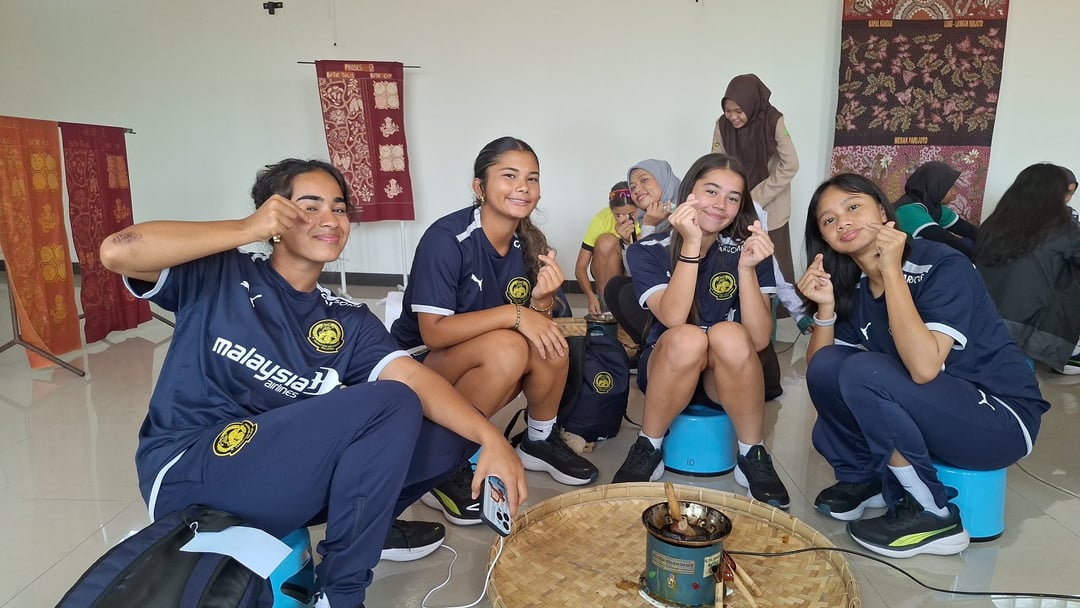
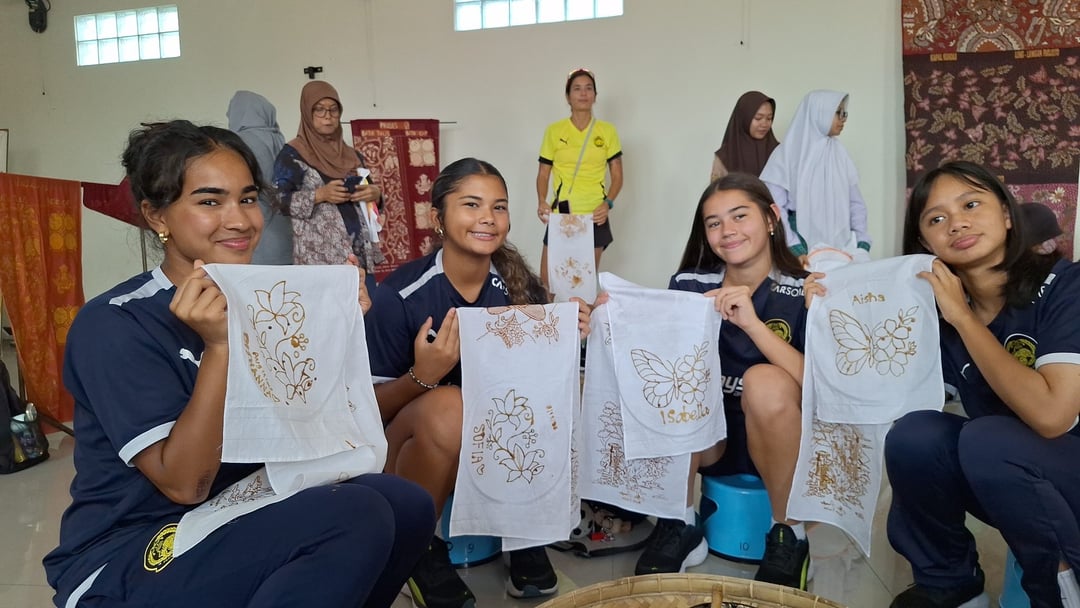
The Hong Kong, China team learned about the history and production process of jenang, while also sampling the local delicacy. Meanwhile, the Malaysian team observed the Kudus batik-making process and tried their hand at creating batik designs.
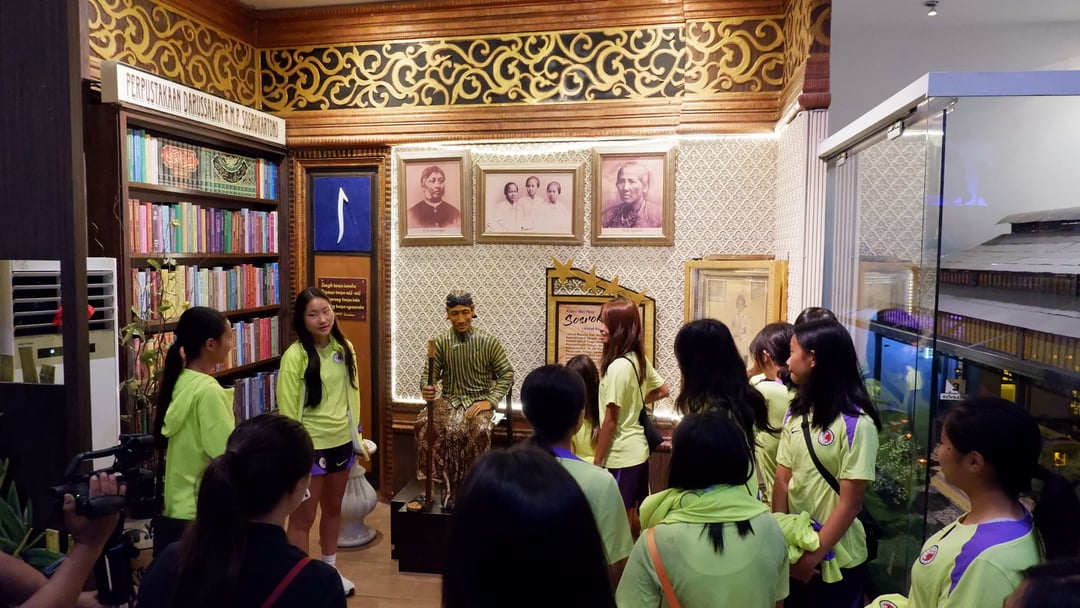
The visit by the Hong Kong, China U-16 women's national team began with an introduction to jenang at the Jenang and Gusjigang Museum. Players and staff viewed the museum’s exhibits and received insights into the history of jenang, its production process, and its cultural significance to Kudus.
For the people of Kudus, jenang is a staple of culinary history and regional tradition. The confection, made from glutinous rice, palm sugar, and coconut, has evolved alongside the local community and is deeply rooted in traditions dating back to the time of Sunan Kudus.
Kudus jenang was officially designated as an Intangible Cultural Heritage (WBTb) of Indonesia by the Ministry of Education, Culture, Research, and Technology in 2022.
The museum also highlights the history of Jenang Mubarok, which was pioneered by H. Mabruri and Hj. Alawiyah in 1910. The business originated as a home industry, initially selling goods near the Menara Kudus Bubar Market.
This history is showcased through the museum's collection, which includes historical cooking equipment, various artifacts, and dioramas related to the history of Kudus.
Hesti Tri Hartanto, head of the Jenang and Gusjigang Museum, stated that the museum aims not only to present jenang as a local specialty but also to educate visitors on the history, culture, and local wisdom of the region.
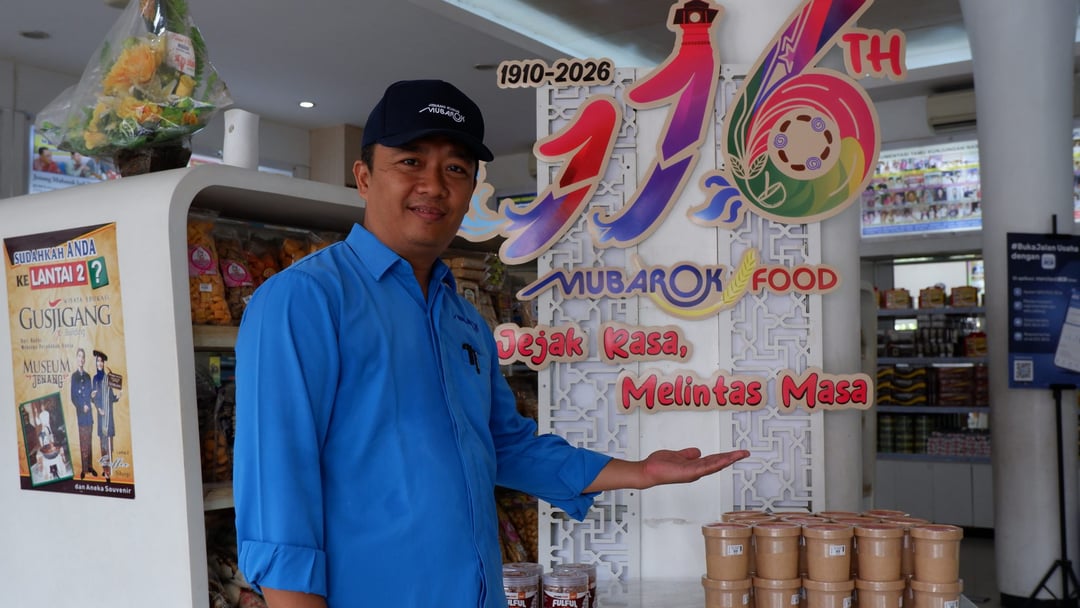
"Jenang is synonymous with Kudus. We want the broader public, including international guests, to understand the history, culture, and local wisdom through the collections we present," said Hesti.
According to Hesti, the museum's collection helps visitors observe the history of jenang and its connection to the history and culture of Kudus.
"As they tour the facility, visitors can learn about the history of jenang itself, as well as the history, culture, and local wisdom of the Kudus Regency through the collections we have curated," she explained.
In addition to the Jenang Museum, the athletes also explored the Gusjigang Gallery, which houses artifacts related to the history of the spread of Islam in Kudus and the development of its community life.
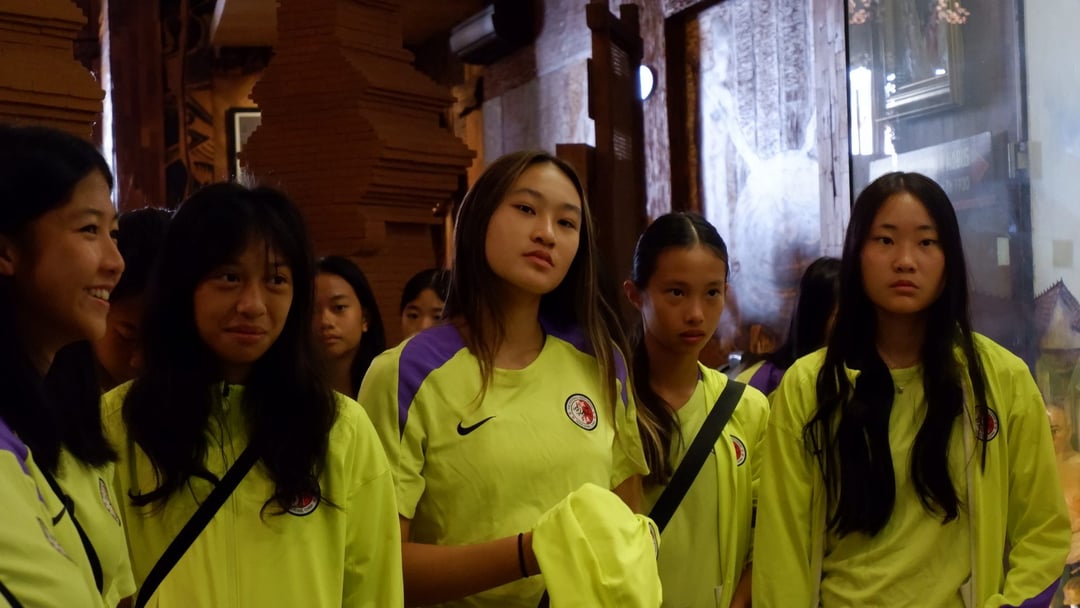
For the Hong Kong, China U-16 Women's National Team, the visit provided a unique experience. They saw firsthand the production process of a traditional food rarely found in their home country.
Wong So Han, assistant coach of the Hong Kong, China U-16 Women's National Team, noted that the atmosphere and culture they observed differed significantly from what they encounter at home.
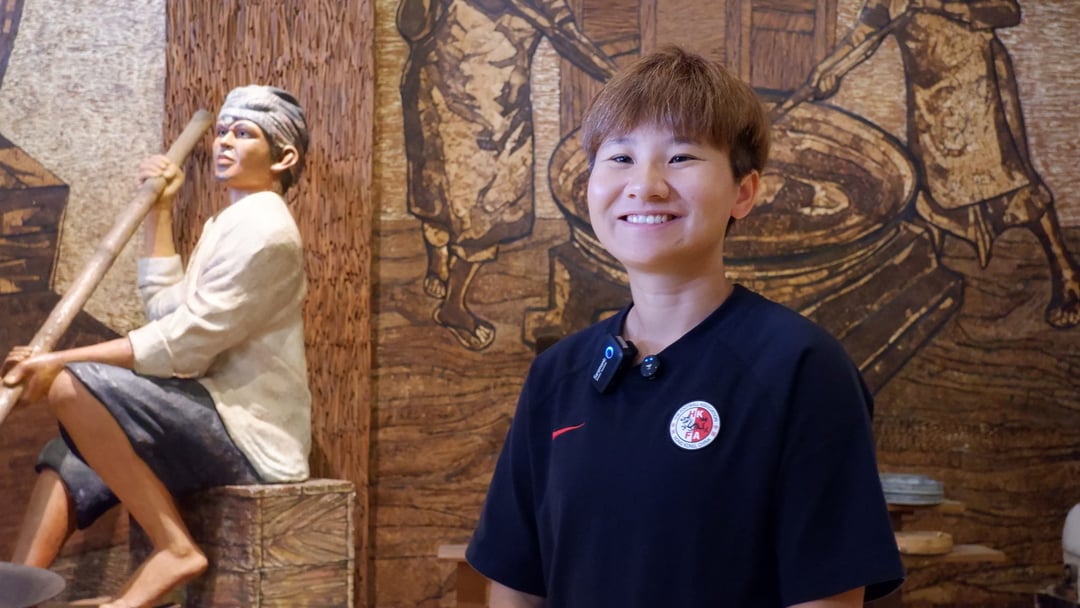
"This is a wonderful culture for us to experience, as such things are rare in Hong Kong, China. It feels very traditional here, and it is fascinating to learn about the production process," she said.
Wong also expressed interest in the museum's collection depicting the religious history of Kudus.
“The exhibition displays there are quite impressive to me. They illustrate Indonesia's very strong religious side, which is both surprising and remarkable,” she added.
Meanwhile, Danielle Leung, a member of the Hong Kong, China squad, observed the production process of jenang. In her view, the process requires significant effort and perseverance.
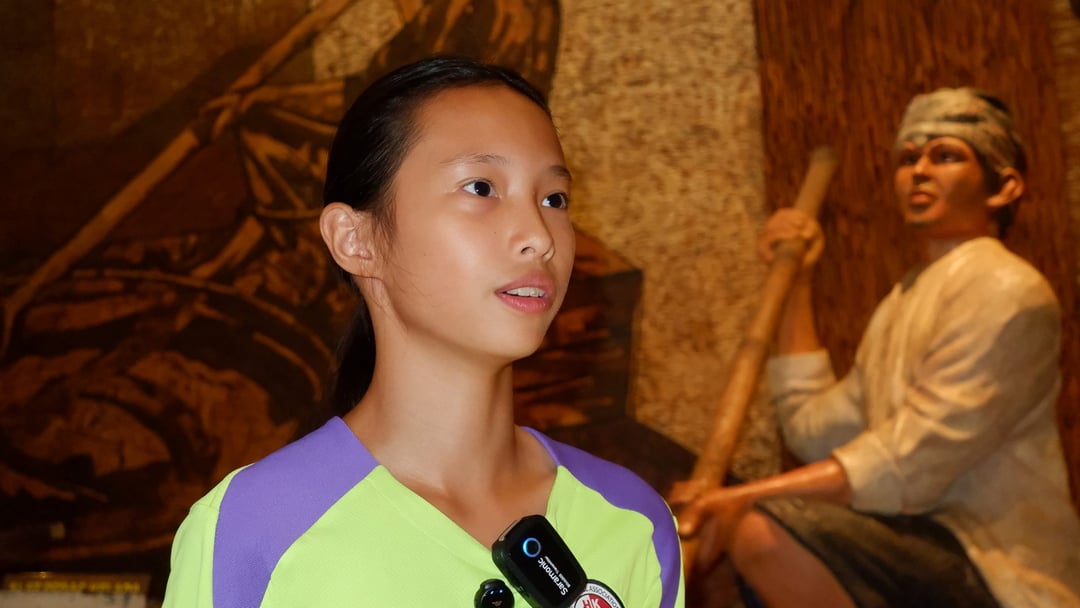
“One thing that surprised me is that it takes a lot of effort and dedication for everyone to make the food and preserve their culture,” Danielle said.
After viewing the collection and the production process, the players were given the opportunity to sample the jenang.
Hesti stated that the athletes responded positively, describing the jenang as sweet and delicious. One participant even gave the tasting experience a rating of eight out of ten.
For the players, sampling the jenang was a highlight of the visit after learning about its history and production process.
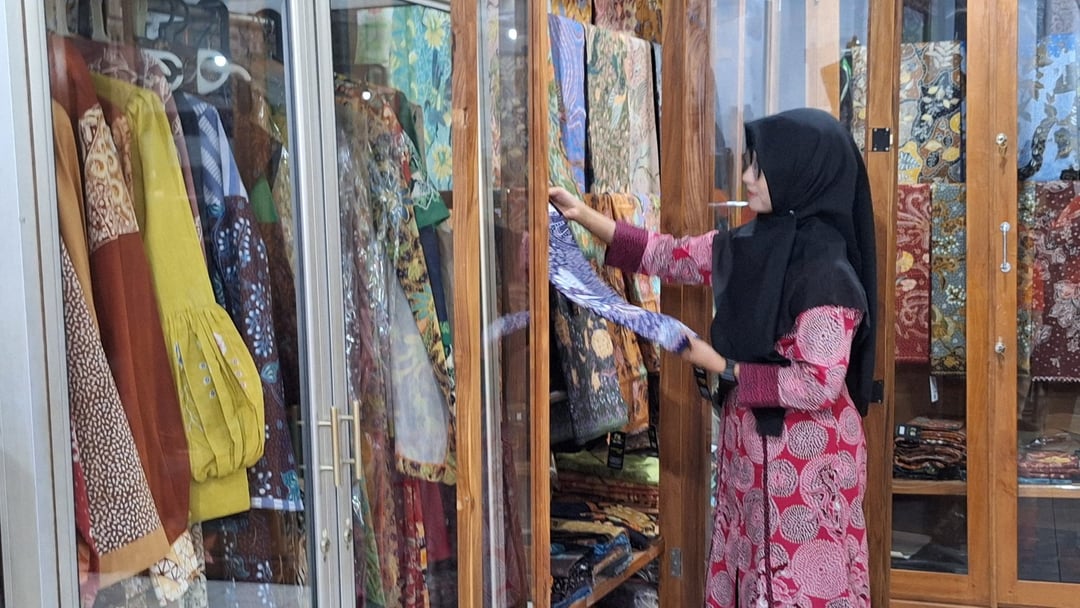
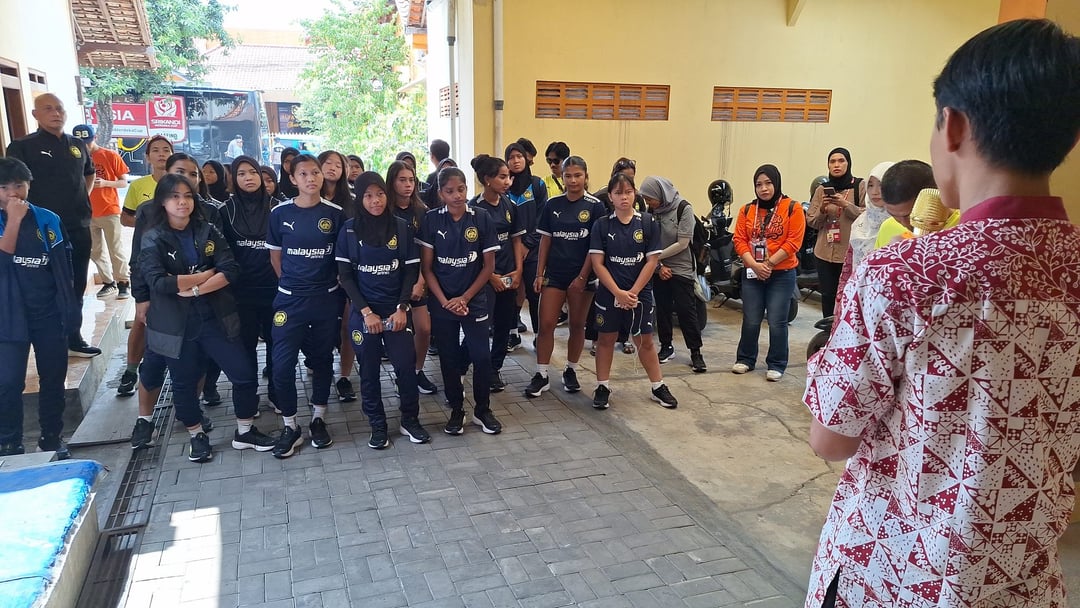
On the same day, the Malaysia U-16 Women's National Team visited the production house and gallery of Batik Alfa Shoofa.
Before touring the production floor, the players and officials were briefed on the history of Kudus Batik, which features a long-standing heritage influenced by diverse cultures, including Chinese and Arab.
From the 17th century through the 1940s, these multicultural batik motifs were central to the identity of the Kudus community. However, from the 1980s through the 2000s, Kudus Batik fell into decline and was largely relegated to cultural artifacts.
Several previously flourishing motifs were nearly lost to history.
Alfa Shoofa is reviving Kudus Batik through both authentic textiles and ready-to-wear apparel, introducing the traditional motifs and colors characteristic of the region in contemporary styles.
Fike, a manager at the Alfa Shoofa Batik production house and gallery, emphasized the importance of in-person demonstrations for illustrating the craftsmanship behind each piece of batik.
“When they visit and see the process firsthand, they realize that batik is more than just patterned cloth. It involves a specific process, skill, and cultural narrative that must be preserved,” Fike said.
Alfa Shoofa also hosts educational visits for students and interns to demonstrate hand-drawn (batik tulis) and stamped (batik cap) techniques.
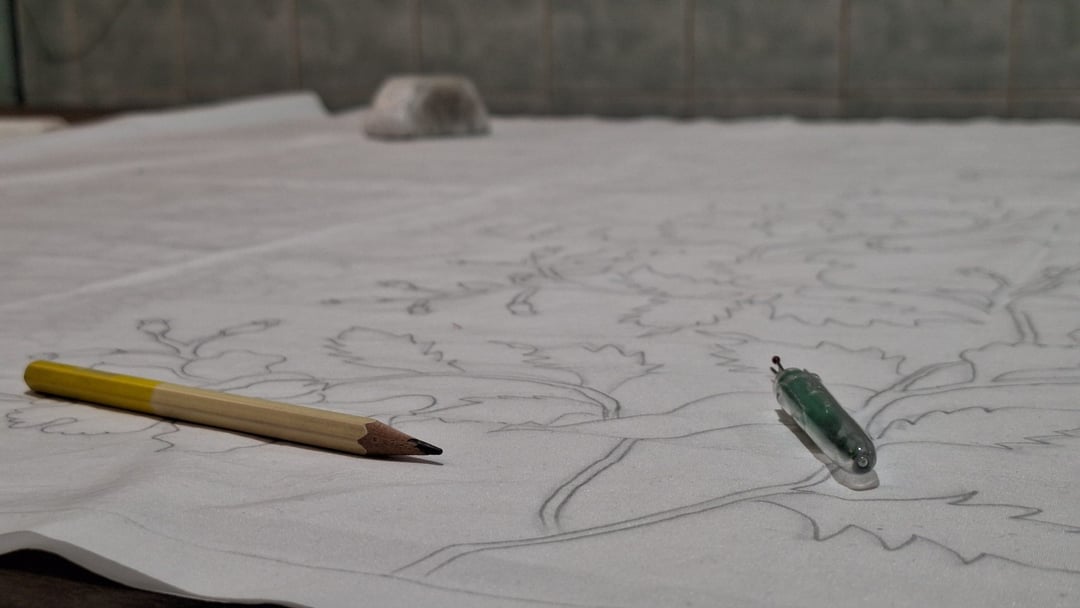
Following an overview of Kudus Batik’s history, the Malaysian team observed the manufacturing process.
The workflow begins with creating a pattern or sketch, which serves as the base before the motif is applied to the fabric.
The players then observed the use of the canting—a traditional pen-like tool—and hot wax. The canting is used to apply the wax onto the fabric, following the pre-drawn patterns.
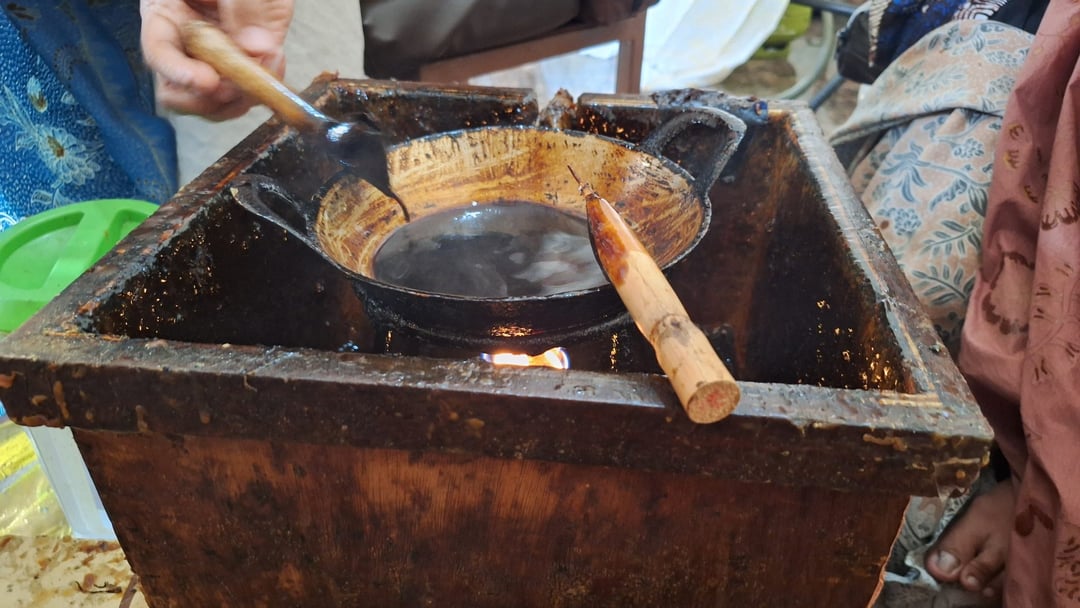
The wax acts as a resist, sealing specific areas of the fabric to prevent dye from reaching those sections during the coloring stage.
For those witnessing the process for the first time, the use of canting and wax highlights the precision and technical skill required to produce the motifs.
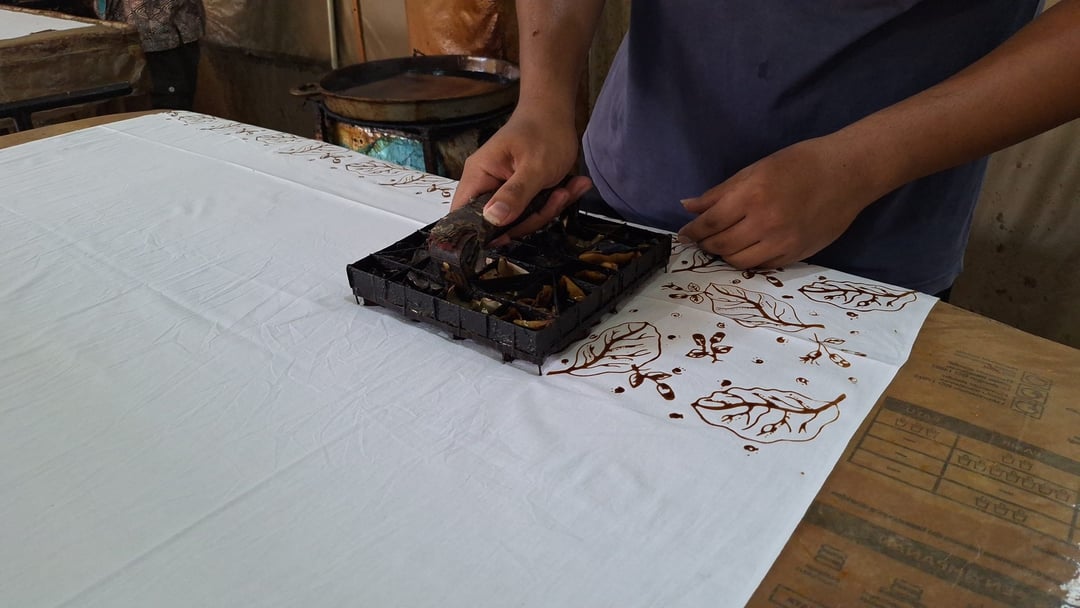
The group later observed the stamping technique, which, unlike the manual hand-drawn method, uses a metal stamp to apply patterns to the fabric.
The next stage is dyeing. Fabric that has undergone the pattern-making process is then colored.
Through this experience, the players witnessed the entire batik-making process, from sketching and using the canting and wax to the stamp technique and final dyeing.
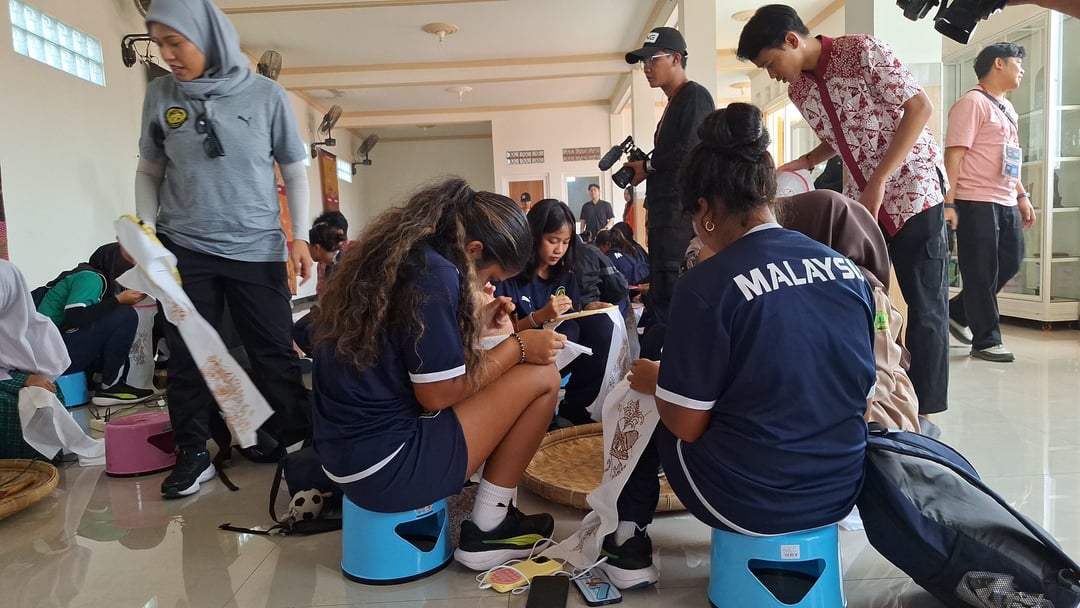
The Malaysian team did more than just watch. The entire contingent had the opportunity to try making batik themselves.
Guided by instructors, the players used traditional batik tools. They engaged directly with the fabric, canting, wax, and patterns, which required slow, deliberate movements.
For Lim You, a forward and the top scorer for the Malaysia U-16 women's national team, the activity was a novel experience.
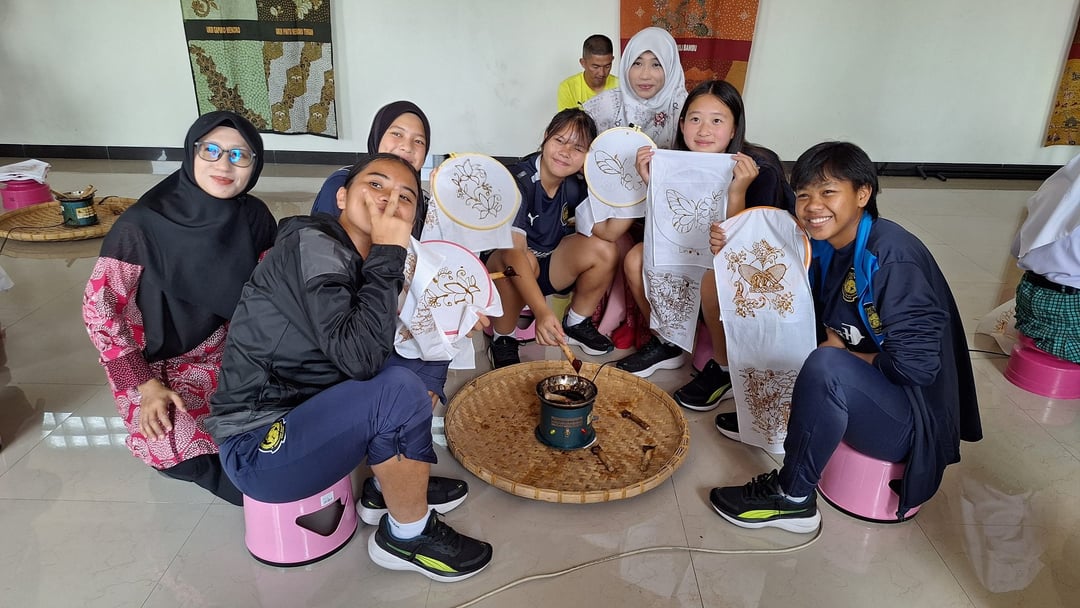
"I think it's very fun, and I really enjoyed it. It's also different because I've never done something like this before," said Lim You.
This experience gave the players insight into the precision required in batik-making. The lines and patterns that appear simple on fabric are the result of meticulous manual labor.
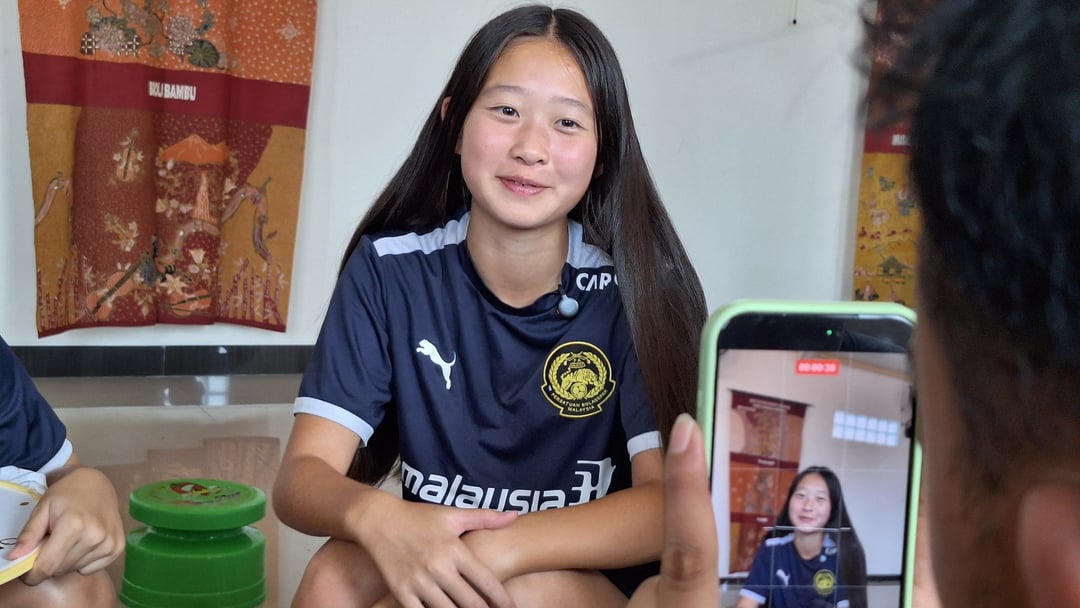
The experience inspired Lim You to encourage others in her home country to visit Kudus.
"Come visit Kudus for a great time," she added.
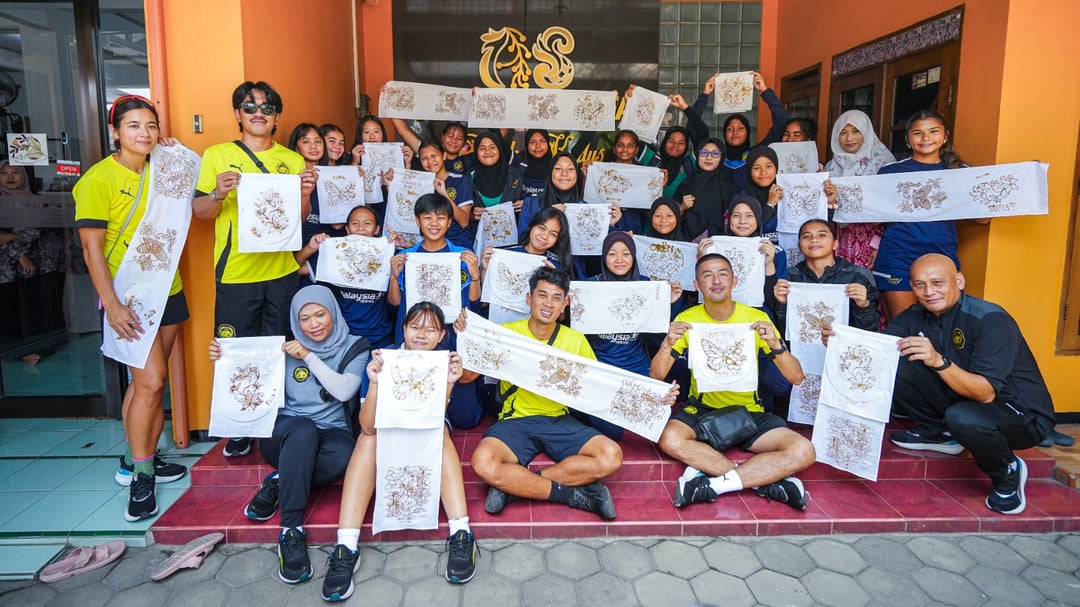
A visit to Alfa Shoofa left a lasting impression of Kudus on the Malaysian players.
Lim You described Kudus using three words: creative, distinct, and unique.
Meanwhile, Isabella Saffia O Luanaigh, a midfielder for the Malaysia U-16 Women's National Team, remarked that learning about a new culture was a delightful experience.
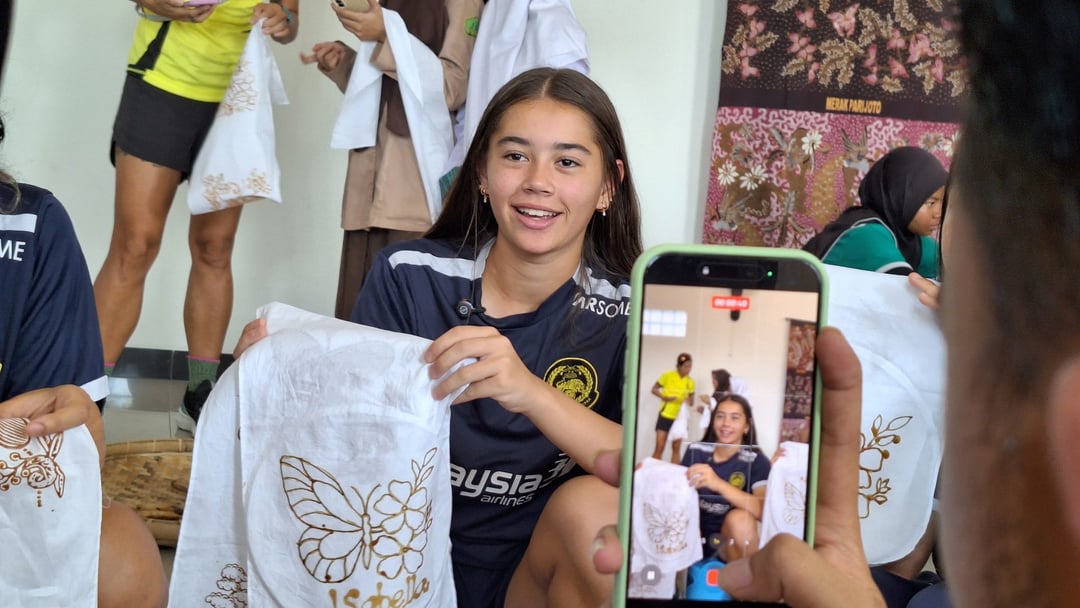
“I think learning a new culture is very fun. It is also an experience to see different things, as it shows there is still so much to learn,” said Isabella.
When asked to describe Kudus in three words, Isabella chose beautiful, extraordinary, and amazing.
She also plans to share her experiences with friends upon returning to her country.
“I will tell my friends how beautiful this place is,” she said.
The visits by the U-16 Women's National Teams of Hong Kong, China, and Malaysia demonstrate how sports activities can create opportunities to introduce local culture to international participants.
The players traveled to Kudus to compete in the Caffino Srikandi Merdeka Cup 2026. Between matches, they visited sites dedicated to showcasing local products and heritage.
The Hong Kong, China team learned about jenang through its history, museum collections, production processes, and tasting experiences. The Malaysian team studied the history of Kudus Batik, observed its production process, and tried their hand at batik making.
Fike, a manager at the Alfa Shoofa Batik production house and gallery, noted that sporting events featuring participants from various regions and countries help expand opportunities for Kudus culture to be recognized.
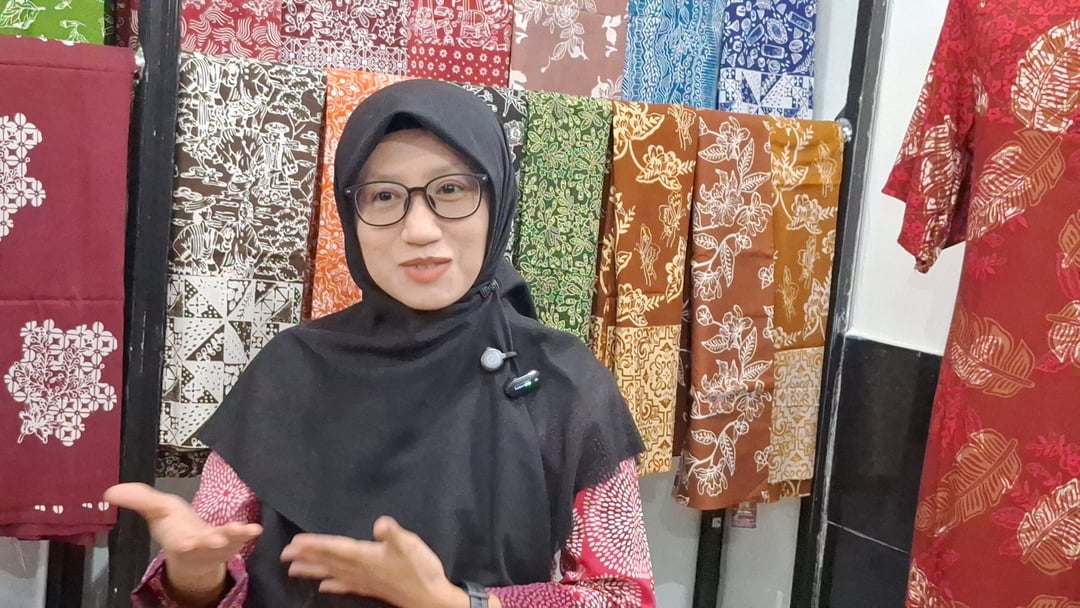
“Sporting events bring people to Kudus. When they visit and learn about batik, it gives us an opportunity to introduce Kudus culture firsthand,” she said.
According to Fike, the experience of observing and trying the batik process can provide participants with knowledge to take home to their respective regions or countries.
Meanwhile, Hesti, Head of the Jenang and Gusjigang Museum in Kudus, views the presence of participants from various regions and countries as an opportunity to promote educational and culinary tourism in Kudus.
“This event has a significant impact on many sectors, from culinary to educational tourism. We hope that international tournaments or events will be held regularly in Kudus Regency each year, which will have a positive impact on us as hosts and on the region's tourism potential,” she said.
The Caffino Srikandi Merdeka Cup 2026 did more than just bring teams from seven countries together on the field; their presence also opened doors for local cultural and business stakeholders to introduce Kudus directly to international visitors.
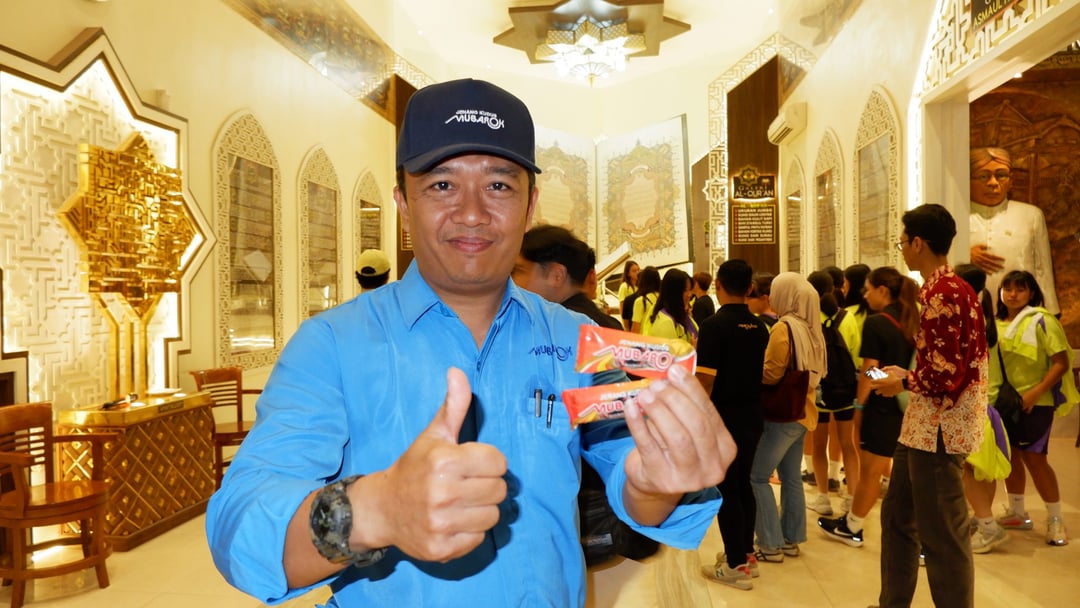
Visits to the Jenang Museum and Alfa Shoofa enriched the players' experience during their stay in Kudus. From learning about jenang to trying their hand at batik, they gained direct exposure to the local culture that defines daily life in the region.
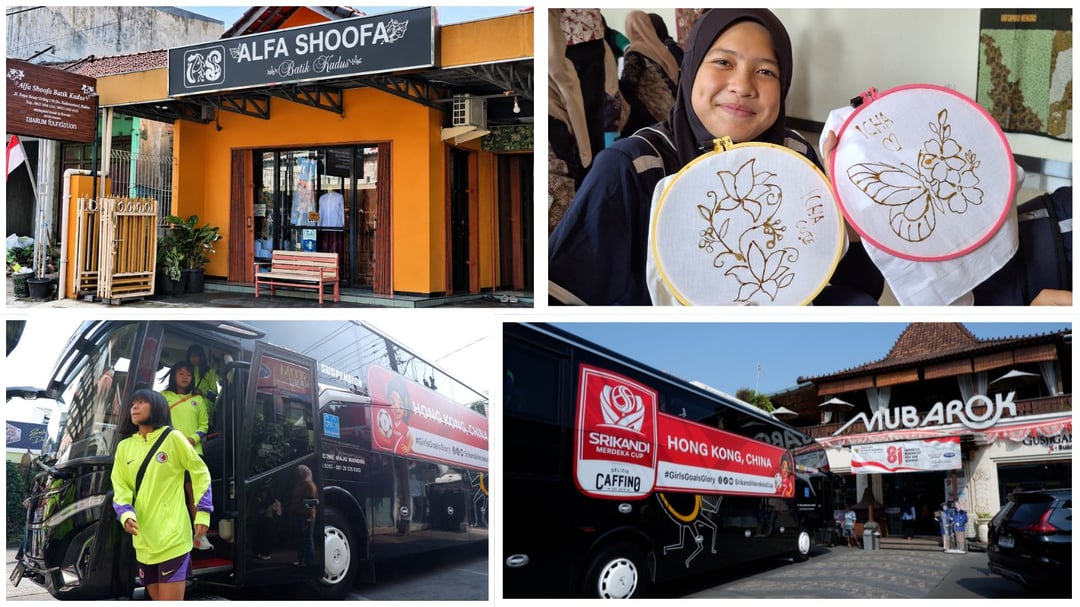
For local cultural figures and business owners, the presence of international participants served as an opportunity to showcase Kudus' regional assets. The Caffino Srikandi Merdeka Cup 2026 not only united seven nations through sport but also provided a platform for participants to engage with the culture and potential of Kudus. (JMY/REDMKK/mainkekudus)