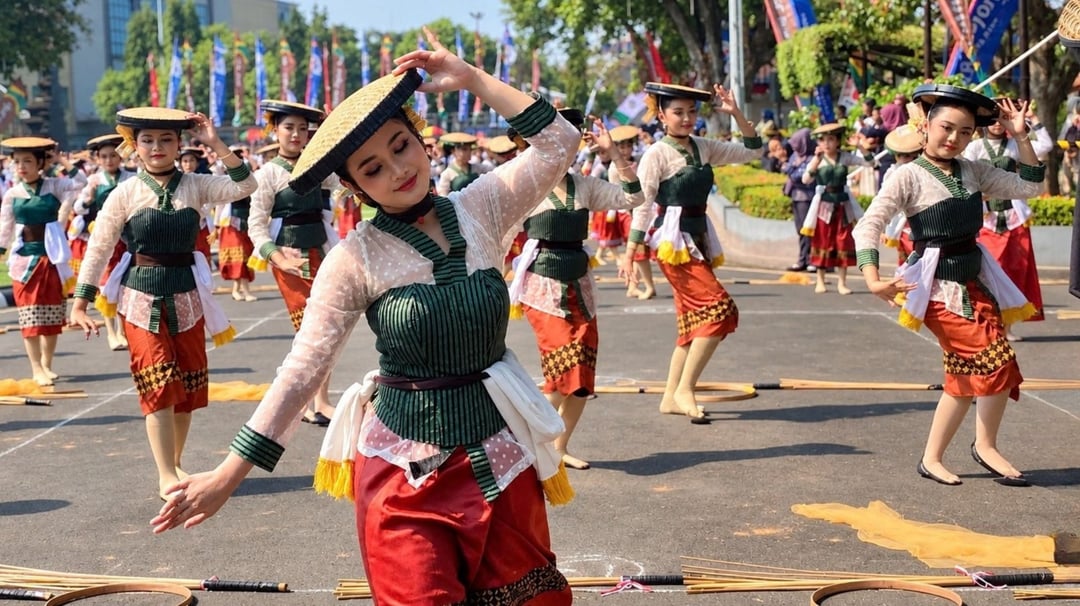
KUDUS — A total of 670 dancers performed the Lajur Caping Kalo dance in a colossal display at the Kudus Regency Hall courtyard on Saturday (Sept. 26, 2026). The performance, part of the 477th anniversary celebrations of Kudus, has been officially recognized by the MURI record-keeping body.
The dancers donned the Caping Kalo, a traditional women's head covering that serves as a staple of Kudus customary attire. Amidst a variety of events drawing visitors to the city, including sports matches, cultural landmarks like the Caping Kalo play a key role in defining the local experience.
The Caping Kalo is still handcrafted by local artisans, including Kamto from Gulang Village, Mejobo District, Kudus Regency.

Kamto is not the first in his family to master the craft. The skill has been passed down through generations, with Kamto representing the fourth generation of practitioners.
“This Caping Kalo is a legacy from my great-grandparents, making me the fourth generation. I am not certain exactly when it started, but it has been a family tradition for approximately 130 years,” Kamto said.
He took up the craft permanently after his father was no longer physically able to continue the work.
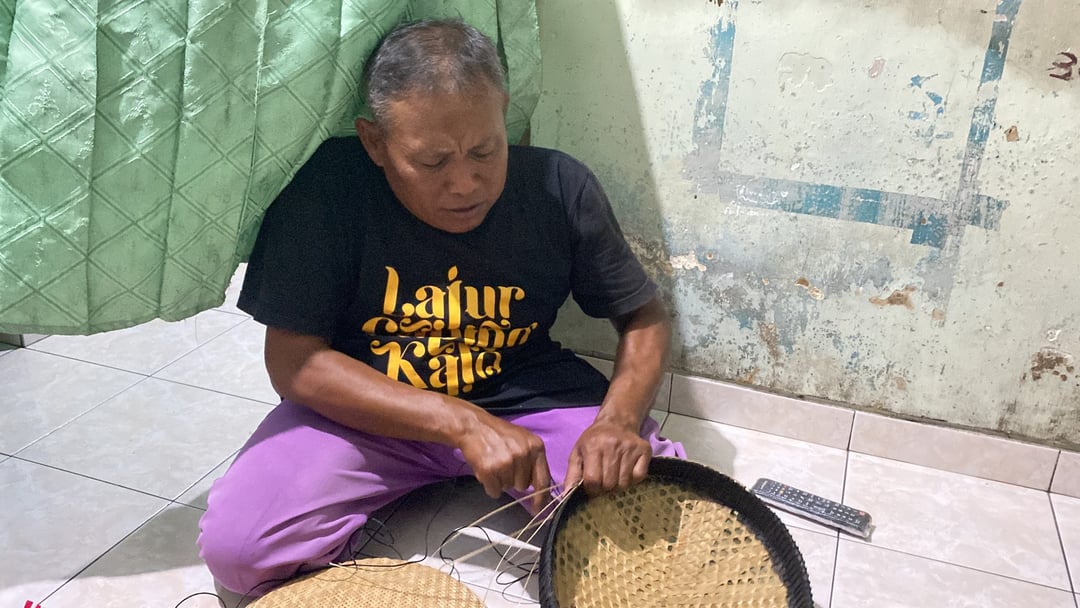
His family encouraged him to continue the tradition so the craft would not fade away. For Kamto, the Caping Kalo remains an essential component of Kudus's cultural identity.
He continues to craft them alongside his daily activities, utilizing his free time in the mornings or evenings to process bamboo for the headwear.
The Caping Kalo is distinct from the standard conical hats used by farmers, featuring a round, flat shape. Its materials, production techniques, and cultural function are deeply intertwined with local traditions.
The design resembles a "kalo," a traditional tool used for straining coconut milk. Culturally, its circular form represents submission to God the Almighty.
The intricate, smooth bamboo weaving symbolizes harmony, community, and mutual cooperation, while the bamboo frame represents resilience, honesty, and openness.
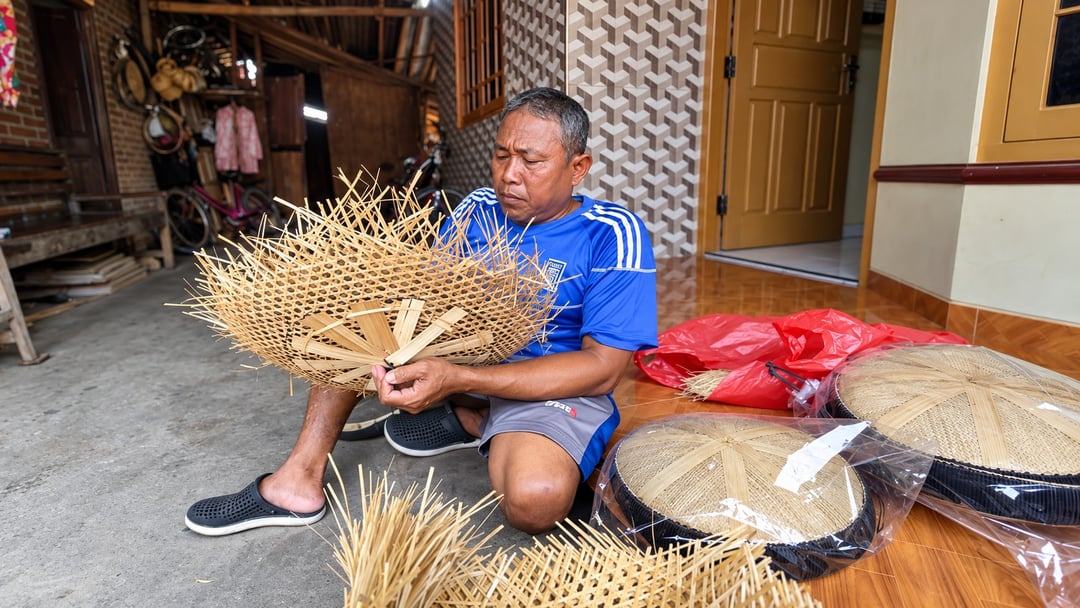
Approximately 90 percent of the Caping Kalo material is bamboo. Other components include rembuyan or kesulo leaves and string.
Historically, palm fiber (ijuk) was used for string. Kamto has since replaced it with plastic string to shorten production time.
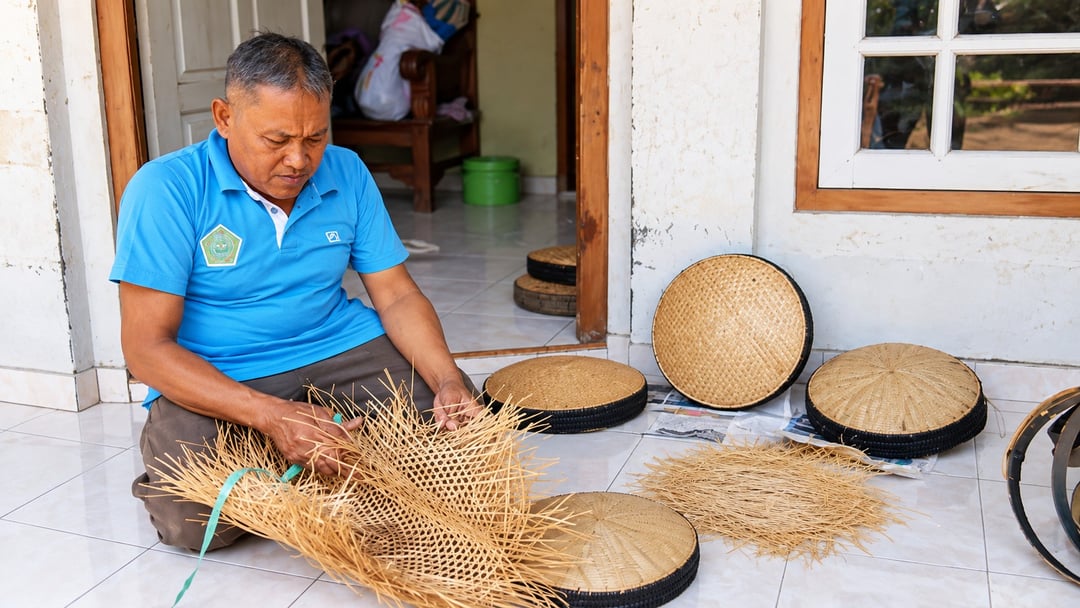
Approximately 90 percent of the Caping Kalo material is bamboo. Other components include rembuyan or kesulo leaves and string.
Historically, palm fiber (ijuk) was used for string. Kamto has since replaced it with plastic string to shorten production time.
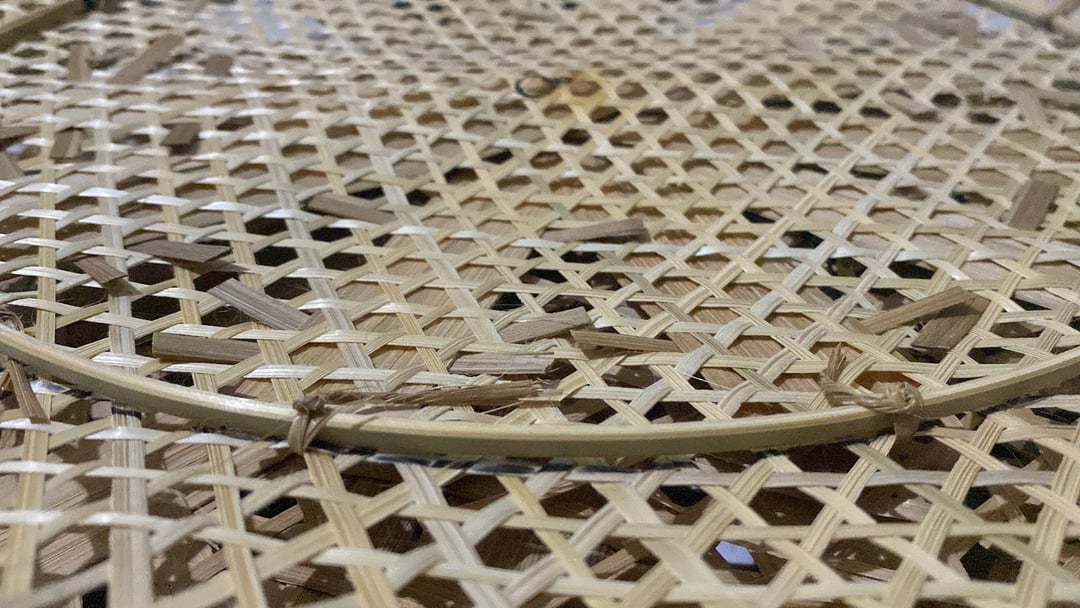
Beyond bamboo, artisans use rembuyan leaves, also known as rembulung or gedobos. In some regions, particularly Pati and other parts of Central Java, the plant is called kesulo or resulo.
Locally, rembuyan and kesulo refer to the same plant or closely related species. The plant features a large stem with a soft, cork-like interior.
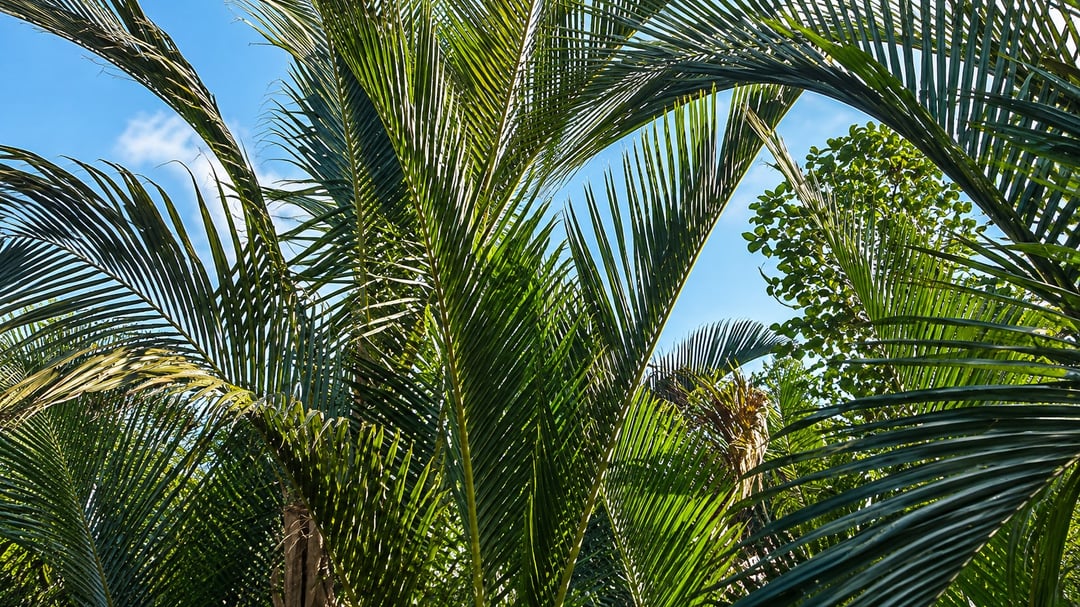
The leaves are traditionally used for crafts. In the past, they were woven into welit, a material for traditional roofing. In Gulang Village, rembuyan or kesulo leaves remain a key component in manufacturing Caping Kalo.
The leaves are prepared for flexibility before use. Once the bamboo base is woven, the leaves are applied to complete the structure.
Beyond the leaves, the plant's stem is also put to traditional use. Its soft core was once used by rural communities to build frames for kites or birdcages.
Once the bamboo weave and leaf layer are prepared, the components of the Caping Kalo are assembled in stages. These include the rangkepan, jalon, iker-iker, and gapit.
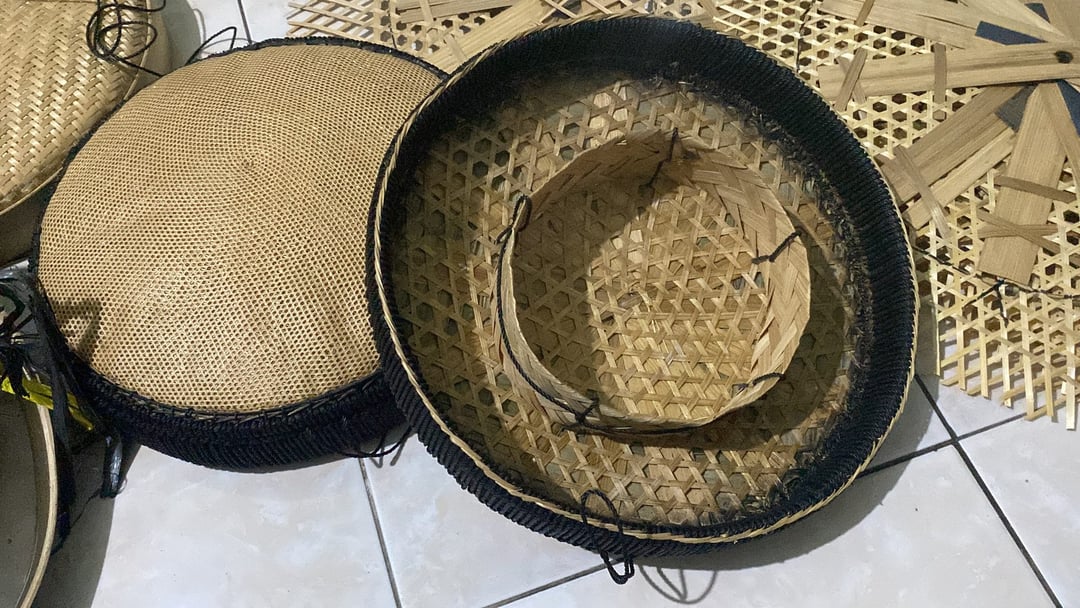
These parts are then stitched and reinforced using thin bamboo strips known as seleret.
The entire process takes several days.
"On average, production takes three to four days," said Kamto.
Work is carried out in stages depending on available time. If all materials are ready and the work can be performed from morning until night, a single Caping Kalo can, under certain conditions, be completed in one day.
For an authentic handcrafted product, Kamto notes that the current price for a Caping Kalo is approximately Rp475,000 per unit, while mass-produced imitations can be found for around Rp90,000.
Buyers often include institutions and schools, particularly leading up to the Kudus anniversary celebrations. The tradition of wearing Kudus traditional attire on the 23rd of each month also serves as an occasion for the Caping Kalo to be worn again.
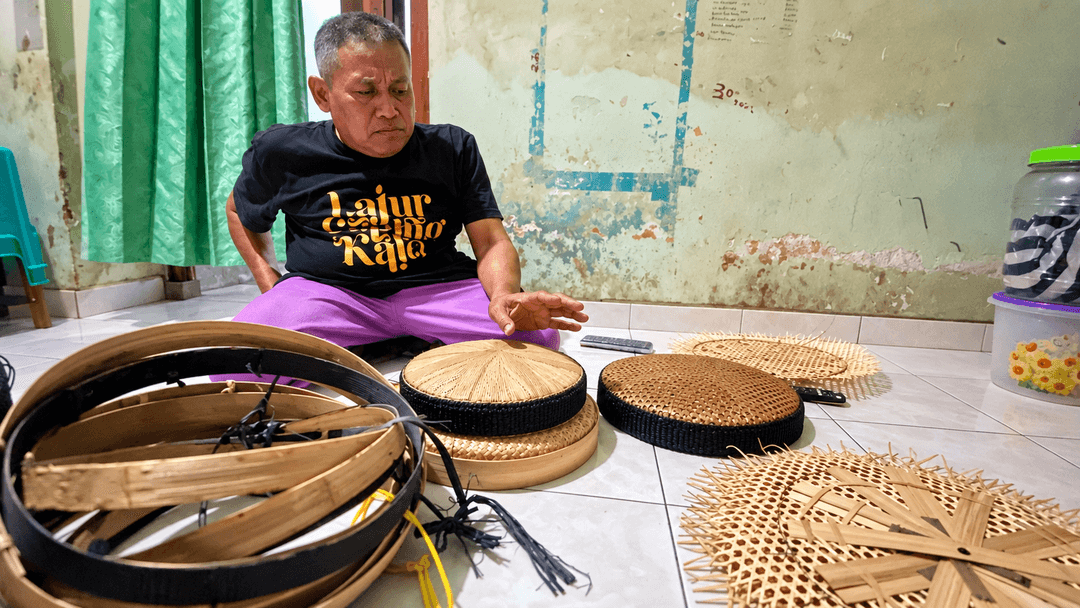
The future of Caping Kalo production faces a generational shift crisis. According to Kamto, the craft requires patience, skill, and time, while younger generations prefer alternative employment options.
"Young people today prefer factory work with a monthly salary," he said.
Kamto is one of the remaining artisans keeping the traditional Caping Kalo craft alive. Village government data indicates that there are currently only about five Caping Kalo artisans in Gulang Village, including Kamto.
This limited number underscores that the future of Caping Kalo craftsmanship remains heavily dependent on a dwindling pool of artisans.
Arief Zuli Tanjung, Head of the Culture Division at the Kudus Department of Culture and Tourism, stated that the Caping Kalo holds significant importance as part of the traditional attire for women in Kudus.

According to Arief, its unique design, materials, manufacturing techniques, and wearing style set it apart from traditional headwear in other regions. The Caping Kalo also reflects the values of diligence, precision, modesty, and creativity characteristic of the people of Kudus.
This distinctiveness grants the Caping Kalo a broader significance whenever Kudus welcomes visitors from outside the region. For tourists arriving to participate in or attend sports events, for instance, local handicrafts offer another perspective of the city beyond the competition arena.
The Kudus Regency Government has undertaken several initiatives to preserve the Caping Kalo. These efforts include proposing the Caping Kalo as an Indonesian Intangible Cultural Heritage, documenting its history and production techniques, cataloging master artisans and crafters, and developing cultural programs to introduce it to the younger generation.
The use of the Caping Kalo in official functions is also part of this effort.
The Kudus Regency Government encourages civil servants (ASN) to wear traditional Kudus attire on the 23rd of every month. This policy simultaneously creates opportunities for the integration of the Caping Kalo into government activities.
Beyond traditional dress, the Caping Kalo is also introduced through art and cultural programs, one of which is the Lajur Caping Kalo Dance.
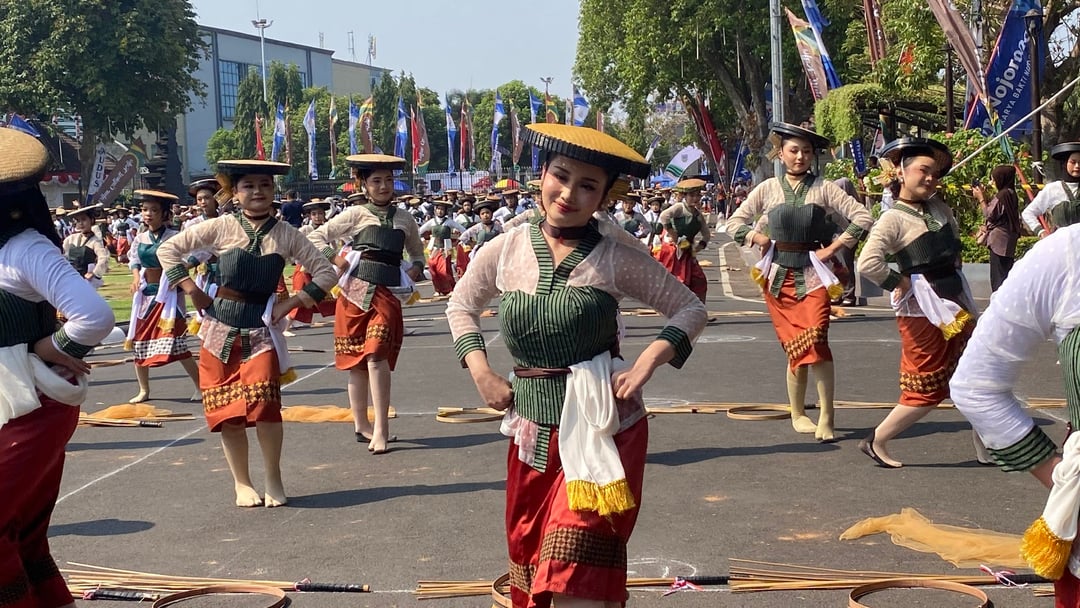
The Lajur Caping Kalo dance draws inspiration from the Caping Kalo crafting process. Its choreography illustrates various stages, from preparing the materials and weaving to assembling the woven components into a head covering.
Lajur Caping Kalo dancer Sherly Jessy Ratna Safitri began learning the dance around February 2026, ahead of Ramadan.
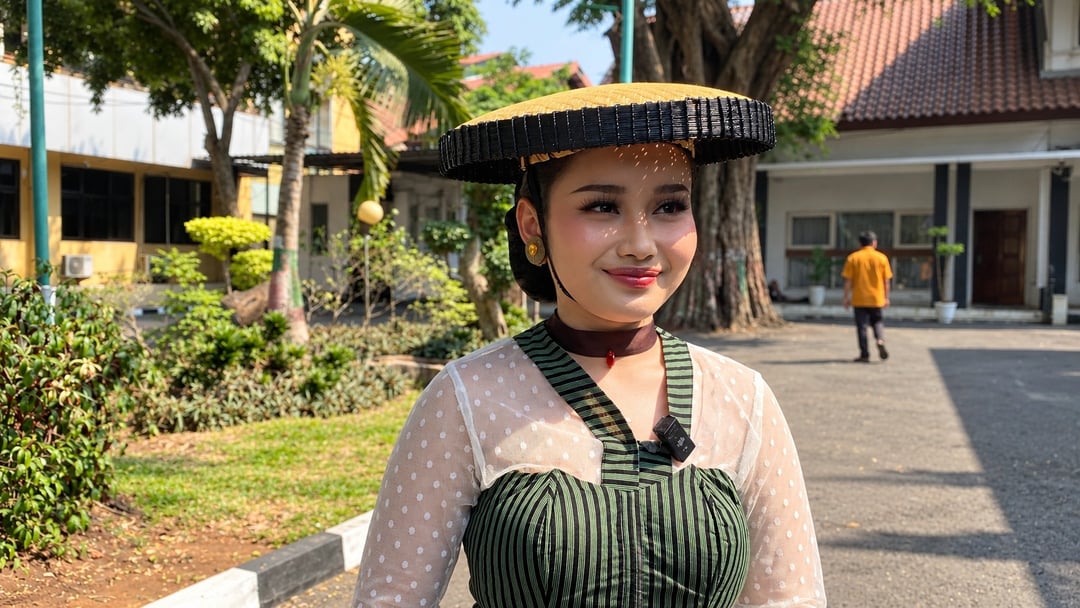
According to Sherly, festivals and various performance schedules allow the younger generation to discover the Caping Kalo through performing arts.
“I am very happy there are festivals like this because, indirectly, we are preserving our culture,” she said.
The dance was later featured prominently during the 477th anniversary of Kudus City. From a craft traditionally made in the homes of artisans, the Caping Kalo has now evolved into a performance accessible to both local residents and visitors.
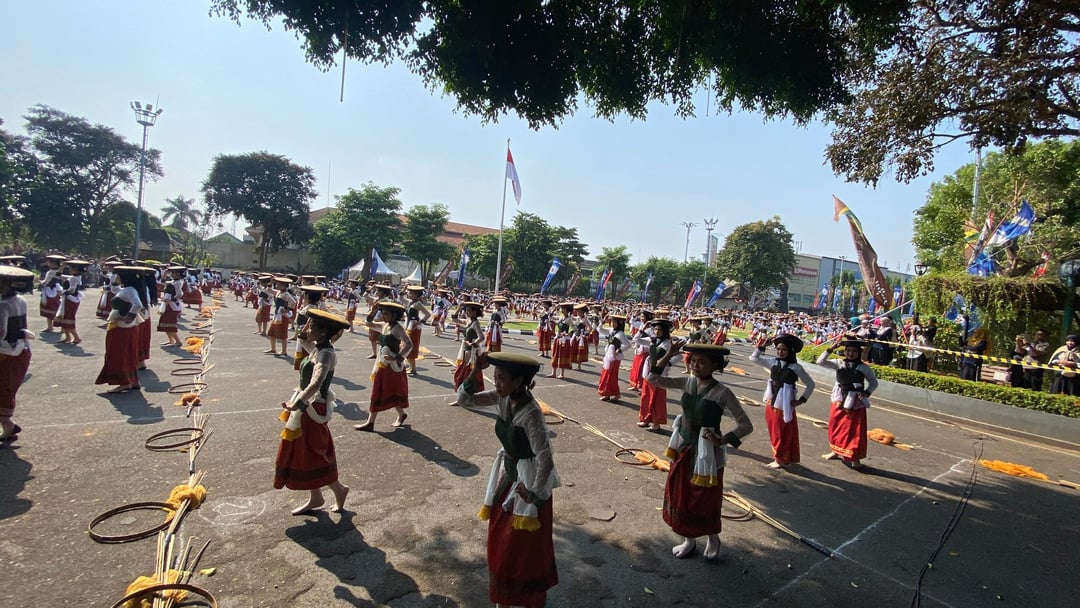
A total of 670 Lajur Caping Kalo dancers gave a colossal performance at the Kudus Regency Pendopo courtyard on Saturday, September 26, 2026.
The dancers wore traditional costumes and Caping Kalo accessories, executing synchronized movements before the public and invited guests.
Senior Representative of MURI, Ari Andriyani, stated that the figure was based on field verification of the proposed participants.
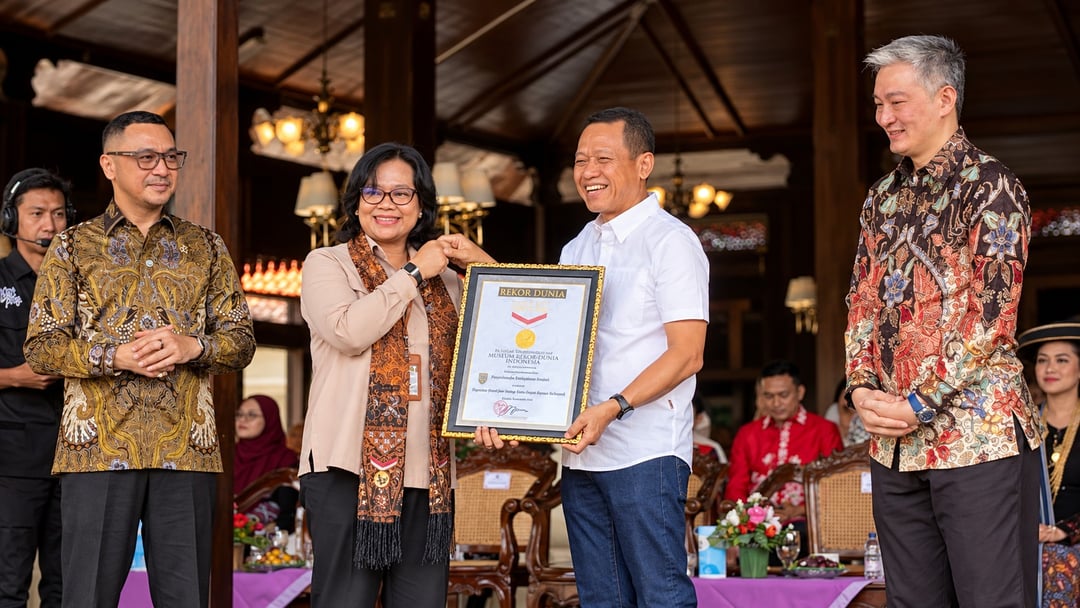
"These 670 dancers did more than perform; they demonstrated a profound love for our ancestral arts and culture through beautiful, harmonious movements," she said.
The performance was subsequently officially recorded by MURI, serving as part of a broader effort to promote the Caping Kalo through the performing arts.
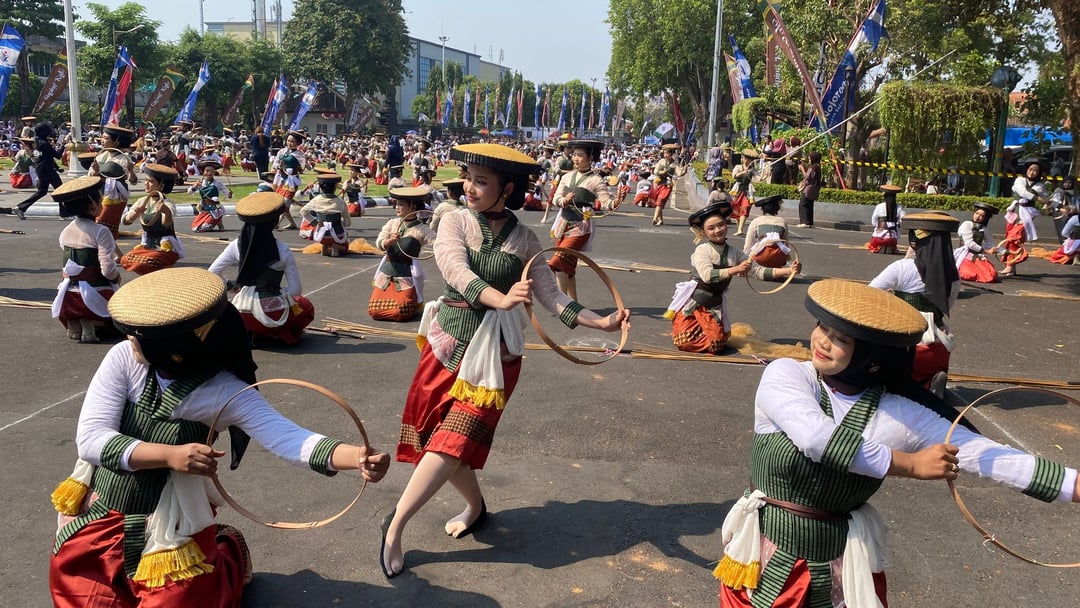
Kudus Regent Sam’ani Intakoris emphasized that the record achievement extends beyond the number of participants, serving as a platform to introduce the local wisdom of Kudus to a wider audience.
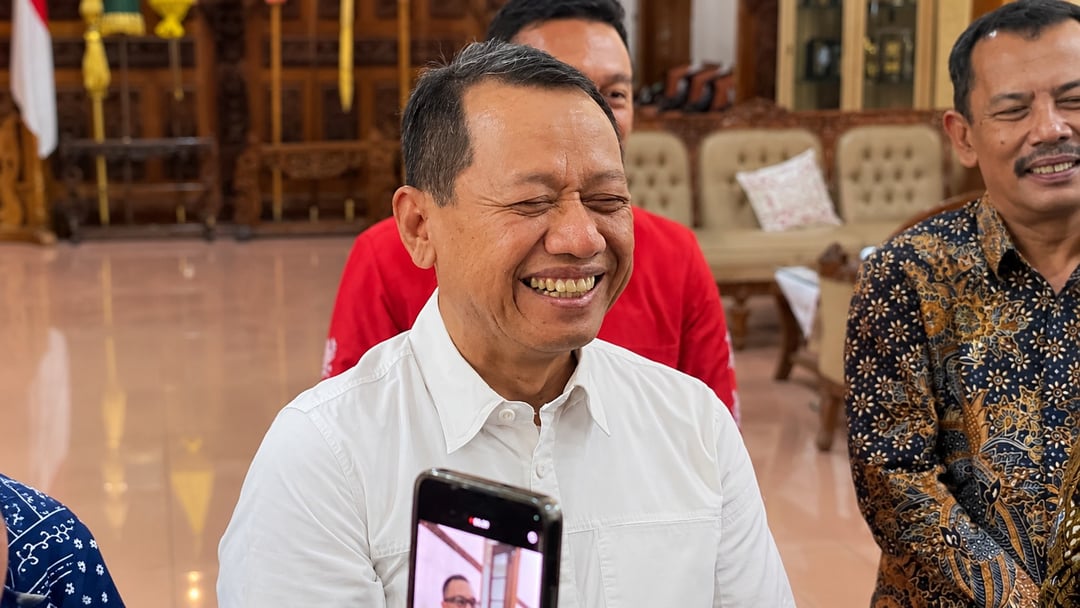
Promoting local wisdom is increasingly relevant as Kudus develops as a destination for various agendas. Sporting events attract athletes, officials, spectators, and communities from outside the region, creating opportunities for them to discover the city’s culture, crafts, culinary scene, and tourist attractions.
In this context, the Caping Kalo adds a unique layer to the experience for sports tourists visiting Kudus. While the competition may be the reason for their arrival, local identity provides a distinctive experience beyond the venue.
The performance was attended by the Indonesian Deputy Minister of Culture Giring Ganesha, representatives from the Region X Cultural Preservation Center, Kudus Regent Sam’ani Intakoris, and members of the local Regional Leadership Coordination Forum (Forkopimda).
The central government, through the Ministry of Culture, has expressed its support for the initiative to designate Caping Kalo as a national Intangible Cultural Heritage.
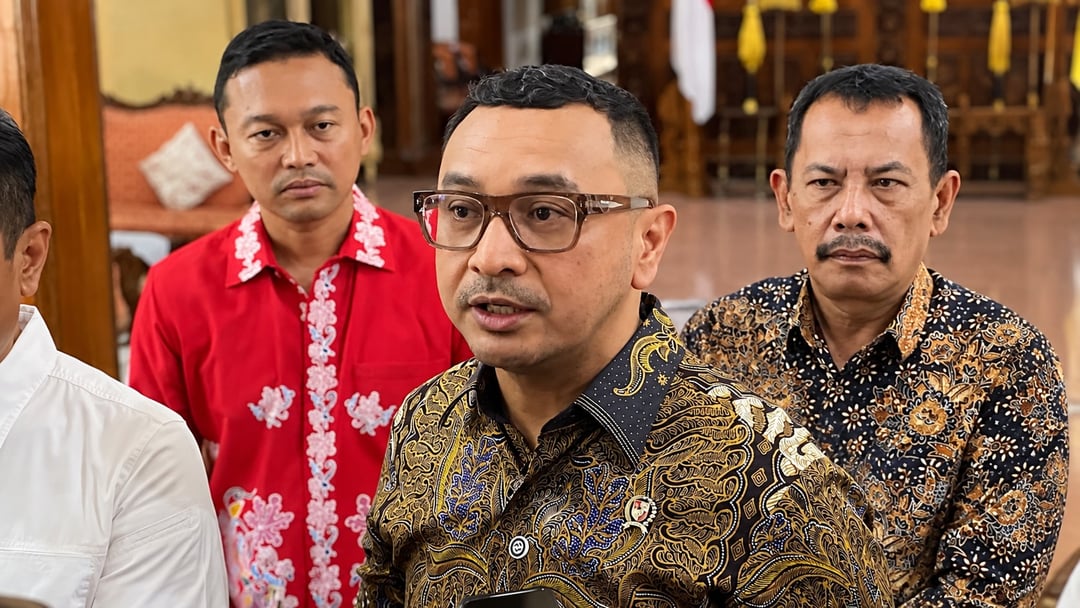
“The recognition of the Caping Kalo dance in the MURI record books marks a historic milestone for us all. I am confident in a bright future for the Caping Kalo following this achievement. We will work toward designating the Caping Kalo as a national intangible cultural heritage,” he said.
The sustainability of the Caping Kalo remains dependent on the transmission of its craftsmanship to future generations. Without a new generation of artisans, this unique cultural asset that distinguishes Kudus from other regions risks being lost.
Meanwhile, such local treasures have greater potential for exposure as Kudus welcomes visitors through various initiatives, including sporting events. While tourists may arrive for competitions, their impression of Kudus is also shaped by their experiences beyond the arena.
The Caping Kalo serves as one such example: a local legacy offering sports tourists the opportunity to discover Kudus through an identity unique to this city. (ITN/mainkekudus)