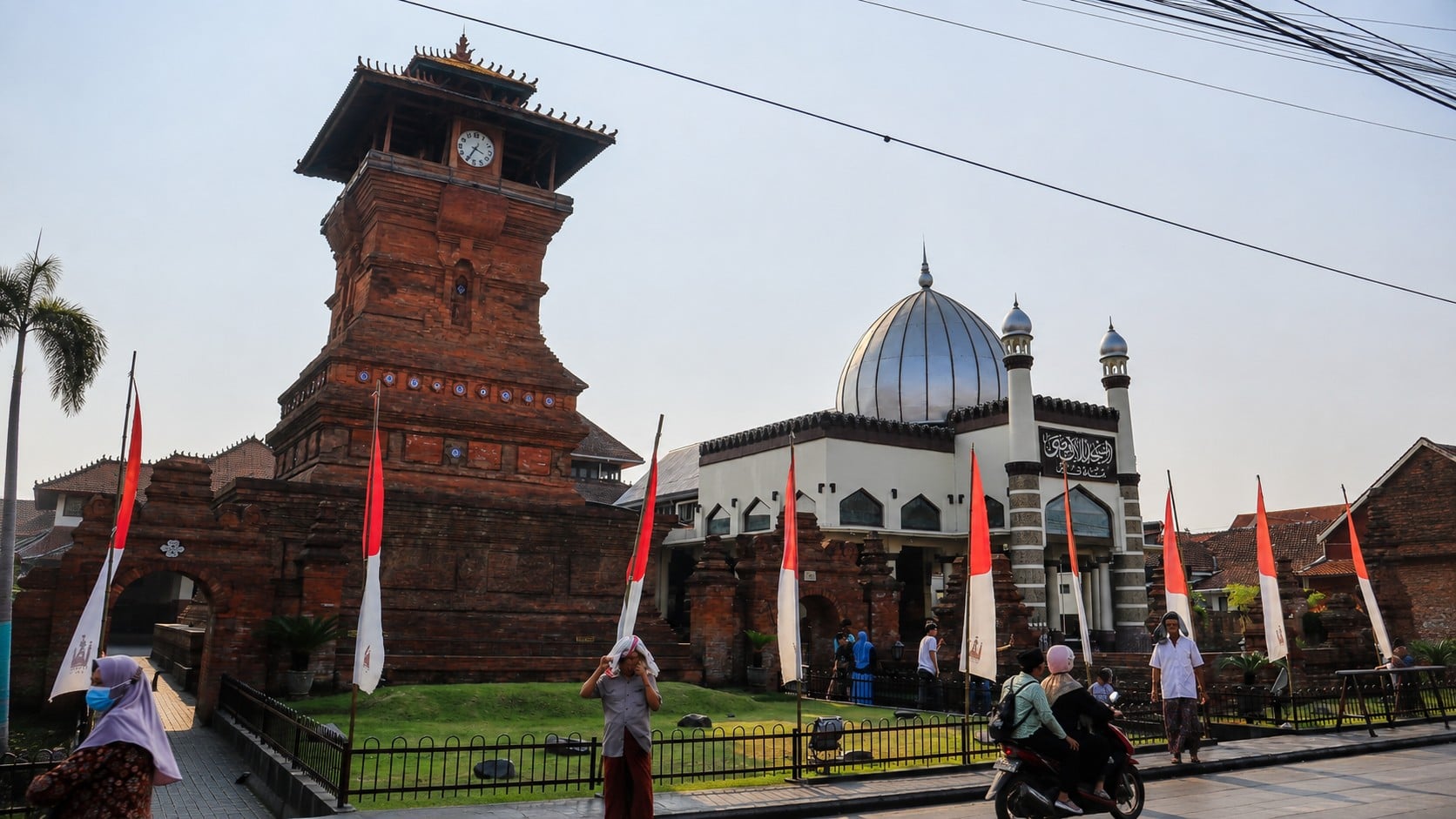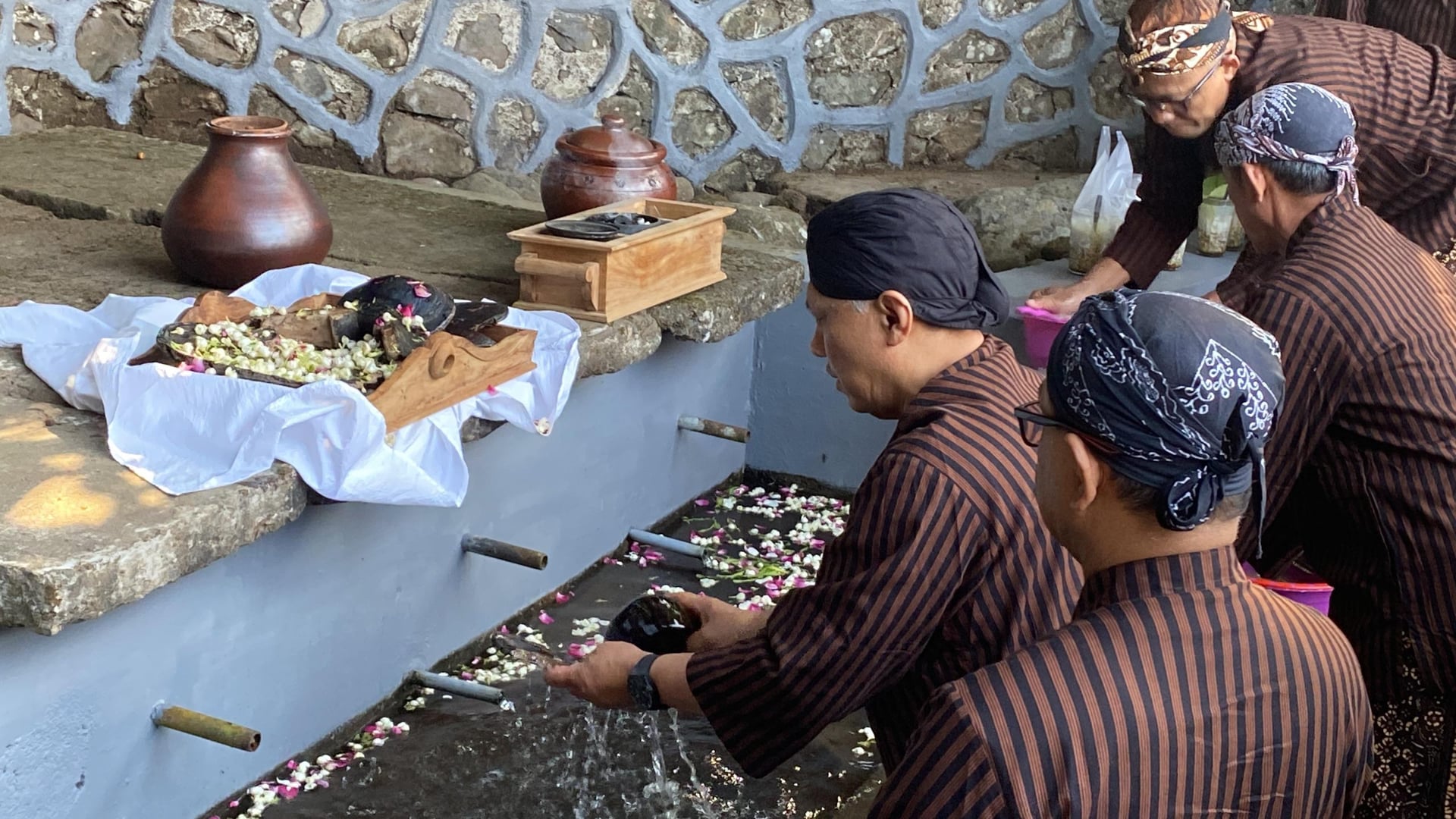

KUDUS – Small teak leaf packets are the first recognizable feature of nasi jangkrik. Inside, one finds rice, buffalo meat, tofu, and a savory broth. While the portion is modest, the dish carries a history deeply rooted in the traditions surrounding the Menara Kudus.
Nasi jangkrik is more than a dish served during specific events. Its existence is tied to the history of Sunan Kudus, a tradition of communal sharing, and culinary secrets passed down through generations.
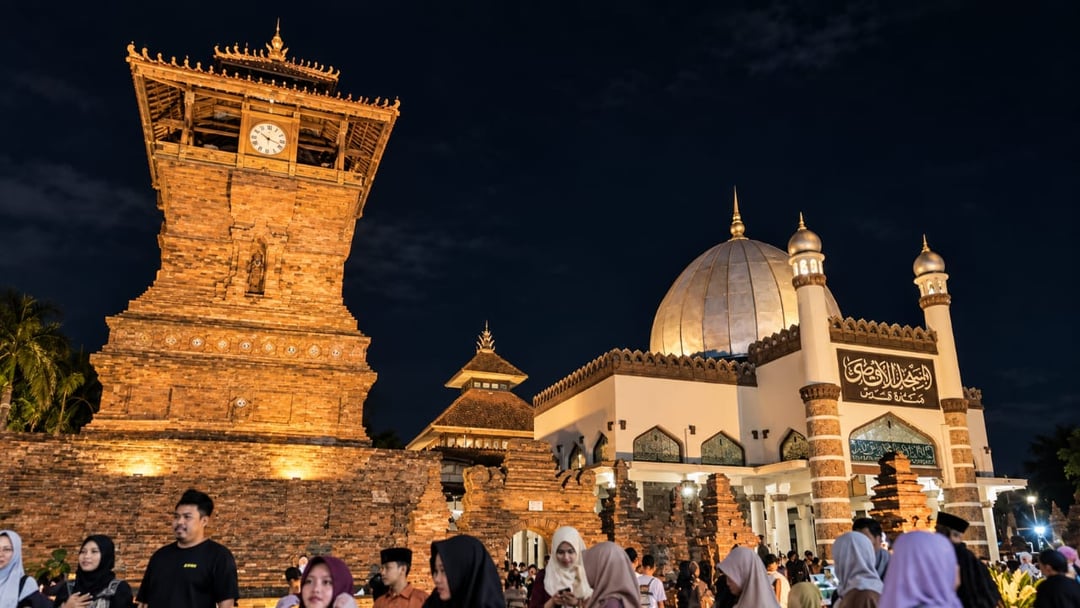
In the Menara Kudus area, the tradition of nasi jangkrik has flourished alongside community life and the presence of pilgrims. It is traditionally distributed during the haul (commemoration) of Sunan Kudus, though it is also prepared and sold for daily consumption outside of those specific events.
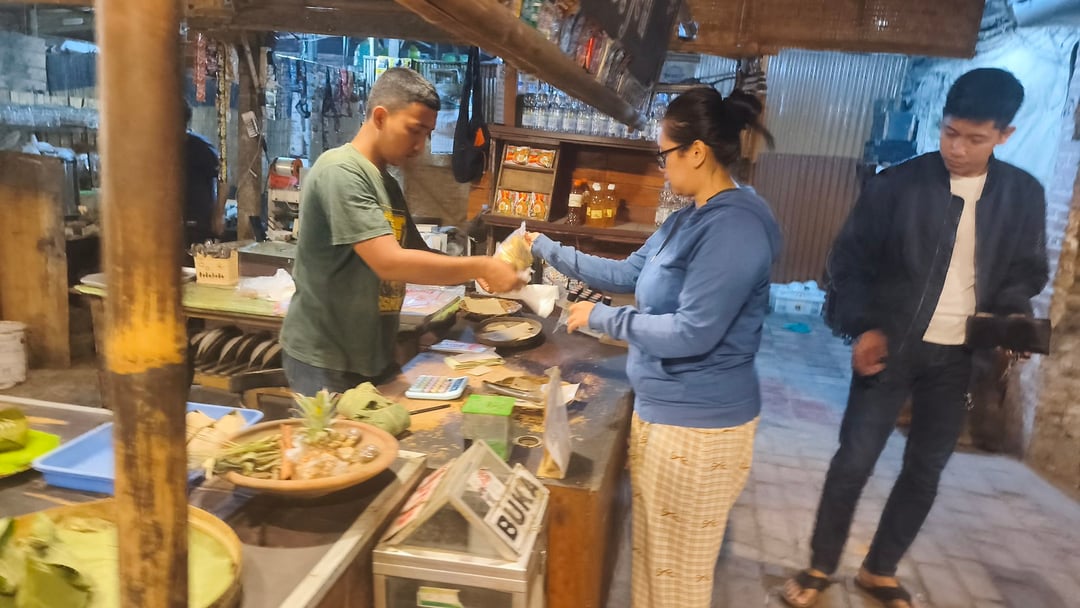
Kudus cultural observer Sumarno describes nasi jangkrik as a culinary artifact intertwined with the legacy of Sunan Kudus and the spread of Islam in the region.

"Anthropologically, nasi jangkrik is a culinary artifact tied to the role of Sunan Kudus as a preacher," he stated.
The name nasi jangkrik does not come from its ingredients; crickets are not used in the dish. Rather, the name refers to a specific culinary component.
Sumarno explained that Javanese culture frequently uses metaphors for naming objects and food. In this case, the fried shallots used in the dish were thought to resemble cricket wings.
In Javanese, lar means wing, and the term lar jangkrik was metaphorically applied to the dish.
"The name lar jangkrik was borrowed to identify the rice dish," Sumarno added.
The dish is characterized by a distinctively tangy flavor profile, with lore suggesting it originated with the family of Sunan Kudus. According to Sumarno, the meal was initially prepared by Sunan Kudus's wife using simple, accessible ingredients such as tamarind, salt, coconut, and palm sugar.
The dish subsequently evolved. Sunan Kudus, who frequently hosted guests, served it on various occasions, including Eid al-Adha.
Over time, its seasonings and flavors were refined. The custom of distributing the food to the broader public developed following the passing of Sunan Kudus.
After Sunan Kudus passed away, devotees wishing to pay their respects began preparing food within the tomb complex. Ingredients were provided through public donations, with preparation coordinated by mosque officials.
The food is wrapped in teak leaves and distributed to pilgrims. This offering of rice is associated with charity and prayer, serving as a tribute to Sunan Kudus and a hope for blessings.
The tradition is tied to specific timing. Sumarno noted that nasi jangkrik is distributed during the month of Muharram, specifically on the 10th of Muharram, to commemorate the haul (death anniversary) of Sunan Kudus.
Historically, the series of events began after dawn prayers. Tahlil, manaqib, and prayers led by religious scholars were part of the proceedings. After visiting the tomb of Sunan Kudus, pilgrims departing the site would receive the nasi jangkrik.
When the number of pilgrims was smaller, food distribution was conducted in a simpler manner. The increasing number of visitors from various regions has necessitated adjustments to the distribution mechanism.
Management strategies were implemented to ensure an orderly process and prevent overcrowding. These changes primarily involve the distribution method rather than the core values inherent in the tradition.
"Only the distribution method has changed. The essence remains the same," said Sumarno.
Sumarno emphasized that nasi jangkrik holds significance beyond its function as food.
"It embodies values of communal spirit, tradition, wasilah, blessings, and religious significance," he stated.
In this context, wasilah is interpreted as a means of drawing closer to Allah SWT through prayer and the tradition of sharing with others.
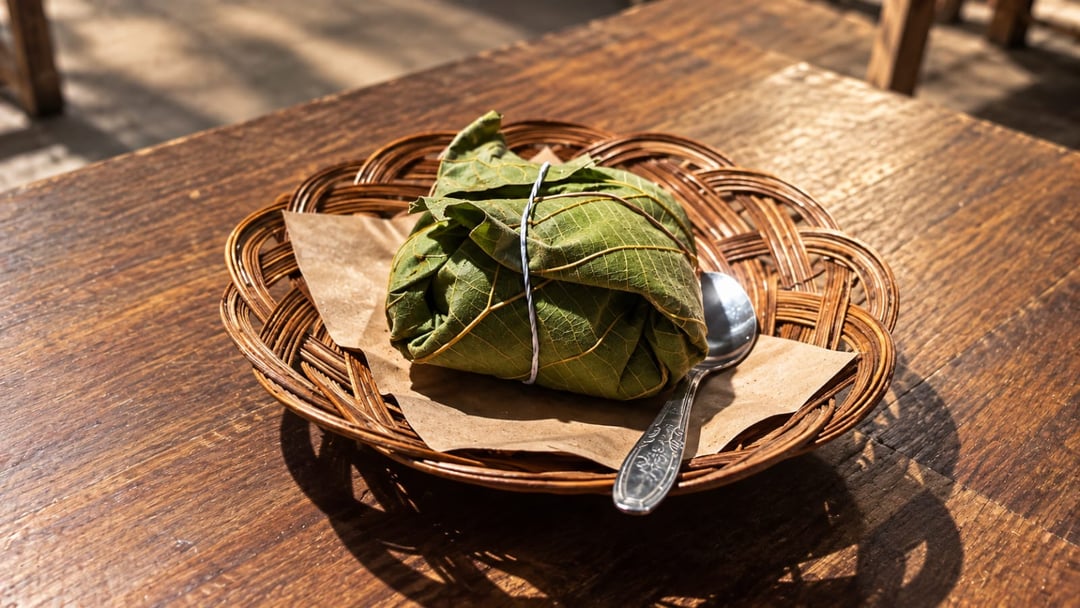
Beyond its history, nasi jangkrik is recognized by its presentation. Teak leaves are used to wrap small portions of the rice.
For Sumarno, the use of teak leaves reflects humility. The small size of the portions also signifies that the food is intended to be shared with many, regardless of the recipient's background.
There are no restrictions based on origin or identity. Everyone who attends has an equal opportunity to receive the food.
In terms of content, nasi jangkrik typically features buffalo or goat meat. The broth is characterized by a tangy flavor, developed through local culinary traditions.
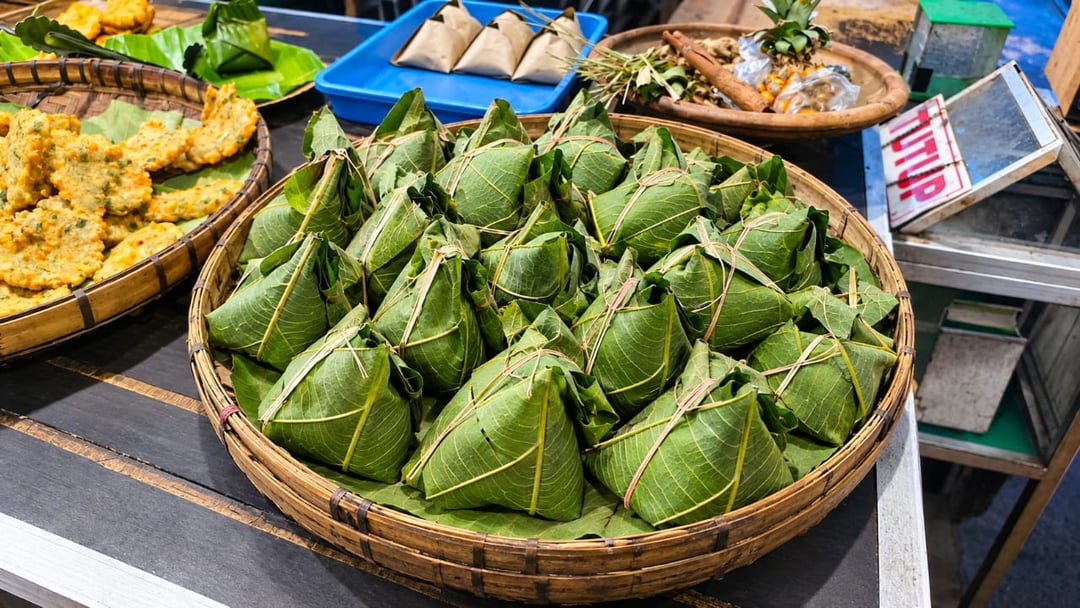
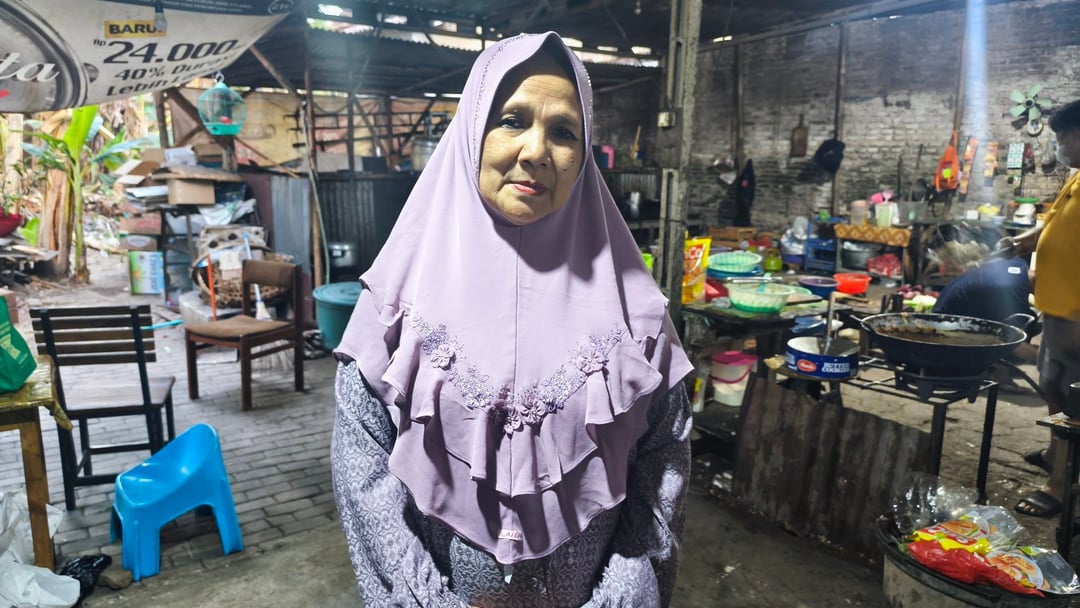
The use of teak leaves is also maintained by vendors selling nasi jangkrik daily, such as 64-year-old Siti Mahmudah, who operates in the Menara Kudus area.
Mahmudah began selling her food around 2006. At that time, she operated near Muntira, an area east of the Menara Kudus which now serves as a parking lot. In 2016, she relocated her business to Angkringan Kidul Sucen.
After nearly two decades in the business, Mahmudah continues to follow the recipes she learned from her parents.
“Yes, I follow my parents’ tradition,” she said.
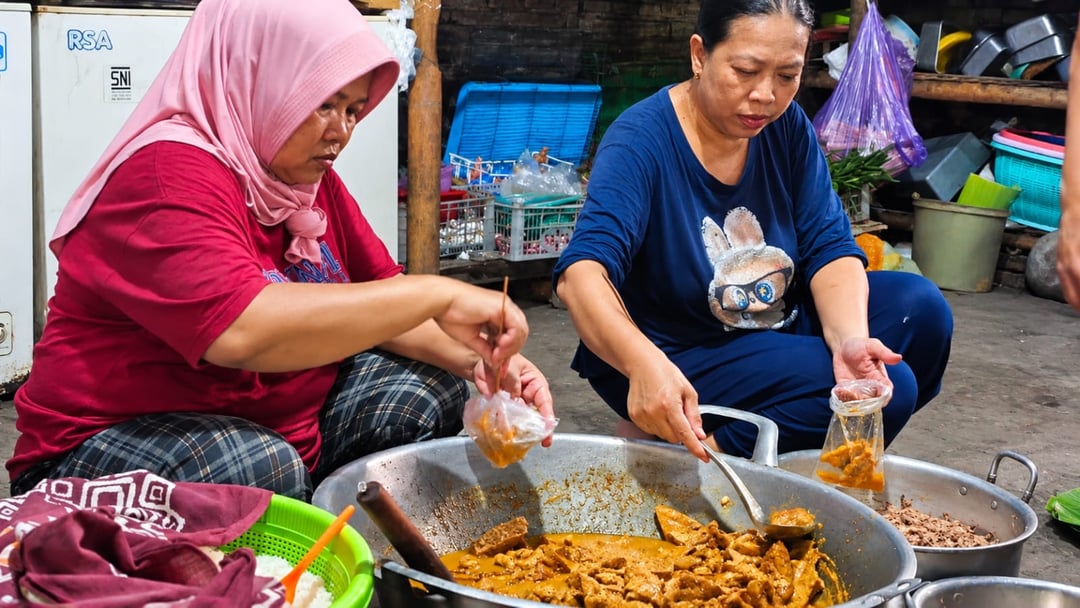
In Mahmudah’s kitchen, the preparation of nasi jangkrik begins with processing the meat. The buffalo meat must be boiled for more than two hours, a process that can take longer depending on the age and toughness of the meat.
Once boiled, the meat is cooked with spices until ready for service. The spice blend includes shallots, garlic, chilies, kencur, and galangal. Coconut milk is added to create the savory broth served with the rice and meat.
For daily sales, Mahmudah typically serves the buffalo meat with tofu. For larger events, however, the side dishes can be customized, with eggs, potatoes, or cabbage added upon request.
Teak leaves remain the traditional choice for wrapping the rice, as Mahmudah believes they impart a distinct aroma to the food. However, customers who prefer alternatives may opt for banana leaves or paper.
A single portion of nasi jangkrik sold by Mahmudah is priced around IDR 14,000. This price fluctuates in line with the cost of buffalo meat; when raw ingredient prices rise, she prefers to adjust the retail price rather than decrease the portion size.
“When the price of meat rises, I have to increase the price of the nasi jangkrik as well. It would be unfair to the customer to reduce the portion,” she said.
She continues to accept large orders, once preparing up to 400 portions of nasi jangkrik for a monthly prayer gathering.
For Mahmudah, nasi jangkrik is not merely a seasonal dish served during the Sunan Kudus haul. After years of preparation, she maintains a steady stream of daily customers.
Among the regular patrons of Angkringan Kidul Sucen is Etik Sugiarti, who says she has enjoyed nasi jangkrik for years and chooses to buy it whenever she is not cooking at home.

Depending on the circumstances, Etik enjoys nasi jangkrik about every two weeks. It is not for any complex reason, she says; she simply likes the flavor and recognizes it as a signature dish of Kudus.
“It’s delicious, you know. It’s authentic to Kudus,” she said.
For Etik, nasi jangkrik is a culinary heritage worth preserving, as it remains well-known to the Kudus community. She also notes that younger generations in her area still appreciate the dish.
Etik’s experience illustrates that nasi jangkrik is not limited to religious traditions. The dish is integrated into daily life, frequently served in street food stalls, local angkringans, family gatherings, religious study groups, and households.
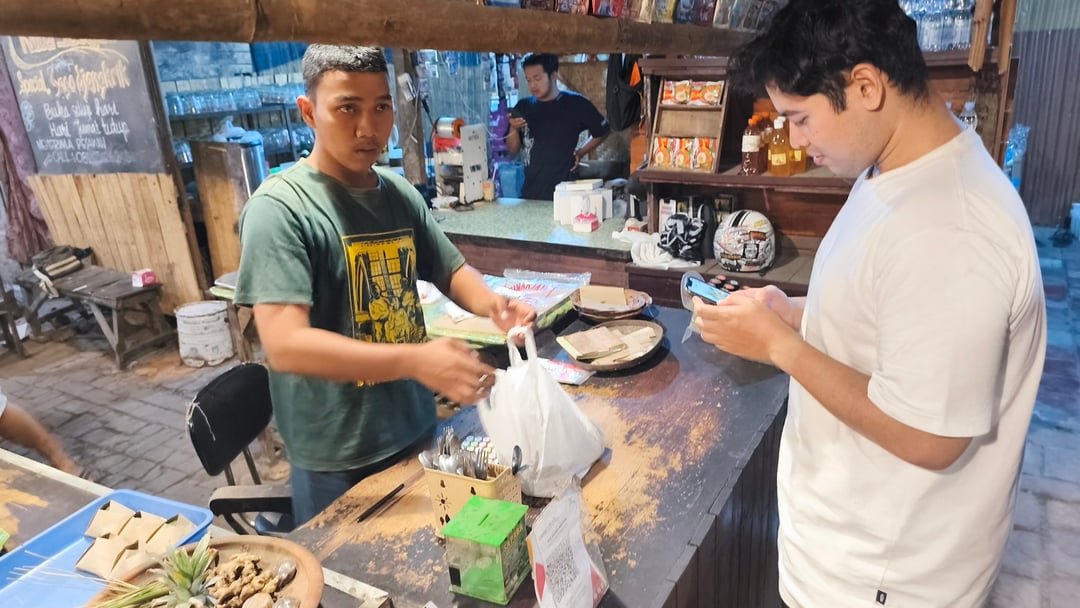
The endurance of nasi jangkrik depends on more than just a recipe. It relies on consistent preparation, continued demand from the public, and a tradition of distribution during specific events.
Mahmudah is one example of how the recipe is passed down through families. She learned the preparation methods from her parents and has applied them in her own business, which she has operated since 2006.
Meanwhile, traditions surrounding the Menara Kudus reflect a different form of cultural inheritance. Community members actively participate by donating ingredients and distributing food to pilgrims during the Sunan Kudus haul (commemoration).
According to Sumarno, it is essential to preserve not just the dish and its recipe, but also the values of social solidarity embedded within the tradition.
The spirit of sharing, he argues, should not be limited to the month of Muharram. The community can express this through food, drink, zakat, and other forms of assistance in various situations.
“Nasi jangkrik can serve as a vessel for seeking blessings,” he noted.
Through these efforts, nasi jangkrik maintains its place in public life. Its recipe is preserved through families for daily consumption, while its distribution during the haul keeps the dish anchored to the traditions of the Menara Kudus.
Ultimately, understanding nasi jangkrik goes beyond its ingredients. It encompasses the origin of its name—linked to its spices—the history tied to the Sunan Kudus family, the tradition of sharing with pilgrims, and the time-honored cooking methods still upheld by local chefs.
Teak leaves, rice, buffalo meat, tofu, savory broth, and spices define its culinary form, while the habit of sharing and paying respects to Sunan Kudus defines its cultural context.
As long as the recipe remains in use, customers continue to seek it out, and the public stays familiar with the history behind its distribution, nasi jangkrik will continue to be passed down to future generations. It stands not merely as a specialty of Kudus, but as an integral part of a tradition rooted in the heritage of the Menara Kudus community. (OEB/YSR/mainkekudus)