
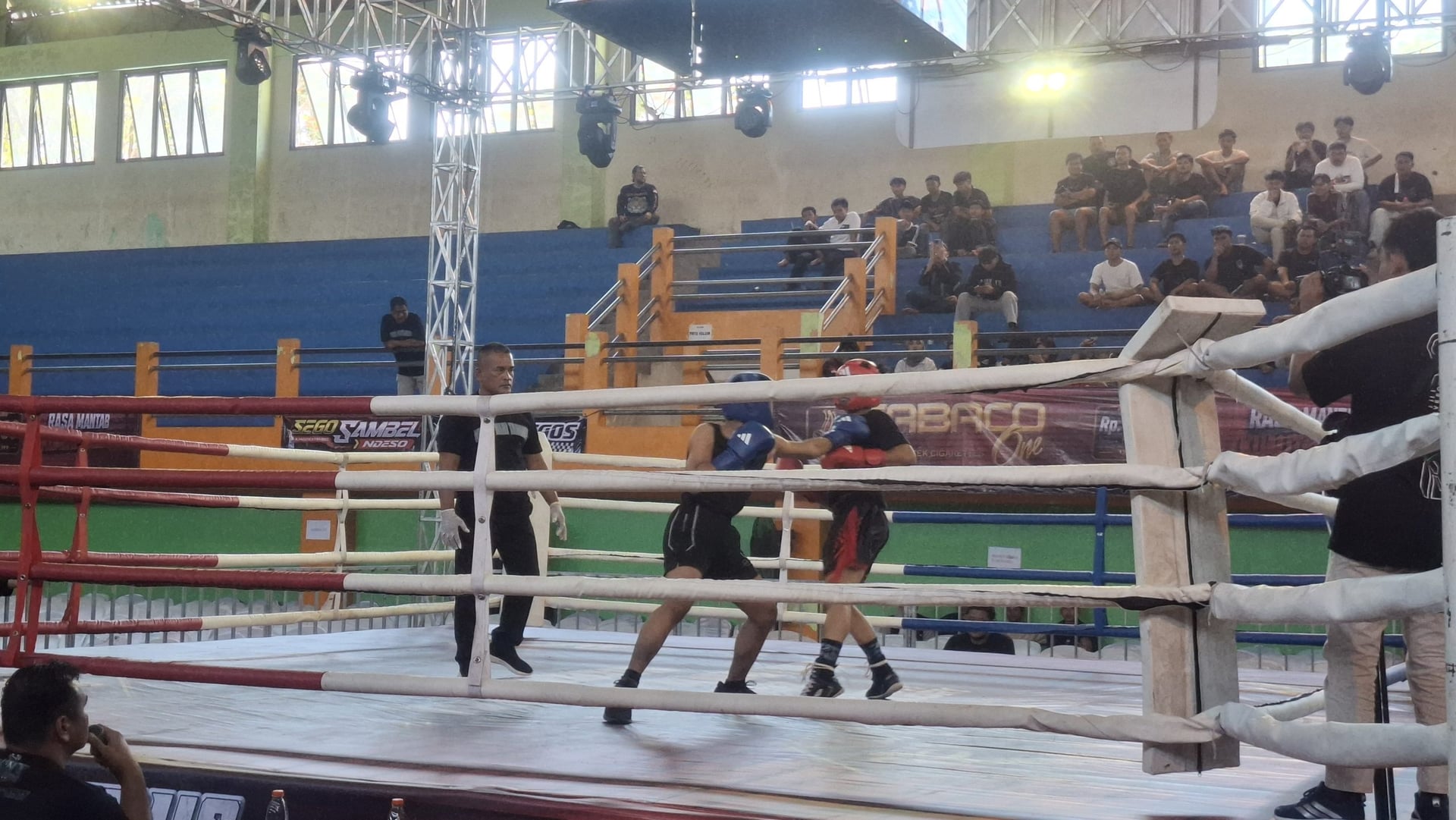
KUDUS — Saturday morning (07/25/2026) at the Bung Karno Sports Hall (GOR) in Kudus began with the sharp toll of a bell, cutting through the roar of the crowd. Cheers erupted with every strike and successful kick. Nearby, fighters busily warmed up—skipping, regulating their breathing, and adjusting their protective gear before being called to the ring. None looked truly relaxed; even those who appeared calm masked tension behind their steady gaze.
This was the atmosphere surrounding Kudus Wani Tanding (KWT), an event organized by the King Boxing Indonesia (KBI) Kudus Regency chapter. For some, the tournament was a chance to secure a victory. But for many others, especially those stepping into the ring for the first time, winning was not the only goal. It was a test of courage, a way to conquer fear, and a journey toward building confidence, one step at a time.
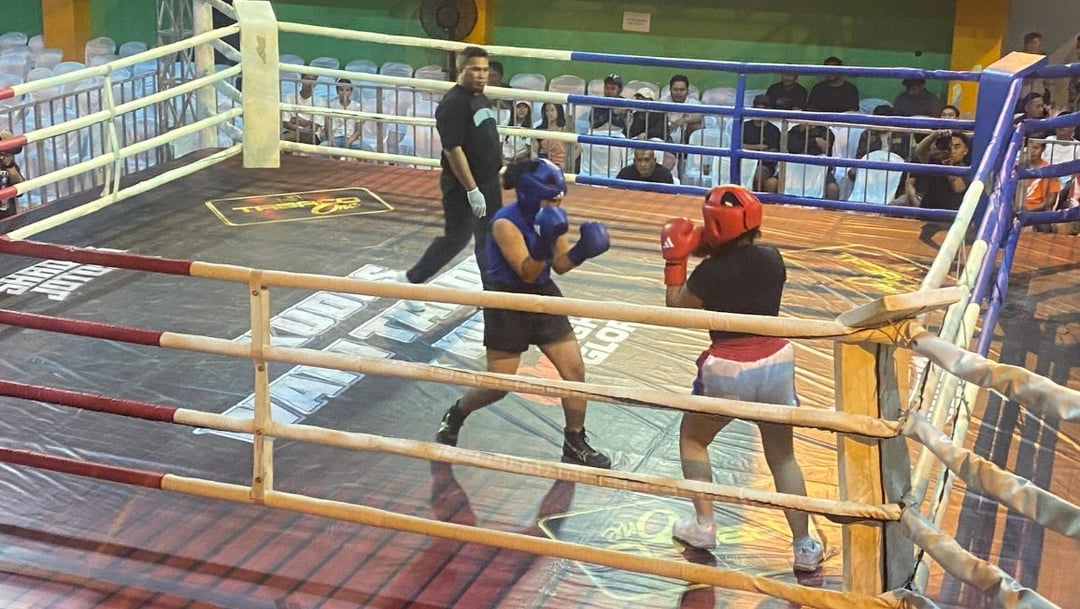
Behind every match lies an unseen journey. The ring is more than a place for punches and kicks; it is a space where one learns to manage pressure, control emotions, and realize that courage is born from repetitive, disciplined training.
Among the athletes participating in Kudus Wani Tanding is Rara Setyawati Rahayu. The 22-year-old from Gribig Village, Gebog District, Kudus, does not come from a professional athletic background. Instead, she spends her days working as a cigarette factory laborer at PT Djarum.
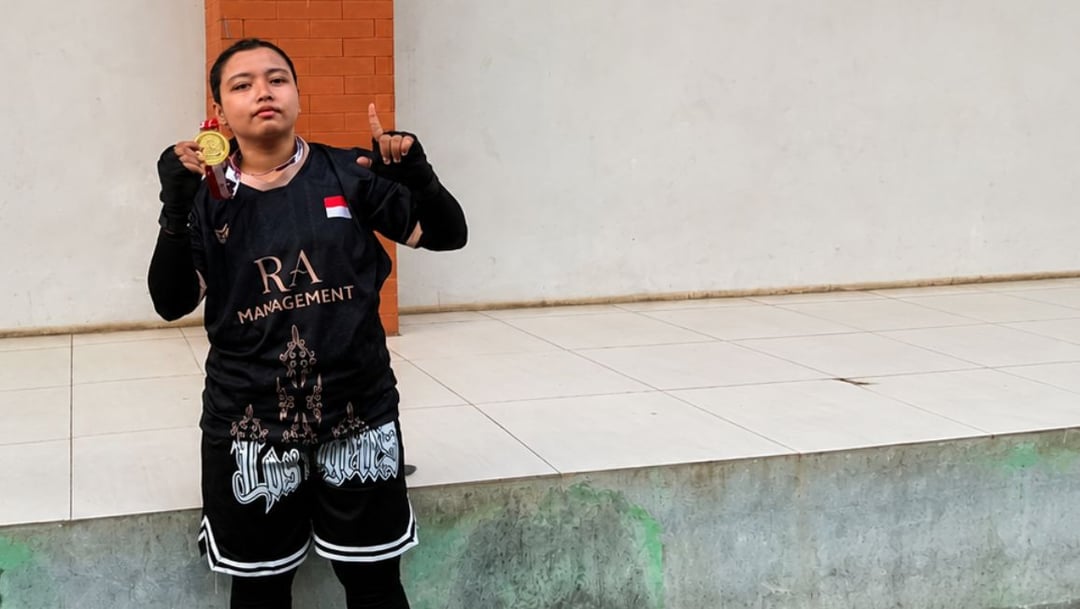
After work, Rara devotes her time to training. She maintains a grueling routine twice a week, ranging from jogging around the sports hall to perfecting techniques like jabs, straights, and uppercuts, as well as sparring sessions.
Her passion for martial arts began in elementary school. In junior high, she practiced Pencak Silat with the Pagar Nusa organization. After a hiatus due to school commitments, she rediscovered her drive after entering the workforce. This year marks the start of her journey into kickboxing.
Her decision initially surprised her family, as her parents were concerned about her choosing a sport defined by physical contact. Yet Rara holds a simple philosophy: martial arts is not just about competing, but about the ability to defend oneself in unexpected situations.
The most demanding part of her training is not the striking, but the running. Each session has targets that require her to maintain her pace until the final lap. Exhaustion is an inseparable part of the process.
She balances it all alongside her professional life. There are no shortcuts to the ring; every match is an accumulation of sacrificed time, expended effort, and unwavering discipline.
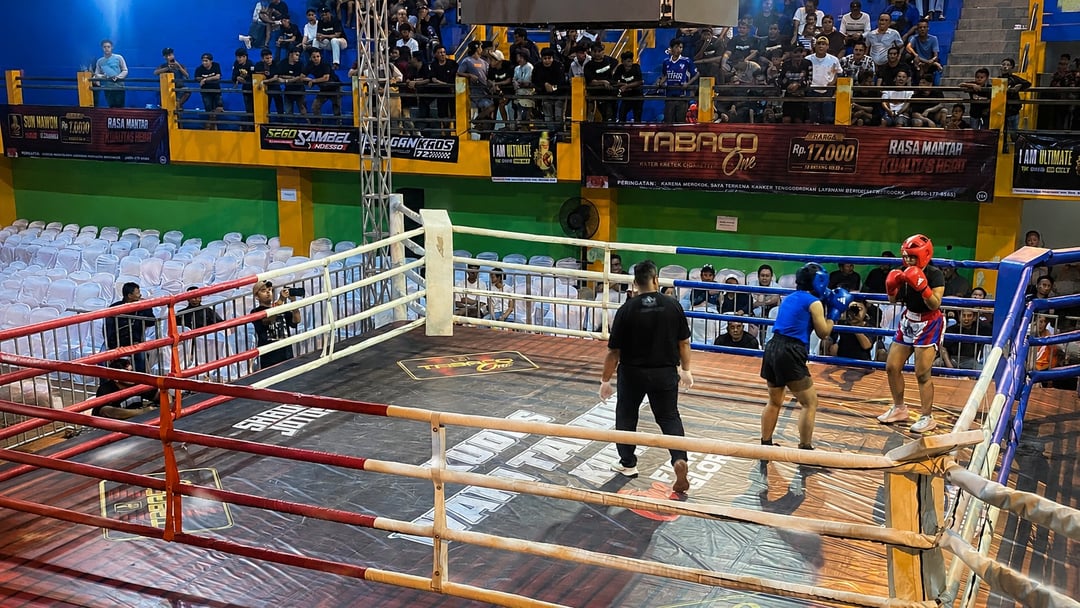
Stepping into the ring means being ready for two possibilities: victory or defeat. Rara has understood this from the beginning.
She admits to having experienced several losses in competition. For her, however, these results have never been a reason to stop training. Instead, every defeat serves as an evaluation to improve her technique and mental fortitude for future bouts.
This mindset keeps her undeterred when facing opponents from more experienced gyms. She chooses to view every match as a learning opportunity. The tougher the opponent, the more experience she gains.
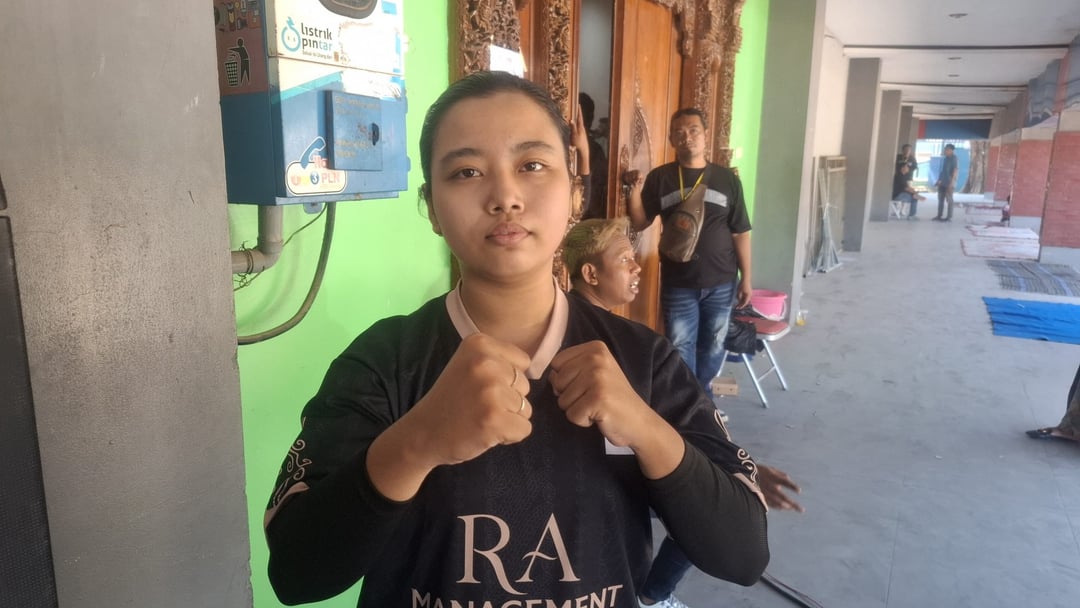
This principle has gradually bolstered her confidence. For Rara, courage does not mean the absence of fear, but rather the resolve to step forward despite the nervousness that always accompanies her before a match.
She hopes more women will dare to try combat sports. Beyond improving fitness, training also provides the necessary skills for self-defense in unexpected situations.
Rara's development is the result of a structured coaching process. Mas’ud, a coach from Akademi Silat Kudus (ASK), believes that the biggest challenge in training novice athletes is not teaching punches or kicks, but building courage.
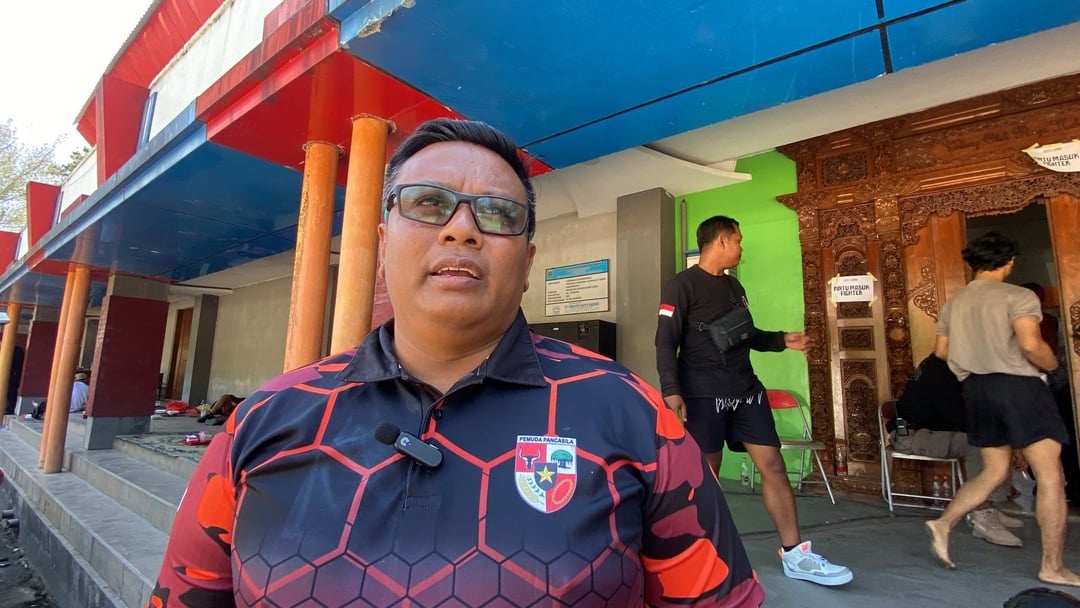
According to him, many newcomers arrive with a fear of getting hit or facing opponents in the ring. Until that mental barrier is overcome, even the best technique is difficult to develop.
Therefore, the training approach always begins with psychological strengthening. Athletes are encouraged to adapt through sparring sessions with more experienced fighters. The goal is not to produce a winner, but to acclimate them to the pressure of competition.
Once the fear begins to diminish, training moves on to mastering basic techniques. Punches, kicks, evasive maneuvers, and physical conditioning are introduced incrementally to ensure the athlete's skills grow alongside their experience.
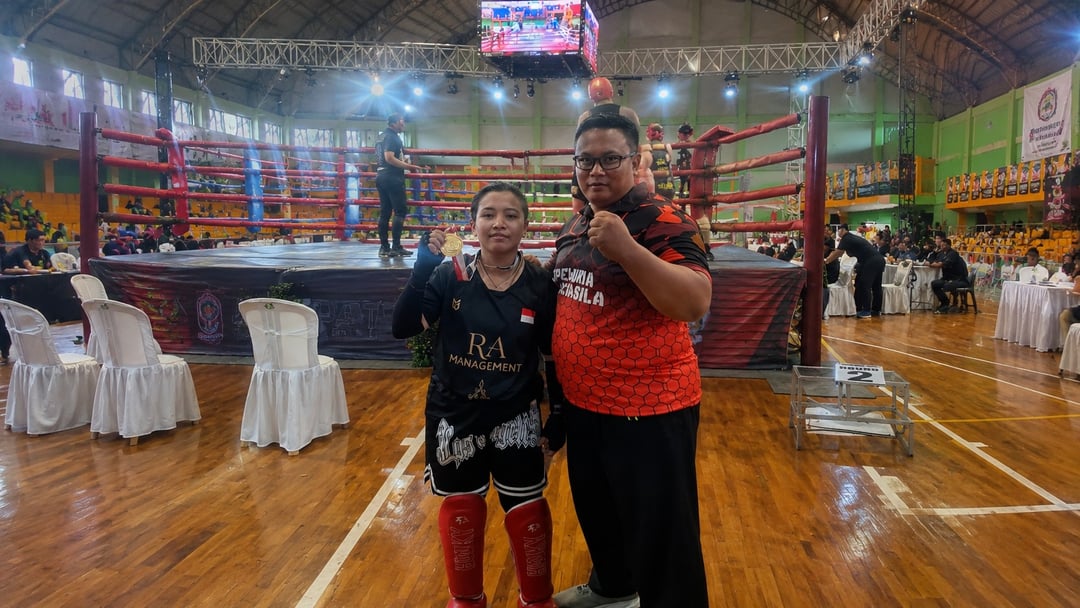
Mas’ud emphasized that events like Kudus Wani Tanding play a vital role in athlete development. Such competitions provide a platform to gauge training progress while offering essential ring experience for athletes beginning their careers. Through these bouts, coaches can assess technical growth, mental readiness, and an athlete’s potential for advancement.
While spectators focus on the two fighters, there are others outside the ring experiencing equal tension.
In the stands of the Bung Karno Gymnasium, Cempluk watched the match with clear anxiety, occasionally clenching her fists and taking deep breaths whenever her athlete absorbed a strike.
For Cempluk, watching women compete in combat sports is inherently worrying. Yet, that concern is outweighed by her belief that self-defense skills are a vital asset for women.
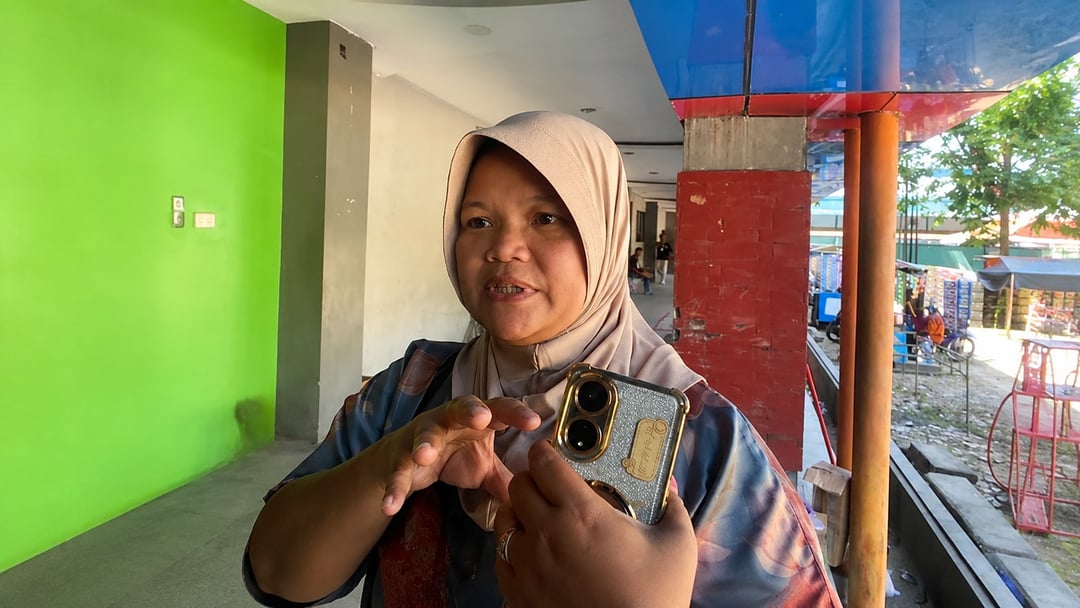
She noted that modern social conditions require women to be capable of self-protection against public threats. Consequently, she remains committed to supporting Rara while stressing the importance of safety gear and prioritizing well-being during matches.
This support extends well beyond the final bell. The encouragement, care, and confidence she provides are instrumental in helping athletes recover from losses and prepare for upcoming challenges.
For Cempluk, combat sports also offer broader future prospects. She hopes young athletes dedicated to the craft can pursue careers as professional fighters, coaches, or physical education teachers, or reach higher tiers of competition.
Kudus Wani Tanding serves a purpose beyond a single day of competition. Kudus Regency KBI Board Member Bowo Dwi Sulaksono, also known as Benjo, explained that the event is designed as an integral part of the development pipeline for athletes striving for higher-level competition.

The competition is open to various categories, ranging from beginners to amateur professionals. This format provides participants with a platform to experience a competitive atmosphere while benchmarking their skills before advancing to higher-level championships.
The enthusiasm of the participants was evident in the number of bouts held throughout the day. A total of 70 bouts featured 140 fighters from various gyms. Of that number, 17 were female competitors performing in the Influencer Class, Amateur Professional, and Women's Kickboxing categories.
For KBI Kudus, development does not end when the match concludes. Routine training continues as part of the athlete regeneration process. The goal is to prepare fighters capable of competing in events such as the Provincial Sports Week (Porprov), pre-National Sports Week (PON) qualifiers, and the National Sports Week (PON) itself.
Events like Kudus Wani Tanding also offer the public a broader perspective on martial arts. The ring serves as a venue to demonstrate that discipline, sportsmanship, and self-control—rather than just offensive capability—are the core values instilled through training.
Every fighter who steps off the ring carries a unique story. Some return home with medals, while others must accept defeat. Regardless, all leave the arena with experiences that cannot be gained through routine training sessions alone.
The journey of Rara Setyawati Rahayu exemplifies how courage is forged through a long process. As a factory worker who trains after shifts, she has learned that courage is not built overnight. It grows from consistent practice, the resilience to accept defeat, and the willingness to stand back up and face the next challenge.
Through coaching, family support, and the competitive environment provided by Kudus Wani Tanding, martial arts in Kudus is developing more than just ready-to-fight athletes. It is cultivating resilient, disciplined characters capable of overcoming adversity. While they compete against opponents in the ring, their greatest battle is ultimately against the fear within themselves. (JMY/mainkekudus)