
Kudus – Historically, the city of Kudus was known as Tajug, named after the many tajug structures found throughout the area. A tajug is a traditional pyramid-shaped roof. Following the arrival of Sunan Kudus, the name was changed to Al-Quds, which evolved into Kudus.
The name Kudus has long served as the identity of this regency in Central Java. The name is deeply linked to the journey of Sunan Kudus, or Ja’far Shoddiq, a pivotal figure in the spread of Islam in the region. The name is believed to be derived from Al-Quds, the Arabic name for Jerusalem in Palestine.
The story begins with Ja’far Shoddiq’s journey to Palestine. Before establishing the mosque and developing the region now known as Kudus, Sunan Kudus lived in Baitul Maqdis to study Islamic theology. During that time, the region was struck by a plague that resulted in significant loss of life.

Local historical accounts suggest that Ja’far Shoddiq played a role in managing the outbreak. In recognition of his efforts, the Emir of Palestine granted him an ijazah—a formal authority to govern a territory in Palestine.
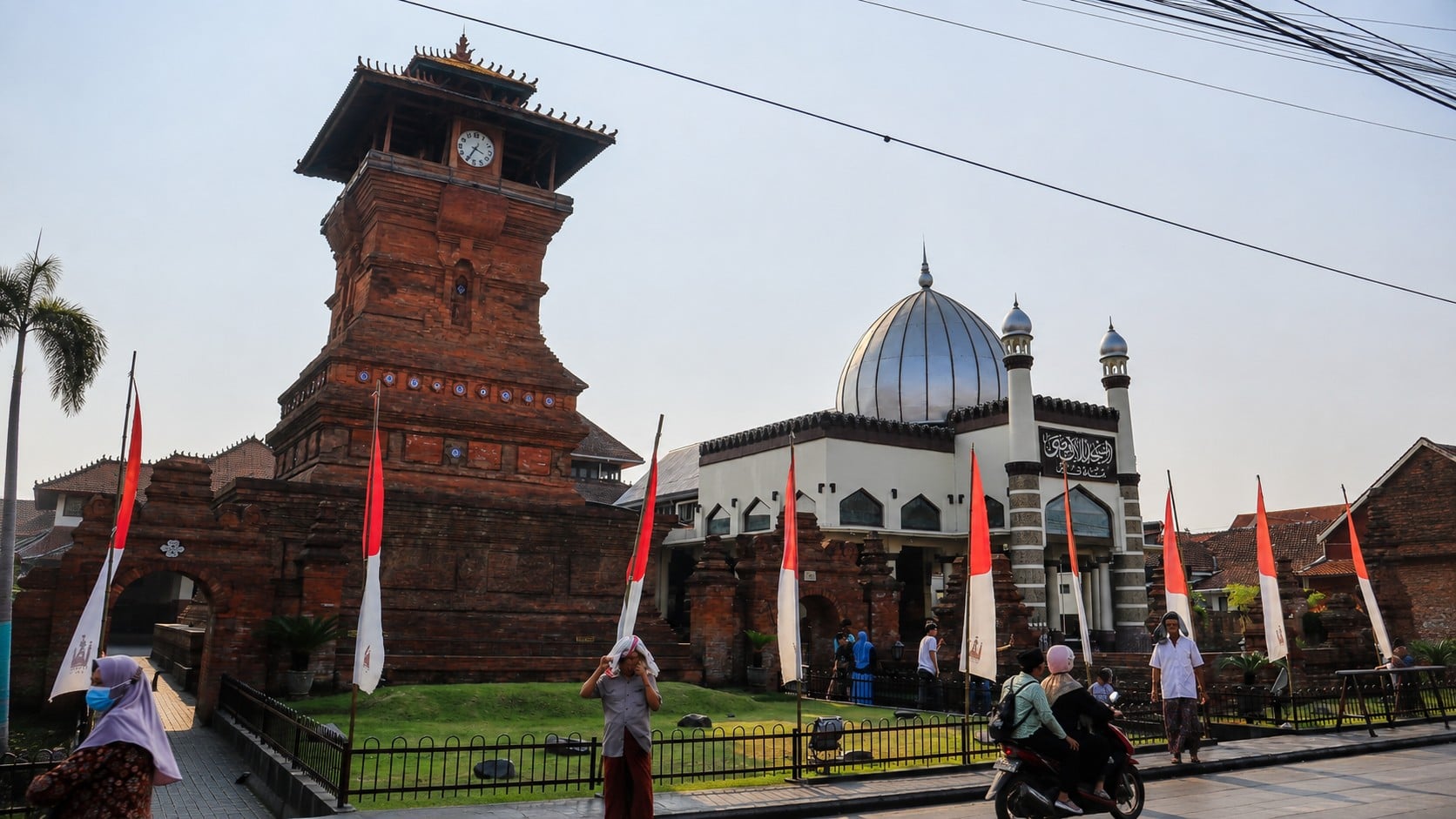
This authorization was reportedly inscribed on a stone tablet featuring ancient Arabic script, which remains placed above the mihrab of the Menara Kudus Mosque to this day. The stone serves as a tangible link to the founding history of Kudus.
Despite receiving this honor, Ja’far Shoddiq requested his teacher, the Emir of Palestine, to transfer that regional authority to the island of Java. The request was subsequently granted.
Following this approval, Ja’far Shoddiq returned to Java, marking the beginning of a religious center that would later become a cornerstone of the region's history.
In 1548 AD (1956 Hijriyah), Ja’far Shoddiq founded a mosque in the Kudus area. Initially named Al Manar, it was later renamed Al Aqsho.
The renaming reflected Sunan Kudus's connection to Palestine, as he chose to model the name after the Al-Aqsa Mosque in Jerusalem.
It was from this point that the influence of Al-Quds became woven into the history of Kudus. Jerusalem is also known as Baitul Maqdis or Al-Quds, which served as the inspiration for the name Kudus used today.
This narrative is a vital component of local history. The name Kudus is not merely an administrative designation but a reflection of the historical and spiritual bonds established through the life of Sunan Kudus.
The mosque founded by Ja’far Shoddiq evolved into one of the most recognizable landmarks in Kudus. Known today as the Great Mosque of Kudus, it stands in the city square and remains a historic marker of the development of Islam in the area.
Over time, the area surrounding the mosque grew into a vibrant center for the community. Kudus is now recognized as a key region for understanding the history of Islam's propagation across Java.
Kudus Regency is historically noted as a center for Islamic development, evidenced by the presence of tombs of prominent saints, including that of Sunan Kudus.
The historical legacy of Sunan Kudus transcends physical structures to include a lasting regional identity. The name Kudus stands as a testament to the journey of a scholar who studied in Palestine before returning to leave an indelible mark on Java.
Amidst shifting times, these narratives remain an enduring part of the history of Kudus Regency. The city's name, the presence of its historic mosque, and the various legacies associated with Sunan Kudus continue to serve as markers of the region's long journey.
Today, Kudus Regency is a district in Central Java Province. The administrative center is located in the city of Kudus, which serves as the region's primary economic and government hub.
The regency is known as a center of Islamic learning, maintaining deep historical ties to the development of Islam. The tomb of Sunan Kudus remains a testament to this legacy, complemented by numerous other religious sites throughout the regency.
Administratively, Kudus Regency comprises nine sub-districts, nine urban villages, and 123 rural villages. The seat of government is situated in the Kota Kudus sub-district.
As it developed, Kudus cultivated a unique identity. Yet, behind this modern progression, the story behind the origin of its name remains an inseparable part of the region's history.
The journey of Ja'far Shoddiq from Palestine to Java, the account of being granted territorial authority, the founding of the mosque in 1548 AD, and the use of the name Al-Quds as the inspiration for naming Kudus form a narrative passed down through generations.
The name Kudus, now widely recognized, is rooted in this history. Derived from the name of the city of Jerusalem, Al-Quds evolved into Kudus, a name now synonymous with the region in Central Java and integral to its historical identity today.
source : https://daerah.sindonews.com/newsread/1121565/29/kisah-sunan-kudus-mendirikan-kota-kudus-setelah-terinspirasi-al-quds-di-palestina-1686258378, https://id.wikipedia.org/wiki/Kabupaten_Kudus