KUDUS — A hexagonal stone relief on the steps leading to the Langgar Dalem Mosque veranda offers a window into the building's history. The carving, which depicts two dragons entwined around a trident, is known as the Sengkalan Memet Trisula Pinulet Naga.
Cultural observer and Langgar Dalem researcher Sumarno believes the symbol serves as a key indicator for dating the structure, which is believed to have originated during the early activities of Sunan Kudus in the region.
However, the precise dating of the Langgar Dalem Mosque remains subject to debate. Conflicting references have emerged, indicating that the history of its establishment requires further academic study.
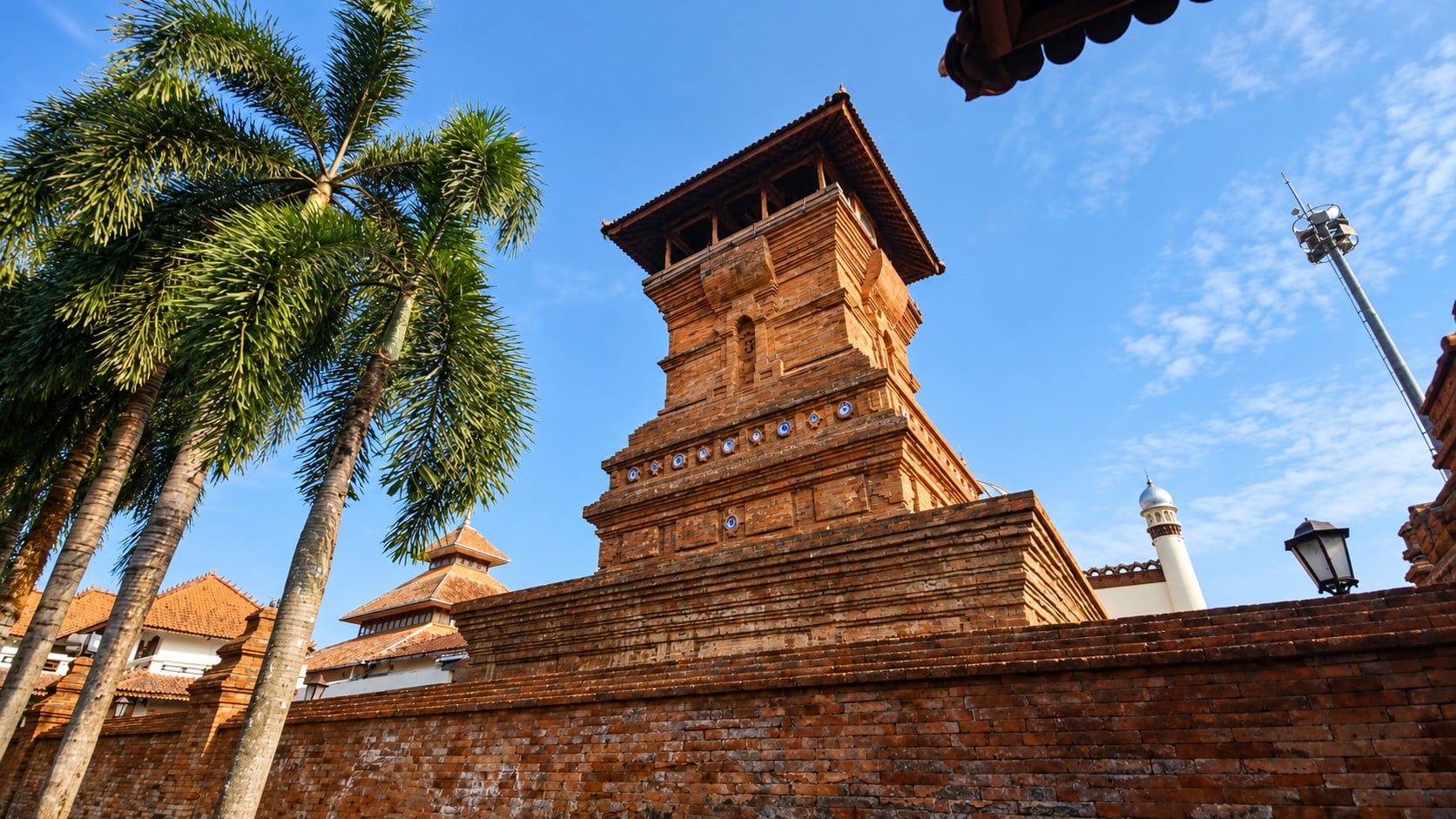
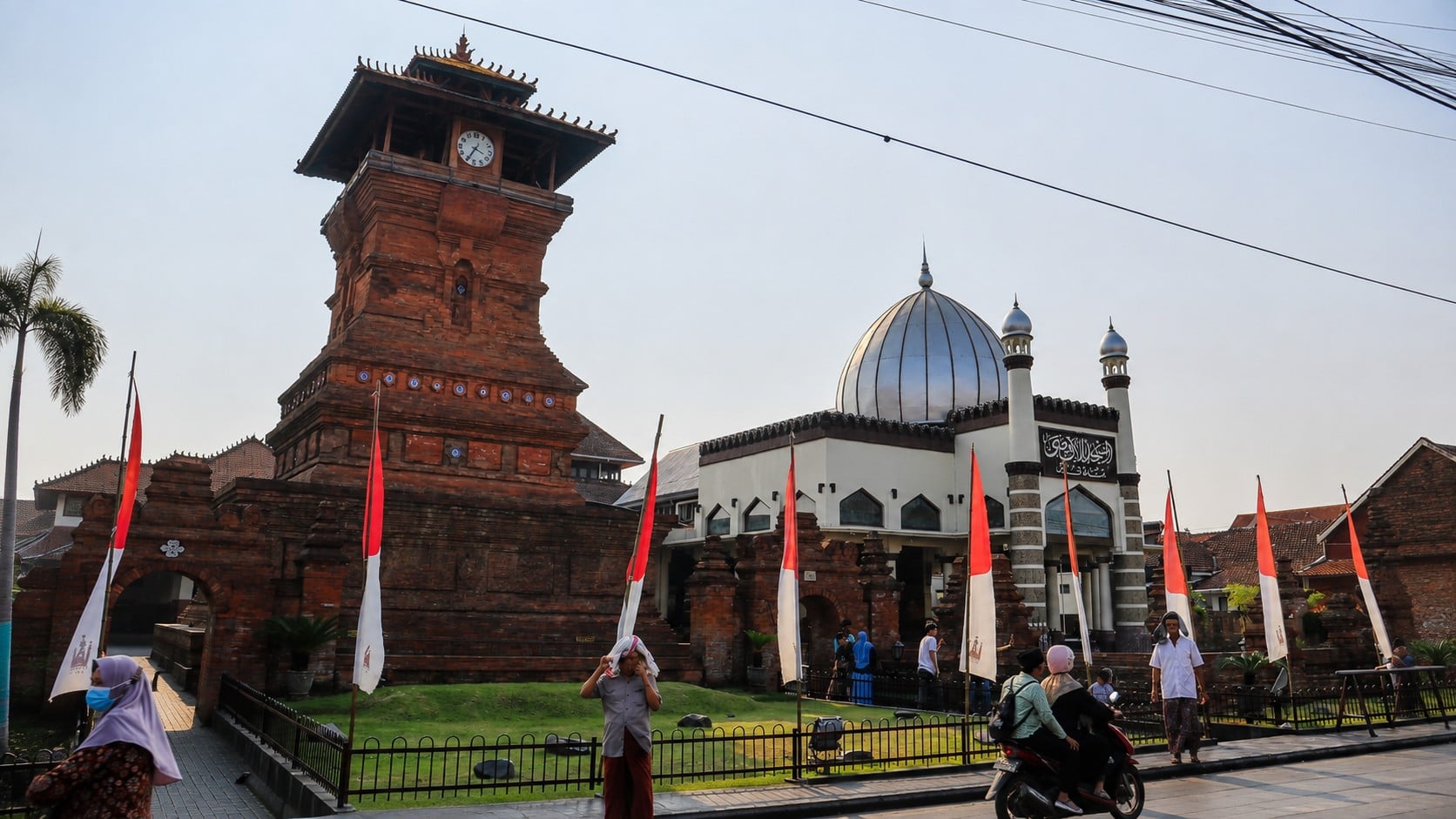
Located roughly 100–200 meters east of the Menara Kudus Mosque, the site preserves traces of religious development that are not always visible through the more prominent monuments in the city center.
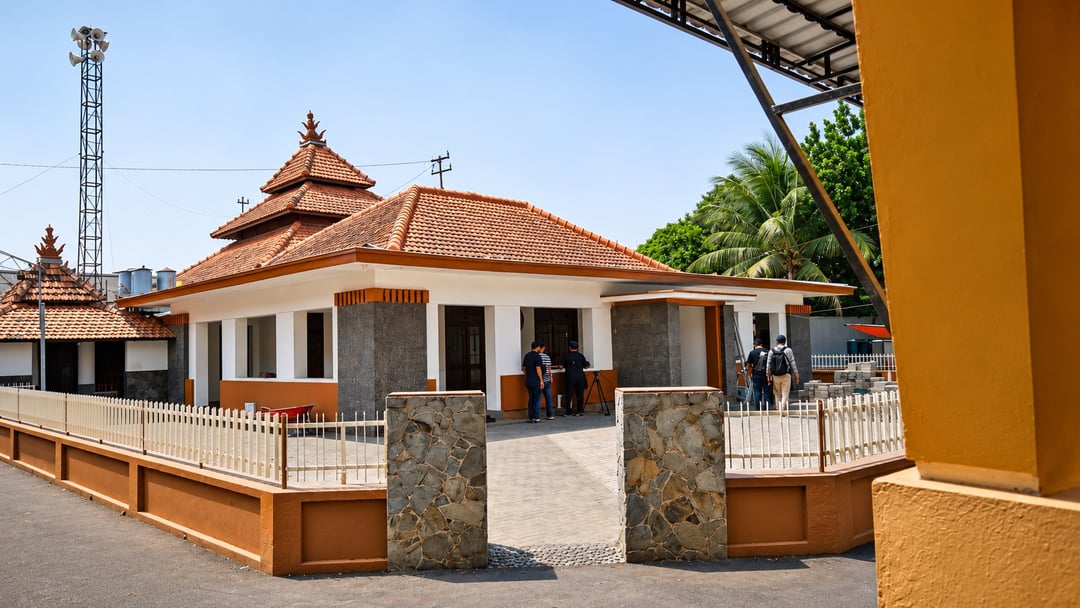
Natal Izza Jumpel, an administrator at Langgar Dalem Mosque, explained that the structure likely began as a small prayer house and center for religious study.
As the local population and the number of worshipers increased, the site evolved from a small prayer house, or langgar, into a full-scale mosque.
Sumarno suggests that Langgar Dalem predates the Menara Kudus Mosque, noting that historical research links the building to the residence of Sunan Kudus and his religious teaching activities.

Meanwhile, the Menara Kudus Mosque eventually expanded into a larger center for worship and the dissemination of religious knowledge.
The connection between Langgar Dalem and the Sunan Kudus precinct grants the site a unique place in the history of Islamic development in Kudus.
Nonetheless, the exact founding date of the mosque remains a mystery, with the ancient relief on the stairs to the front veranda serving as a primary point of investigation.
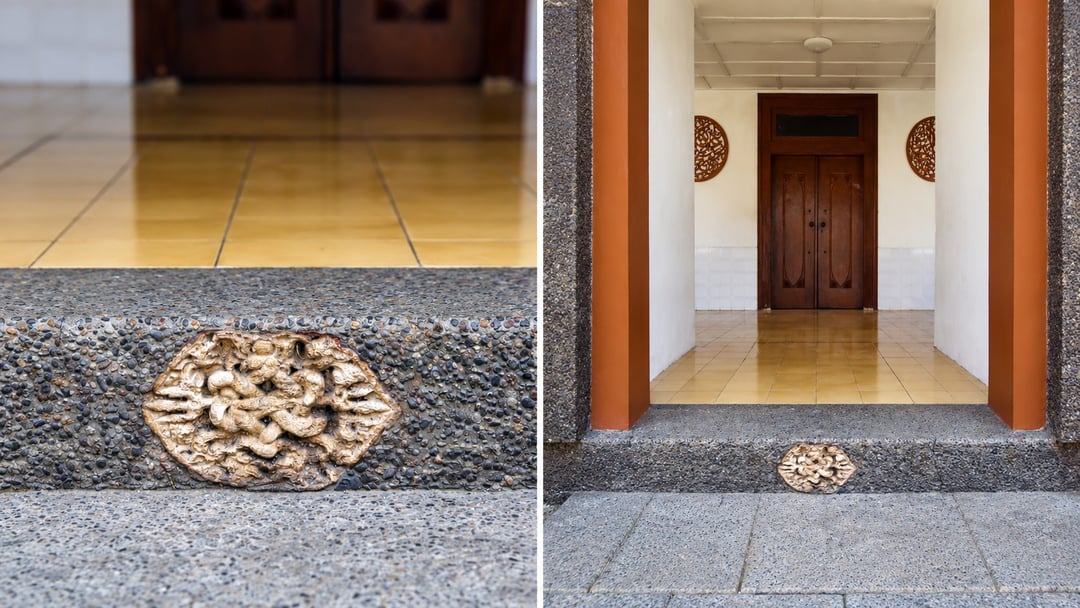
The hexagonal relief is crafted from yellow stone and depicts two dragons intertwined around a trident, a three-pronged spear.
This ornament is known as the Sengkalan Memet Trisula Pinulet Naga. In Javanese tradition, a sengkalan memet denotes a year through symbols rather than written digits.
Sumarno explained that interpreting the sengkalan requires mapping each symbol to its corresponding numerical value in Javanese tradition.
In the Trisula Pinulet Naga, the trident (trisula) represents the number 3, the act of being wrapped (pinulet) represents 6, and the dragon (naga) symbolizes 8.
Read in reverse, these digits form 863, which is associated with the year 863 Hijri or approximately 1458 AD.
However, some references cite the year 885 Hijri, or 1480 AD, as the founding year of Langgar Dalem.
These conflicting accounts mean the building’s exact date of origin cannot be confirmed by a single source.
Sumarno also noted that the trident symbol is linked to Hindu-Javanese traditions. Consequently, the relief alone cannot definitively date the mosque without considering cultural context, architectural evolution, and other historical evidence.
Regardless of these varying interpretations, the Trisula Pinulet Naga relief demonstrates how traditional artistic symbols and elements persisted within a society undergoing the transition to Islam.
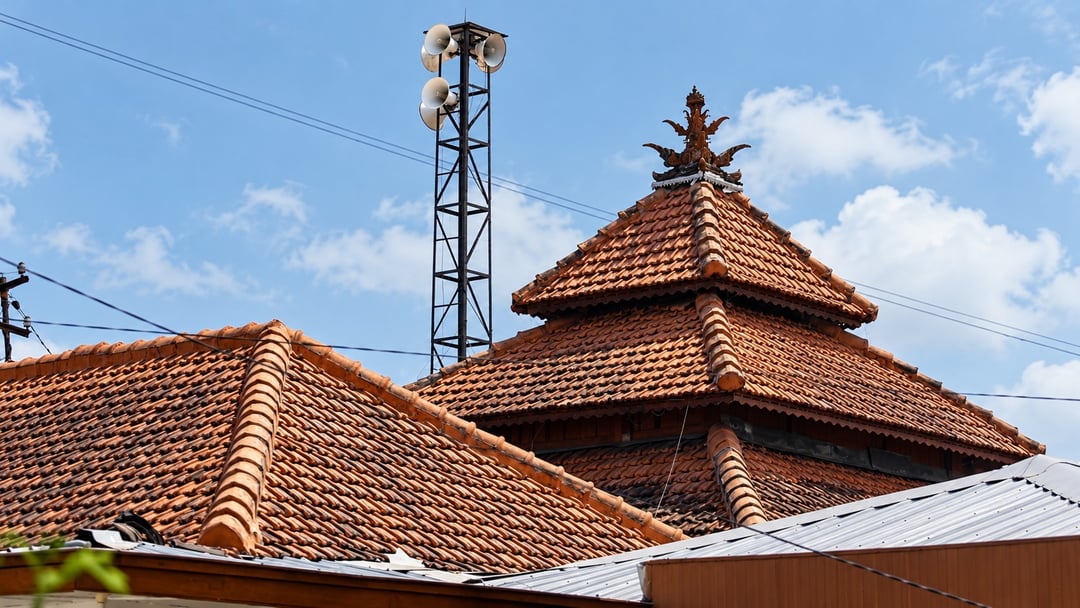
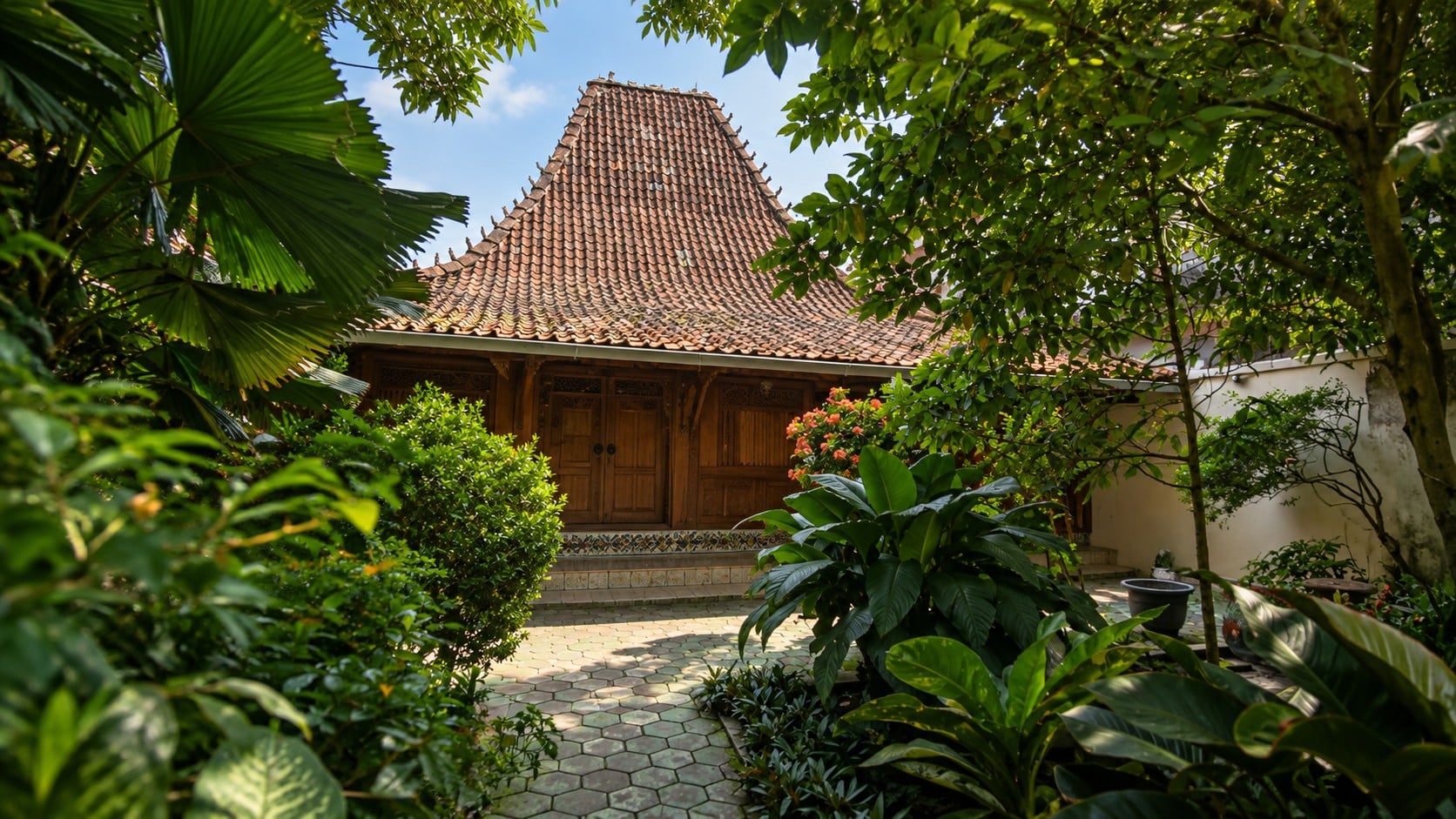
The Langgar Dalem Mosque features distinct traditional Javanese architectural traits. Its three-tiered roof, topped with a mustaka finial, covers the main hall supported by four wooden pillars, known as saka guru.
Several original architectural elements remain identifiable, from the doors and walls to the stone plinths supporting the pillars.
However, the current structure does not entirely reflect the building's original state.
According to Sumarno, the Langgar Dalem Mosque has undergone more than five renovations, with structural changes recorded up to 1958 reflecting the long history of the mosque's maintenance.
During various restoration efforts, administrators have uncovered original building components that were previously concealed by modern materials.
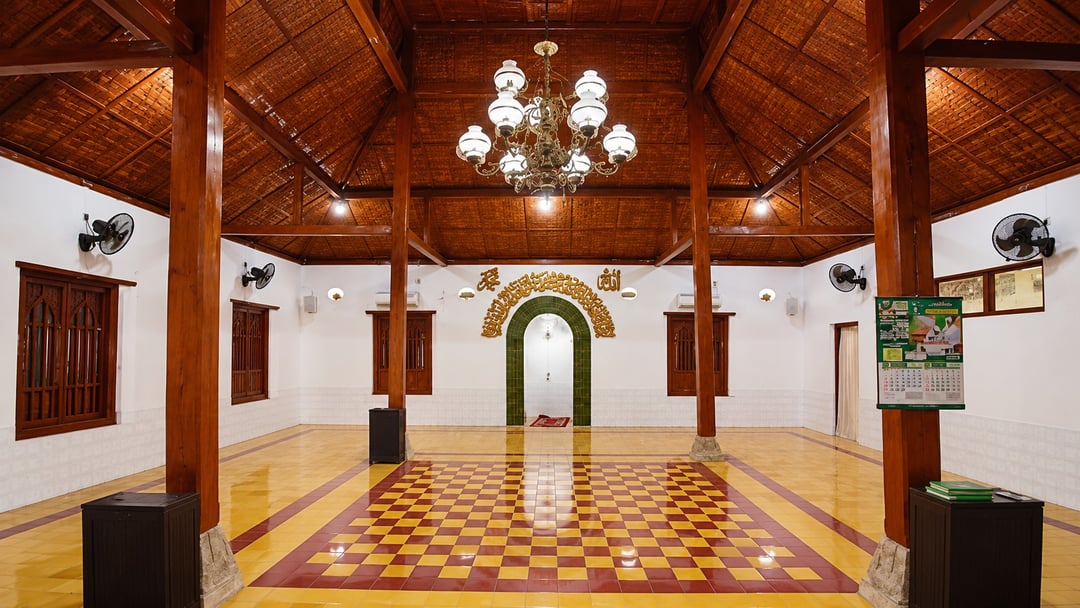
Natal explained that parts of the pillar bases were previously covered by wooden casing, while other sections of the structure were concealed by ceramic tiles. Once these layers were removed, the original, previously unseen elements were exposed.
Maintenance conducted following the Covid-19 pandemic also revealed bamboo weaving on the ceiling that had been hidden by a suspended ceiling.
These findings demonstrate that structural modifications do not necessarily obliterate all original features, as some remain preserved and can be uncovered during maintenance.
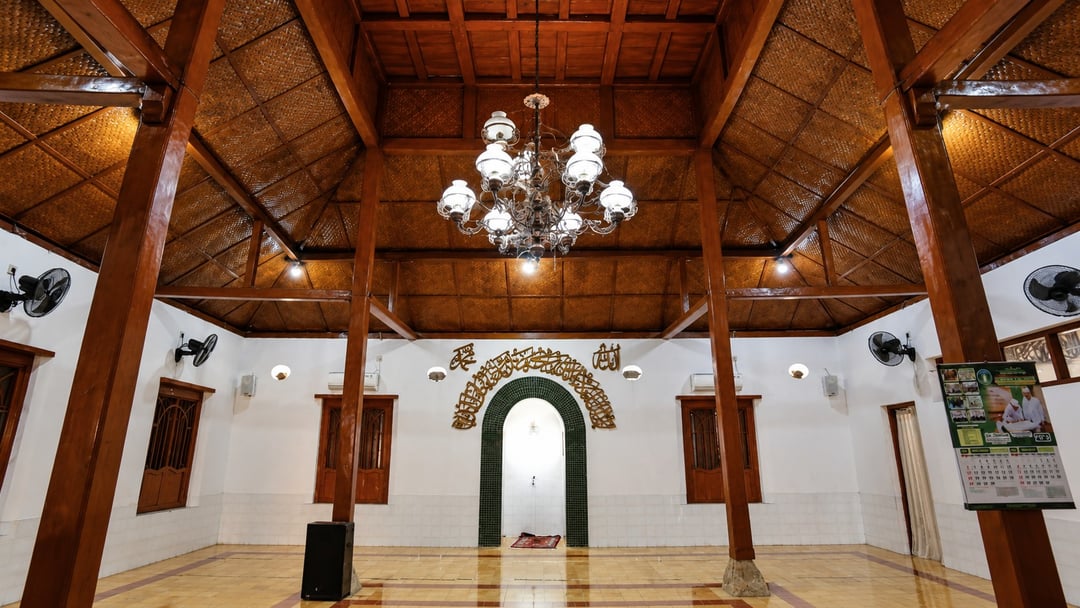
However, the physical condition of the materials cannot be used as the sole basis for determining the building's overall age. Further research is necessary to distinguish between original components and later repairs.
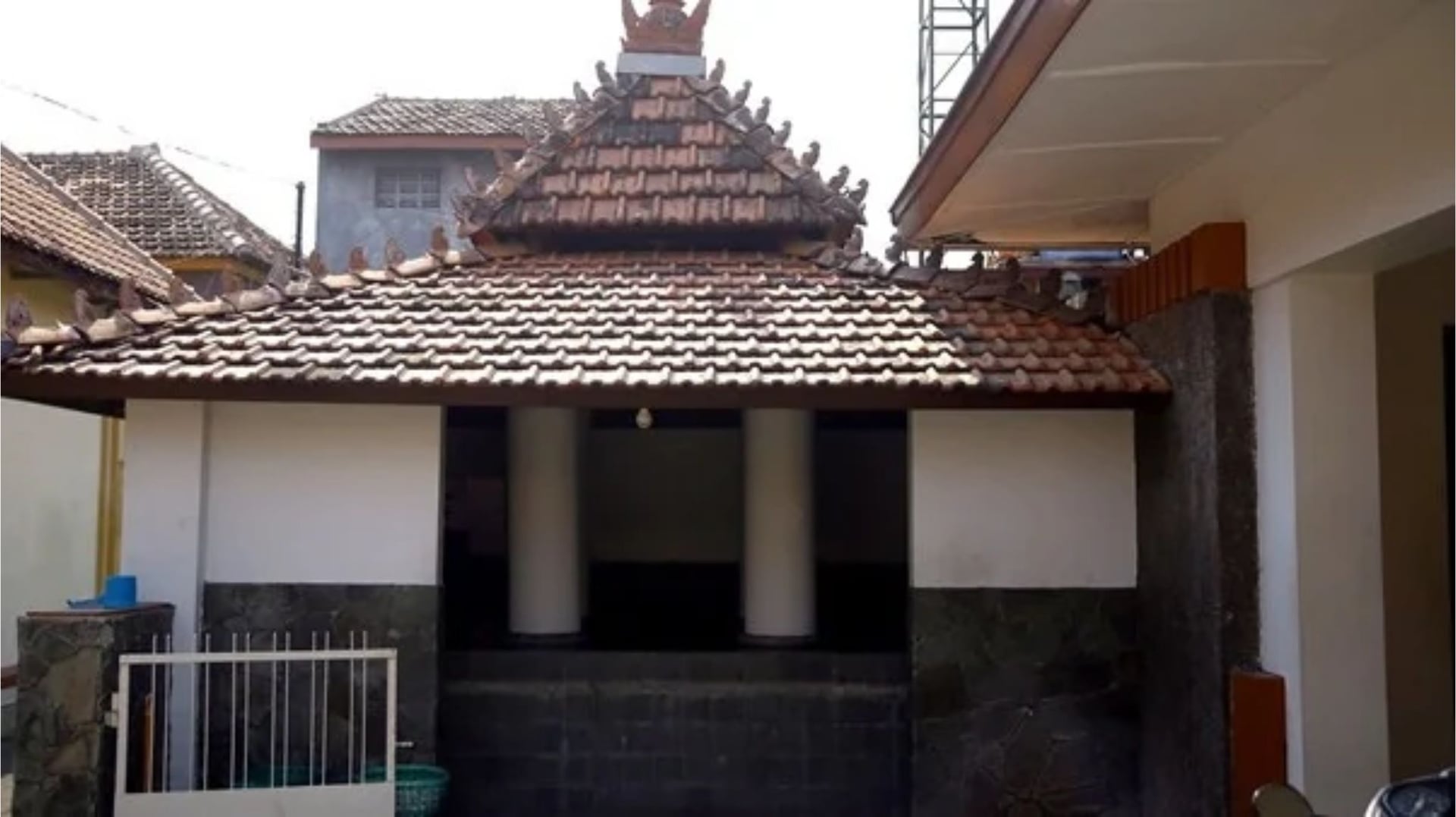
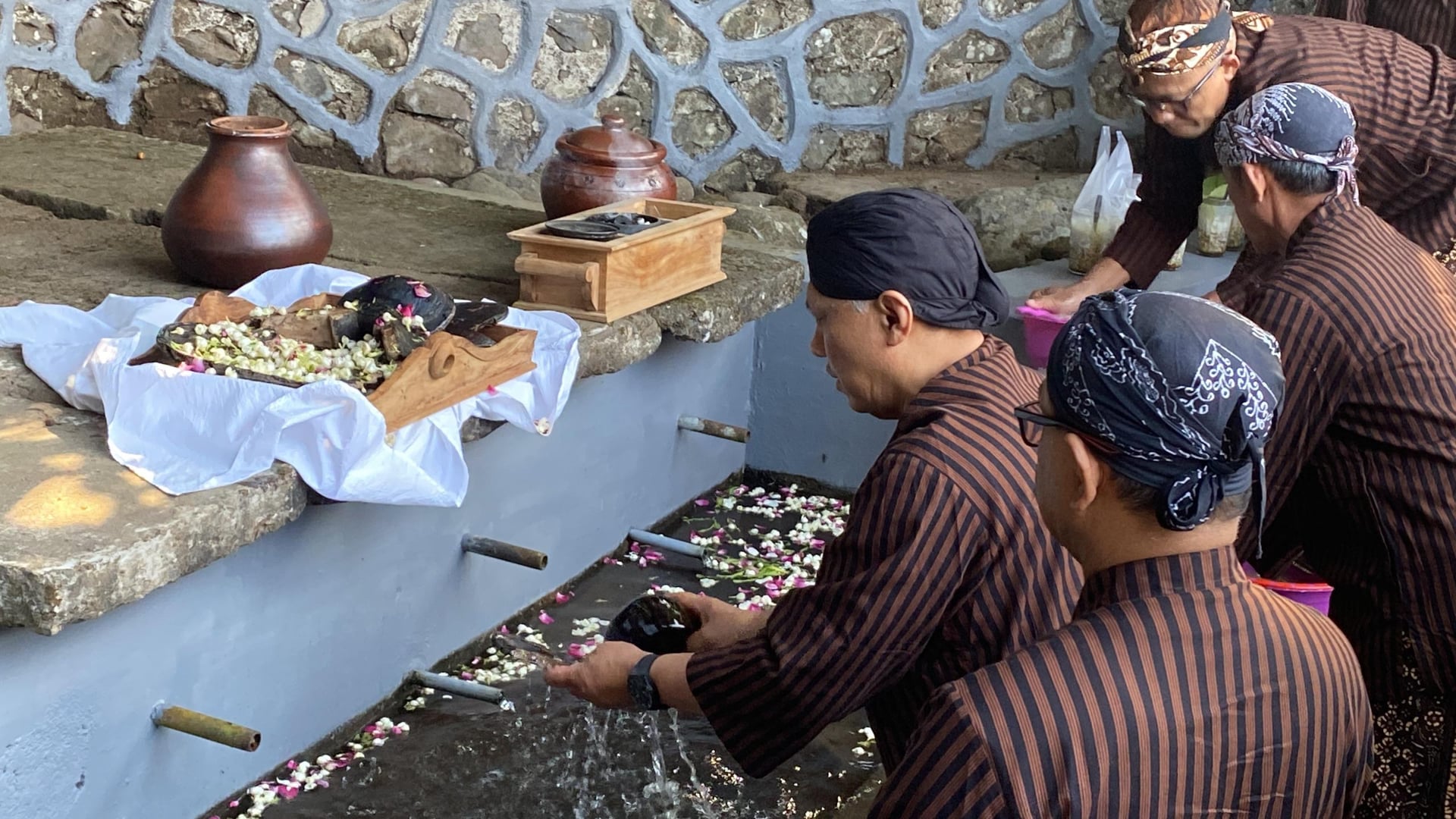
Beyond the main hall and ancient reliefs, the Langgar Dalem Mosque features an ablution area that differs significantly from modern facilities.
The area retains the use of a traditional water basin, or kulah. Four wooden pillars are integrated into the construction, with their bases submerged within the water basin.
Unlike contemporary ablution areas equipped with rows of faucets, this traditional design showcases a construction method that blends wooden elements with the water basin into a single structure.
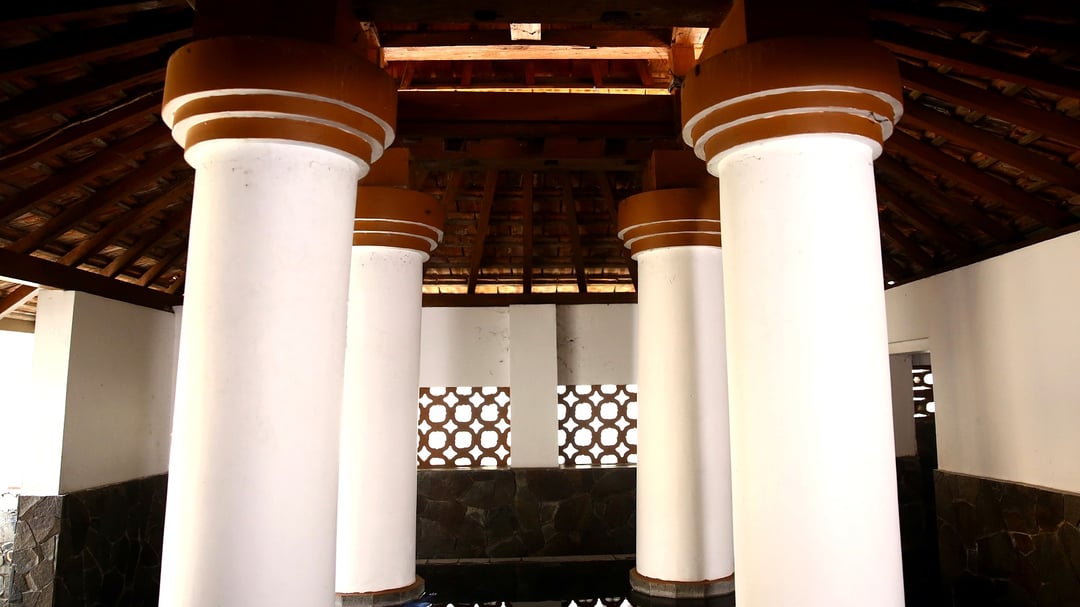
Natal identified the area as a preserved feature of the mosque's maintenance efforts.
The four pillars illustrate the historical use of timber in traditional religious architecture.
Alongside the central pillars in the main prayer hall, these wooden elements remain a defining characteristic of the mosque's environment.
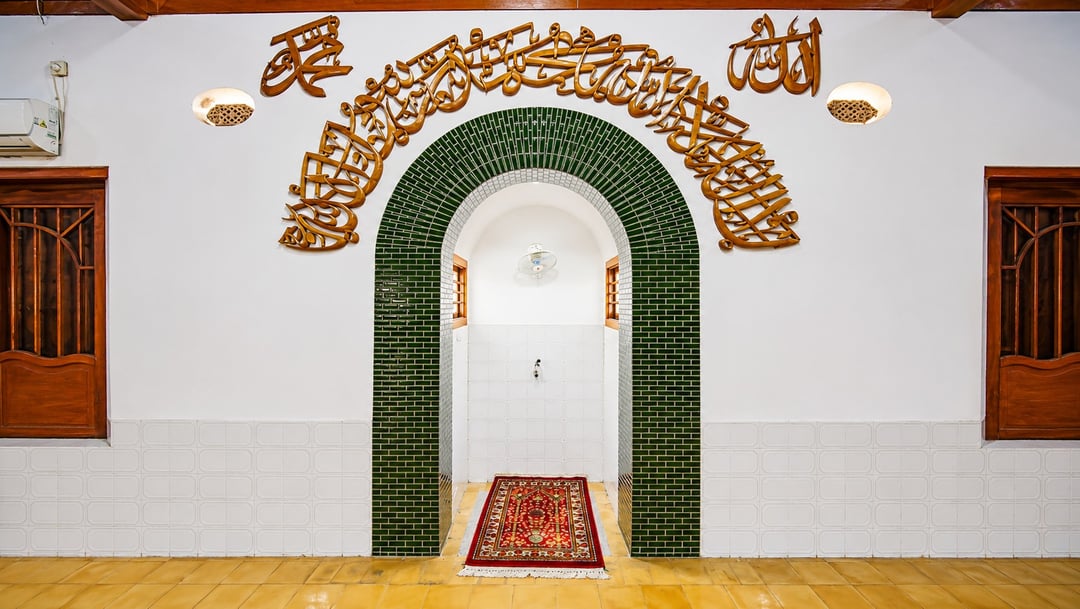
Amidst ongoing restoration and historical research, the Langgar Dalem Mosque continues to serve as an active place of worship.
To this day, the mosque remains a venue for communal prayers and religious study sessions.
Friday prayers are centralized at the Menara Kudus Mosque. According to Sumarno, this arrangement is intended to consolidate the congregation.
The Langgar Dalem provides a unique perspective on the evolution of Islam in Kudus. Its history is documented through reliefs, architectural design, building materials, and enduring religious activities.
Among these features, the Trisula Pinulet Naga relief remains a key focal point for further research. The variations in dating suggest that a building's history cannot always be interpreted through a single symbol or source.
Situated within a residential area, the mosque preserves a chapter of the long history of Kudus. Preservation efforts offer an ongoing opportunity to uncover the remaining historical traces embedded within its structure. (MKK EDITORIAL)