

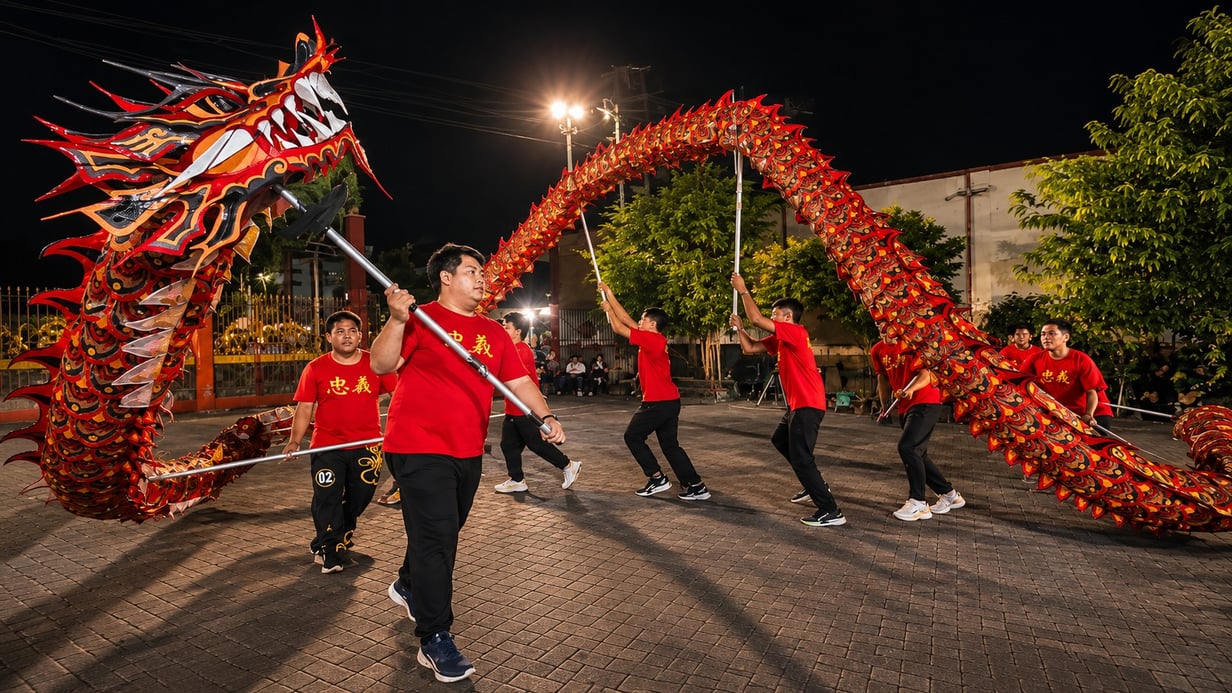
KUDUS – Lion dance and dragon dance practice in Kudus does not always occur in the afternoon. When members have work or school commitments, sessions often begin late into the night.
At the Bangau Putih Wushu Studio, located at the Hok Hien Bio Temple on Jalan Jenderal Ahmad Yani, Getas Pejaten, Jati, Kudus, members are dedicated to maintaining consistent training. They set aside time to refine their techniques and build team cohesion.
These efforts are part of the Kudus branch of the Indonesian Lion Dance Sports Federation's (FOBI) commitment to fostering talent and ensuring generational renewal. The sustainability of the lion and dragon dance traditions depends not only on individual skill but on the ability of members to work as a unified team.
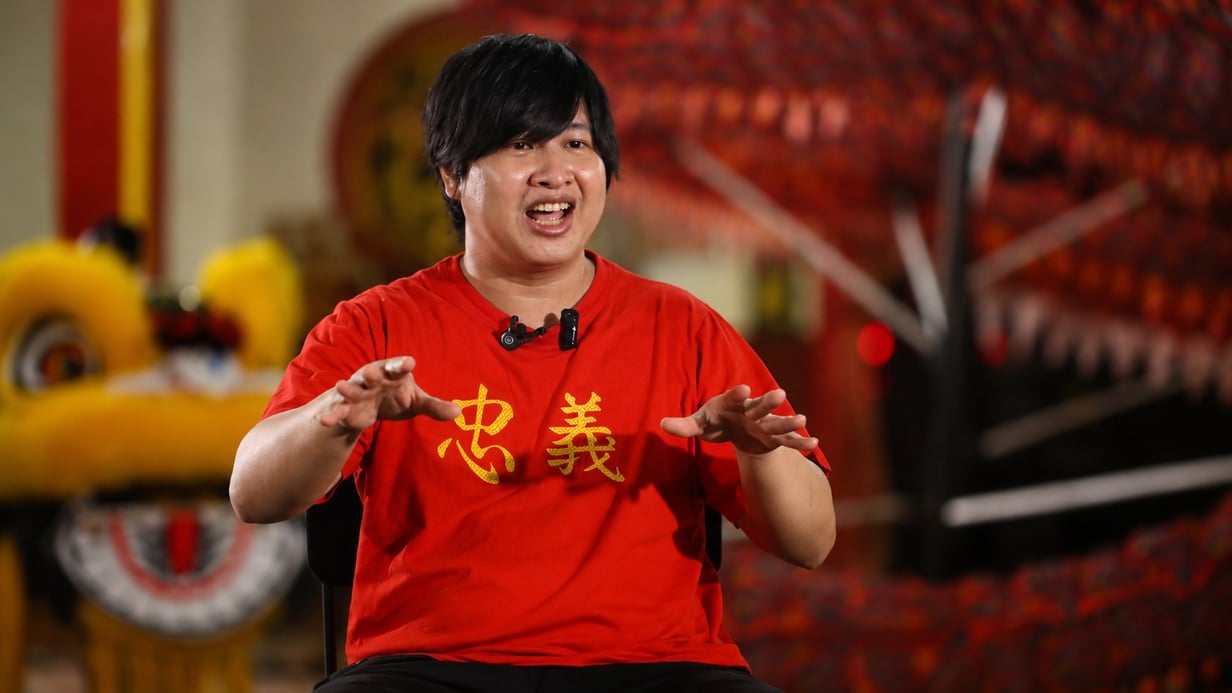
Reza Adriano, head of the FOBI Kudus chapter, acknowledges that talent succession is a major challenge. Many members eventually leave Kudus to pursue education in Semarang or other cities.
This turnover affects the number of active performers. A lion dance requires two individuals moving in sync within a single costume, while a dragon dance involves a larger group that must maintain precise coordination.
Reza has been involved in the lion dance community since 1999, having trained under Shifu Tjia Eng Bie. After a hiatus to complete his university studies, he resumed training in 2011 and began conducting outreach programs in local schools.
Introducing the tradition directly to students serves as a vital method for recruiting new members and giving the younger generation the opportunity to learn about lion and dragon dances.

Mastering these disciplines cannot be done instantly. Every performer must first grasp the foundational techniques before moving on to complex sequences.
Reza explains that training begins with developing proper stances, understanding musical rhythms, and learning head movements, with each element playing a critical role in achieving a harmonious performance.
"We certainly need time when first learning; it begins with the stances, followed by the music, and then the head movements," explained Reza.
Beyond physical stamina, performers must master the rhythm and movements of their teammates. In both Barongsai and Liong performances, a lack of synchronized tempo can compromise the entire show.
Consequently, rehearsals are repeated extensively to ensure each member understands their individual role. Cohesion is a skill that is continuously cultivated through increasing practice and competition experience.
The challenge of maintaining consistent practice is also felt by members who are employed, as they must reconcile rehearsal schedules with their professional commitments, including rotating shift work.
Rangga Dicky Ryanto and Muhammad Rifki Ardiyanto are two Liong group members who navigate this routine. Rangga works as a machine operator at PT Bakti Usaha Nusantara, while Rifki, also known as Dianto, works as a supply staff member at PT Djarum.

Rangga has been involved in Liong for six years, starting in vocational high school, while Dianto joined approximately two years ago.
Due to work demands, they typically schedule rehearsals for weekends, such as Friday, Saturday, or Sunday. It is not uncommon for practice sessions to begin as late as 10:00 p.m. or 11:00 p.m.
During preparations for the provincial sports games (Porprov) qualifiers, training has even extended until 1:30 a.m. The resulting reduction in rest time presents a significant challenge after a full day of work.
Nevertheless, both remain dedicated to their attendance and training alongside other members. For them, the training center is more than just a place to practice; it is a space for building camaraderie and lasting friendships.

Consistent training proved vital for the Kudus lion and dragon dance team during the 17th Central Java Provincial Sports Week (Porprov) 2026 held in Greater Semarang.
The Kudus team secured three bronze medals during the competition.
Two medals were earned in the lion dance categories. The first was claimed by Julio Winata and Steven Kantari in the Lion Dance Obstacle Course, while the second was won in the Traditional Lion Dance event by a squad featuring Agus Prabowo, Alvis Rezando, Gilang Ramadhan, Julio Winata, Adrian Avita K, Rizki Fajar R, and Vicki Zulianto.
The third bronze medal was awarded for their performance in the Open Free Taolu Dragon Dance category.
These results highlight the success of lion and dragon dance development in Kudus. Behind every competitive performance lies a rigorous training process demanding discipline, coordination, and a significant time commitment from every team member.
For FOBI Kudus, ongoing development remains a top priority. Efforts to recruit new members, introduce the sport to schools, and maintain consistent training are essential to ensuring that lion and dragon dance continue to thrive while fostering future athletic success. (REDAKSIMKK)