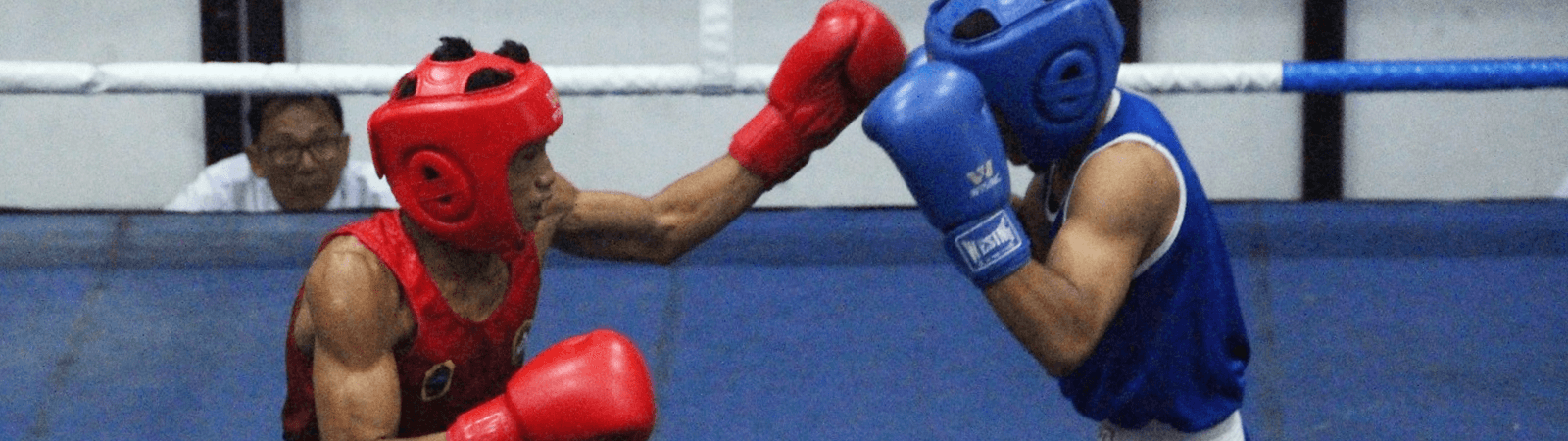
KUDUS — The rhythmic sound of punches hitting punching pads echoed through a boxing gym in Kudus. Athletes took turns during training sessions as coaches monitored their movements, offering technical corrections. Nearby, newcomers focused on mastering fundamental skills before transitioning to higher-intensity drills.
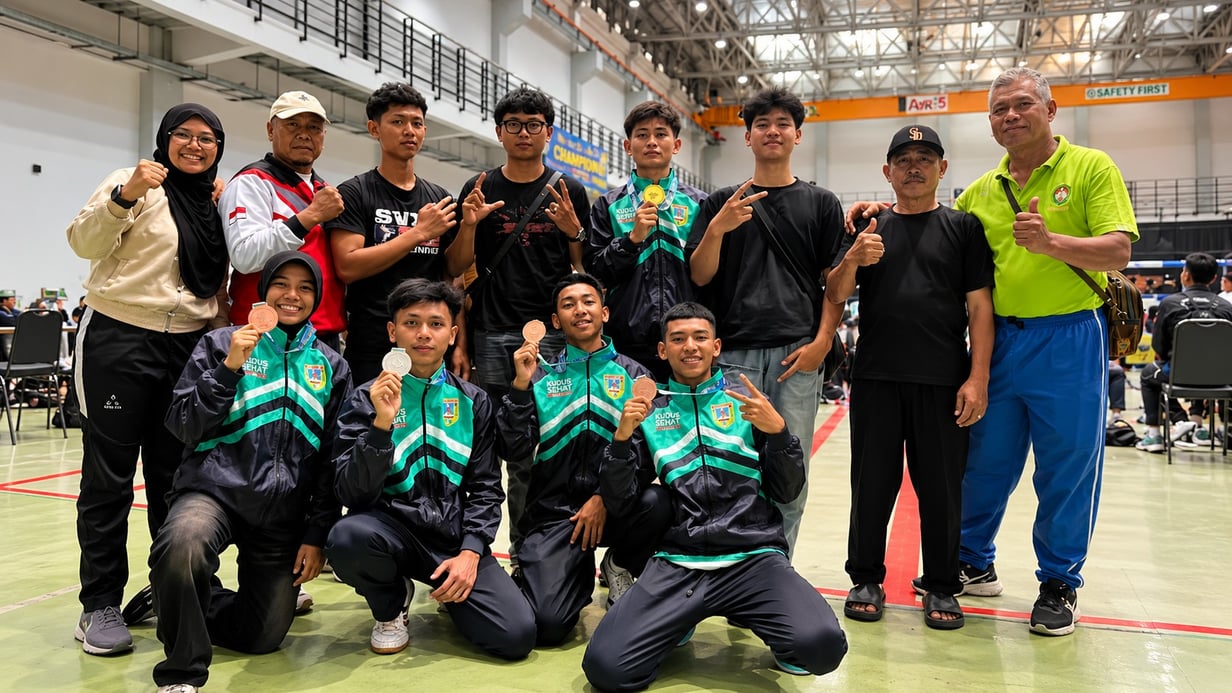
This routine is a hallmark of the year-round development program at Pertina Kudus. The results were evident at various championships, including the 2026 Central Java POPDA held in Semarang from September 1–6, 2026. The Kudus boxing contingent secured six medals across junior high and high school/vocational school divisions, highlighted by Faisal Rizki’s gold medal in the men’s 54-kilogram bantamweight high school/vocational category.
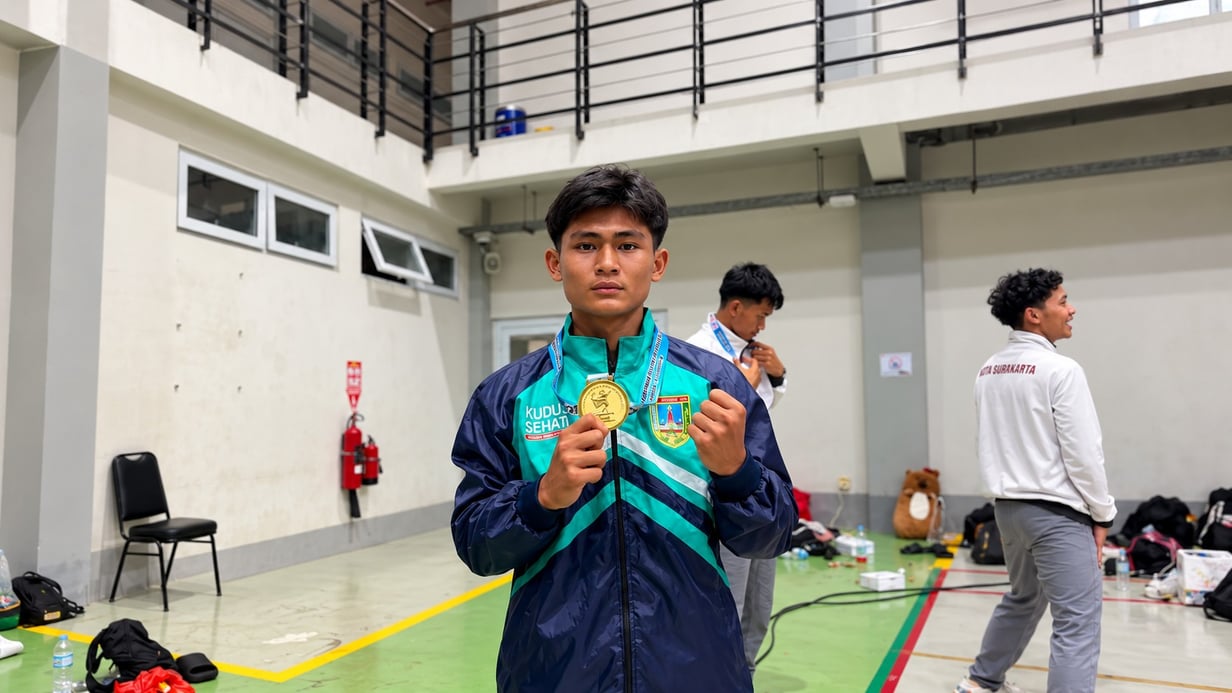
These achievements are the product of disciplined, consistent training. Student-athletes continue to hone their technique and physical condition for various competitions, while new members are provided with a foundation in boxing fundamentals.
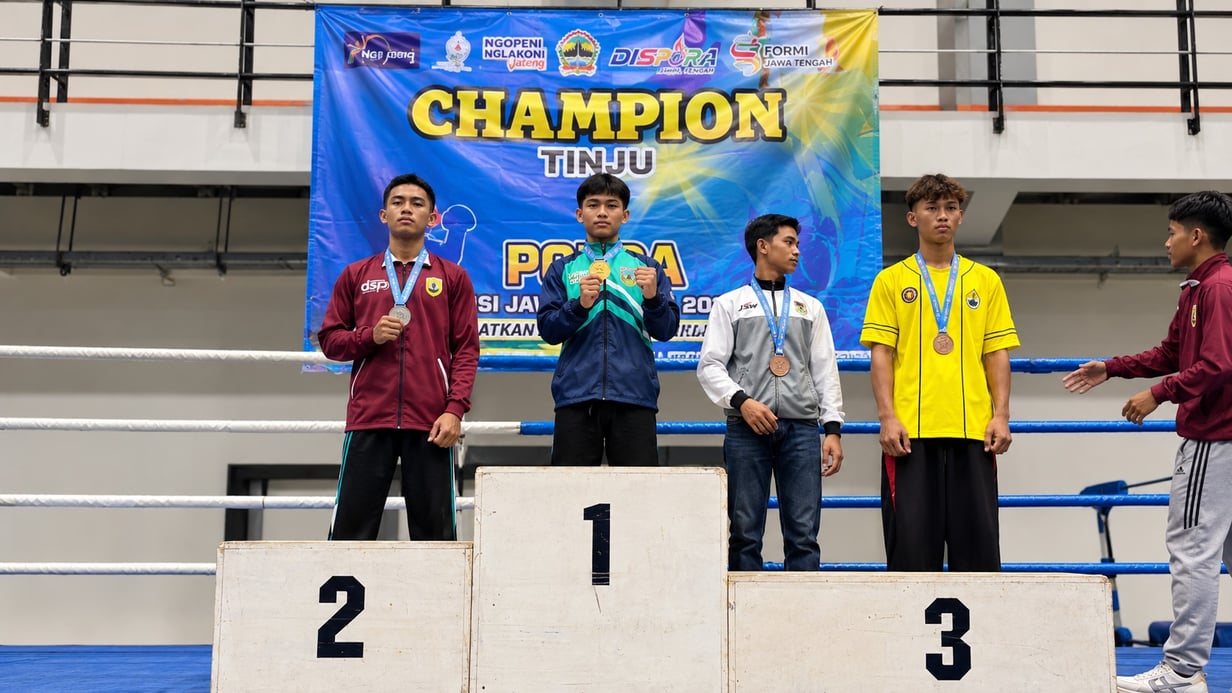
Faisal Rizki was the sole gold medalist for the Kudus boxing team at the 2026 Central Java POPDA, clinching the title in the high school/vocational men’s 54-kilogram bantamweight division. This medal was among the six total podium finishes earned by Kudus student boxers.
Two silver medals were awarded to Wisnu Hamzah Izzulhaq in the junior high men’s -55 kilogram class and Reza Afrizal Malna in the high school/vocational men's 63-kilogram class.
Meanwhile, three bronze medals were claimed by Muhammad Arya Latif in the junior high men’s -48 kilogram class, Khoirunnisa Tyas in the high school/vocational women's 63-kilogram class, and Dyah Sri Mulyani in the high school/vocational women's 48-kilogram class.
These six medals reflect the ongoing development program for student athletes at Pertina Kudus. Training is not confined to pre-competition phases; consistent practice remains the foundation for building the technique, fitness, and readiness required to compete in the ring.
Following the POPDA event, focus has shifted to the next agenda, including the XVII Porprov Central Java 2026, scheduled for October 25–31, 2026.
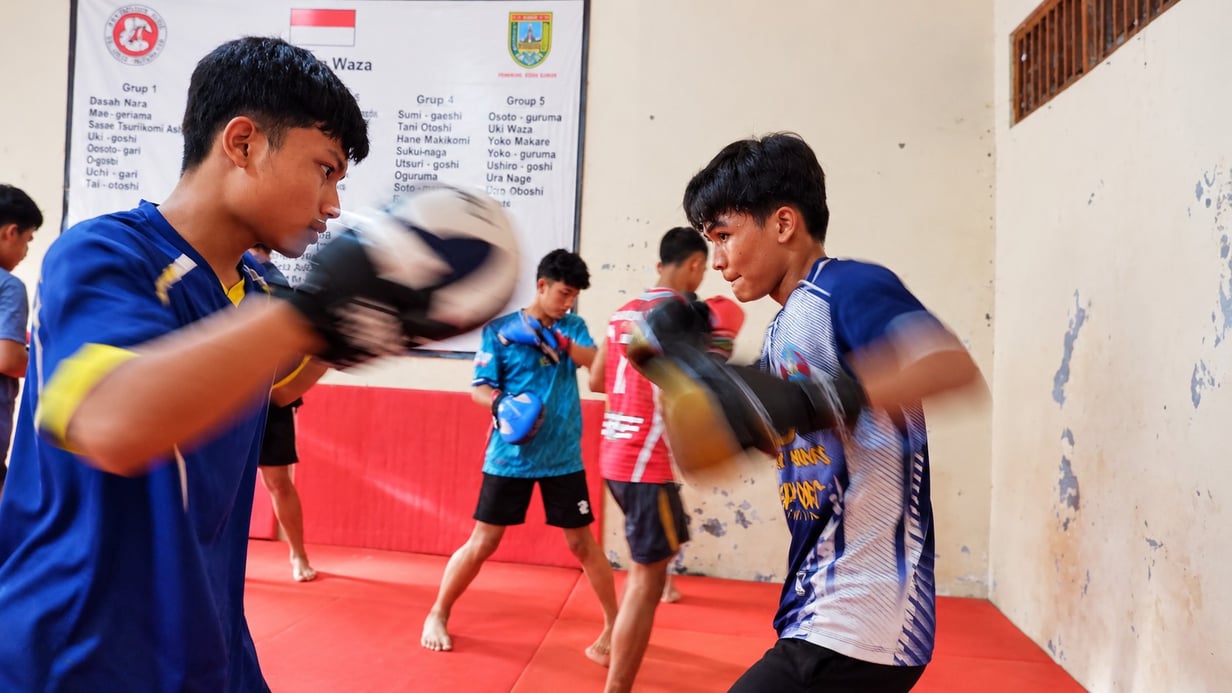
The opportunity to explore boxing in Kudus is not limited to experienced athletes. Pertina Kudus training sessions are open to the general public looking to learn from the ground up. Currently, the club has about 30 active members from diverse backgrounds, including junior and senior high school students, university students, and professionals.
Training is provided free of charge, allowing those new to the sport to join without any prior experience. Participants can progress through the basics at their own pace under the guidance of professional coaches.
Sessions are held at various locations and times. On Mondays and Thursdays, training runs from 4:00 PM to 6:00 PM at GOR Djarum Kaliputu, Kudus. From Tuesday through Friday, sessions take place at the same time at the SMA NU Hasyim Asy’ari Kudus classroom building.
Saturdays are designated as rest days. On Sundays, outdoor physical conditioning is held at rotating locations, such as Taman Oasis, Taman Balai Jagong, and other venues throughout Kudus.
New members are not immediately pushed into competition. The curriculum focuses on fundamental techniques, building a training routine, maintaining physical fitness, and mastering safety protocols before advancing to higher-intensity workouts.
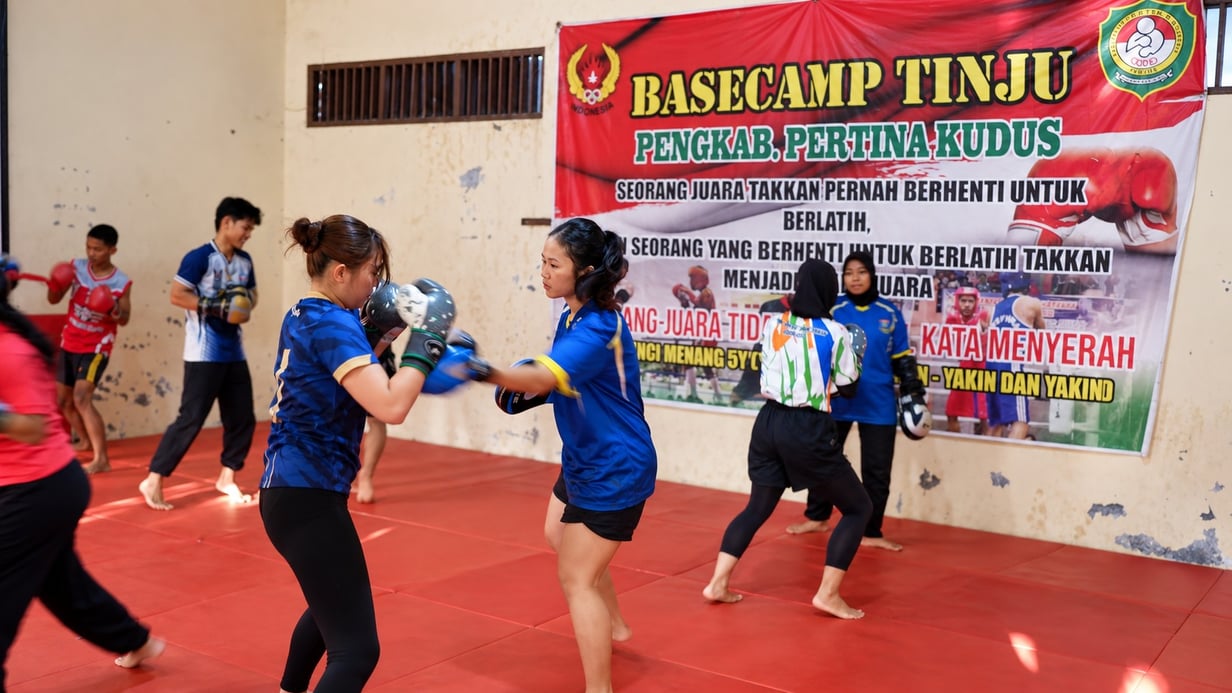
The Pertina Kudus training gym is open to everyone, not just those already accustomed to the ring. Newcomers can join and learn the sport from its most fundamental stages.
There are currently about 30 active members, ranging from middle and high school students to working professionals.
The training is provided free of cost, and newcomers are not required to have any prior boxing or competitive experience.
The training schedule is divided across several sites: Mondays and Thursdays at GOR Djarum Arena Kaliputu, Kudus, and Tuesdays through Fridays at the SMA NU Hasyim Asy’ari Kudus classroom building.
Saturdays are for rest, while Sundays are dedicated to outdoor physical conditioning, moving between locations like Taman Oasis, Taman Balai Jagong, and various other sites around Kudus.
New recruits are introduced to the sport by mastering foundational techniques, building consistency, improving fitness levels, and understanding safety regulations before moving toward competitive sparring.
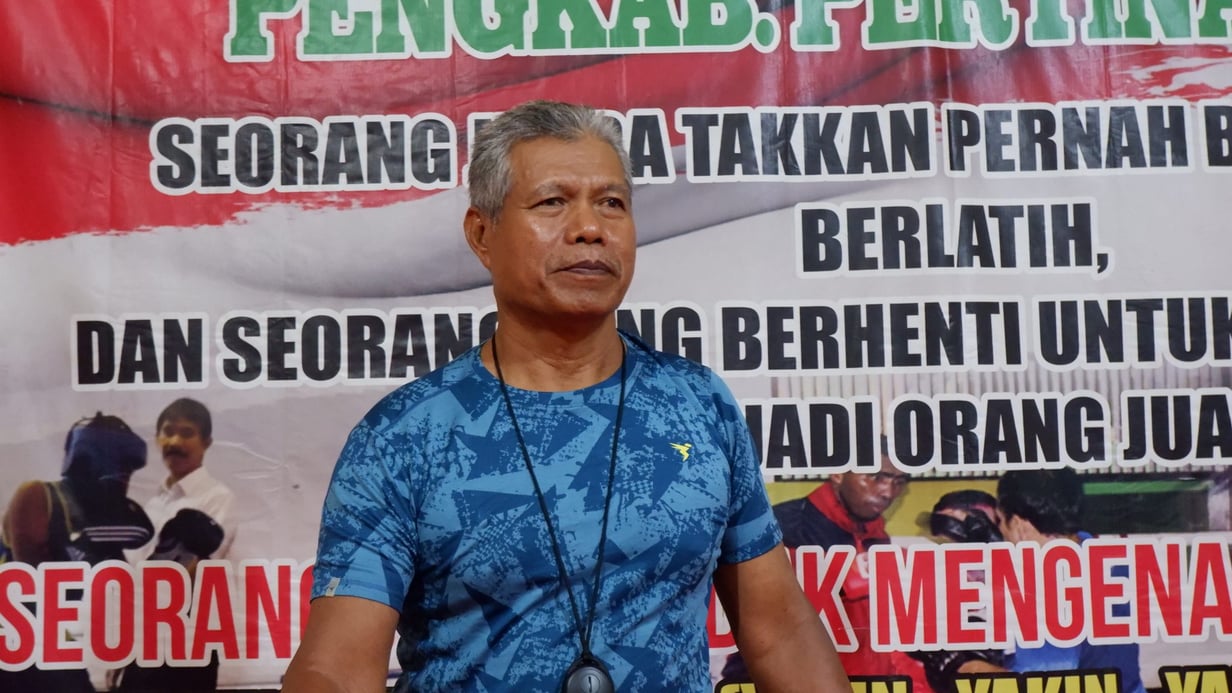
Pertina Kudus coach Suwono emphasizes that while courage is a vital asset for any boxer, it is not enough on its own. Athletes must also possess discipline, a fighting spirit, and continuously refined technical skills.
"First and foremost are discipline and fighting spirit. The primary requirement is guts—courage. Regardless of technique, if an athlete lacks the nerve and is timid, they will never be able to achieve success," said Suwono.
Consequently, athlete development follows a gradual progression. Beginners do not immediately engage in high-intensity sparring. They must first master fundamental techniques and establish training habits before advancing to more complex drills.
During sparring sessions, safety remains the priority. Athletes are required to wear protective gear such as mouthguards and headgear, while the intensity of strikes is strictly monitored and controlled according to training needs.
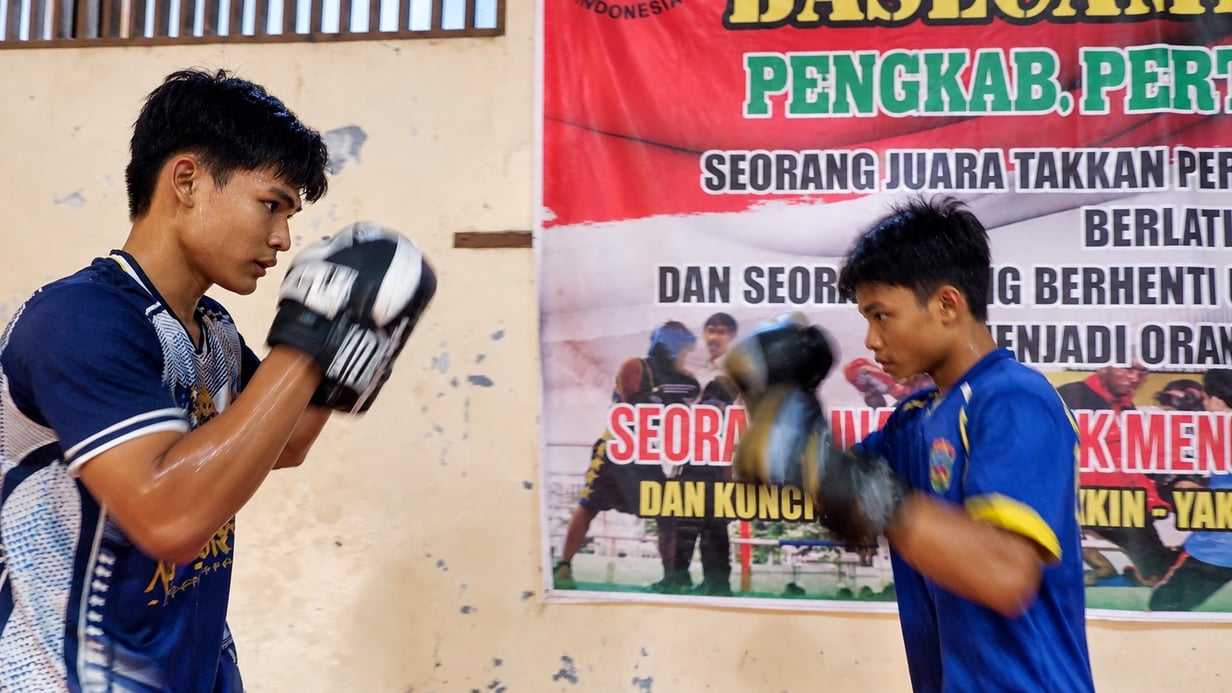
Referees oversee sparring sessions from within the ring. If an athlete absorbs a blow deemed too powerful, the session is paused to assess their condition.
Through this approach, training focuses on more than just offensive and defensive skills; athletes learn to recognize their physical limits, maintain fitness, and adhere to coaching instructions while in the ring.
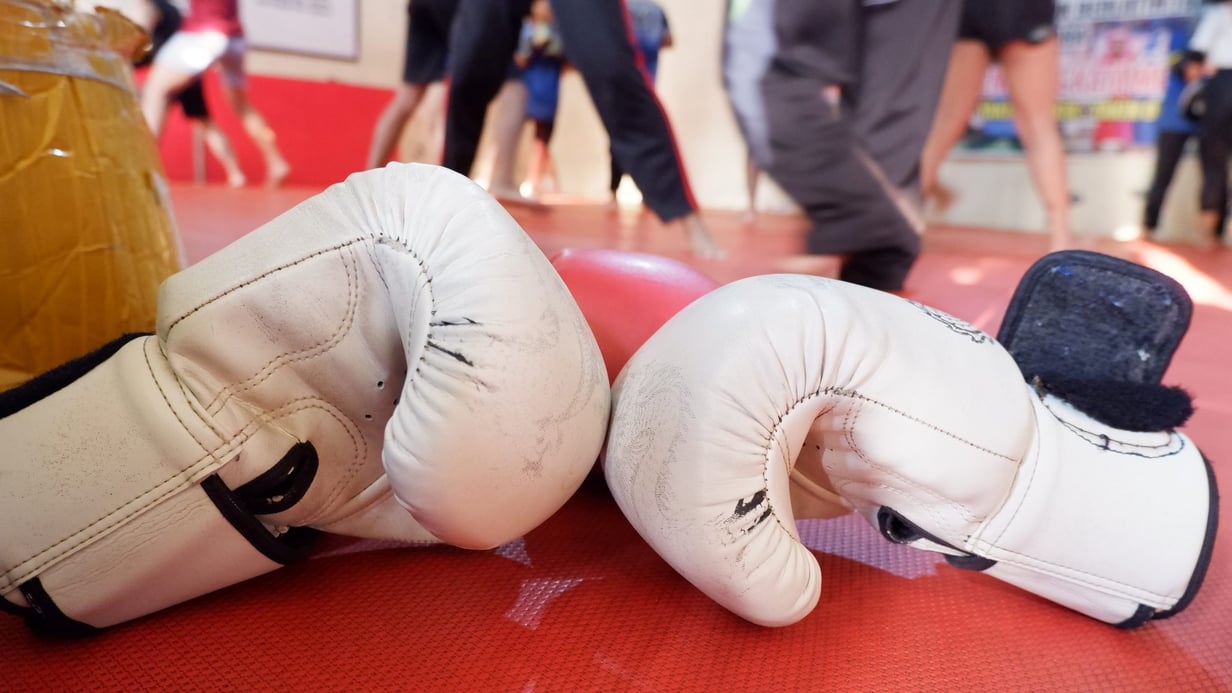
While training is provided free of charge, members must procure basic safety equipment. This includes a mouthguard, hand wraps, and headgear for sparring sessions.
This equipment is utilized according to the specific training phase and becomes increasingly essential as athletes progress to higher-intensity sessions.
For beginners, competition is not the immediate objective. Training begins with mastering basic techniques and building physical conditioning before moving on to more complex material.
Through these stages, coaches monitor each athlete's development. Progress is measured by the ability to follow training, discipline, courage, physical condition, and a willingness to learn, all of which are assessed before an athlete moves to the next level.
Student athlete development at Pertina Kudus follows a structured, staged approach. Athletes begin with routine training before undergoing a selection process for tournaments suitable for their age and weight class.
Championships serve as a testing ground for training results. By facing opponents and experiencing the atmosphere of a match, athletes can identify their strengths and the areas that require improvement in subsequent training sessions.
Chairman of the Kudus Regency KONI, Sulistiyanto, views the cultivation of young and student athletes as vital to sustaining local sports achievements.
“Boxing development is quite good; the talent cultivation and coaching processes are quite strong. There is a consistent upward trend in performance. While the growth is not sharp, it is steady,” said Sulistiyanto.
According to him, this progress is built incrementally. Student athletes who show improvement are given the opportunity to advance to higher competition tiers based on their age group and available tournament schedules.
Support for this development is provided through budget allocations to the regency board. KONI also offers rewards to athletes who secure medals in official events such as the Provincial Sports Week (Porprov).
Beyond training and competition, boxing programs must also address public perception. The sport is still often associated primarily with head strikes and physical contact.
This perception presents a challenge when introducing boxing to new recruits. Consequently, mastering basic techniques, utilizing protective gear, maintaining strict coaching supervision, and regulating sparring intensity are essential components of every training stage.
Open training sessions allow students and the public to familiarize themselves with boxing without immediately entering the ring. New members start with fundamental techniques and physical conditioning, progressing according to their individual capabilities.
Through this process, coaches can identify an athlete's potential for further development. Those who demonstrate readiness are directed toward championships tailored to their age and competition class, facilitating regeneration as new members train and eventually compete.
This cycle repeats within the Pertina Kudus training gym. Athletes who have competed return to refine their skills, while new members begin learning the basics of boxing.
Much of the development process occurs far from the podium. Athletes focus on movement, technical correction, and physical conditioning, repeating these drills in every session. Through this routine, the pipeline is maintained, preparing athletes for the next levels of competition. (JMY/mainkekudus)