
KUDUS – Beach volleyball is typically synonymous with sand and coastal areas. However, in Ngembalrejo Village, Kudus, the sport continues to thrive despite being located far from the coast.
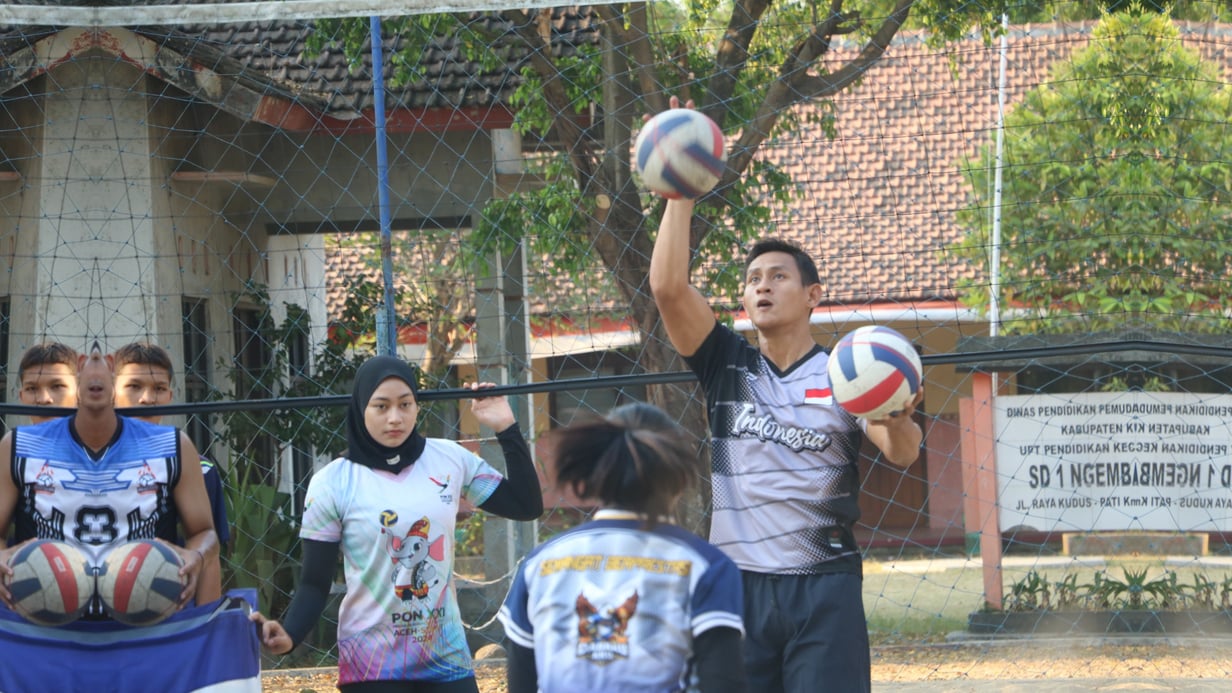
Ivojo, an abbreviation for Ikatan Voli Ngembalrejo (Ngembalrejo Volleyball Association), is a club dedicated to developing beach volleyball in Kudus. Training sessions are held at the SDN 1 Ngembalrejo volleyball court, involving both junior and senior athletes.
Four times a week, athletes gather for technical, physical, and tactical training. From this court, many Ivojo athletes have gone on to compete in regional, national, and international tournaments.
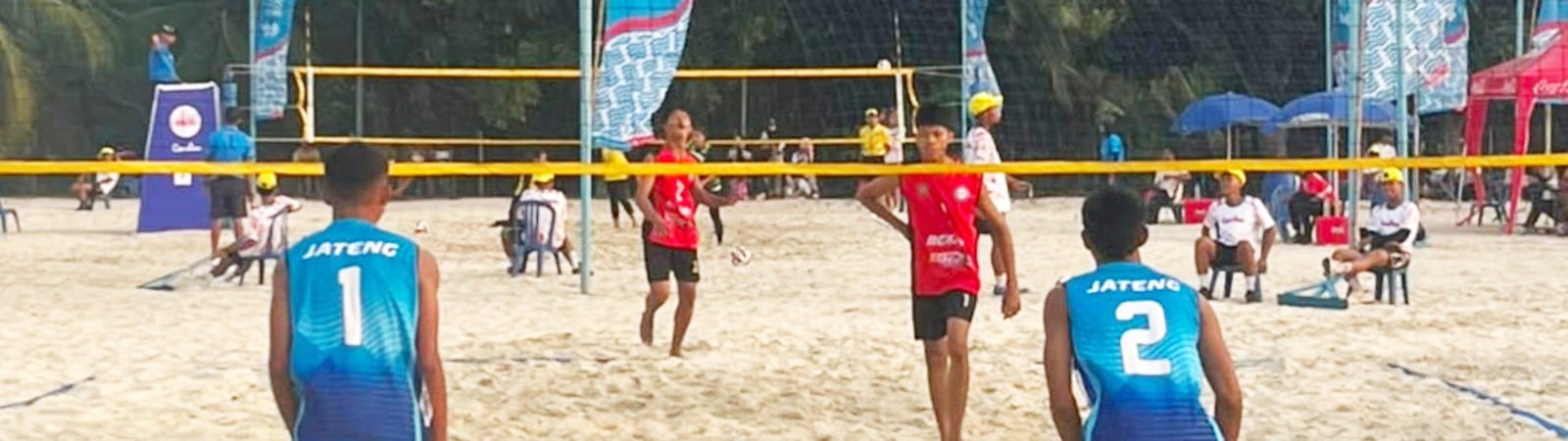
The latest success comes from the 2026 U-17 National Beach Volleyball Championship at the Jakabaring Sport Complex in Palembang, South Sumatra. Two athletes from Kudus, M. Akbar Sya’bani and Ficki Fisnanda, representing Central Java, secured second place in the men's 2x2 division and first place in the men's 4x4 division.
This journey was not built overnight. Ivojo has been fostering beach volleyball development for nearly two decades, since its establishment on July 26, 2007.

Before the founding of Ivojo, Achsin Rois managed a volleyball group in Ngembalrejo Village, which focused primarily on indoor volleyball.
The training direction shifted after Achsin attended a national-level coaching course between 2006 and early 2007, where he was introduced to beach volleyball.
His interest grew further after watching peers in Solo play the sport. This experience convinced Achsin that the sport did not require a coastal location to flourish.
The group he led eventually participated in a beach volleyball championship in Kendal. Building on that training and competition experience, the drive to establish a formal beach volleyball program in Ngembalrejo intensified.
On July 26, 2007, Ivojo was officially established, integrating beach volleyball into its development program.
However, the decision immediately presented a fundamental challenge: Kudus has no coastline, and the club lacked adequate sand courts.
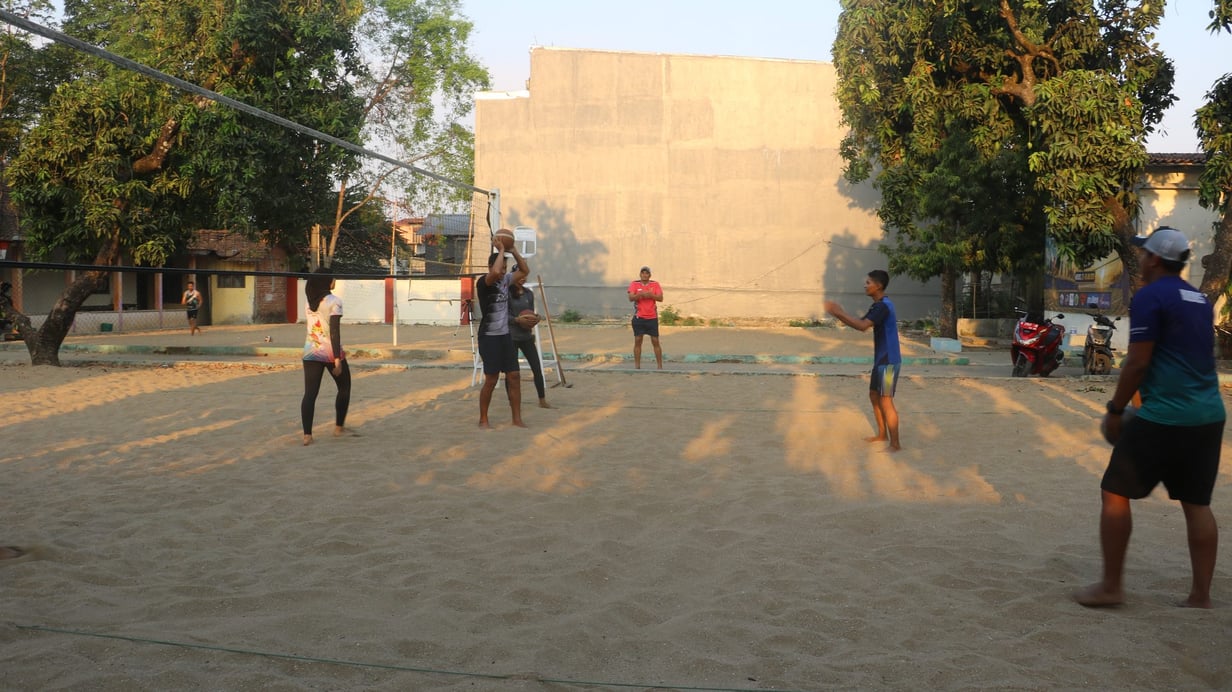
In the early days, limited funding meant that training facilities had to be built independently.
Black sand was sourced from the Selalang region of Kudus to construct the court. Maintenance is performed personally by the players and staff.
When the court is left unused for several days, the sand surface can become compacted. Before training sessions, players must use hoes to loosen it to ensure the court is ready for play.
From these humble beginnings, the development program took shape. Early activities consisted largely of inter-village matches before athletes transitioned to competing at higher levels.
Currently, training takes place at the SDN 1 Ngembalrejo volleyball court. This facility serves as a training ground for both junior and senior athletes, as well as an introduction point for aspiring beach volleyball players.
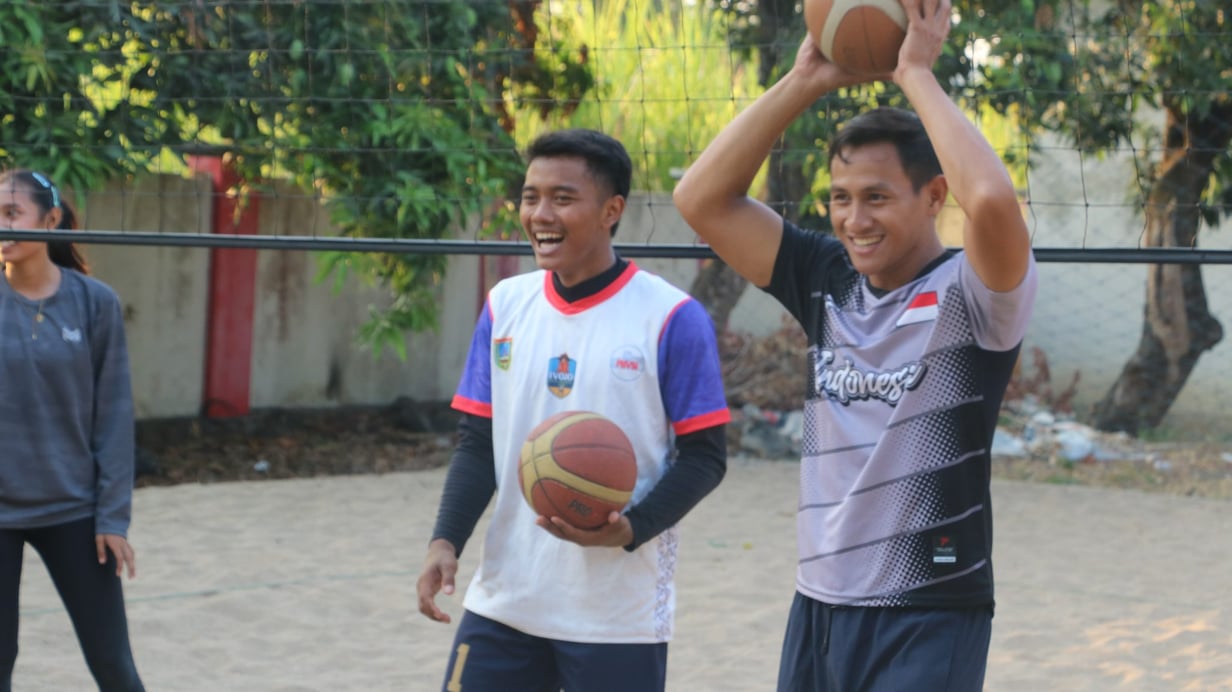
Muchammad Fauzi Setiawan, known as Wawan, has been part of Ivojo’s development staff since 2019, having been involved in regional talent development since 2017.
According to Wawan, beach volleyball presents unique demands compared to indoor volleyball.
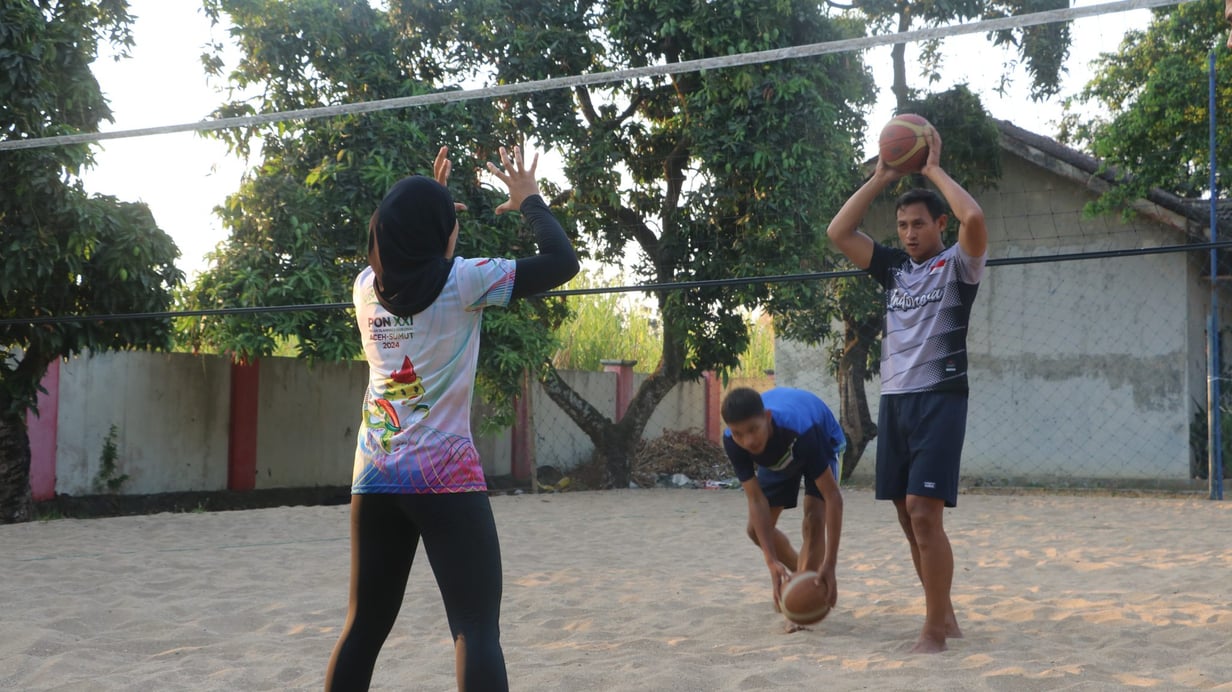
The sandy surface makes movement more strenuous. Steps, jumps, and changes in direction require significantly more energy because the footing is not as stable as on a hard court.
Another distinction lies in the number of players. In the 2x2 format, with only two athletes on the court, each player must possess a more versatile skillset.
Athletes must do more than just hit the ball; they need to be proficient in offense and defense, blocking, reading the ball's trajectory, and maintaining communication with their partner.
Physical conditioning is a crucial component of training because a player must be involved in nearly every phase of the game.
For athletes transitioning from indoor volleyball, this style requires significant adaptation. They must adjust to moving on sand while understanding a game that demands greater individual responsibility.
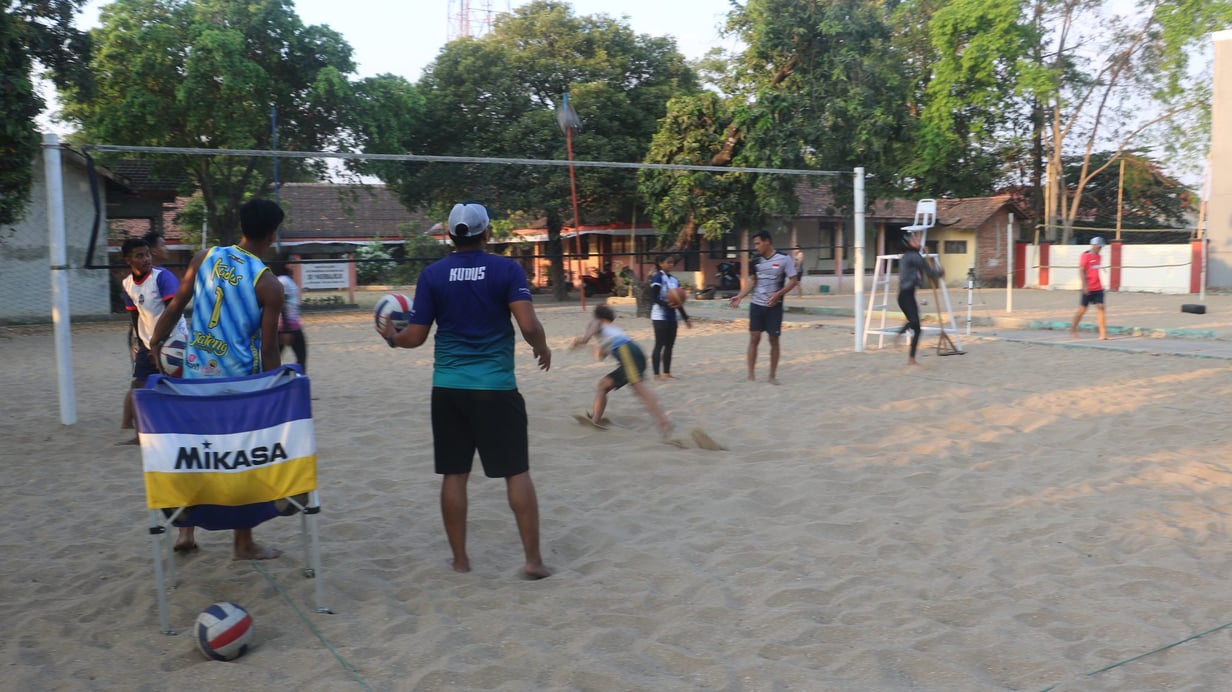
Ivojo holds regular training sessions four times a week.
On Mondays, Wednesdays, and Fridays, athletes train after the Asr prayer for two to two-and-a-half hours. On Saturdays, practice begins at 8:00 AM and lasts for approximately three hours.
This program serves as the foundation for athlete development. When the club prepares for tournaments, the intensity and structure of the sessions are adjusted based on competitive needs.
Beyond game technique, athletes focus on physical fitness, sand movement, defensive strategies, blocking, game awareness, and effective communication with their partners.
For younger players, these routine sessions are essential for understanding the game's nature and building a consistent work ethic before moving into tournament preparation.
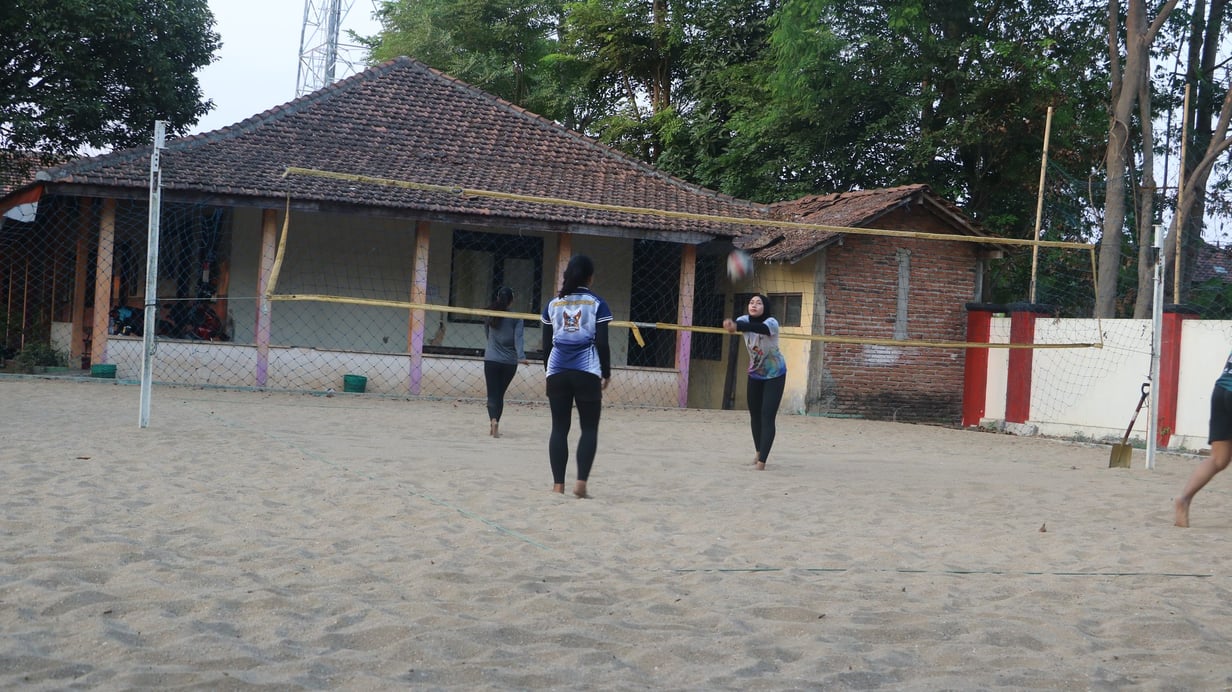
Ivojo is opening doors for young athletes interested in beach volleyball.
The registration process is straightforward. Prospective athletes can simply arrive at the court during scheduled practice sessions. Many discover Ivojo through siblings who are already members, while others join after being invited by friends or learning of the sessions firsthand.
There are no registration or training fees. The club also provides drinking water for athletes during practice.
This open approach allows children to visit, observe, and trial training sessions before committing to a regular schedule.
Specific selection processes are typically only implemented when the club prepares athletes for upcoming championships.
Despite the open enrollment, consistently recruiting new talent remains a persistent challenge for Ivojo.
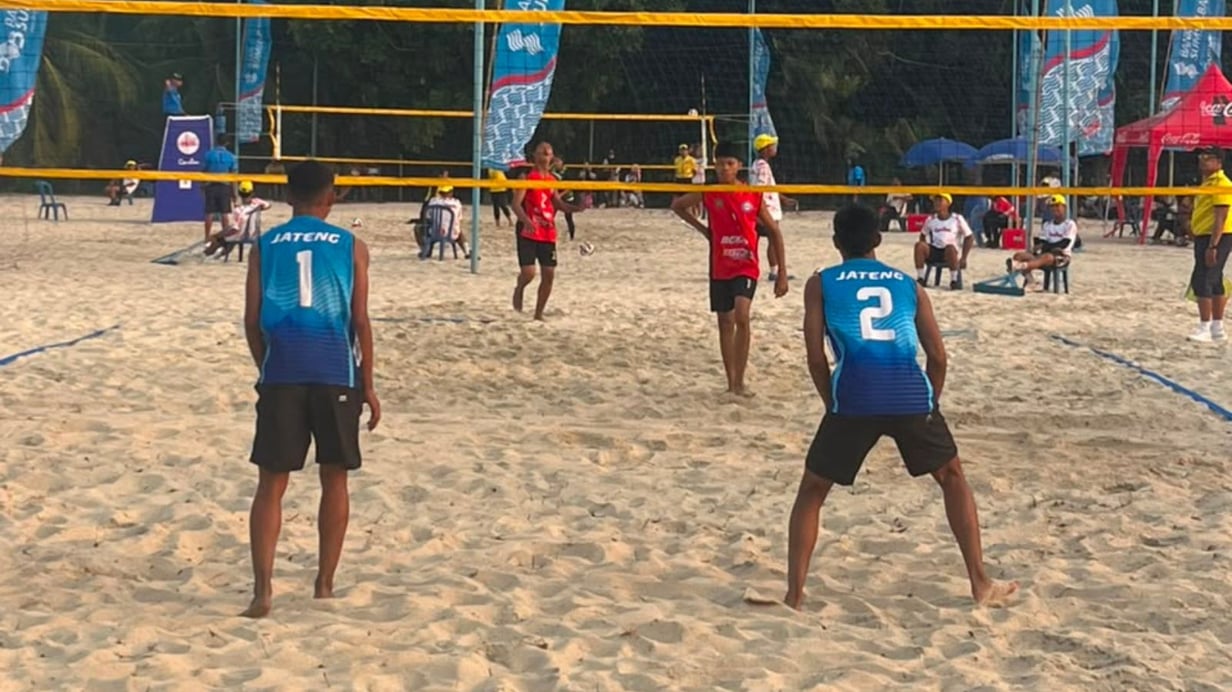
Ivojo’s success extends well beyond the training court.
The club’s athletes have earned medals at the National Sports Week (PON) and represented Indonesia on the national team, including a bronze medal finish at the world championships in Qatar.
During the 2023 Porprov in Rembang, Kudus claimed all four gold medals available in beach volleyball: men’s 2x2, women’s 2x2, men’s 4x4, and women’s 4x4.
Ivojo has also hosted the Kudus Open, attracting participants from six provinces and international competitors from Malaysia. The tournament allows athletes to face diverse opponents without the need to constantly compete outside of Kudus.
Recent success was achieved at the 2026 U-17 National Beach Volleyball Championship held August 5–9, 2026, at the Jakabaring Sport Complex in Palembang.
Two Kudus athletes, M. Akbar Sya’bani and Ficki Fisnanda, competing for Central Java, took second place in the men’s 2x2 division and first place in the men’s 4x4 division.
Akbar, who began his career in indoor volleyball, is among the athletes who successfully navigated this transition.
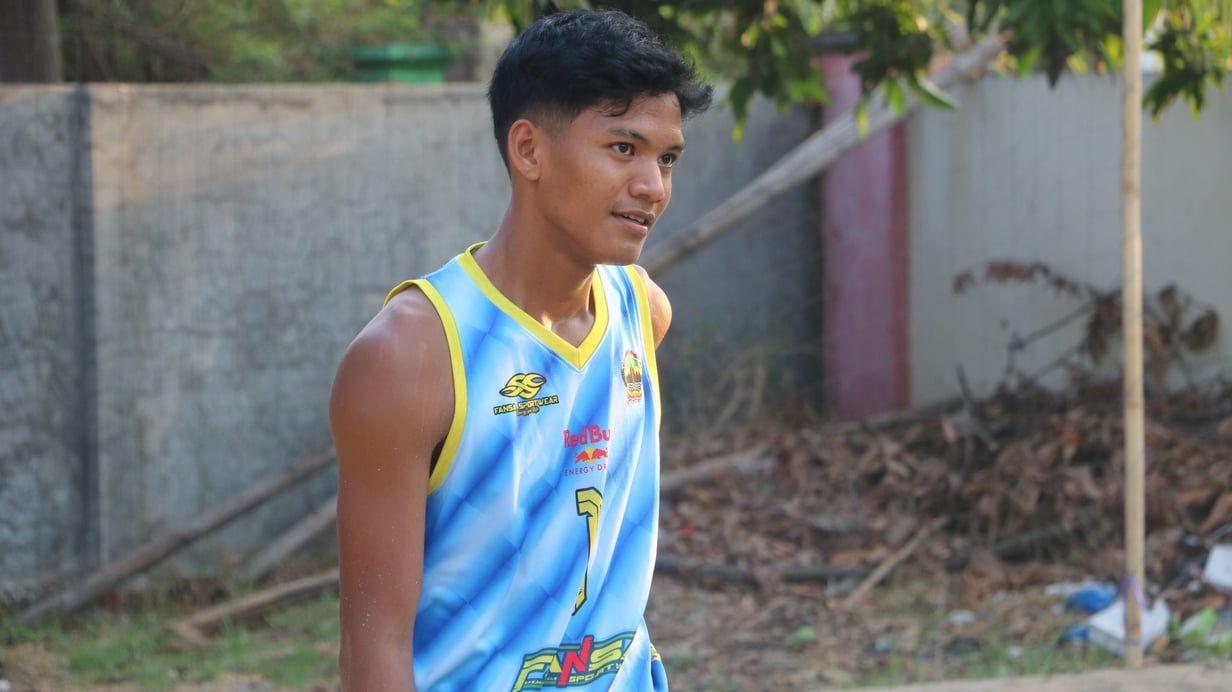
Muhammad Akbar Sya’bani discovered Ivojo at age 14 while in his third year of middle school, after a friend invited him to join a practice session.
Previously, Akbar played indoor volleyball with Berlian Muda Kudus.
The transition to beach volleyball required him to adapt to a sandy surface, a two-person team format, and more demanding physical requirements.
One training exercise Akbar recalls vividly involved sprinting seven laps within a set time. Running on sand proved significantly more challenging than on a hard court, as the surface restricted his movement.
Despite the difficulty, he embraced the training process and the camaraderie with fellow athletes.
Through consistent practice, Akbar built a strong competitive record. He earned runner-up honors at the Popnas tournament in Jakarta, finished second in a Sidoarjo competition, and won gold at the 2024 national championship in Sidoarjo.
That experience served as essential preparation for the U-17 National Beach Volleyball Championship held in Palembang from August 5–9, 2026.
Together with his team, Akbar secured first place in the 4x4 category and second place in the 2x2 division.
For Akbar, these results marked a milestone as his first championship title at the U-17 national level.
The Palembang competition also allowed him to face athletes from across the country, forcing him to adapt to sand conditions and environmental factors different from his home training facility.
Following the tournament, Akbar resumed training to maintain and refine his skills for upcoming matches.
Despite these achievements, player development remains a hurdle for Ivojo.
The club currently supports 40 athletes, split evenly between 20 junior players and 20 seniors.
However, the influx of new prospects is not always sufficient to ensure long-term sustainability across all age groups.
Recruitment relies heavily on local networks, with many new members joining through existing connections, friends, or word-of-mouth regarding training activities.
Attracting female athletes remains a particular challenge for the club.
Training takes place on open courts, requiring prospective athletes to acclimate to sun exposure and sand. Concerns regarding skin tone changes also remain a consideration for some female prospects.
Ivojo hopes to expand the introduction of beach volleyball through schools, particularly those with dedicated sports programs.
Early exposure starting in schools is expected to create new pathways for identifying talent while strengthening the player development pipeline.
Beyond player development, infrastructure is another key area Ivojo is addressing for future growth.
One proposal under consideration is the construction of beach volleyball facilities around the Logung Reservoir in Kudus.
The area is envisioned to eventually house a court for both practice and competition. With better facilities, athletes would have dedicated training space and access to competitive experience locally in Kudus.
Improving facilities is also tied to the needs of training female athletes. Courts with better sun protection are expected to help attract more female participants.
For now, training remains based at the SDN 1 Ngembalrejo volleyball court.
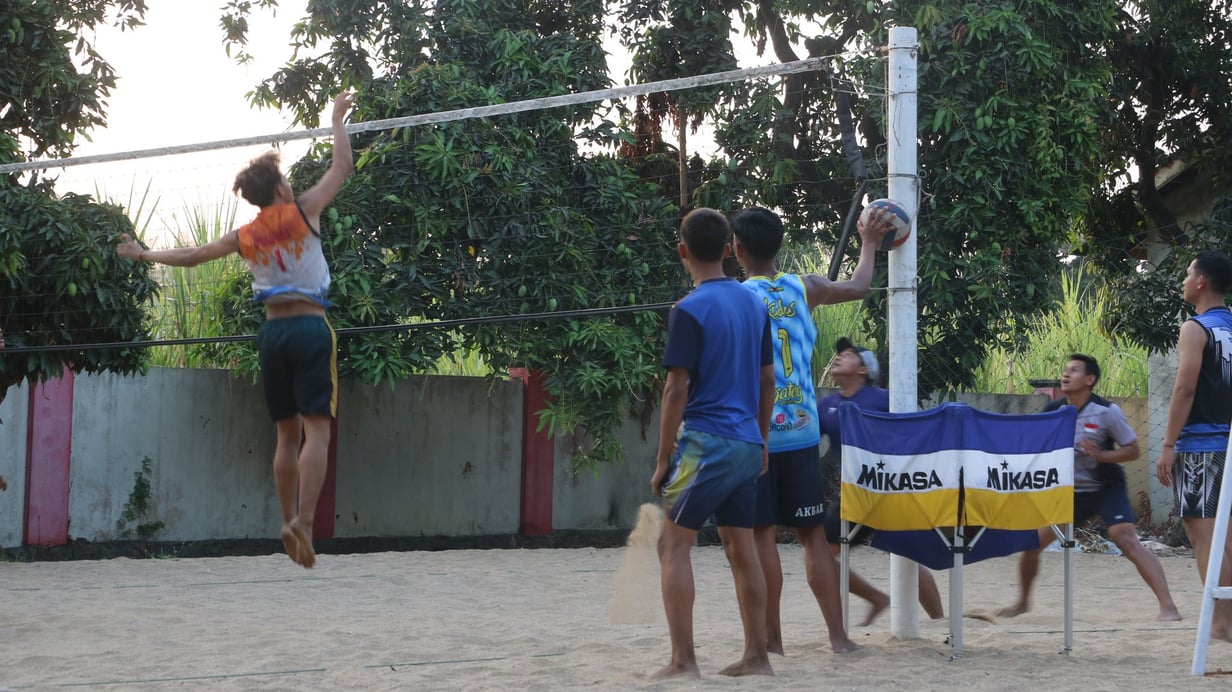
Nearly two decades since its founding, Ivojo has grown from a village-level volleyball group into a club that trains beach volleyball athletes for various levels of competition.
The journey began with Achsin Rois's interest in the sport, leading to the self-funded construction of a sand court, the establishment of a training regimen, and the eventual sending of athletes to regional and national tournaments.
Akbar is one athlete who emerged through this process. Recruited by friends while still in junior high, he transitioned from indoor volleyball to the sand court, eventually representing Central Java at the U-17 National Championships.
However, the sustainability of Ivojo does not rely on a single athlete or a specific tournament result.
At the SDN 1 Ngembalrejo court, junior and senior athletes continue to train regularly, whether to maintain their skills, prepare for upcoming matches, or learn the fundamentals of the game.
The ongoing challenge is to ensure a steady stream of new talent, maintain consistent training, and evolve facilities to meet athlete needs.
Kudus may not be a coastal region, but from a sandy court in Ngembalrejo, beach volleyball continues to thrive, producing athletes capable of competing at various levels. (DN/mainkekudus)