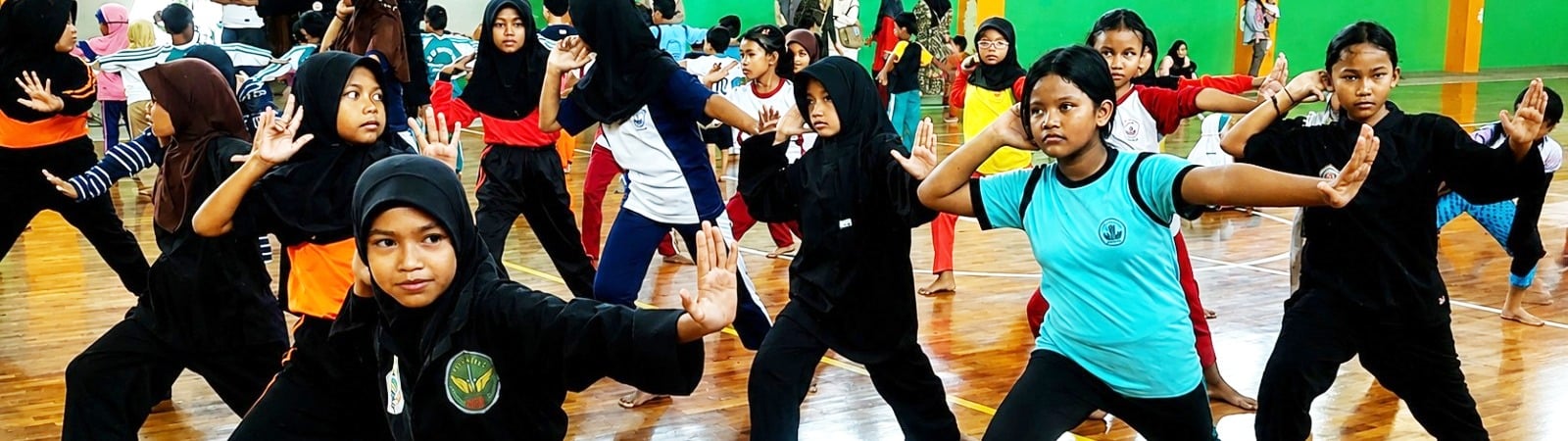

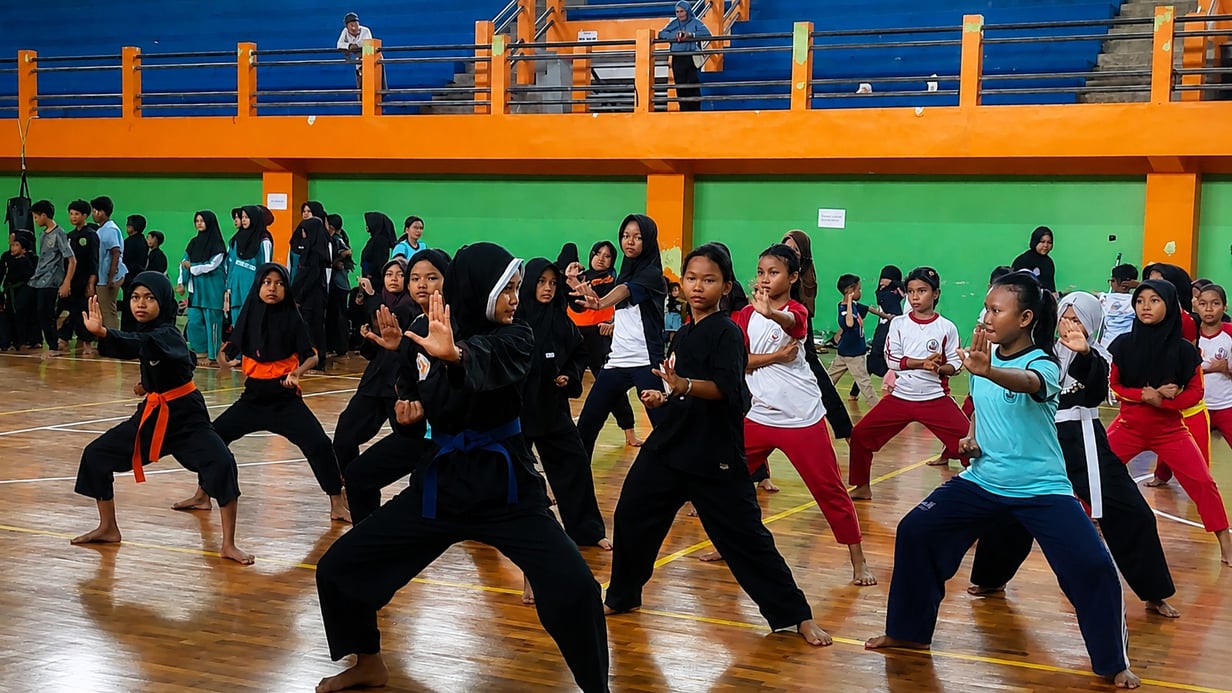
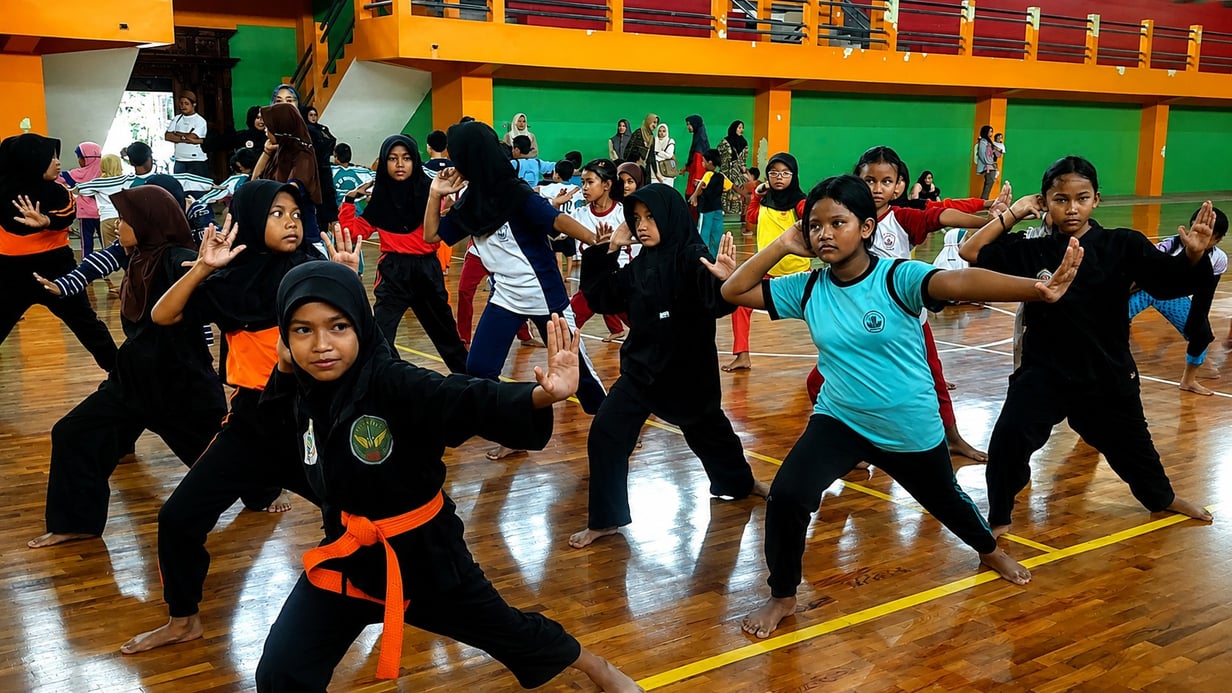
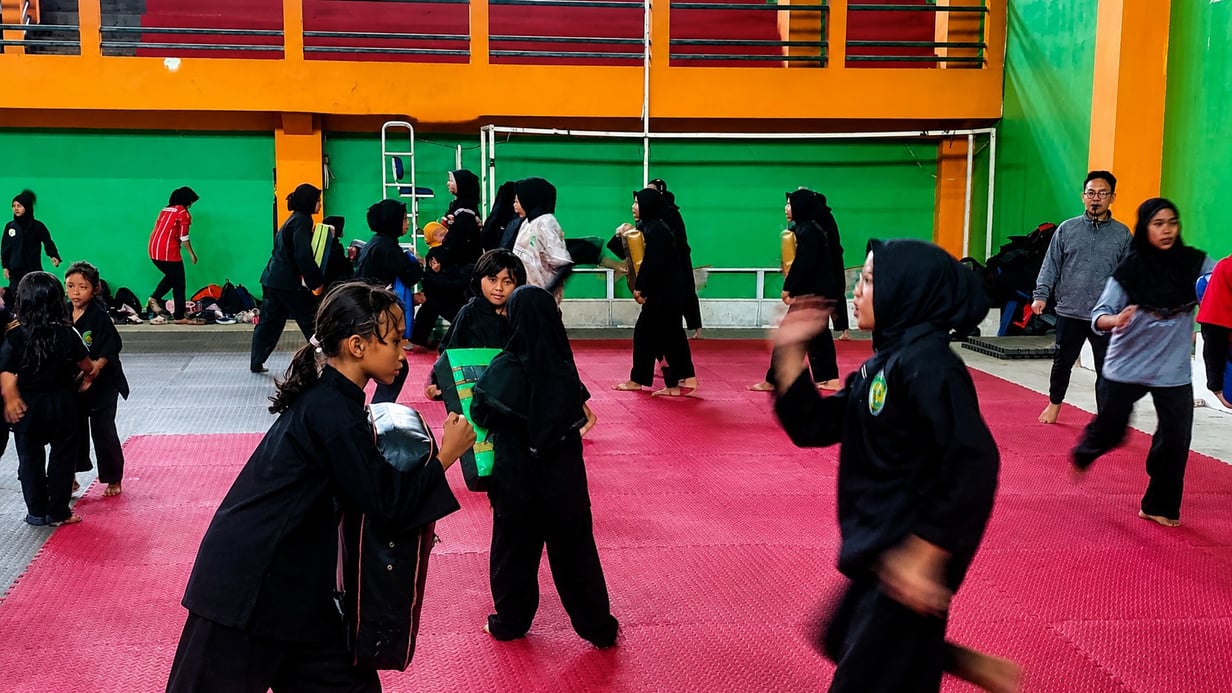
KUDUS – The sound of stomping feet echoes through the training arena as children and teenagers move with agility to the coach's commands. They refine their stances, repeat hand movements, and continuously practice kicks. Some athletes focus on perfecting their performance-based arts category, while others prepare for competitive sparring matches.
Although no championship was scheduled that day, the training rhythm remained disciplined. For the Kudus Silat Academy (ASK), this intensive routine is the foundation of its development program. Since its establishment in January 2024, ASK has consistently utilized sustained training to build the physical, technical, and mental strength of its athletes from a young age.
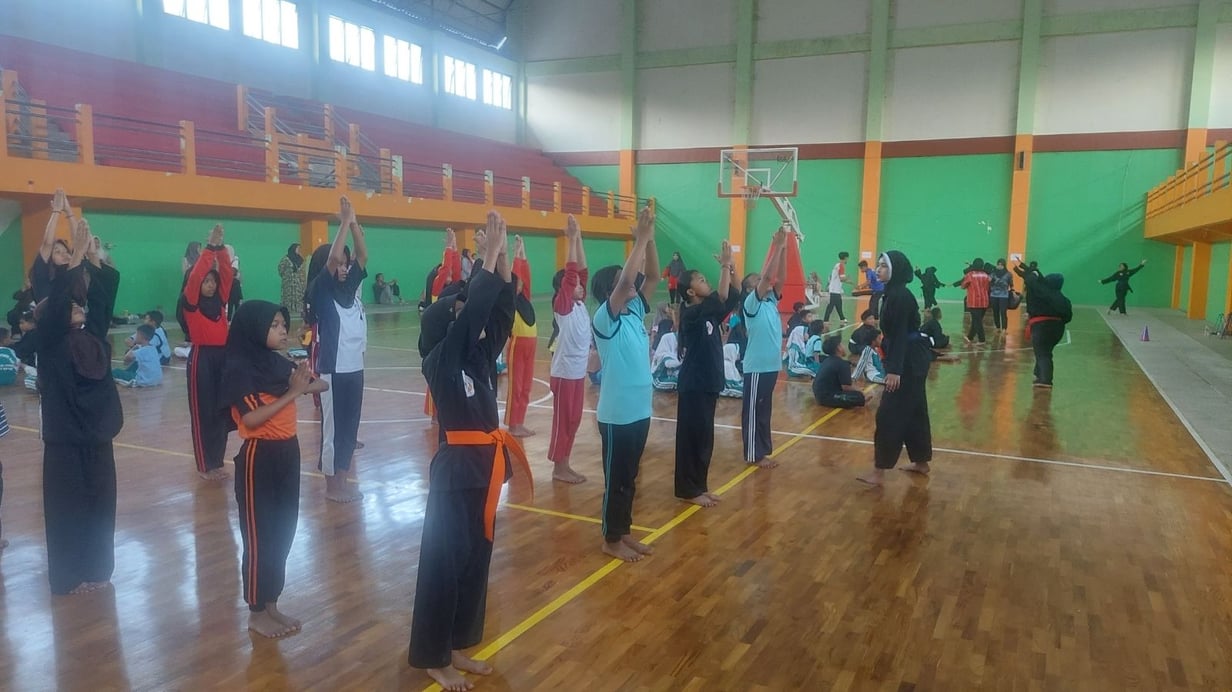
Currently, ASK oversees approximately 60 athletes across various age groups, ranging from elementary school students to university athletes. The youngest athlete is just seven years old, or in the first grade. From this modest training space, their long journeys begin. Some join simply for exercise, others to hone their talents, and some focus on competition goals. Through this process, Pencak Silat is introduced not only as a competitive sport but also as a means to instill discipline and life consistency.
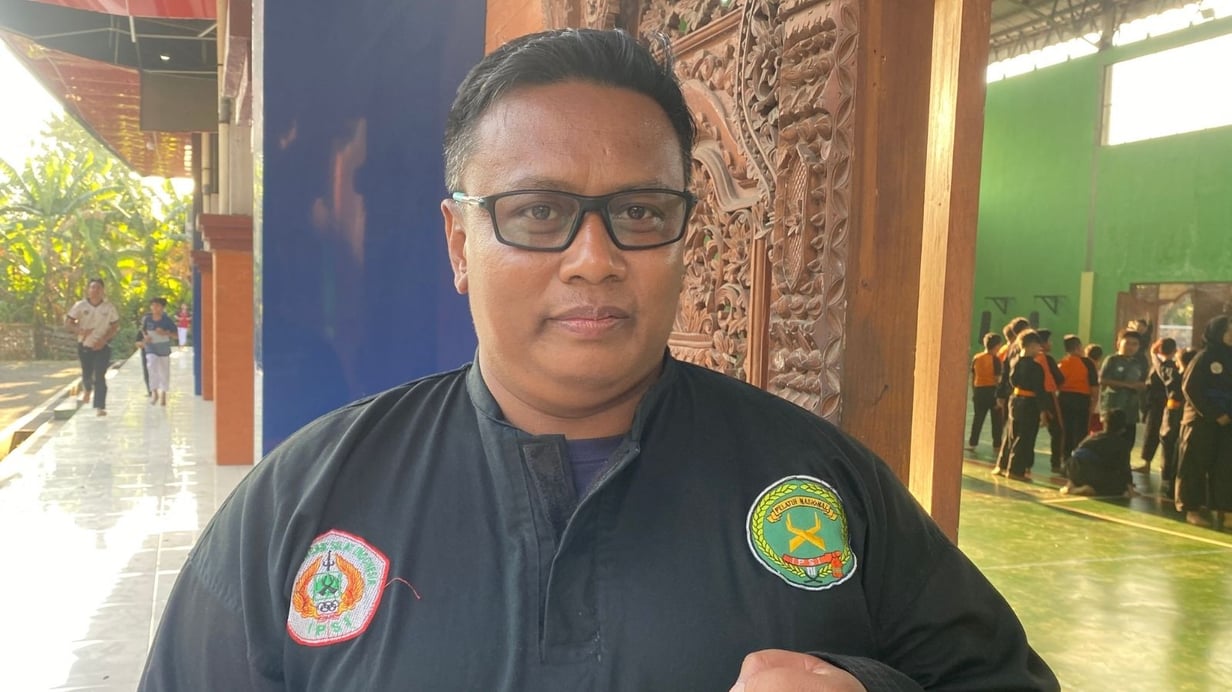
The founder of the Kudus Silat Academy, Mas’ud, explained that ASK was specifically designed to identify and cultivate young talent for various levels of sports competition. The development targets include the Regional Student Sports Week (Popda), Provincial Sports Week (Porprov), National Student Sports Olympiad (O2SN), National Sports Week (PON), and international-level championships.
"The goal is to identify talent and achieve success, whether through Popda, Porprov, O2SN, PON, or other competitive events," said Mas’ud.
To optimize athlete potential, ASK divides its development system into two primary categories: arts performance and competitive sparring. Each category features a specific curriculum, training pattern, and technical approach.
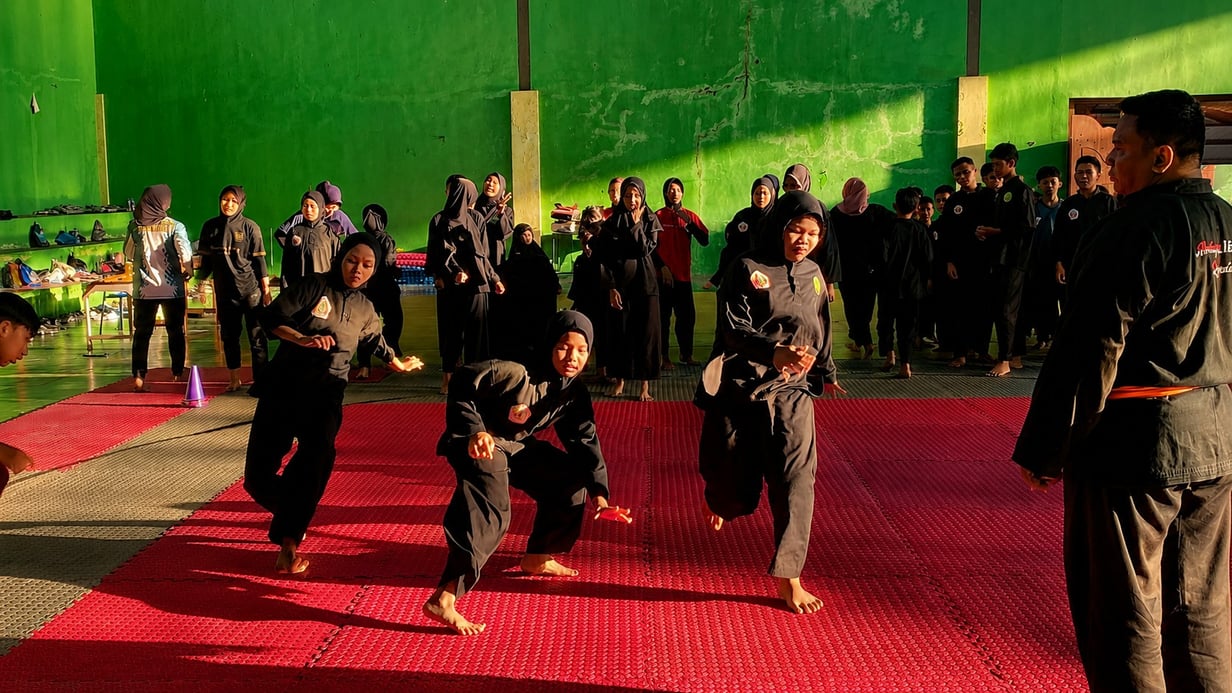
Athletes are required to follow a training schedule five times per week. This rigorous routine remains consistent, whether during pre-championship periods or the off-season. By maintaining this structure, athletes do not need to restart their preparations from scratch. As match dates approach, training focus shifts to refining strategies, perfecting techniques, and boosting physical and mental endurance.
Mas’ud added that this training routine positively impacts character development. Controlled physical activity helps reduce excessive reliance on smartphones. Furthermore, the physical and mental discipline fostered in the arena serves as a valuable foundation for students aspiring to join military or police academies. However, the academy's primary focus remains on building consistent training habits and fostering a sense of responsibility toward every stage of the process.
The consistency of training at the academy has yielded tangible results across various competitions since 2024. The most notable achievement occurred at the Silat Challenge Open National Championship held in Purbalingga from August 1–2, 2026. The national-scale tournament drew approximately 500 participants from across Indonesia, including Central Java, Aceh, and Sumatra.
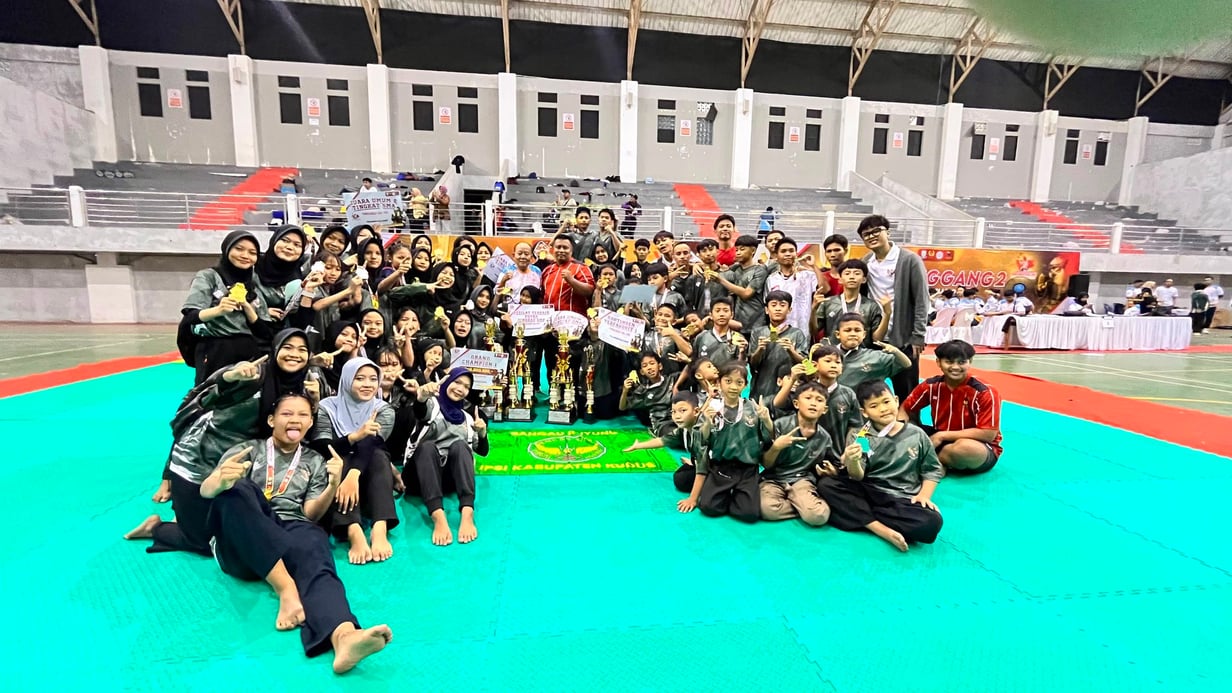
The academy sent 58 athletes to the event, who secured a total of 58 medals, including 38 gold, 15 silver, and 5 bronze. Of the 38 gold medals, 18 were won by elementary school athletes, 16 by junior high school students, and 4 by high school students.
With this dominant performance, the academy claimed the Overall Champion title for the Early Childhood, Pre-Teen, and Teen categories, while also securing the Grand Champion 1 and Favorite Champion 1 awards. Two athletes were named the tournament's top players: Edgar Ananda Sofyan (SD 1 Getaspejaten) in the boys' early childhood category and Rajendra Rakha Rafi Abrar (SMP 2 Kudus) in the boys' junior high school category.
"Praise be to God, we are very proud of the children's achievements. We hope this level of performance can be maintained and further improved," Mas’ud said.
For the academy’s management, the medal count is not merely about trophies, but serves as an objective metric for evaluating the effectiveness of their training programs.
The results from the Purbalingga championship serve as a vital evaluation for the upcoming Central Java Student Sports Week (Popda), scheduled to be held in Semarang in early September 2026.
"We used this championship as a tryout session. It allowed us to objectively assess our athletes' development, particularly in terms of competitive mental resilience and technical mastery, which we will refine before the Popda," explained Mas'ud.
The atmosphere of an official competition presents pressure and experiences distinct from daily training. In the ring, athletes must apply combat strategies, adapt quickly to opponents' tactics, and maintain total focus. Through this dynamic, the coaching staff can identify the technical strengths and weaknesses that require immediate improvement in future training sessions.
The paths of athletes at ASK vary significantly. Not all discovered pencak silat at an early age. Reno Andika, for instance, only began training in the eighth grade, at approximately 14 or 15 years old. His initial motivation was simple: to fill his spare time during the Covid-19 pandemic restrictions.
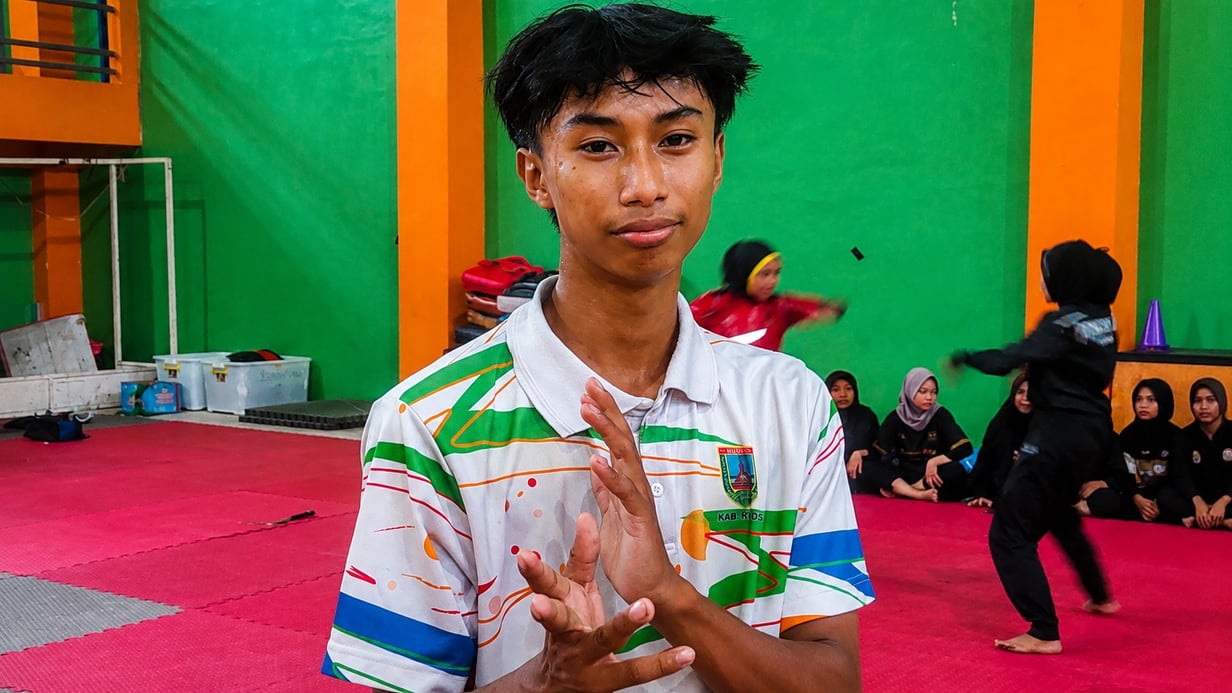
Over time, consistent training transformed Reno's initial interest into a full commitment. He began competing in various tournaments, ranging from regional events to open national championships. Facing opponents with diverse techniques has provided him with valuable lessons regarding the importance of mental toughness beyond basic technical proficiency.
While he continues to achieve success in the silat arena, Reno maintains a clear focus on his academic future.
"My ultimate goal is to become a teacher," he said.
Reno's story illustrates that athlete development does not always stem from a goal of becoming a champion. Some start out of curiosity, a search for positive activities, or simply to maintain physical health. Through a structured training process, this initial interest naturally evolves into an achievement-oriented mindset.
The existence of the ASK has strengthened the pencak silat training ecosystem in Kudus Regency. The Kudus branch of the Indonesian Pencak Silat Association (IPSI) views independent schools, clubs, and academies as critical pillars in the tiered regeneration of athletes.
Kudus IPSI Chairman Muhammad Nur Hasyim emphasized that high-performance pencak silat development is now inclusively distributed across various age groups, from children and teenagers to adults.
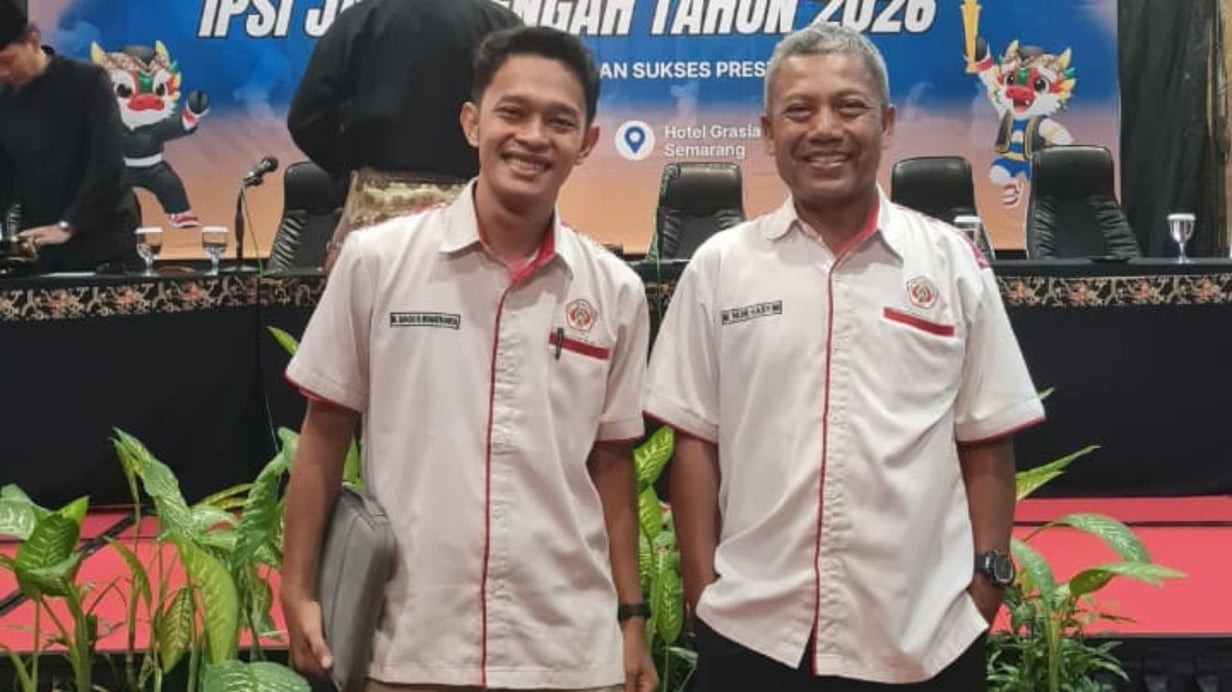
"Developing high-performance pencak silat is no longer the sole responsibility of the IPSI Regency Board. The presence of schools and academies that independently take on roles has greatly accelerated training," Hasyim stated.
Hasyim stressed the importance of sustainability in coaching programs to prevent young athletes from dropping out due to technical or non-technical obstacles. The synergy of clear programs, consistent training, and institutional commitment is key to producing quality athletes.
"The most important thing is that training continues consistently with measurable goals. I am confident that Kudus will continue to produce top-tier silat athletes in the future," he added.
Currently, there are four active academies and training groups in Kudus consistently supplying potential athletes to the region. These training venues have expanded access for local youth to study martial arts while pursuing professional athletic careers.
Beyond medals and statistics, Pencak Silat possesses cultural values that distinguish it from other sports. The discipline integrates four core elements: athleticism, artistry, self-defense, and cultural heritage, all of which are thoroughly internalized during every training session at ASK.
Athletes are trained not only in precise offensive and defensive techniques but also in discipline, respect for coaching instructions, sportsmanship, and maintaining ethical conduct both inside and outside the arena.
According to Hasyim, instilling these character values is crucial for the personal development of the younger generation. "With a sportsmanlike spirit, a healthy body, and a positive mindset, they will naturally grow into better individuals who contribute meaningfully to society," he explained.
Consequently, the role of Pencak Silat training extends beyond competition. For younger athletes, it serves as a gateway to cultural awareness and discipline. For adolescents, competitions offer a testing ground for physical and mental maturity, while for those pursuing a professional path, the academy provides a foundation to compete at national and international levels.
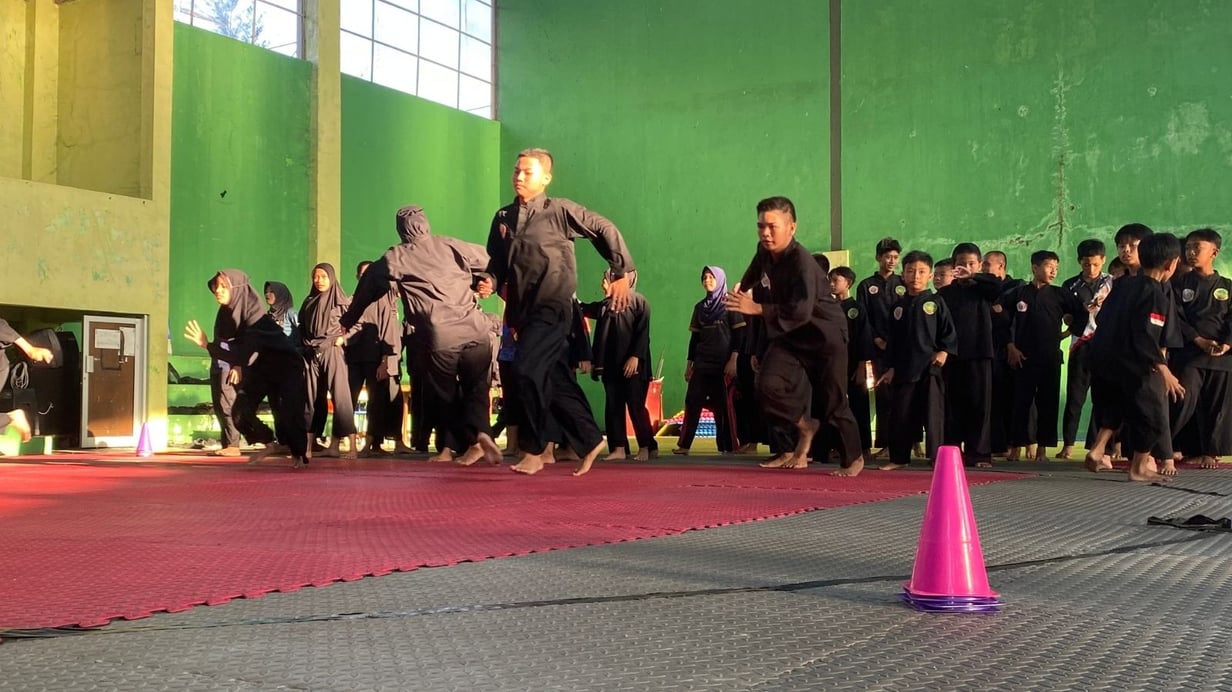
Following the championship in Purbalingga, ASK athletes returned immediately to the training arena. Evaluations from previous matches are now being used to refine techniques for upcoming competitive challenges.
Mas’ud emphasized to his students that success in one event does not guarantee future results without consistent hard work. Technical refinement and physical conditioning must remain a continuous priority.
ASK serves as an integral part of the Pencak Silat development network in Kudus, involving collaboration between athletes, coaches, academics, parents, and the IPSI organization. The overarching vision is not merely to collect medals, but to ensure an uninterrupted pipeline of future talent in Kudus.
Hasyim hopes the Pencak Silat ecosystem in Kudus continues to thrive, eventually producing athletes who can excel on the world stage. "Our goal is for Kudus Pencak Silat to be recognized internationally. We want Kudus to be known not only as an industrial hub but also as a powerhouse for Pencak Silat achievement," he said.
Developing high-performing athletes requires time and unwavering commitment. Behind every athlete on the podium lies countless hours of training, repetitive technical drills, and full support from the surrounding environment.
At the Kudus Silat Academy, this long-term process is nurtured daily, from mastering basic movements to preparing for top-level competition. Through consistent training, Pencak Silat remains a vital, evolving sport and a preserved cultural heritage of the nation. (ITN/mainkekudus)