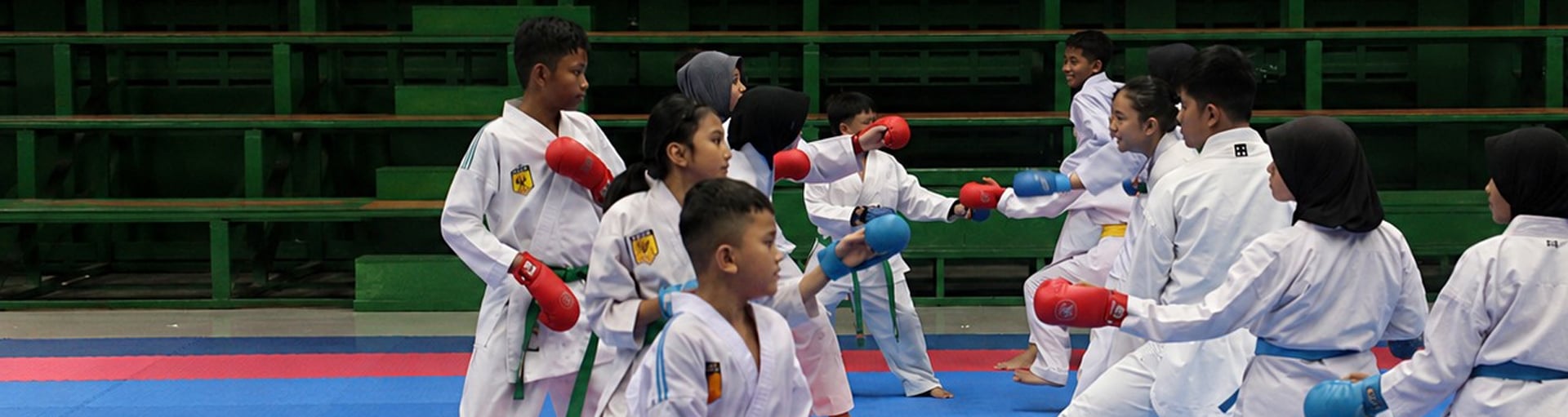
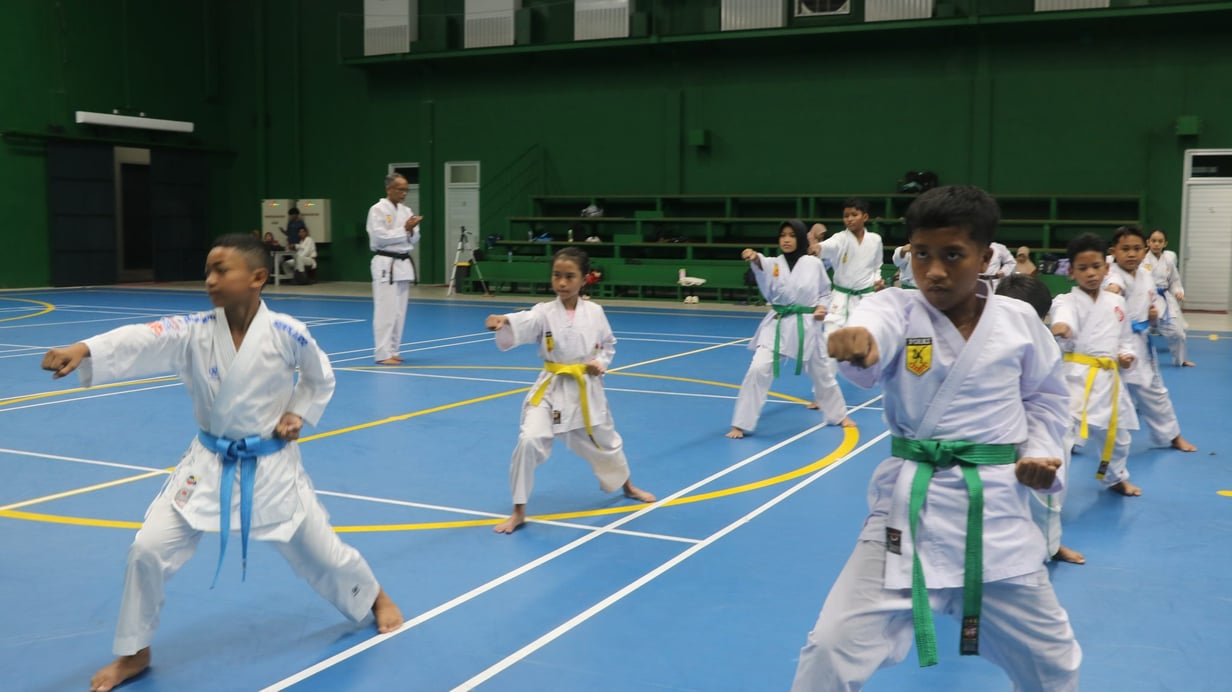
KUDUS – Every Monday, Thursday, and Saturday, the Super Elite Karate Kudus training sessions are held from 4:30 p.m. to 8:00 p.m. WIB at the GOR Djarum Arena Kaliputu. Athletes of all ages, ranging from elementary school students and teenagers to experienced senior competitors, gather for these collaborative training sessions.
When attendance is lower, the group trains together. During one such session on a Thursday, approximately 40 to 50 athletes practiced as a single unit. When participation approaches 100, coaches divide the athletes into smaller groups to better tailor the training to their specific needs.
This training structure is part of the development program for Super Elite Karate Kudus, which was officially established in February 2026. The team serves as a centralized hub for athletes representing various karate clubs and schools across Kudus Regency. Currently, about 100 athletes are enrolled, spanning categories from early childhood to the senior level.
Since its inception, Super Elite Karate Kudus has competed in several tournaments with notable success. Throughout 2026, the team secured the overall championship title in three separate events, accumulating 199 medals. These achievements are credited to their rigorous thrice-weekly training schedule, post-match evaluations, and a comprehensive coaching system catering to all age groups.
Super Elite Karate Kudus was formed to consolidate athletes from various karate institutions in Kudus Regency. Eight schools currently participate in the joint training program, which operates under the oversight of the Indonesian Karate-Do Sports Federation (FORKI) of Kudus Regency.
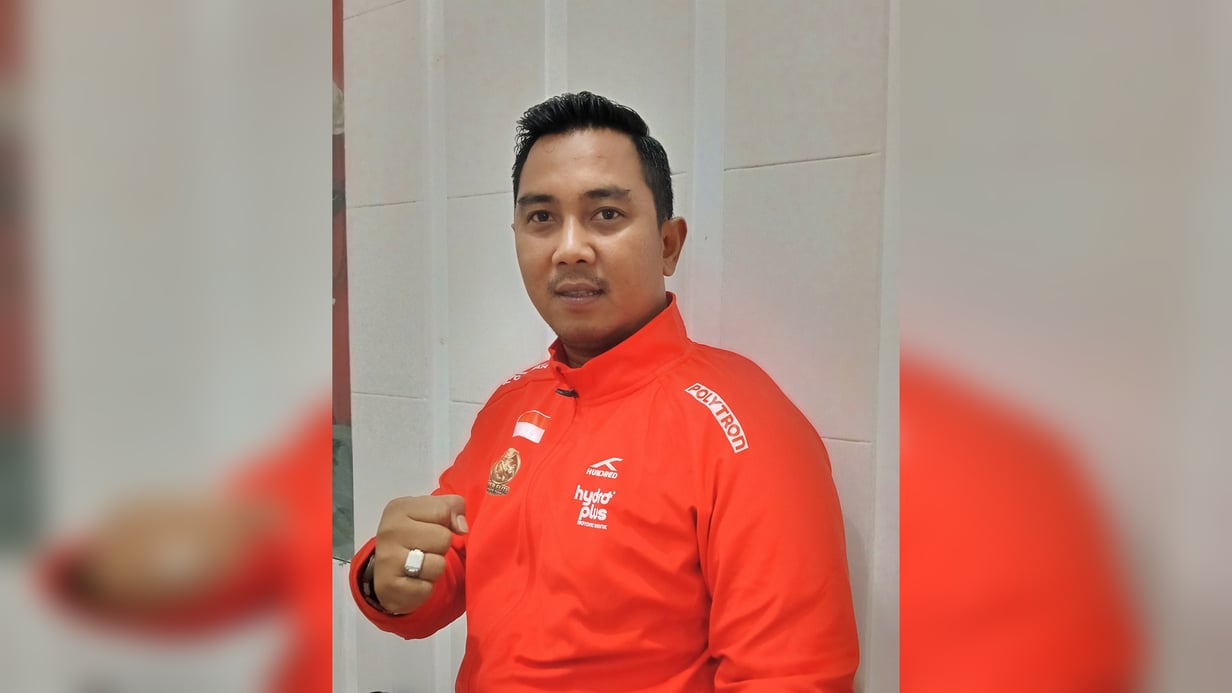
Niendio Woro Permono, head of the FORKI Kudus branch and manager of Super Elite Karate Kudus, stated that this integration is a strategic effort to cultivate and develop high-potential young athletes.
Athletes from various dojos remain with their respective groups while participating in joint training sessions through Super Elite Karate Kudus. The Djarum Arena in Kaliputu serves as the training ground and centralized facility.
The program focuses primarily on developing athletes from early childhood through the junior level, providing them with long-term preparation for upcoming competition schedules.
The team is categorized by age, ranging from Pre-Early Childhood (ages 6–7), Early Childhood (8–9), Pre-Novice (10–11), Novice (12–13), Cadet (14–15), Junior (16–17), U-21 (18–21), to Senior (above 22). Six coaches oversee the athletes' training.
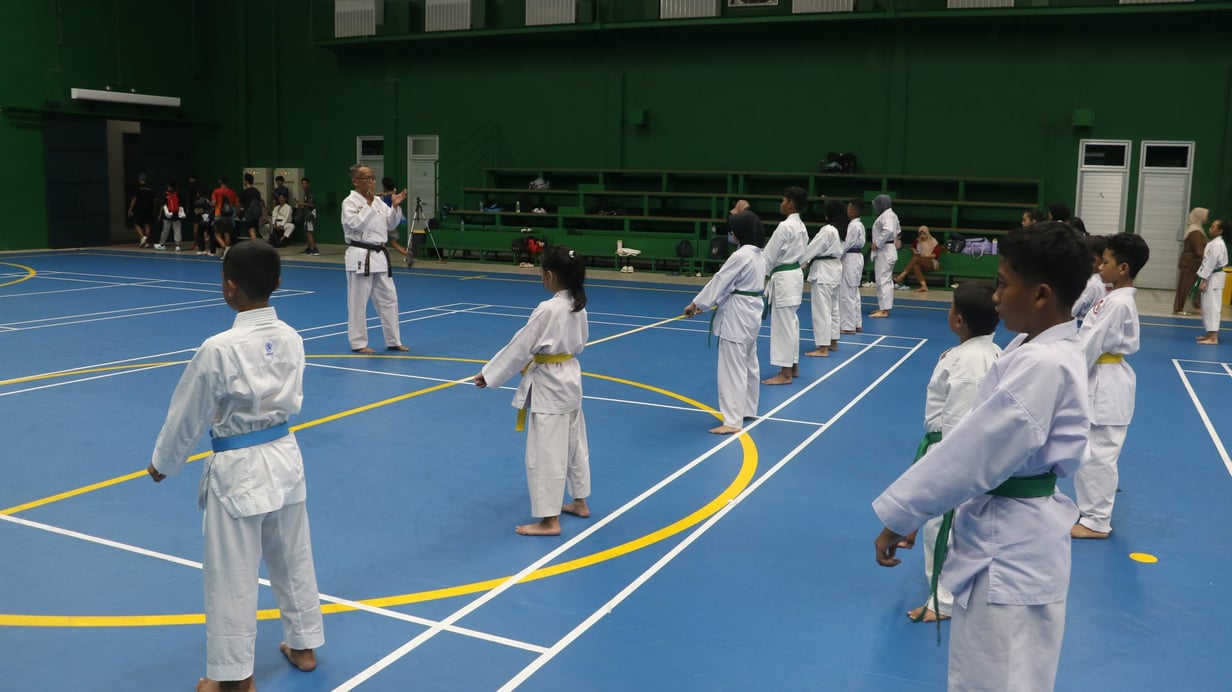
All athletes train simultaneously on Mondays, Thursdays, and Saturdays from 4:30 p.m. to 8:00 p.m. Group distinctions are managed by coaches during the sessions rather than through separate schedules.
When 40 to 50 athletes are present, they typically train together. However, as attendance approaches 100, coaches divide the participants into groups to ensure more effective instruction.
The curriculum includes physical and technical training, with intensity adjusted based on the competition calendar. As tournaments approach, the focus shifts toward refining technique and increasing intensity.
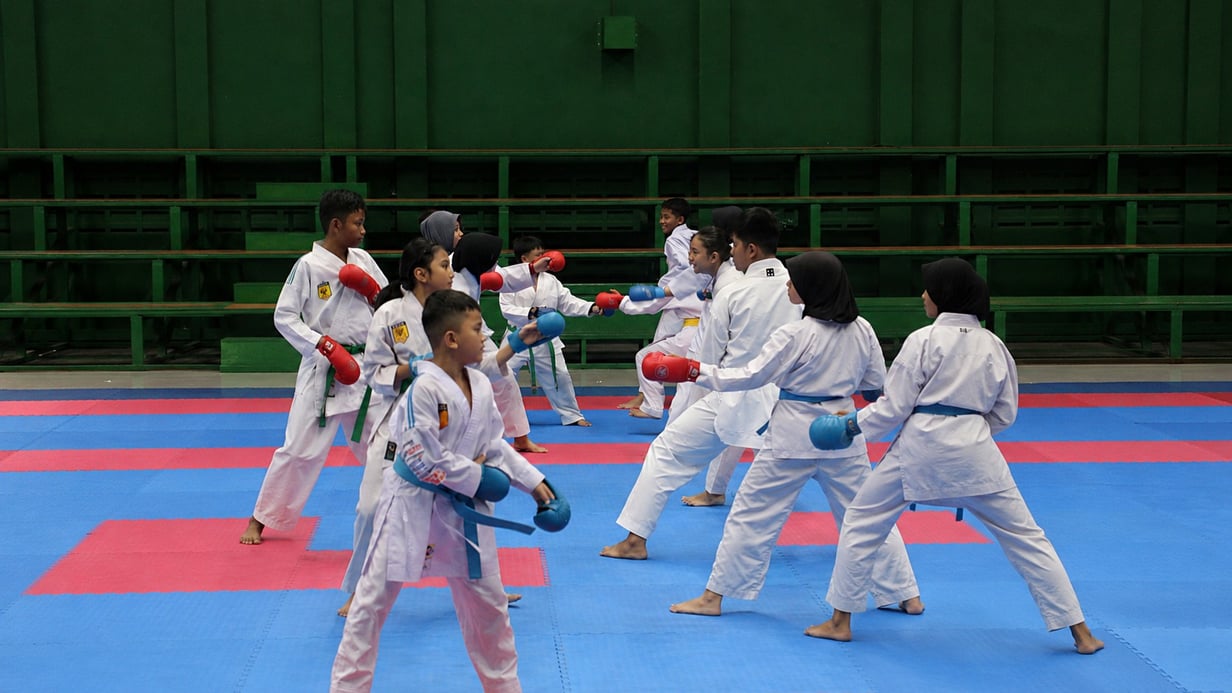
Sparring is not conducted during every session; it is scheduled based on team needs, particularly when invited by other dojos or as tournament dates draw near.
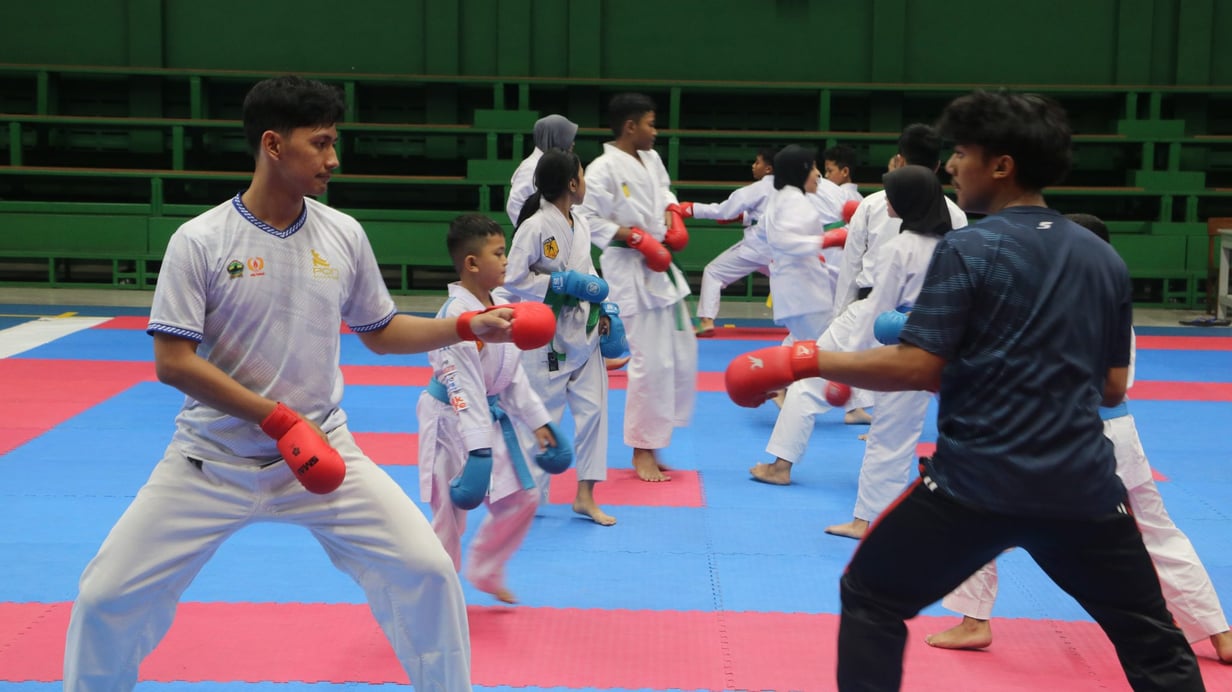
This training structure incorporates sparring sessions as preparation for specific milestones, while consistent daily training remains the cornerstone of the development program. Following each competition, coaches evaluate results and refine training programs based on performance data.
The effectiveness of this approach was demonstrated across three championships attended by Super Elite Karate Kudus throughout 2026.
At the Wira Adhyaksa Cup National Karate Championship 2026, held at GOR Jatidiri Semarang from April 25–26, Super Elite Karate Kudus secured 37 gold, 21 silver, and 26 bronze medals. With a total of 84 medals, the team clinched the overall championship title.
This success was replicated at the 11th Rector Cup UIN Walisongo International Karate Open Championship 2026 in Semarang on July 11, where the team earned 27 gold, 22 silver, and 22 bronze medals for a total of 71, once again claiming the overall championship title.
From August 1–2, Super Elite Karate Kudus competed in the Ultramen Hydroplus Karate Championship 2026 at GOR Djarum Arena Kaliputu, Kudus. The team took home 23 gold, 12 silver, and 9 bronze medals, totaling 44, and successfully secured the overall championship title for a third time.
Across these three events, Super Elite Karate Kudus amassed 199 medals: 87 gold, 55 silver, and 57 bronze, marking a successful 2026 campaign.
For the coaching staff, each tournament serves as a diagnostic tool to assess athlete development. Post-match evaluations are used to identify technical areas requiring improvement in subsequent training sessions.
Muhammad Ade Sebastian, 25, an administrator and head coach of Super Elite Karate Kudus, emphasized that team development is focused on building a talent pipeline starting from the school-age level.
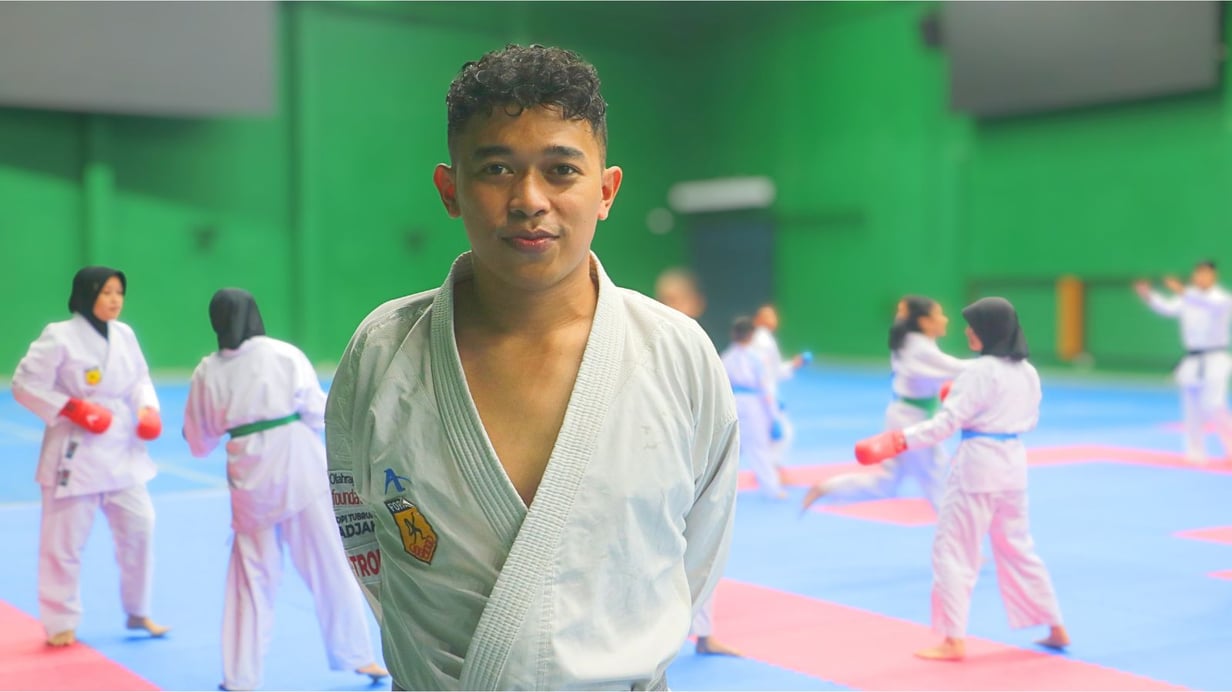
The development program is not limited to high-performing athletes. Students from elementary through high school are prepared through structured training. According to Ade, sports provide a positive outlet for youth, offering a healthy alternative to excessive screen time and social media usage.
For Ade, discipline and consistency are vital. Post-competition evaluations ensure that training programs evolve in line with individual athlete growth.
Talent identification is also conducted through various dojos and affiliated branches outside the main Super Elite group, allowing promising youth athletes to eventually transition into more centralized, professional training programs.
This phased approach ensures balanced development, where younger athletes are not burdened with the same performance demands as seniors, allowing them to progress according to their age-specific needs and coaching guidance.
One such young talent is 10-year-old Dean Ikmal Zidny, a fifth-grade student at SDN 1 Rendeng Kudus.
Dean began his karate journey in kindergarten, entering his first competition in first grade with his parents' encouragement. Since then, he has competed in numerous championships, securing accolades at the Regency Championship, the Wira Adhyaksa Cup National Championship, and the Ultramen Hydroplus Karate Championship.
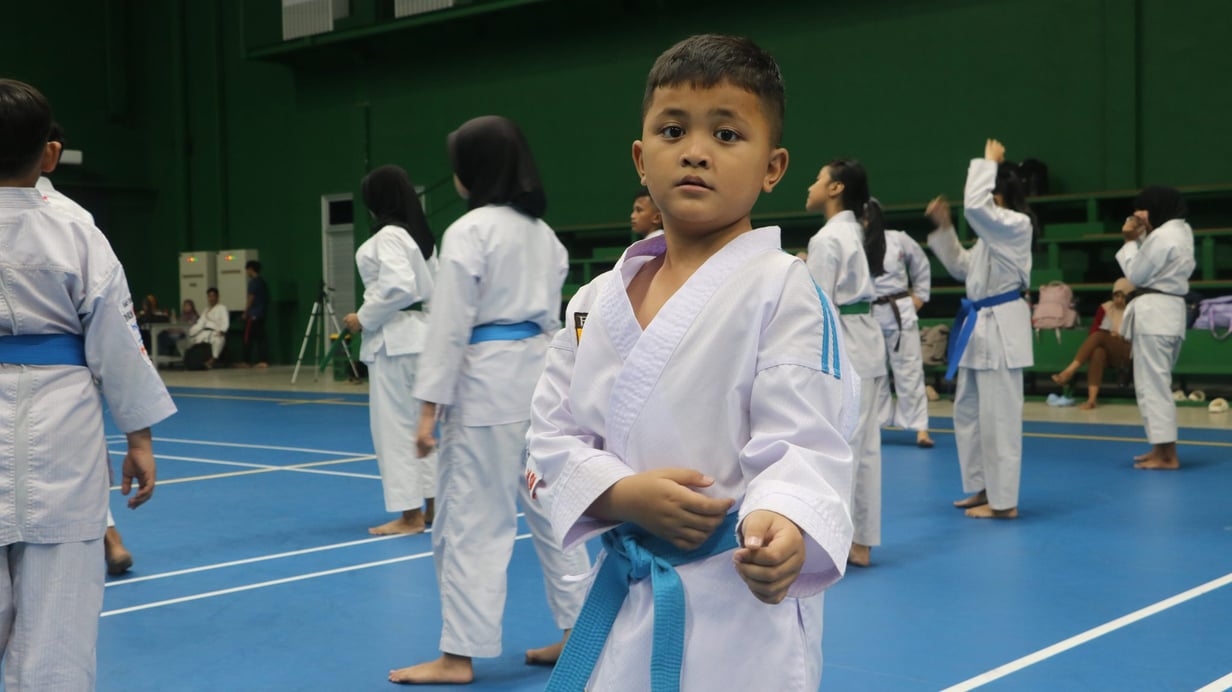
For Dean, learning to pace his energy is a crucial takeaway from competition. He understands that stamina must be managed, as tournaments often require multiple rounds of performance.
In the lead-up to championships, his sparring schedule is intensified as part of his preparations, providing Dean with vital experience against potential opponents.
Winning gold remains a source of pride for Dean, as his success brings recognition to both his school and family. At just 10 years old, he is already setting his sights on the Asian Games.
Muhammad Dzaka Hibatullah, 20, navigates life as a senior athlete. The Kudus native is currently studying at Brawijaya University in Malang while maintaining his competitive karate career.
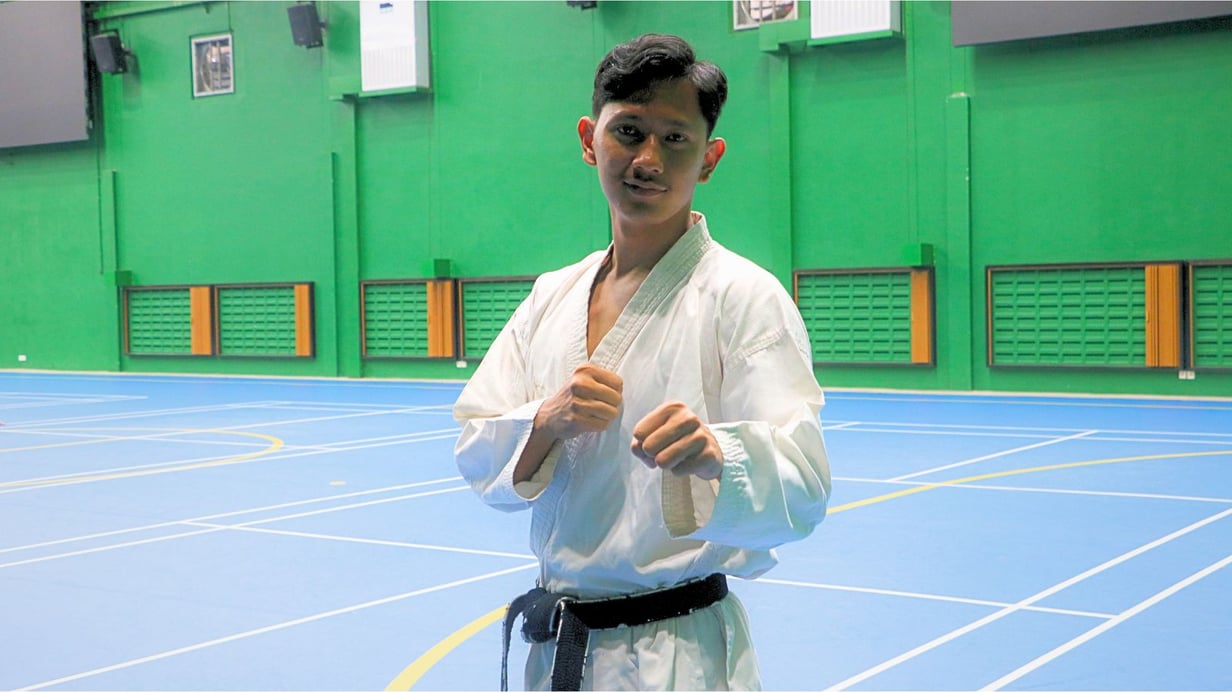
Born into a family of karate practitioners, Dzaka has been involved in the sport since kindergarten. Deciding to pursue the sport seriously has required him to strictly manage his time between training, academics, and other commitments.
Life as an athlete has forced Dzaka to sacrifice leisure time and adjust his study schedule, ensuring that training and competitions remain a consistent priority.
He acknowledges the sacrifices required of an athlete, yet notes that the pride of success and the desire to make his parents proud keep him committed to the process.
Dzaka previously secured a third-place finish and a bronze medal at the Regional Martial Arts Championship in Kudus—an experience he aims to build upon in future competitions.
His current focus is winning gold at the 2026 Central Java Provincial Sports Week (Porprov). He is currently intensifying his training and focusing on mental preparation for his upcoming bouts on the mat.
For the Kudus Regency branch of FORKI, developing athletes from early childhood through the junior level is a primary focus. These groups are being prepared systematically, ensuring they have sufficient time to develop before competing in various regional events.
The integration of eight karate schools under the Super Elite Karate Kudus banner serves as a key element of the centralized training model. Athletes from different schools are provided opportunities to train together under a unified program led by experienced coaches.
For senior athletes, the focus is currently on preparing for upcoming regional multi-sport events. Meanwhile, athletes in the early childhood to junior categories are being groomed for long-term development with the potential to qualify for the Central Java FORKI squad.
FORKI Kudus is targeting at least one gold medal at the Central Java Provincial Sports Week (Porprov), scheduled for October 2026. This objective follows a successful year in which Super Elite Karate Kudus achieved three general championship titles throughout 2026.
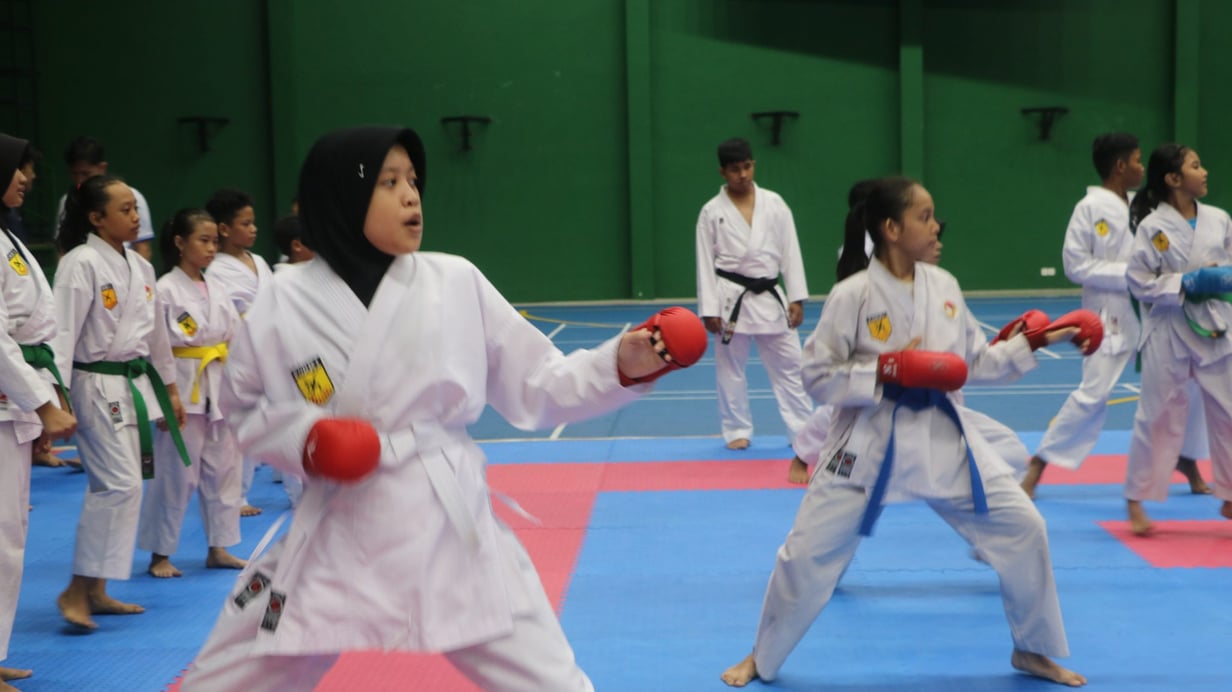
Super Elite Karate Kudus was established in February 2026. Despite its recent founding, the team has already brought together approximately 100 athletes from eight different schools and participated in numerous championships.
The haul of 199 medals across three tournaments is part of that record. Following each competition, the process shifts to rigorous training and evaluation, with athletes returning to the dojo to refine their skills before the next challenge.
Training sessions are tailored to individual needs, with coaches adjusting routines based on the athletes' age and skill levels. Sparring sessions are also held periodically, particularly in response to invitations from other dojos or as tournaments approach.
Dzaka serves as an example of a senior athlete currently pursuing a gold medal at the provincial level, while Dean is in the early stages of his journey, with significant development still ahead. Both highlight that the training process extends far beyond the results of a single match.
Training until 8:00 p.m. is part of the athletes' regular routine. Once one session concludes, the cycle continues: training, evaluation, and competition serve as the benchmarks for their progress.
For Super Elite Karate Kudus and FORKI Kudus, this process is essential to maintaining a steady pipeline of athletic talent. From early childhood to the senior ranks, every athlete follows a structured path within the same developmental framework. (JMY/mainkekudus)